“I want the viewer to sense something bodily without being able to name exactly what it is.”
Our interview with Won Ji Lim explores a sculptural practice shaped by the relationship between the body, materials and instability. Working with rope, steel, wire mesh and other contrasting materials, Lim creates installations that explore tension, balance and the fragile nature of structures. In this conversation, she reflects on repetition, the physical behaviour of materials and how seemingly stable forms can reveal a constant state of change.
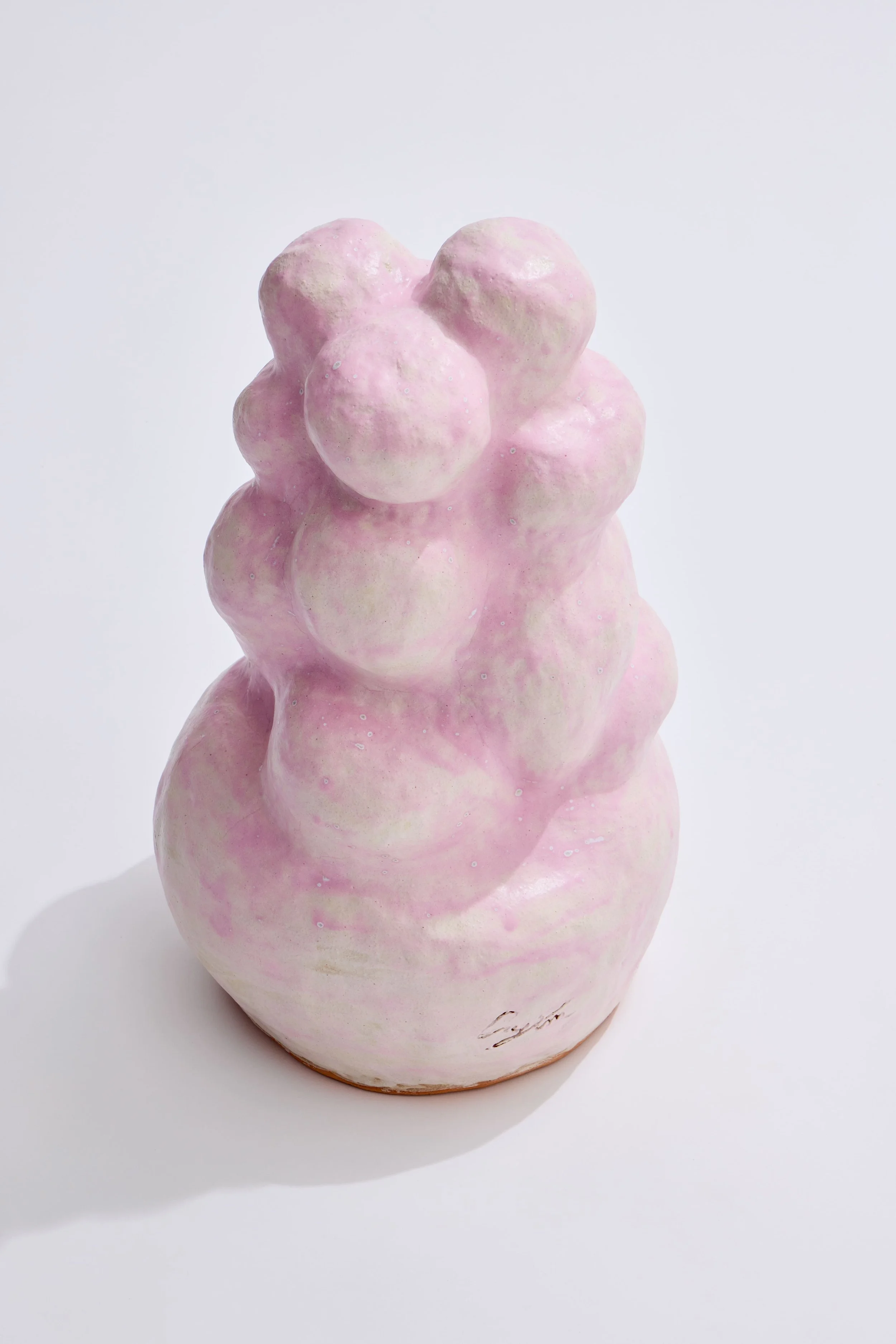
Body Study 01, 2024
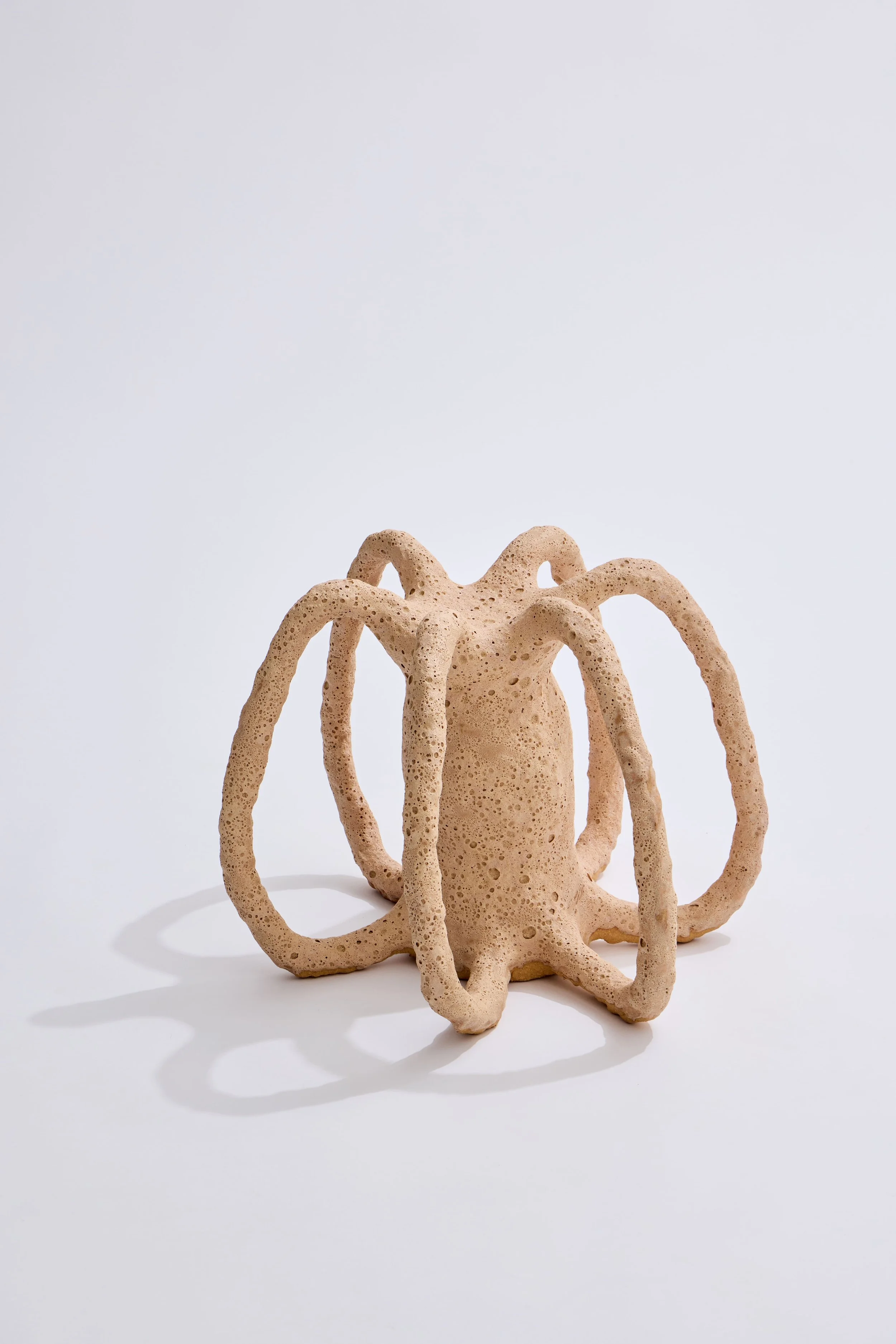
Body Study 02, 2024
Could you tell us a bit about yourself and your background?
I’m a South Korean artist currently based in Chicago, where I am pursuing an MFA in Sculpture at the School of the Art Institute of Chicago. Before moving to the United States, I studied Ceramics and Glass at Hongik University in Seoul. That material-based training shaped my early interest in process, casting, repetition, and the physical behavior of materials, and it continues to influence the way I approach sculpture and installation. My earlier work focused on the body and on how bodily presence might persist even as the figure becomes fragmented, abstracted, or incomplete. Through casting, reflection, material residue, and spatial relationships, I explored ways of suggesting the body without relying on direct representation. My current practice focuses more closely on control, repetition, hypervigilance, and instability. I often begin with habitual actions such as arranging, correcting, aligning, and repeatedly checking. These behaviors are translated into sculptural systems structured through tension, balance, suspension, support, and continual adjustment. I work with materials including rope, steel, hog casing, and wire mesh, particularly materials that stretch, sag, loosen, tighten, or change over time. I am interested in structures that initially appear ordered and stable, but gradually reveal stability as something contingent, temporary, and continuously maintained.
Your sculptures often suggest the body without showing it directly. How do you decide when a form feels connected to the body, and when it has become too abstract or too recognizable?
I usually determine this through a combination of visual recognition and physical sensation. If a form begins to resemble a specific body part too clearly, I tend to pull it back because I do not want the work to become anatomical or illustrative. At the same time, if the form loses its sense of weight, curvature, tension, vulnerability, or bodily proportion, it can begin to feel too detached from the body. I look for a point where the form remains physically suggestive without becoming immediately identifiable. I often test this through proportion, surface, scale, and the relationships between separate elements. A slight change in curvature, distance, or orientation can be enough to make a form feel bodily, while another small adjustment can shift it toward abstraction. I am interested in maintaining that ambiguity. I want the viewer to sense something bodily without being able to name exactly what it is. For me, the strongest forms exist in that in-between state, where recognition remains possible but never fully resolves into a fixed image.
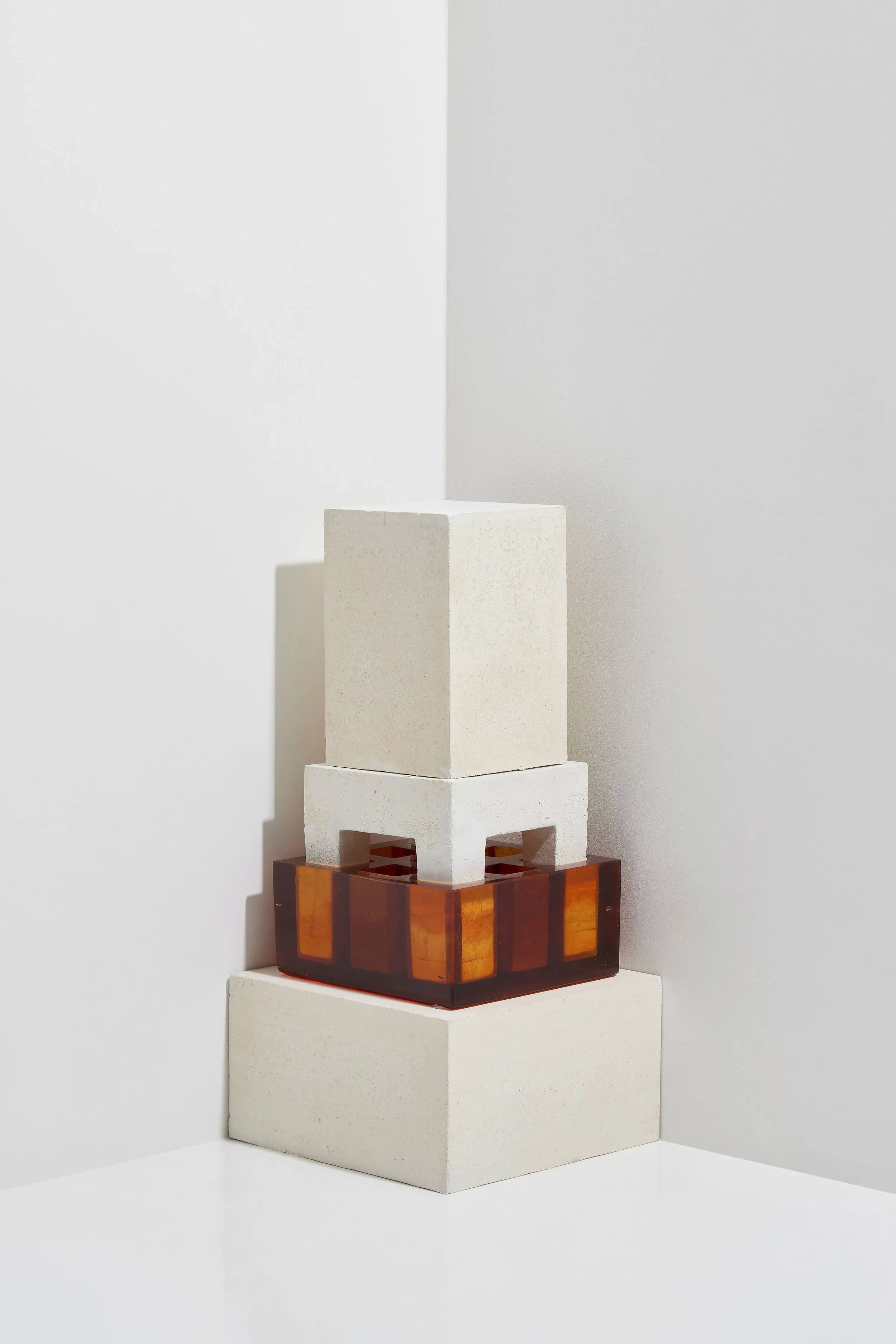
Untitled, 2024
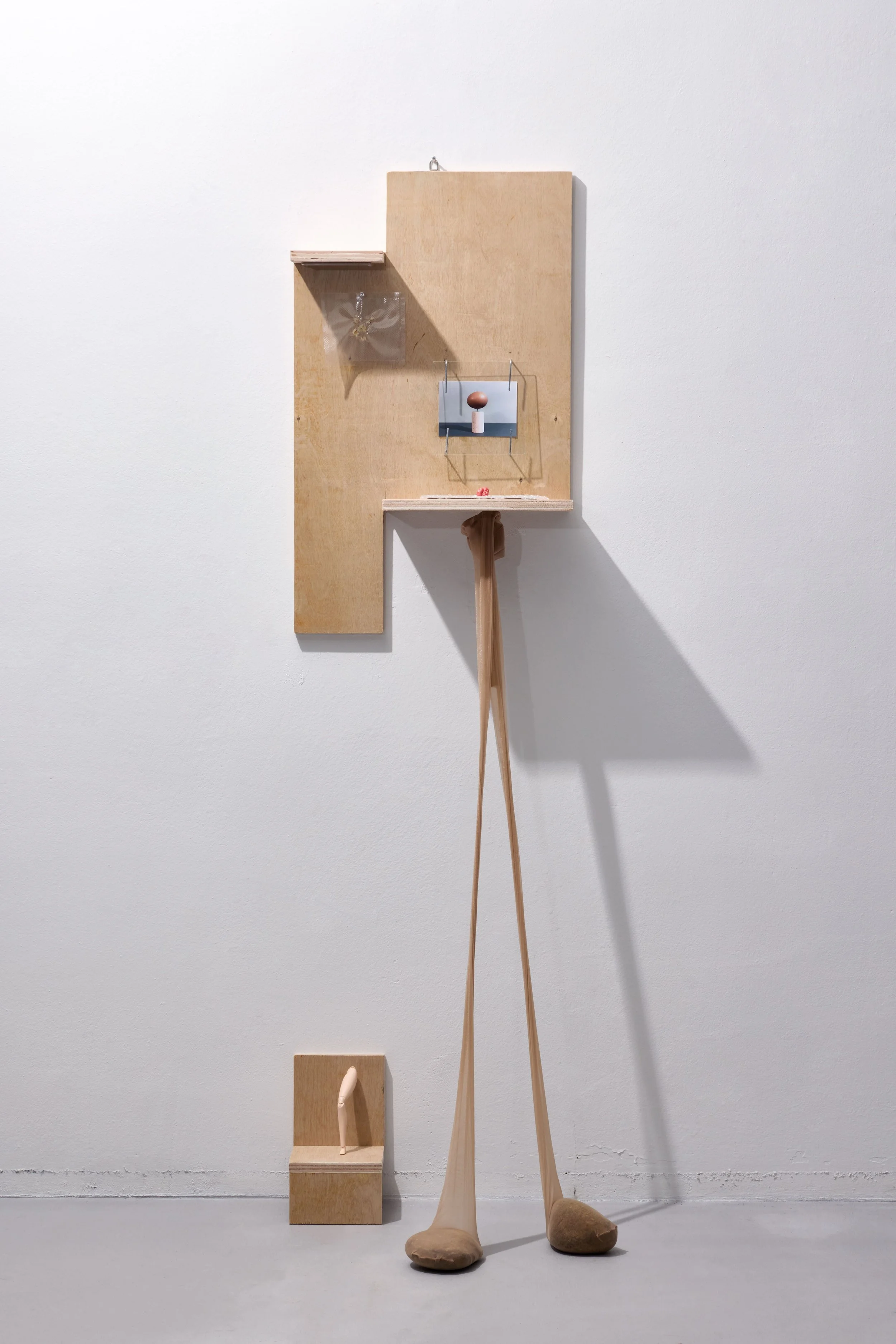
Note 1, 2024
Many of your works bring together materials that feel very different from one another, such as soft forms, hard supports, transparent surfaces, and heavy blocks. What guides your choices when you combine these materials?
I usually choose materials according to the kinds of relationships they can create within a work. In my earlier sculptures, I was drawn to combining materials with very different physical qualities, such as cement and glass, or softer forms with rigid supports. Bringing these materials together made their individual properties more pronounced. Weight could sit alongside transparency, hardness alongside fragility, and density alongside openness. I was interested in how these contrasts could shape the perception of a form and contribute to a bodily presence without directly representing the body. Rather than choosing materials primarily for symbolic reasons, I tend to respond to their physical behavior and visual character. I pay attention to how they hold weight, reflect light, bend, resist, or occupy space, and then consider what kinds of relationships emerge when those properties are placed in proximity. In my current work, these material relationships have become more closely connected to instability and change over time. Even so, I continue to begin with the same attention to how different materials behave, affect one another, and alter the structure they inhabit.
Your installations often ask viewers to move around objects, look through clear surfaces, or notice reflections and shadows. How do you think about the viewer’s body in relation to the space you create?
I think about the viewer’s body as something that becomes more perceptible through movement and position. Rather than directing the viewer toward a fixed experience, I am interested in creating spatial conditions that shift according to where someone stands, how closely they approach, and how they move around the work. Transparent surfaces, mirrors, shadows, and gaps between objects allow the installation to change from one viewpoint to another. A reflection may momentarily absorb the viewer’s body into the work, while a transparent surface can layer their image with objects beyond it. Elsewhere, movement alone may reveal or obscure parts of the installation. These subtle shifts make the viewer more aware of their own position in relation to the space. I do not think of installation as something to be encountered from a single frontal perspective. I see it as a spatial situation that unfolds through movement. The viewer’s body becomes part of the work’s perception through changing distance, orientation, reflection, and visibility, rather than through direct representation.
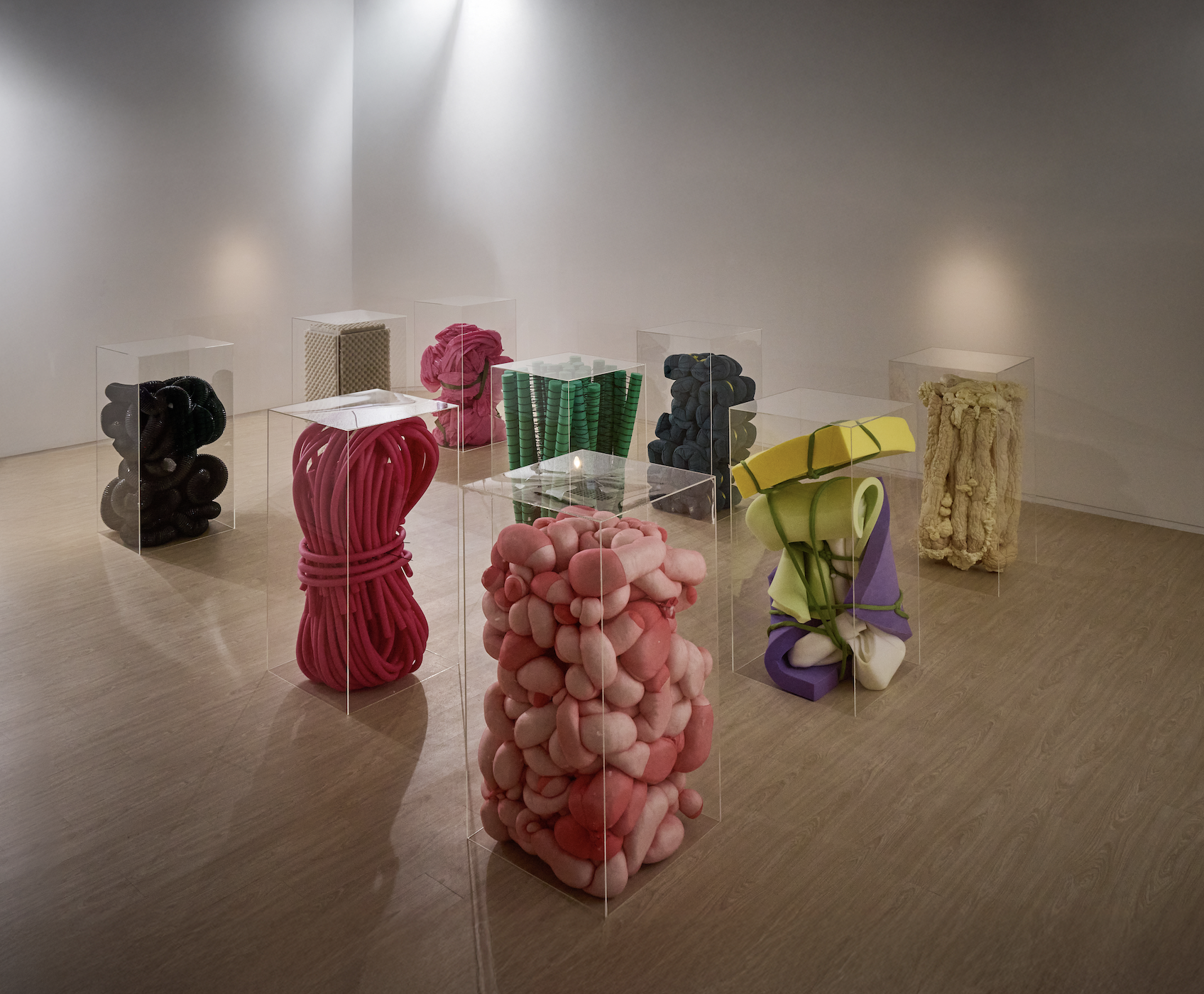
We are living in a room series, 2024
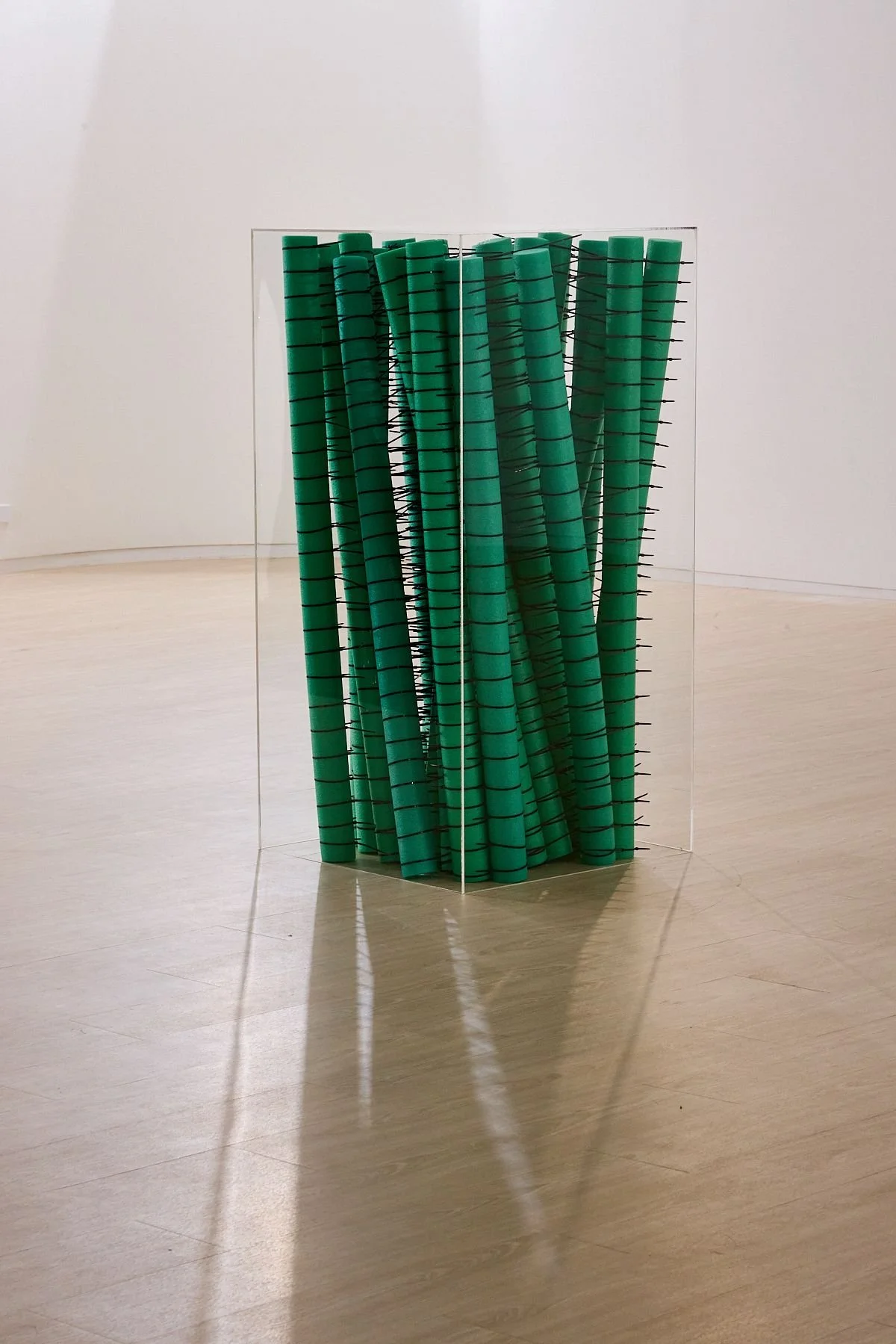
We are living in a room 09, 2024
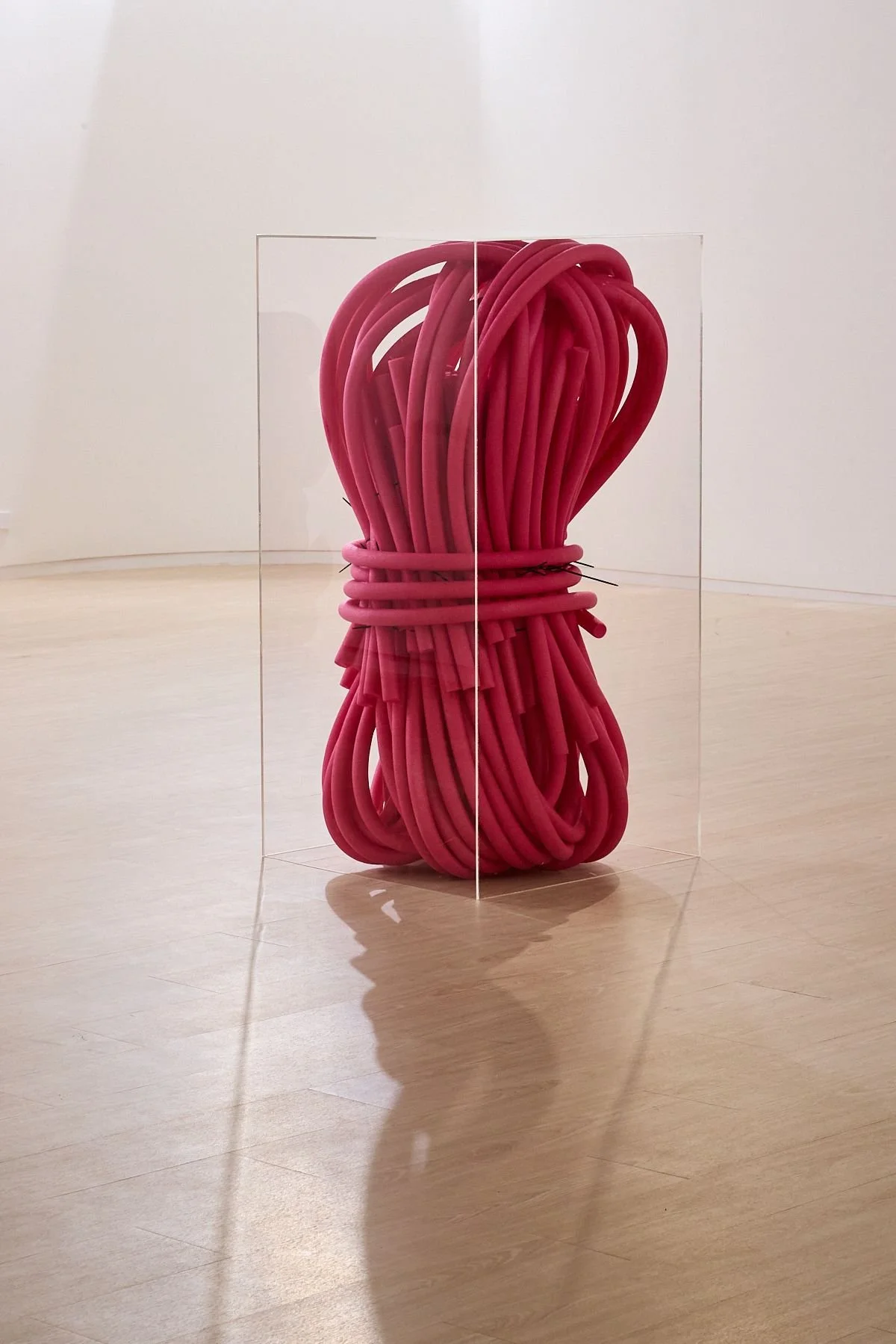
We are living in a room 06, 2024
Tell us a bit about how you spend your day / studio routine? What is your studio like?
My studio routine shifts depending on the stage of a work. Some days are highly physical and involve building, cutting, tying, adjusting, or testing materials; others are much slower, spent observing, rearranging, or considering small changes. I tend to work through repetition, returning to the same structure again and again to adjust tension, distance, balance, or placement until the relationships begin to feel right. My studio is usually quite organized, even though the work itself often introduces instability into that order. I keep materials, tools, sketches, and fragments from previous experiments close at hand because I move constantly between finished works, tests, and emerging ideas. I also photograph works-in-progress frequently, as an image can reveal spatial or material relationships that are harder to notice while standing inside the installation. A significant part of my studio time is simply spent looking. Sometimes the most important development is not something I actively make, but a change I notice later—a material that has shifted, loosened, dried, sagged, or settled differently overnight. Those small changes often become the basis for the next decision in the work.
What artwork have you seen recently that has resonated with you?
Recently, I was particularly drawn to Mire Lee’s The Heart of My Machine is Golden Lead at the Secession in Vienna. The installation brought together a cement mixer, motors, tubing, liquid, and altered architectural elements to form a system that felt simultaneously industrial and bodily. What stayed with me was the sense that the machinery remained in constant operation without ever arriving at efficiency or resolution. It moved, circulated, leaked, and accumulated material, as though repetition itself were gradually exhausting the system. What I found especially compelling was the way instability and failure emerged through the actual behavior of materials rather than being presented as abstract ideas. The machine no longer functioned simply as a tool; it began to feel vulnerable, strained, and strangely physical. That tension between rigid infrastructure and unstable matter strongly resonated with my own interest in structures that require continual adjustment yet never fully settle. I was also struck by the way the work extended beyond the individual objects and transformed the exhibition space itself. Architecture, heat, sound, movement, and residue all became part of the work, making the installation feel less like a discrete sculpture and more like a continually shifting environment.
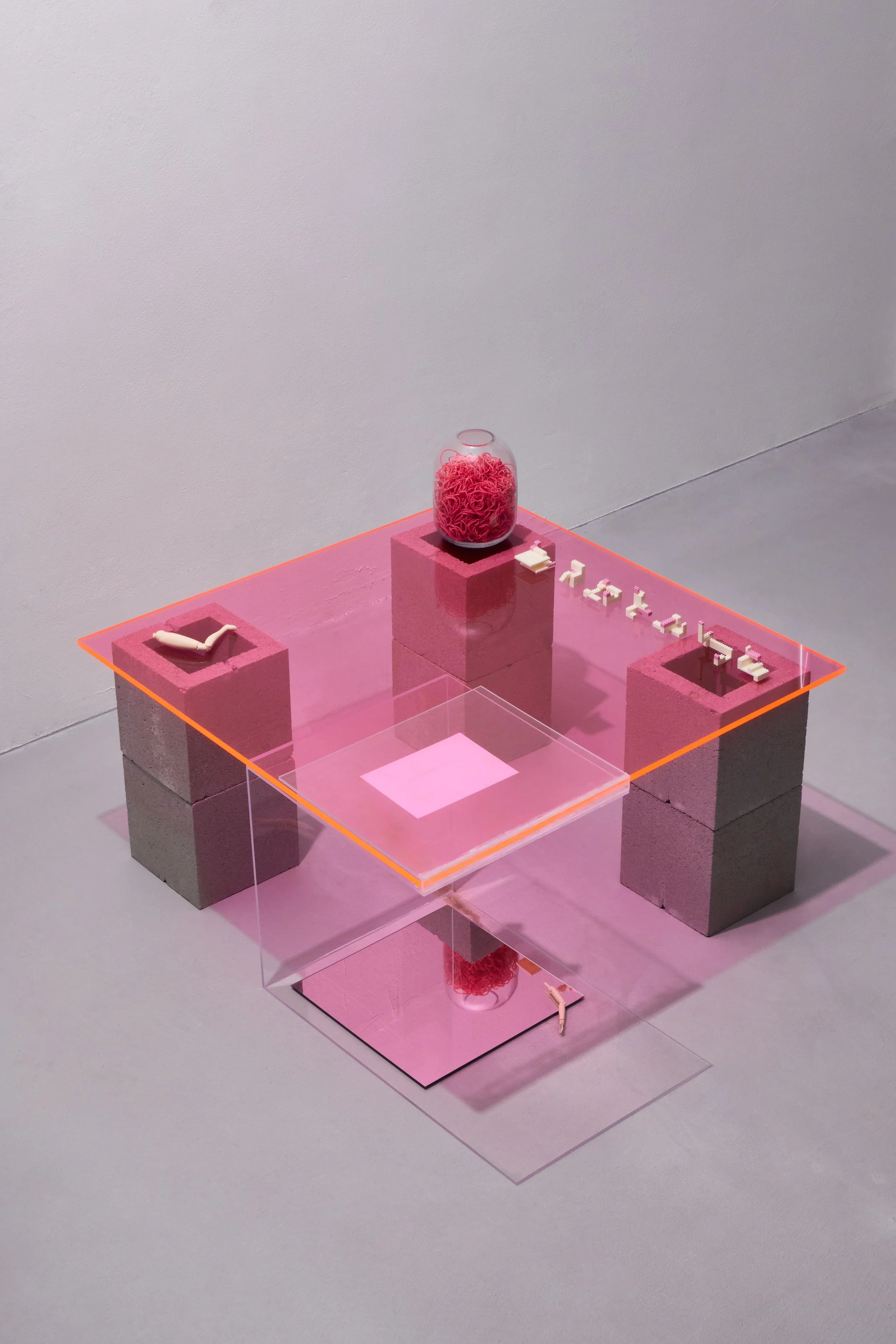
Note 2, 2024
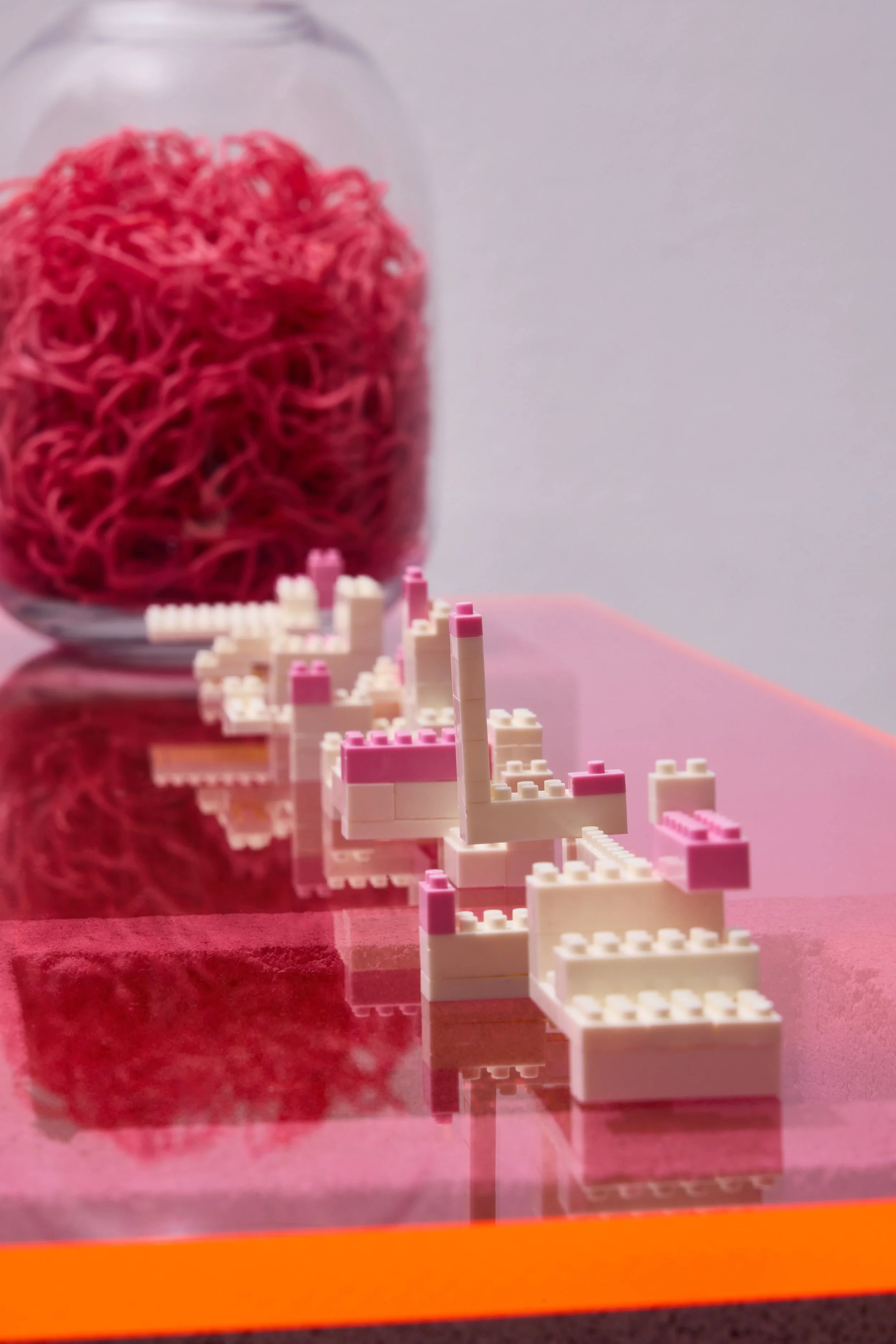
Note 2, detail shot, 2024
Is there anything new and exciting in the pipeline you would like to tell us about?
I’m currently developing a few projects that I’m particularly excited about. I am continuing to expand Shifting Center, a large-scale installation made with EMT conduit, connectors, black string, and movable structural elements. The work began as an adjustable framework, and I am continuing to test how movement, tension, and shifting points of support can transform the structure. Next month, I will be participating in Momentum, an exhibition organized by Chicago Sculpture International, where I will present Held at the Edge. Made from hog casing stretched over wire mesh structures, the work examines the relationship between a soft, bodily material and a more rigid framework. At the moment, I am especially interested in looking more closely at the smaller structural details within these works—points of connection, tension, attachment, and balance. I want to understand how these seemingly minor elements can determine the behavior of a larger structure, and how sustained attention to them might open up new directions in my sculptural practice.