All of my work, especially my painting, is characterized by countless erasures and second thoughts. So they are almost always "untrodden paths" that I walk with very few certainties.”
Our interview with Jacopo Naccarato explores an artistic practice shaped by experimentation, material exploration and uncertainty. Moving between painting and sculpture, Naccarato brings together human, animal and hybrid forms, creating works that balance familiarity with ambiguity. In this conversation, he reflects on the role of doubt, the importance of touch and how unexpected discoveries shape his creative process.
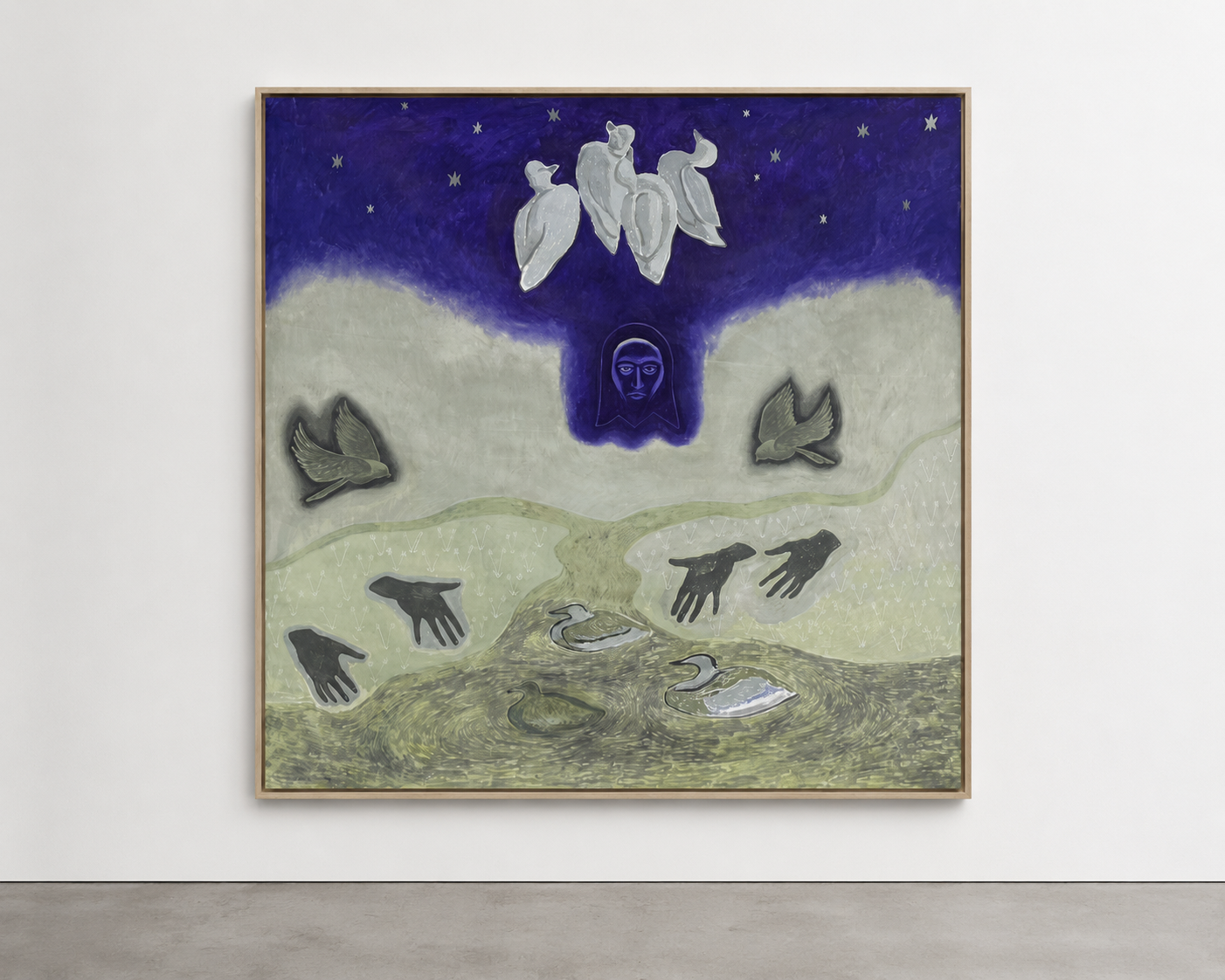
"Pulp purple (duck chase)", 2025
Could you tell us a bit about yourself and your background?
I come from a small Tuscan city, Arezzo, which few people know about today, but which in the past was a cradle for great authors and enjoyed great prestige even in the ancient world. I was born here, but many in my family came from southern Italy, so there were many different roots at home. I studied art in high school and then again at university; I wasn't convinced about this path right away, and even now, I still have a lot of questions! I trained in my hometown thanks to a few good teachers, but mostly thanks to the bad ones. After that, still a victim of this indecision, I went to Berlin for a while to see if I could grow up on my own, and upon my return, I decided to attend the Academy of Fine Arts in Bologna. After a couple of years and numerous disappointments, I stopped producing images—any kind of image—for a month. At the end of this "visual fast," I felt pushed toward a change and went to Bucharest.
At the time, I was strongly drawn to Romanian art; looking back, I think it was a failing moment for my work at the time, but an extremely useful one for what came after. When I returned to Italy and finished the academy in Bologna (during Covid-19—I can't really say how much of an impact it had, but it contextualizes my biography in a historical moment, just like everyone else's), I decided to resettle in Arezzo. Here, I found a job as an artist's assistant, working on her project for the Venice Biennale. In parallel, driven also by the new trend of provincial revival that Covid had somehow triggered, two fellow citizens and I opened an independent space.
The latter was a truly special experience because of everything we shared and how much fun we had, above all building solid friendships. I still live and work here today, in my hometown.
Your work often brings together human, animal, and mask-like forms. How do you decide when a figure should remain recognizable and when it should become more uncertain or hybrid?
I simply go by trial; I don't make many decisions beforehand. I’m resistant to set recipes; each time, I look for something new, even within the repetition. All of my work, especially my painting, is characterized by countless erasures and second thoughts. So they are almost always "untrodden paths" that I walk with very few certainties. When an image appears that satisfies me, I leave it be, and I try to keep going like that! It can be very frustrating at times, but at least it brings some surprises. I use my own vocabulary, to which I'm always trying to add new words. Often they aren't mine—in fact, hardly ever—but all of this ends up making up my personal language.
There is a strong focus on surface in your work, from soft painted areas to rough sculptural textures and layered materials. How important is touch in your process, and how do materials shape the direction of a piece?
You’ve hit the nail on the head, I’m deeply interested in surfaces! For instance, I only paint with thinner, so my painting is really dry and skin-deep. In sculpture, I can't deny that I’m guided by the nature of the medium itself—whether it becomes matte or glossy, dusty or smooth. Natural materials have a history, a life, an age; on certain pieces, I don’t even feel like intervening. I like working on patinas, which is also a way to bring painting and sculpture together; I like faking materials and turning them into elegant lies through casts and molds. I should probably call myself a materialist because I take deep pleasure in touching objects and in the response they give back to me when I find my hands stained, dusty, bruised, or burned. It happens when I have to pull out a splinter or remove resins with turpentine. It sounds almost masochistic, yet it’s not a habit—it’s just an effect that tells the story of an encounter.
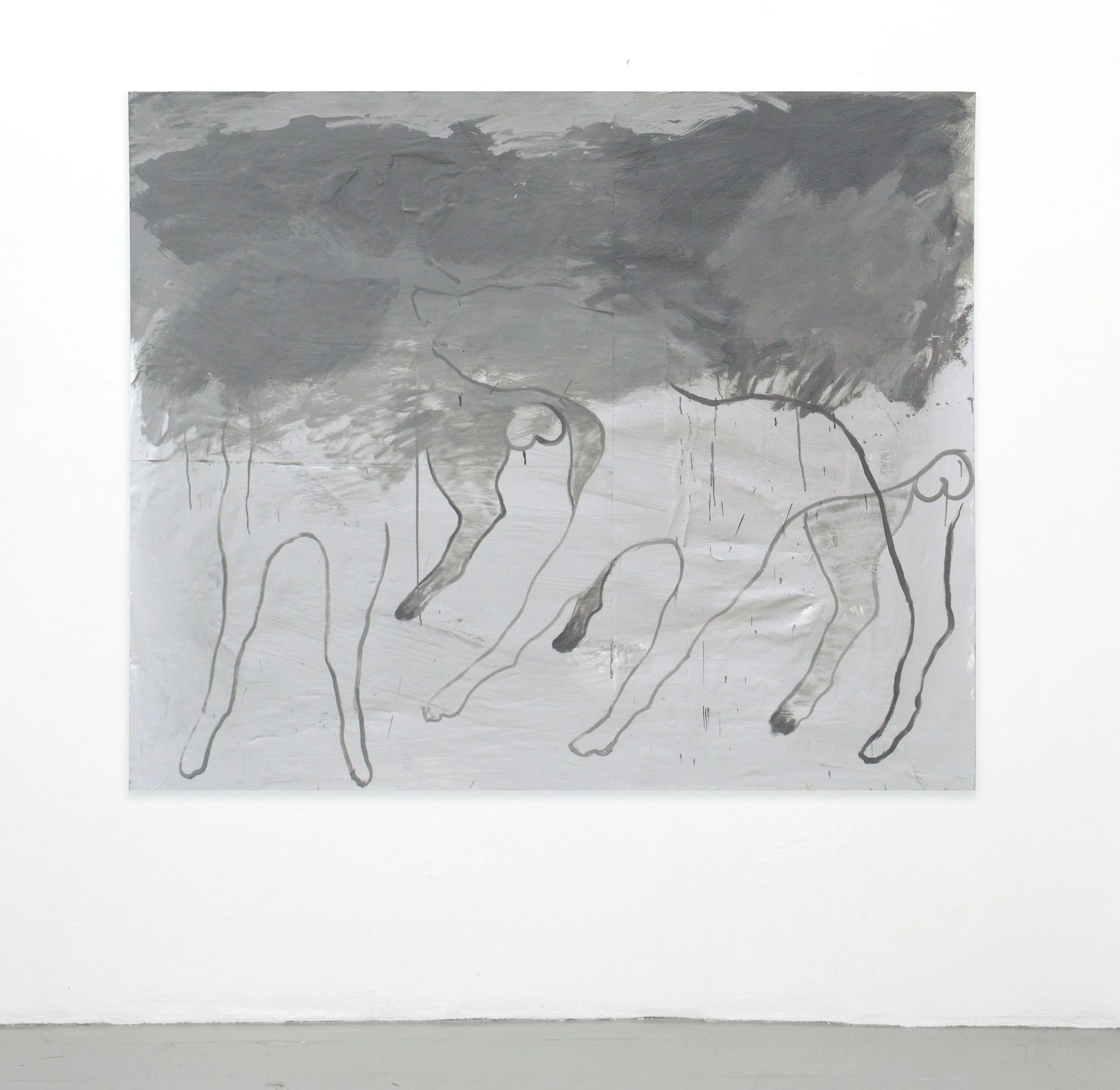
"Policane", 2021
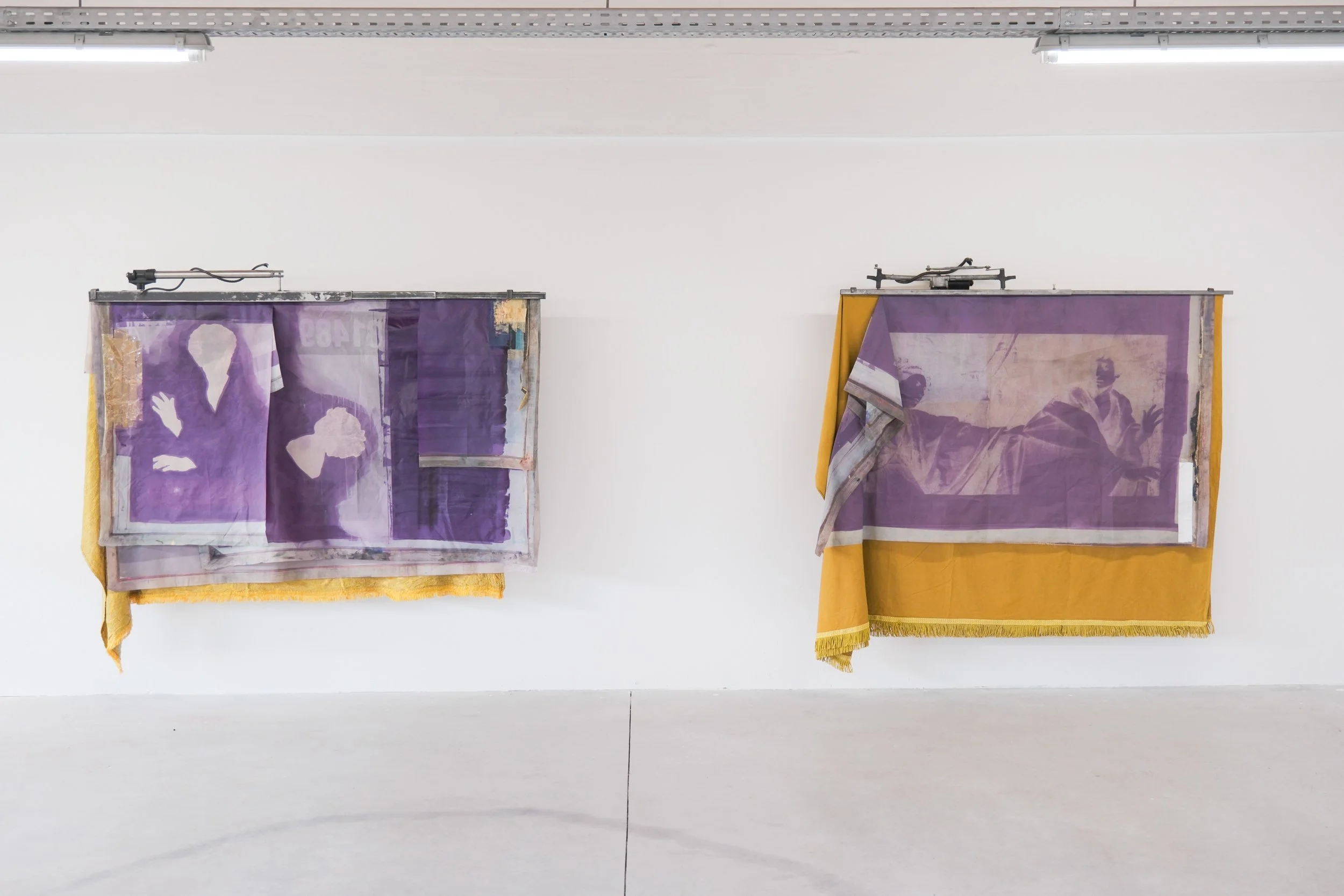
“AMBUSH I/ AMBUSH II”, 2025, (photo by:Sam Lomprez)
Tell us a bit about how you spend your day / studio routine? What is your studio like?
I’m struggling with this one! I couldn't really tell you. I try in every possible way to go to the studio just like someone going to an office or a factory, but then in the morning, while having breakfast and enjoying my hour of silence, I think about how I can leave the house whenever I want, that I'm in no rush—I like that, and so off I go. I’ve always had studios carved out of basements, wooden shacks, or garden sheds. Cold places, freezing cold, where it rained inside almost every time. Once, I set up a wood stove and it took me three days to drill a hole through the wall to run the flue outside; so every morning, I’d carry in some firewood and light the fire—a hassle, but one I look back on with fondness. Today, I finally have a new studio; it's modest, but in a beautiful place! It has heating and I’m still getting used to it—the oil on my palette had never dried so fast! I spend a lot of time just sitting still and a lot of time making mistakes; I walk out and come back in, I do other things, I get distracted. I switch from painting to clay, then maybe to wood, I read and then I write, I spend time on the phone, I call people I haven't heard from in ages, I go outside to smoke with the building's caretaker, Richard! I'm not quite sure if this dynamic qualifies as an actual routine, but it is what it is!
Many of your images feel emotionally charged without explaining exactly what has happened. How do you think about leaving room for viewers to sit with ambiguity, doubt, or discomfort in the work?
I like to think that the artwork is completed in the viewer's gaze. Painting and sculpture are free from the formula imposed by a narrative arc; there is no beginning and there is no end! I try to convey gut feelings! I don't want to encode an image that, in itself, serves no "purpose." Let's let them enjoy the privilege of uselessness. You mention doubt, which is central to my research. I don't think I know many things, but I certainly know I have many doubts, so it feels only sincere to put them into my work.
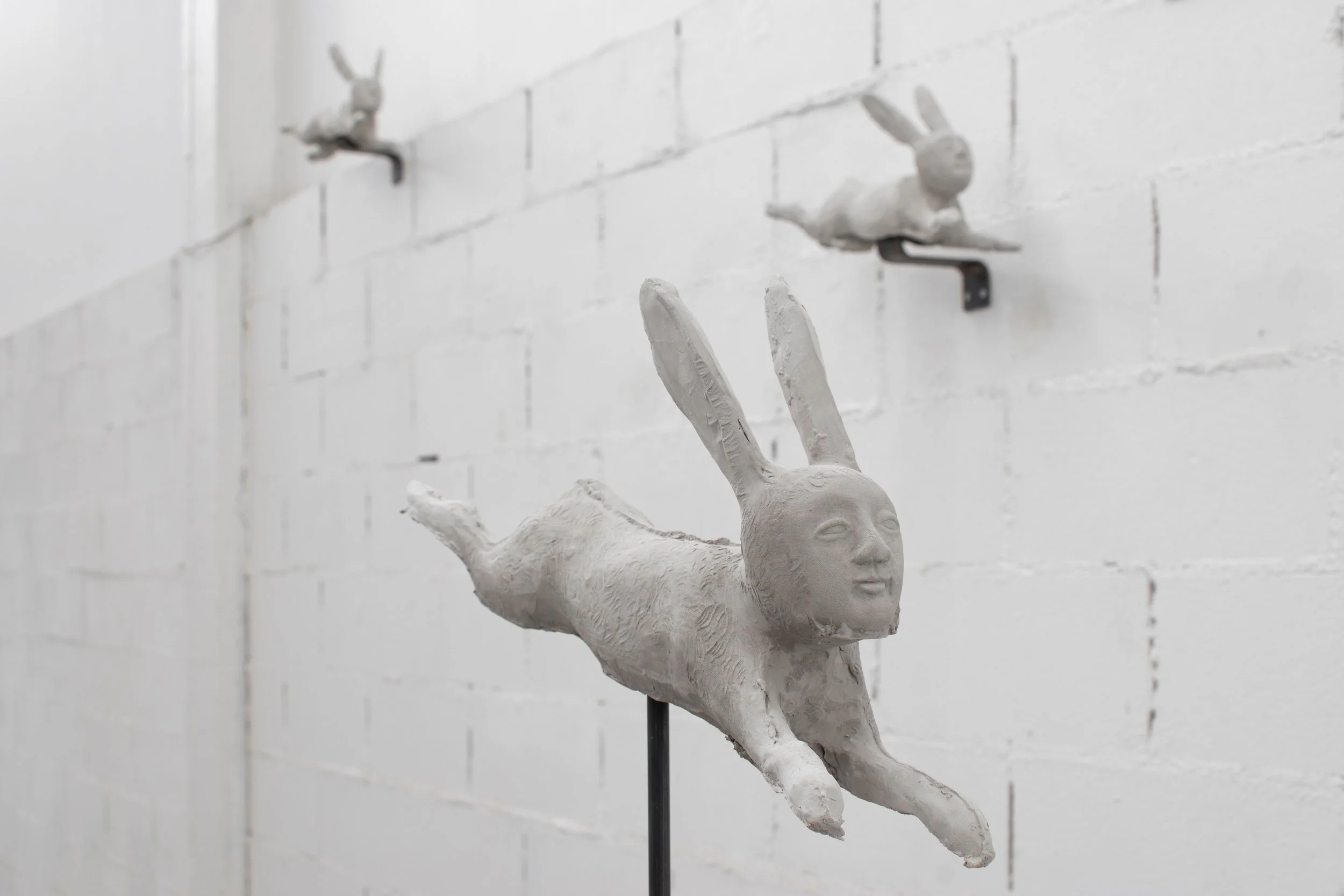
“Frenesia di un passo incerto (nugolo)”, detail, 2025, UNO bis (photo by: Michael Trutta)
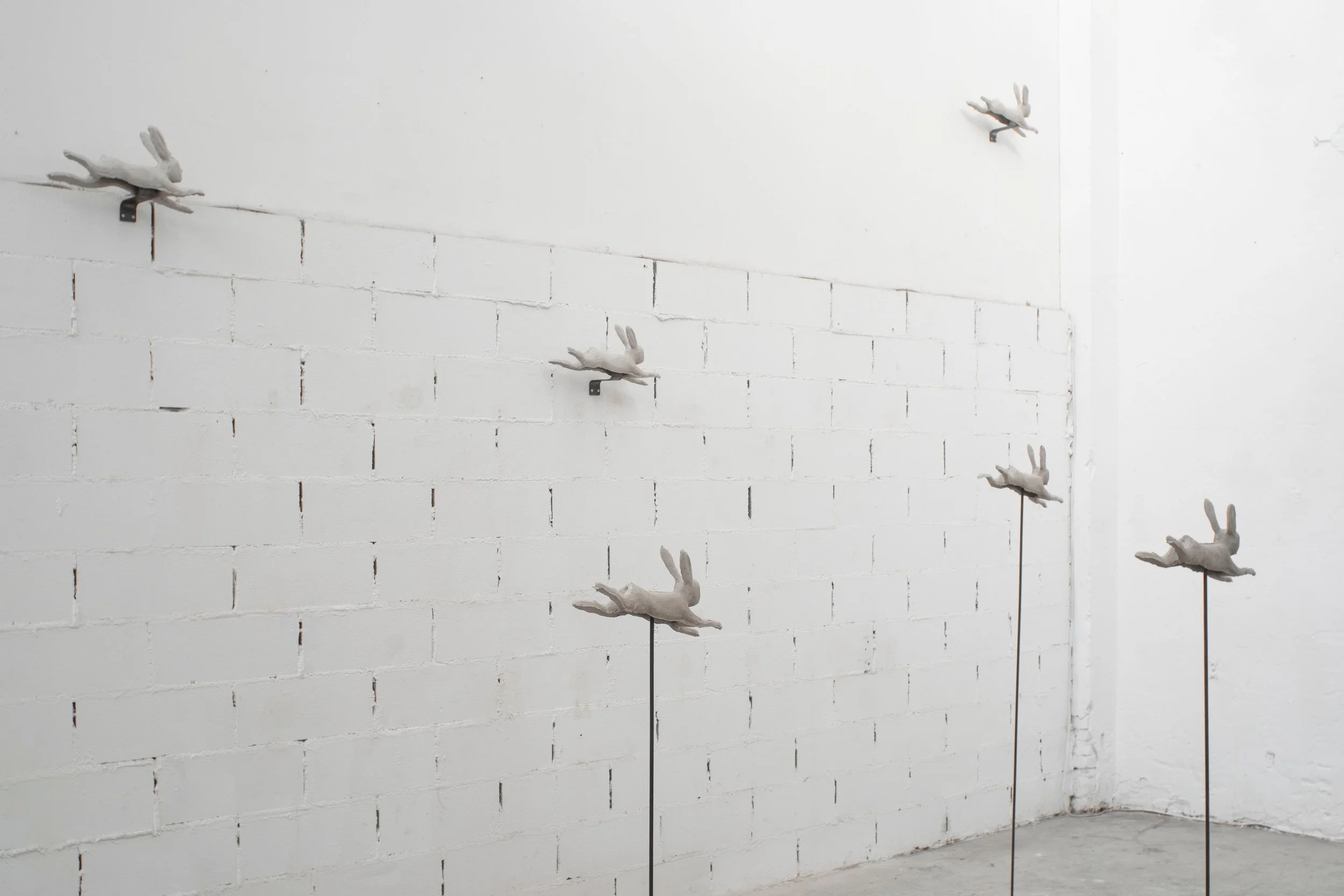
“Frenesia di un passo incerto (nugolo)”, detail, 2025, UNO bis (photo by: Michael Trutta)
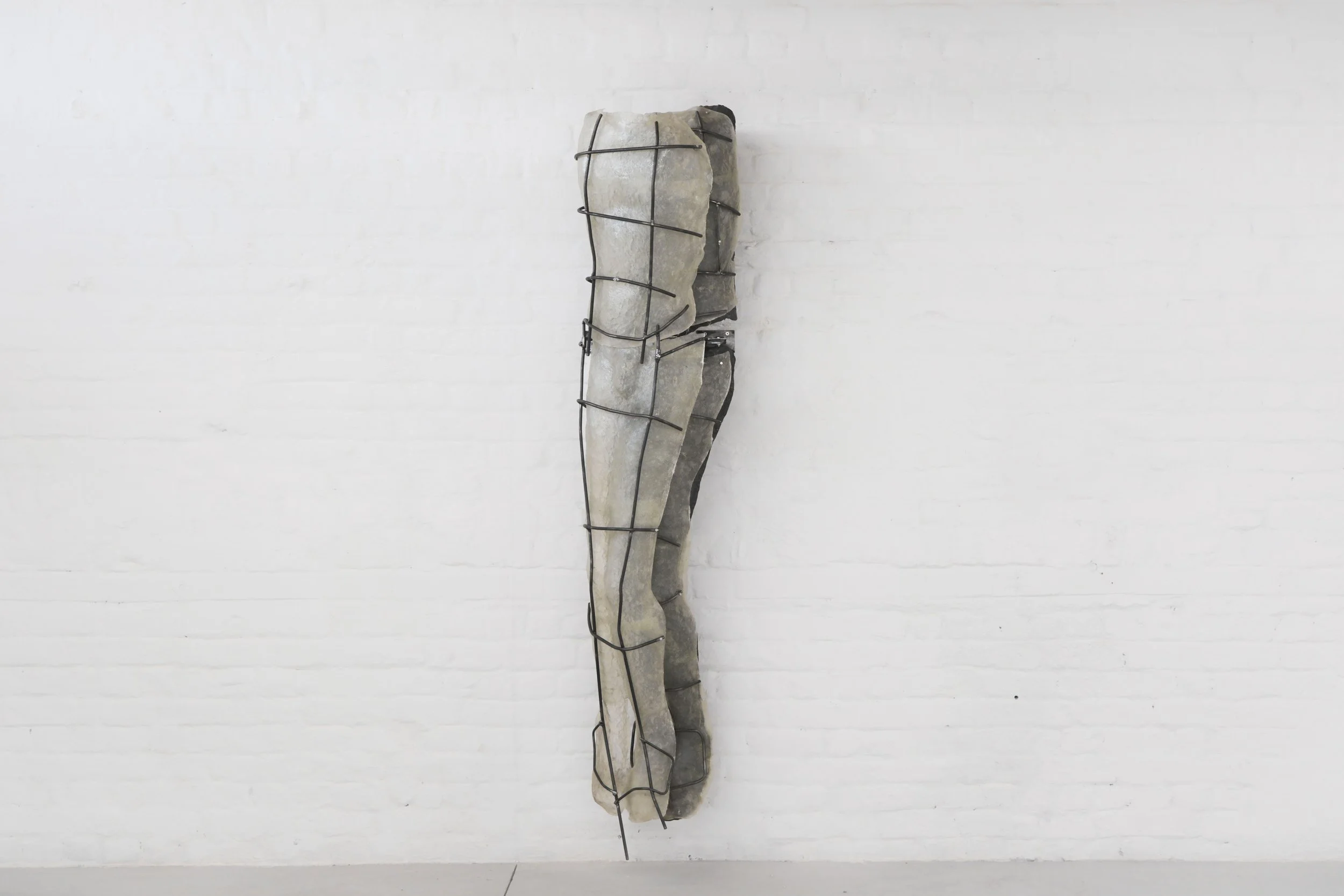
“ESUVIA”, 2025, (photo by: Sam Lomprez)
What artwork have you seen recently that has resonated with you?
Unfortunately, I have a terrible memory! But lately, I’ve been thinking about Beato Angelico's paintings.
Is there anything new and exciting in the pipeline you would like to tell us about?
No, I don’t want to tell you anything; right now, I’m in the midst of a new painting season.