“I'm interested in the moment just before clarity of recognition, where something registers as body-like before it's been fully named.”
Our interview with Anya Mokhova explores a sculptural practice shaped by material, the body and the qualities of transformation. Working with wax, tallow, soap and lipstick, Mokhova creates tactile forms that sit somewhere between the recognisable and the abstract. In this conversation, she reflects on the importance of material, repetition and the relationship between sculpture and the space around it.
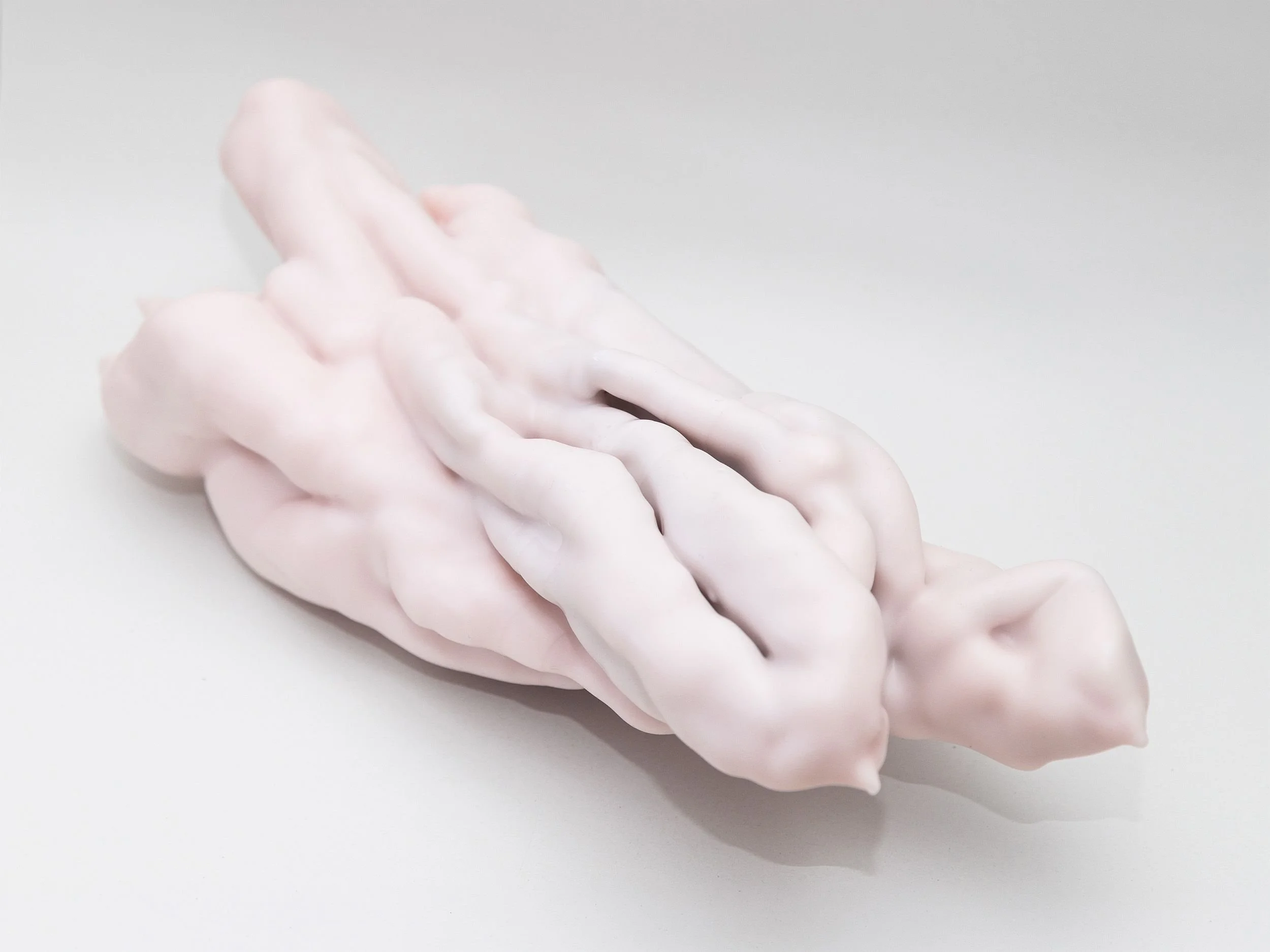
Pink Cosmos V, 2023
Could you tell us a bit about yourself and your background?
I am a sculptor based in London, working from a studio at The Koppel Project in Lambeth. I did my MA at Chelsea College of Arts, and before that I trained in academically in architecture, which is still a constant source of inspiration for me. It shapes how I think about a piece, not just on its own, but in relation to the viewer and the space around it. I have been recently more into doing in-depth colour studies after The Slade School of Fine Art summer school, which pushed me further exploring the shades of pink I use across my work.
Your sculptures often suggest parts of the body without becoming fully recognizable figures. How do you decide how much detail to include and how much to leave open?
For me the sculpture doesn't start with a sketch, so it's not about working toward a predetermined image, it's much more material-driven. It's about locating the moment and freezing a process at a specific stage, when it could be pushed forward, stopped, or even reversed at any point. So, I'm not trying to illustrate anything with my pieces: I want the viewer to visually explore the sculpture, almost 'touch' it with their eyes, and 'complete' the piece themselves with their own imagination. I'm interested in the moment just before clarity of recognition, where something registers as body-like before it's been fully named. Material often provides the clues for me as when to stop as it builds up in layers. How far can I pull a form from legibility while it still reads as having come from something alive - is one of the questions I keep in mind when I create works.
The materials and surfaces in your work can feel soft, fragile, and carefully handled. What draws you to these qualities, and how do they shape the way you make each piece?
I'm drawn to soft, fragile materials because they carry a kind of vulnerability from where they come from: animal bodies. At the same time they are close to my own body, as could be used for food or for cosmetics. They soften, wear down, and change with temperature, and pick up the warmth of a hand instantly, holding an intimacy that rigid materials just can't. I use wax, tallow, soap, and lipstick, blended into intimate, visceral pink shades I've been developing more precisely since my colour studies at The Slade. Working with them means working with urgency, because none of them pretend to last in the state I need them to be in for making works. I'm often right at the limit of the material, catching shapes of the pieces at exactly the right moment as the wax cools to the temperature I need it at, or casting soap before it sets. It can be really slow sometimes as I add volume layer by layer. Yet, every mark preserves the moment it was made. Oddly, in a visual sense, my interest in these surfaces actually started with marble. Its translucency always reminded me of fat, soap, or milk.
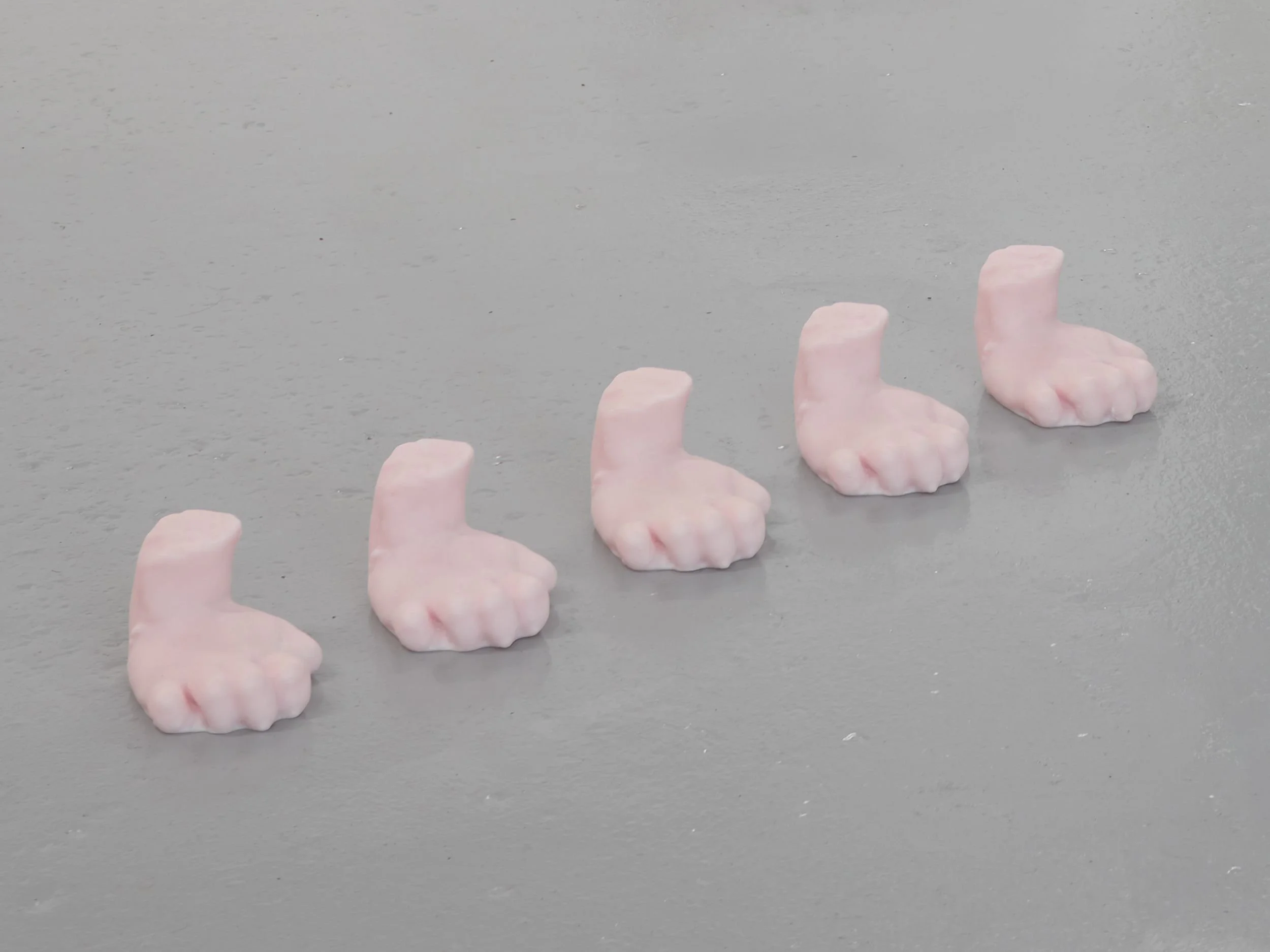
Psychopomp Paws, 2026
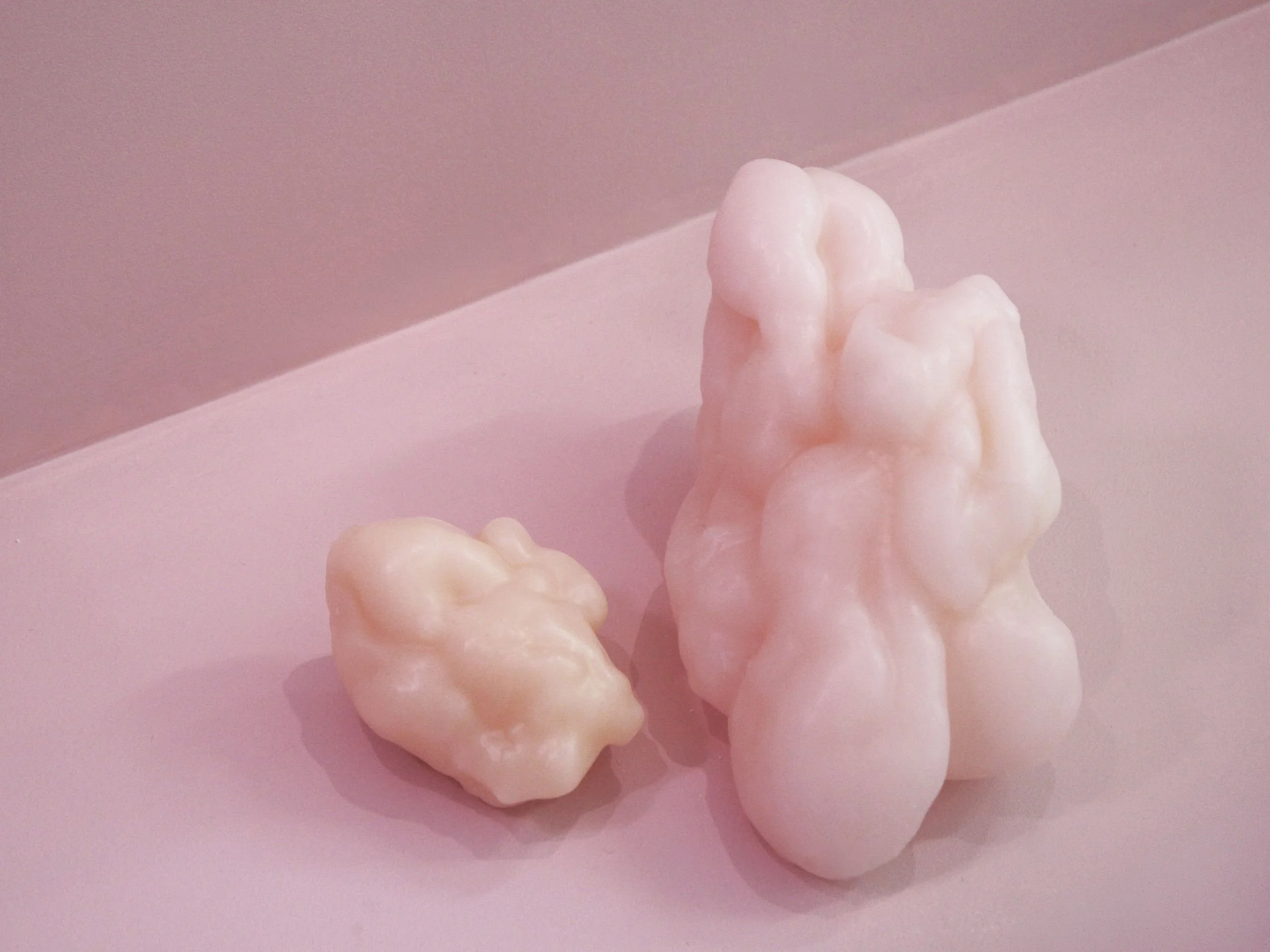
Folds, 2019
Repetition, grouping, and display seem important in how the works are presented. How do you think about the relationship between individual forms and the way they sit together in a space?
To me a single piece reads as only a fragment of the whole story. Grouped, the same forms start to behave like a language, each one speaking a little differently depending on how they turned out in the same process of shaping. Repetition turns one gesture into a pattern, and a pattern feels inevitable in a way a single object doesn't. With Psychopomp Paws especially, the repetition makes the whole collection feel like one unified piece rather than a group of separate ones. One cast hand feels personal, but a few together feel more like an evidence of a ritual of making. Sometimes I think about expositions almost like a vitrine in a 19th-century Cabinet of Curiosities, cast, displayed, as if they were found pieces. However, I would exhibit a bit larger works right on the floor as well, as I want them to participate in space, rather than stay objects to be looked at from a distance. That precision in the install is what turns a private object into something with real presence in a room, and honestly that's where the meaning of the work really gets decided by the viewer.
Tell us a bit about how you spend your day / studio routine? What is your studio like?
I work in a 19th-century building, which actually helps regulate the temperatures I need. Wax and tallow are only workable under certain conditions, so my days and even weeks follow temperature more than habit. It does tale time to wait for them to heat up and cool down. The space holds both sides of my process at once, wax, tallow, and half-finished casts on one side, drawings and sketches on the other. I don't let the studio get chaotic and would say it is pretty organised, especially when needed to pre mix a variety of waxes into different shades.
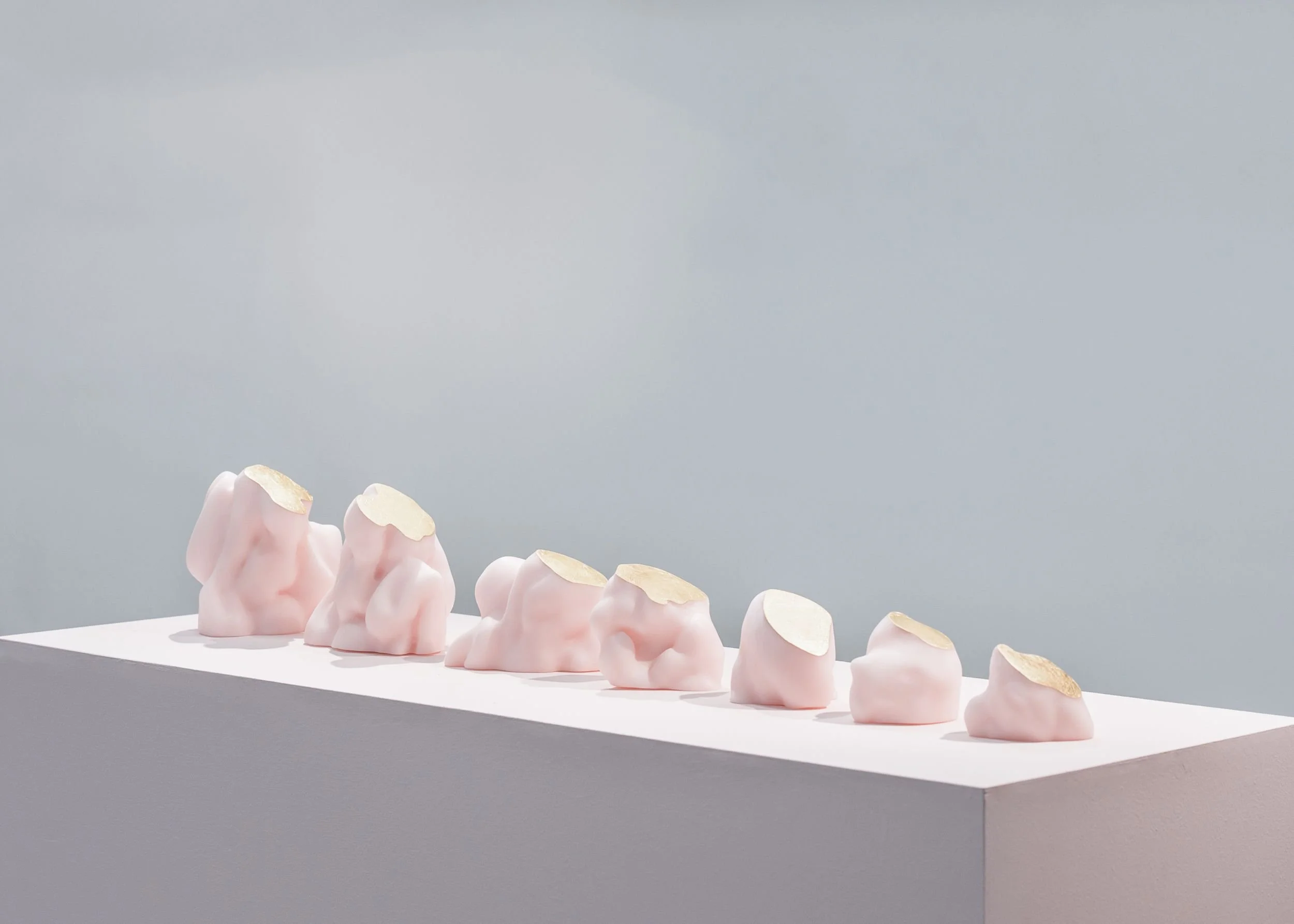
Momentum, 2022
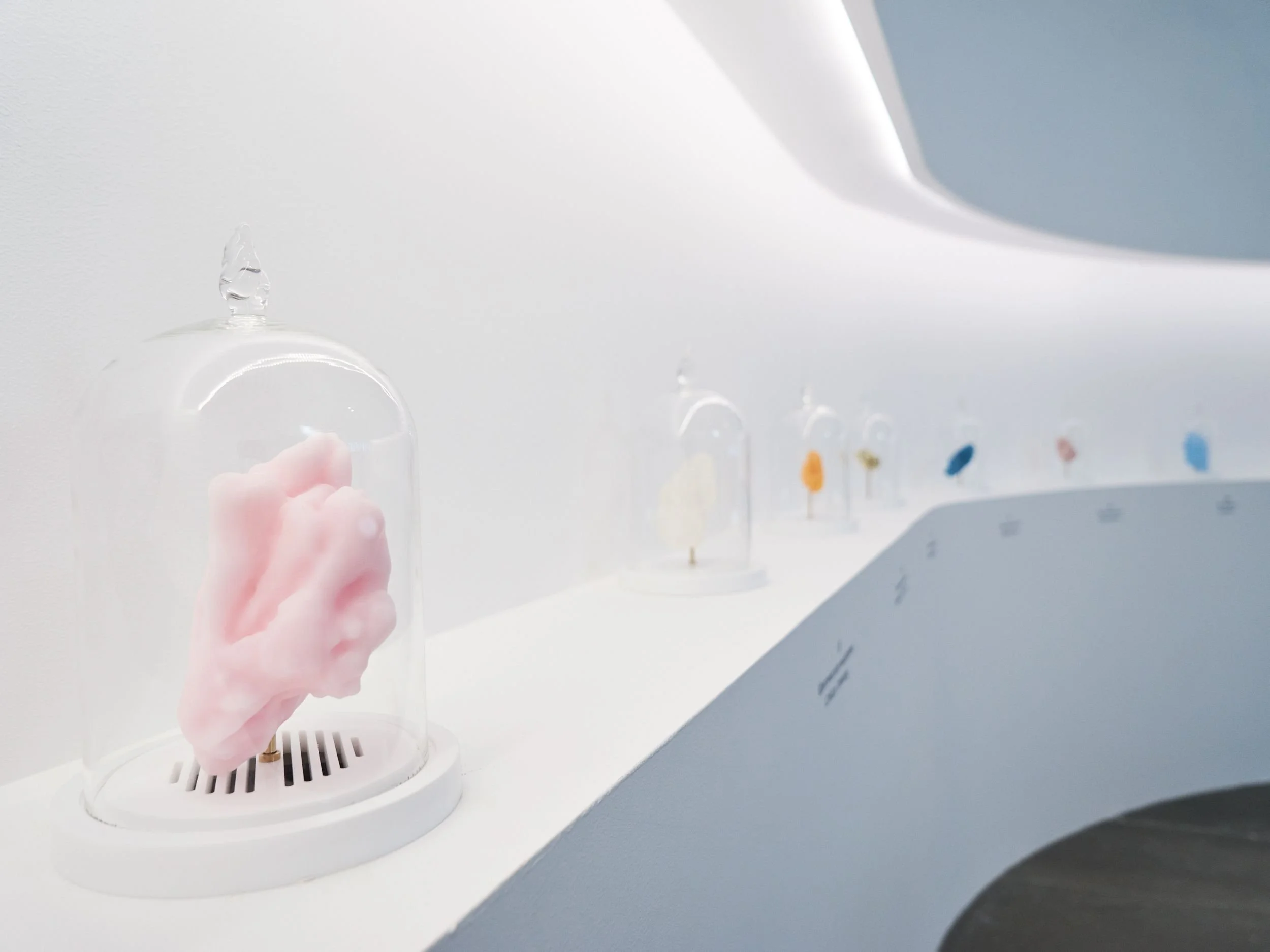
Meteorites, 2018
What artwork have you seen recently that has resonated with you?
I recently went back to Sir John Soane's Museum, especially the architectural fragments, plaster casts, and classical drapery. What keeps pulling me back is how those objects sit in this strange, dense threshold between preservation and decay. The pieces are staged almost like once useful tools of unknown purpose, and the light constantly reframes them depending on where one stands.
Is there anything new and exciting in the pipeline you would like to tell us about?
This year I completed the MASS Sculpture Programme, and that pushed me to collaborate more with other artists working with complex, lived materials, which is actually what led directly to Hylē: A Language Without Words, the show I'm now curating at Hypha Gallery during Frieze week, bringing together artists working in that same territory. Moving that series into a permanent material feels like a real step for me. I'm also joining newplatform.art this year, and I'm really looking forward to what it might bring!