“Jazz is the conductor and choreographer of my work.”
Our interview with Shawanda Corbett explores her multidisciplinary practice, spanning ceramics, painting, photography and performance. Currently exhibiting in The Logic of Place, a group show at MARUANI MERCIER, Corbett considers the relationship between the body and material through a practice informed by cyborg theory, science fiction and African American musical traditions. We discuss identity, technology and the role of physical making in contemporary art.
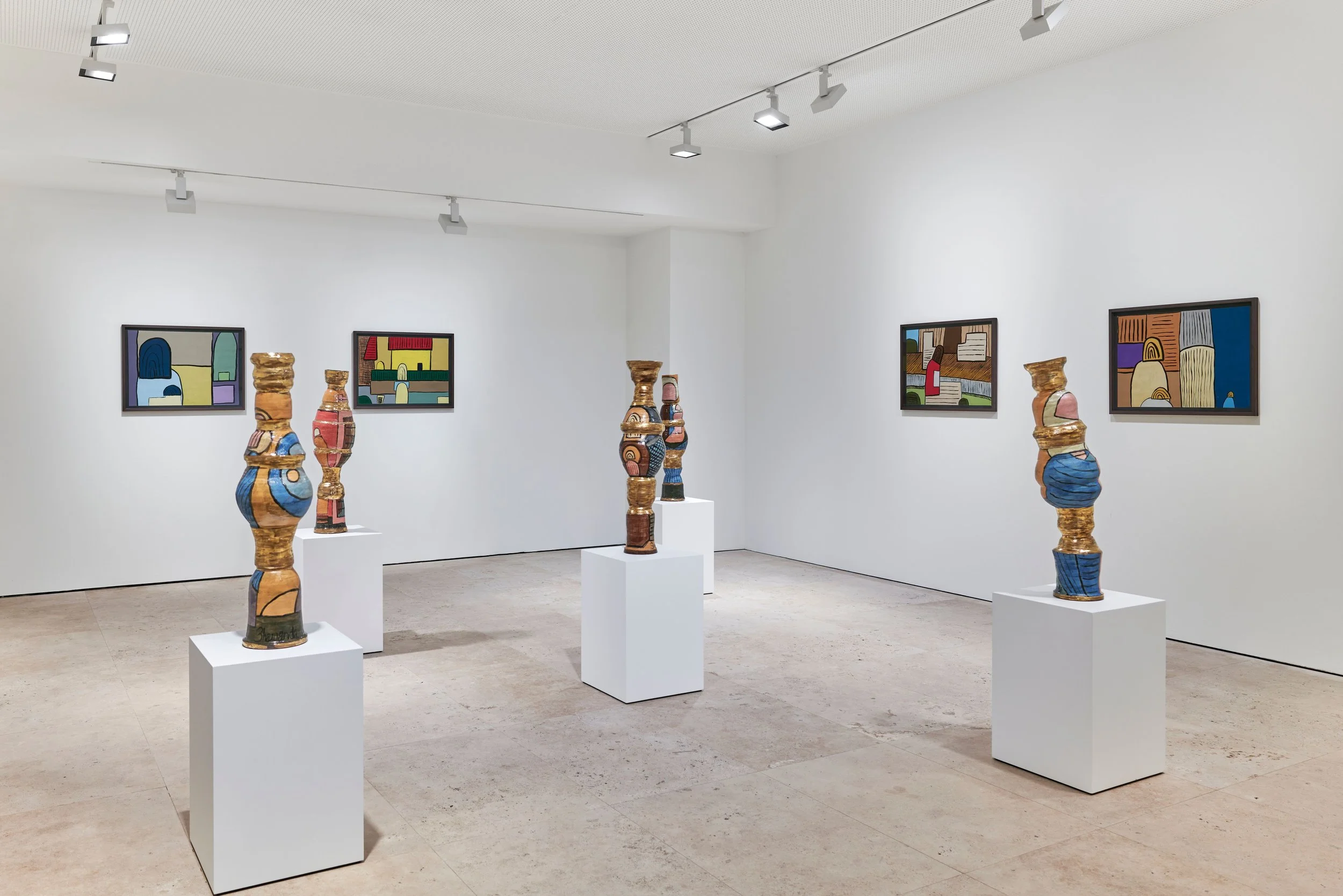
Installation view of the Logic of Place
Could you tell us a bit about yourself and your background?
Growing up between New York and Mississippi, moving through numerous neighborhoods, gave me early intimate understanding of how communities exist within pre-established systems: governmental structures, geographic conditions, agricultural economies, and other industrial frameworks. Each community engages with these systems in distinct ways, yet all share fundamental, collective needs. That foundational awareness shaped my practice, which has since expanded from those local neighborhoods toward a global examination of human interconnection across cultures and communities worldwide.
My academic trajectory allowed me to construct a practice rooted in ceramics and theater performance, two mediums that are simultaneously solitary and communal, with rich, intersecting histories traceable to ancient Greece. My interest in science fiction, particularly mid-twentieth century television and film production design, led me naturally to the Bauhaus movement and subsequently to Donna Haraway’s seminal work, A Cyborg Manifesto, which proved instrumental in synthesizing my technical and conceptual approaches. Drawing on cyborg theory, I apply the concept of the “complete body” as an analytical framework to interrogate the constituent elements of personhood, community, and society. This lens allows me to examine how discourses surrounding human identity evolve as individuals navigate complex social spaces and as distinct cultures engage in meaningful exchange.
You are taking part in The Logic of Place, a group show at MARUANI MERCIER, bringing together five artists whose work explores the relationship between the artist's body and the materials they use. The exhibition considers how the body and material can influence and transform one another through the act of making. At a time when AI is increasingly changing how images and artworks are produced, do you think the physical act of making art, and the connection between the artist's body and the material, has become more important?
I would think so, but it’s not just how the artist makes the work. There are artists who are more thoughtful in choosing their fabricators, because it’s important to know the material and how one should interact with it with the artist’s visual language in mind.
You work across ceramics, painting, photography, and performance. What first drew you to ceramics, and what is it about the material that continues to interest you?
I was drawn to the physicality of clay: mixing, making, and firing. Also, I love how the body interacts with clay. The raw materials of ceramics are present in every industry, and we all use ceramics daily. That versatility is what keeps me interested.
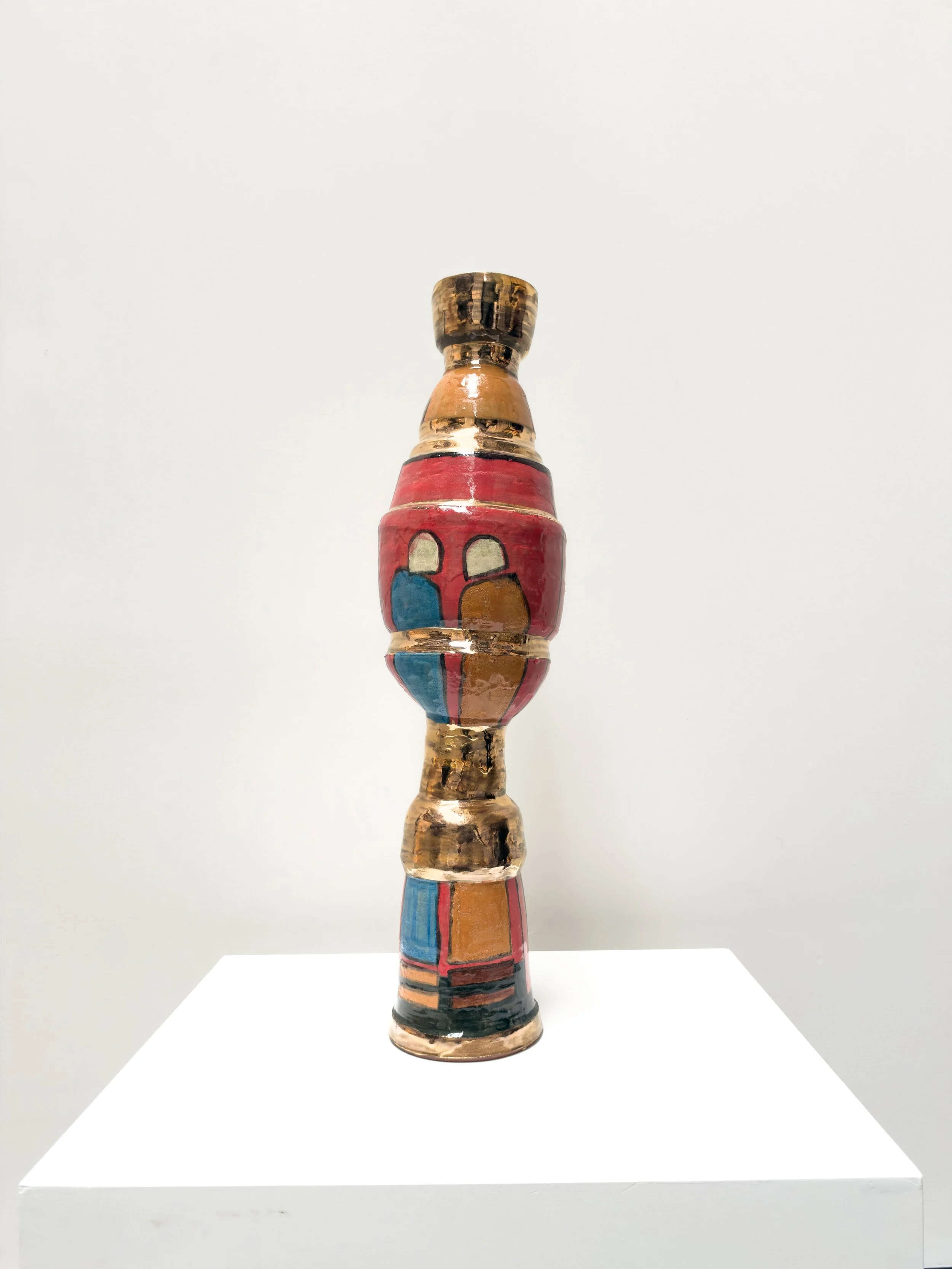
That girl is in a cage of her own making, 2026 painted ceramic 83.5 x 20.63 x 20.63 cm
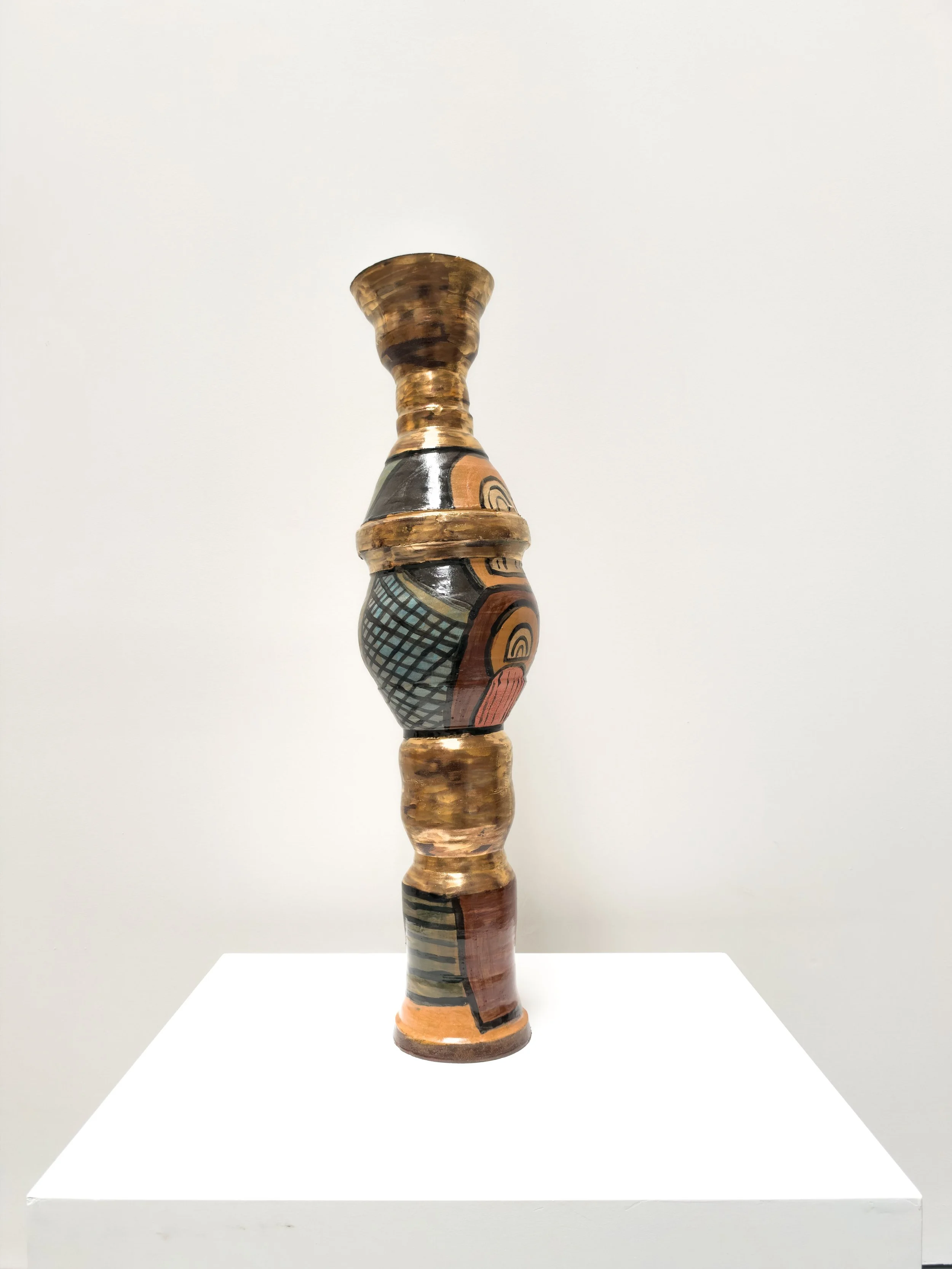
In my case, it’s different because..., 2026 painted ceramic 86 x 17.78 x 17.78 cm
You have spoken about identifying as a ‘cyborg’ and have drawn on cyborg theory in your work. What does this idea mean to you, and how has it influenced the way you explore the relationship between the body, technology, and identity?
I have always identified with cyborgs, ever since I was a child, mainly because I’m an oddball and a strange bird, and I mean that affectionately. There is freedom in choosing the identities that best suit you, or in choosing not to label yourself at all, and that is okay. Besides, I literally move through life on a machine, that is such a cyborg thing to do. Cyborg theory has influenced how I think about the body, technology, and identity. In considering how each relates to the others, I don’t allow parameters to pigeonhole my perspective. I need the freedom to question and challenge everything, including my own perception.
African American musical traditions, particularly jazz and the music of the American South, are important influences in your work. Your titles often reference musicians and musical compositions. What is it about jazz that resonates with you, and how does its rhythm, improvisation or spirit find its way into the work?
Music, especially jazz, is an important part of African American culture. Music can trigger memories and feelings, and it brings people together. Jazz is the conductor and choreographer of my work.
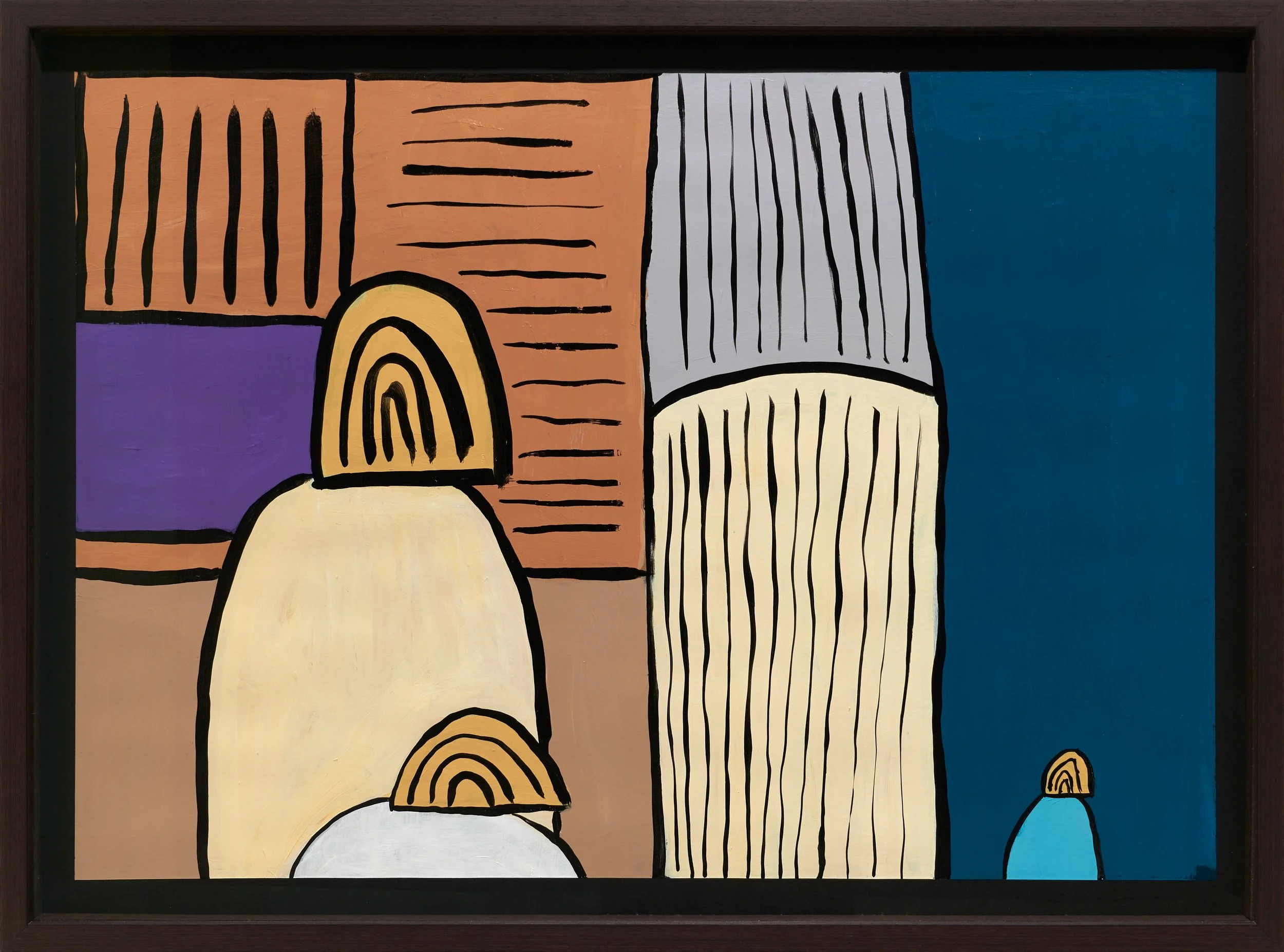
Stop that, it’s impolite to stare, 2026 acrylic on paper 55.9 x 76.2 cm
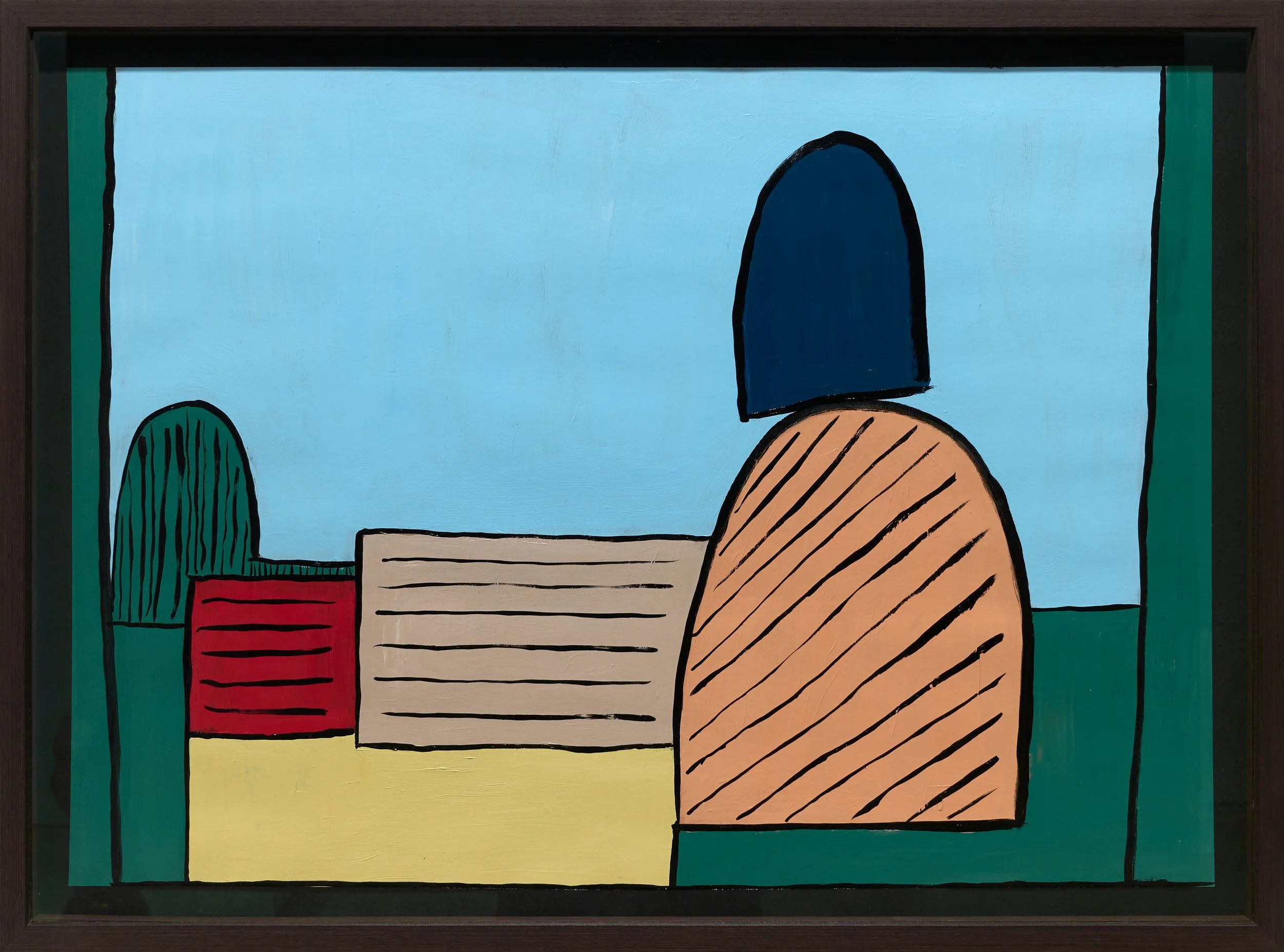
You have to make a good impression, now show me what you’ve been doing, 2026 acrylic on paper 55.9 x 76.2 cm
What artwork have you seen recently that has resonated with you?
Well, it isn’t a particular artwork but rather a particular medium: I love the transformation of fabric and textiles in contemporary art.
Is there anything new and exciting in the pipeline you would like to tell us about?
I do, but it’s too early to talk about it.