“I find the state when you are unsure if something is being built up or dismantled to be very interesting, like contradicting states existing in one body at the same time.”
Our interview with Benjamin Orlow explores a sculptural practice shaped by improvisation, memory and the physical qualities of clay. Working with bodily forms and improvised structures, Orlow creates sculptures that balance fragility and weight, construction and collapse. In this conversation, we discuss the role of touch, the emotional resonance of materials and how memories and unexpected forms emerge through the process of making.
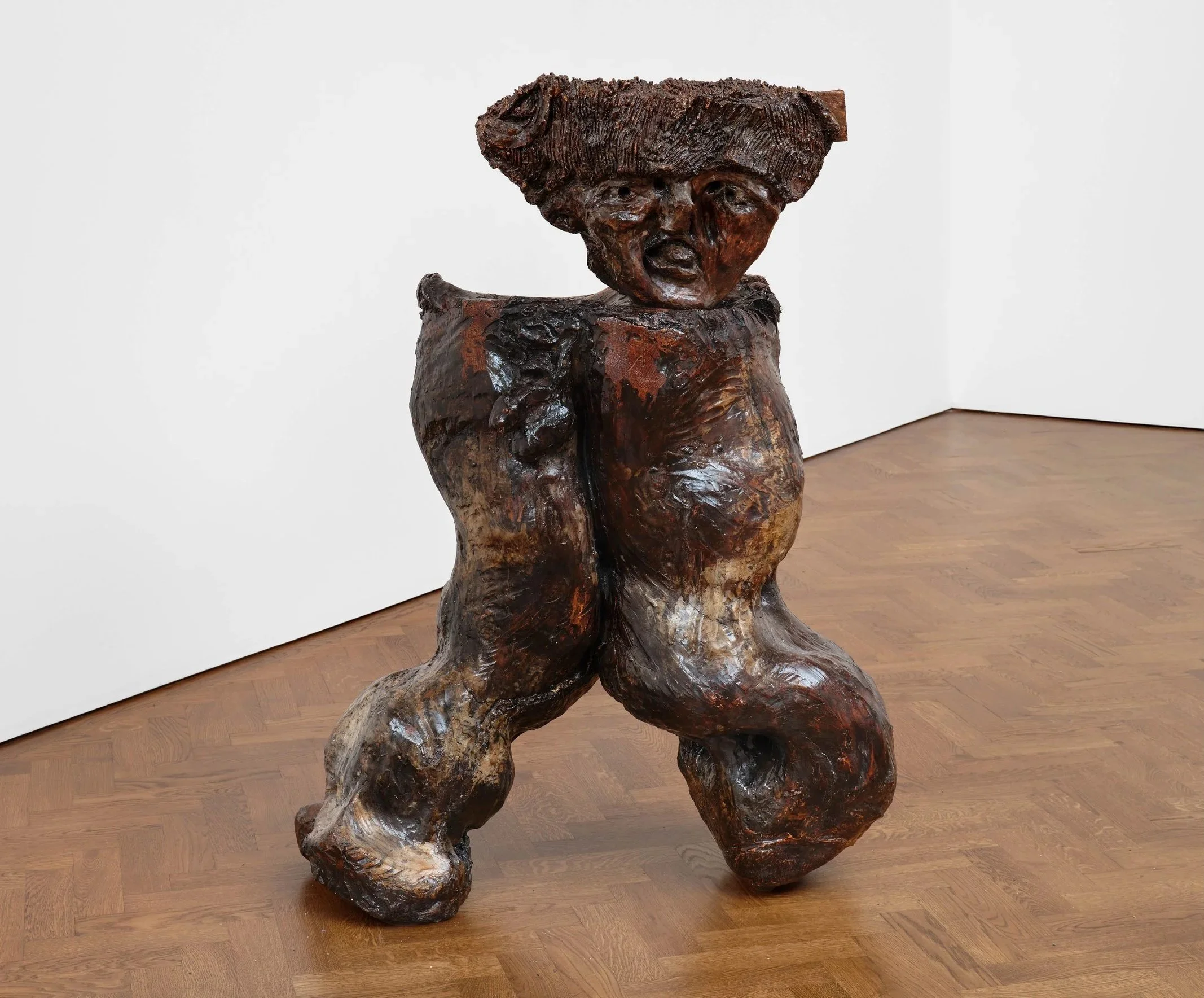
Untitled (Leg, head) 2026 Photo Eva Herzog
Could you tell us a bit about yourself and your background?
I’m based in London, in the old Ear Nose and Throat Hospital in Kings Cross. I work with sculpture and video and in my spare time I run a project space called St. Chads in the ambulance unit.
Your sculptures often feel physically heavy and emotionally quiet at the same time. How do you decide the balance between weight, scale and vulnerability when developing a new piece?
I usually start from zero, without a plan or predetermined outcome. I improvise the work, usually by coiling clay, which means going around in circles over and over, while letting the form slowly develop. The larger the form, the slower the process. At times it can feel like nothing is happening and a sense of desperation and despair can creep in. But then, suddenly something will appear. Perhaps a shape, or a fragment of a form that triggers a memory. A kneecap, a mandible. The way a chest sits on a stomach and how skin folds over a bellybutton when someone is seated. Sometimes I’ll have a strong memory of a family member or a brief moment from childhood that appears. And then I try to emphasise the thing that has emerged. To amplify it. And after a while it begins to feel like the work is directing itself and I’m just a bystander while it manifests itself.
Many of your works combine bodily forms with supports, tables, architectural spaces or temporary structures. What role does the surrounding environment play in shaping how a sculpture comes together?
Because the texture and weight of clay means that it has a certain pace inherent to the process. I’m constantly at odds with gravity and the risk of collapse. I tend to prop the forms up with whatever happens to be around, in order to be able to continue working and these improvised solutions often end up being part of the final work. I think of the work as having the interior narrative that the figure itself expresses but also the exterior narrative of the figure being made and the processes and decisions that come with it. I find the state when you are unsure if something is being built up or dismantled to be very interesting, like contradicting states existing in one body at the same time.
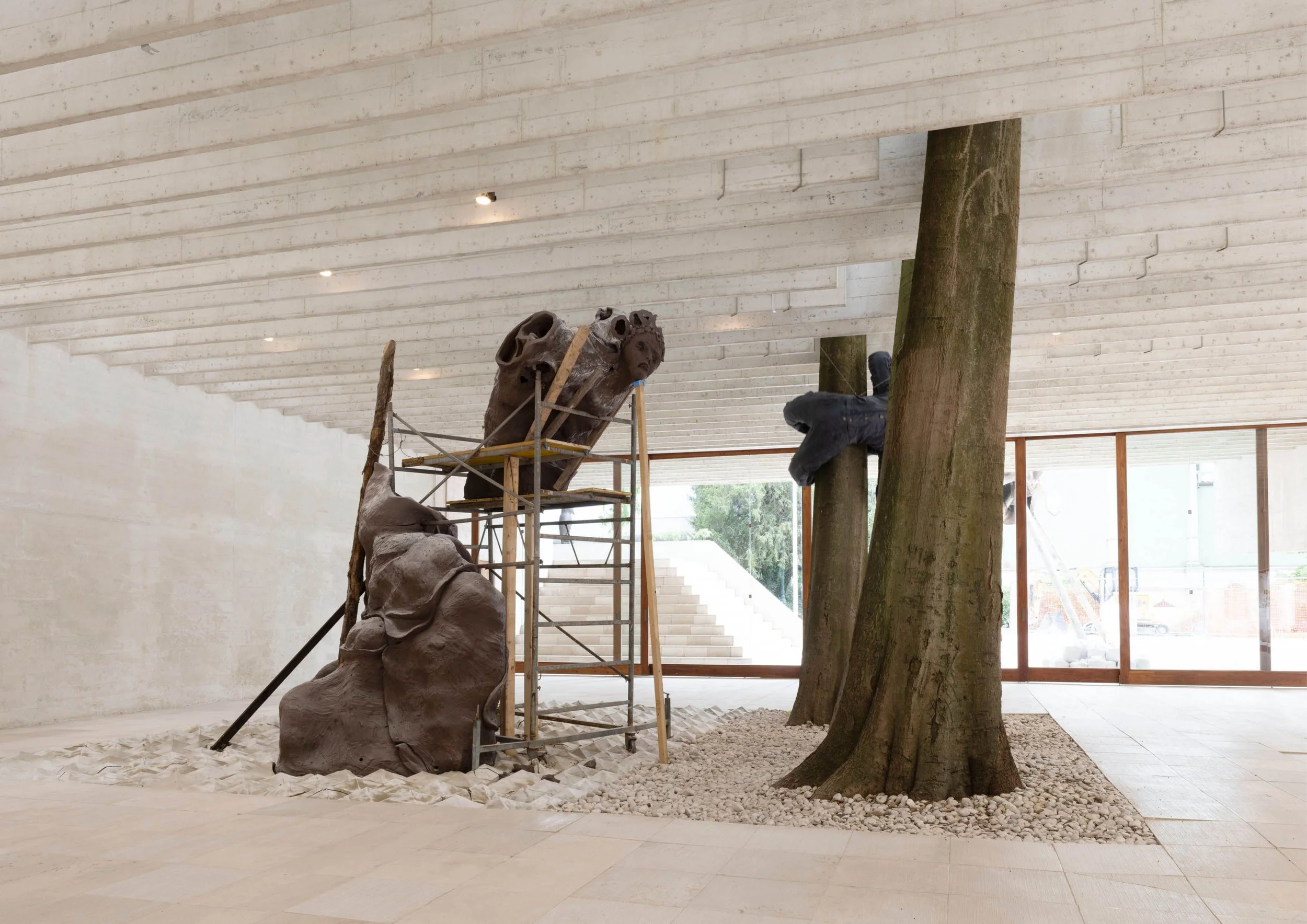
Ritual City, 2026, photographer Pirje Mykkänen
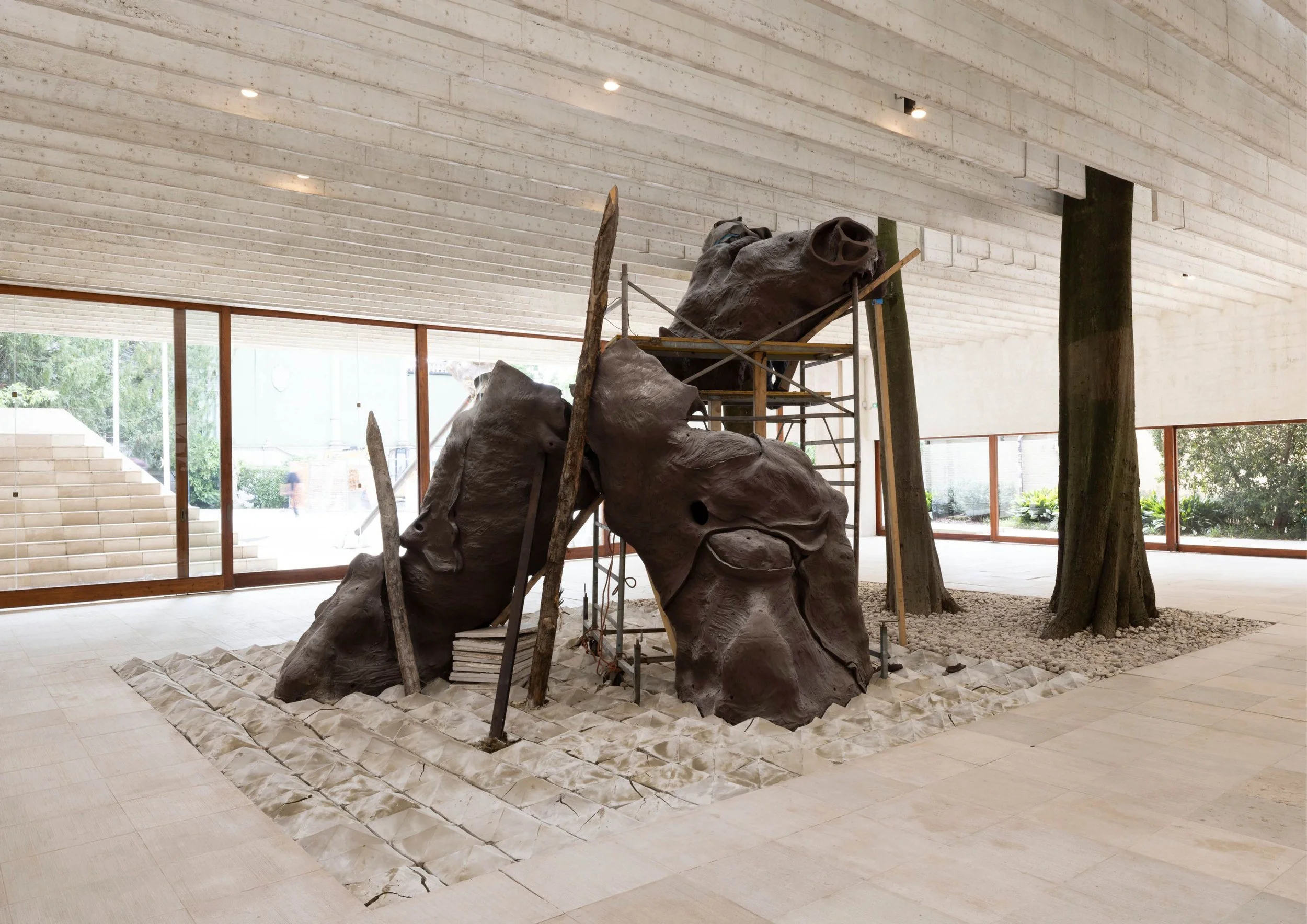
Ritual City, 2026, photographer Pirje Mykkänen
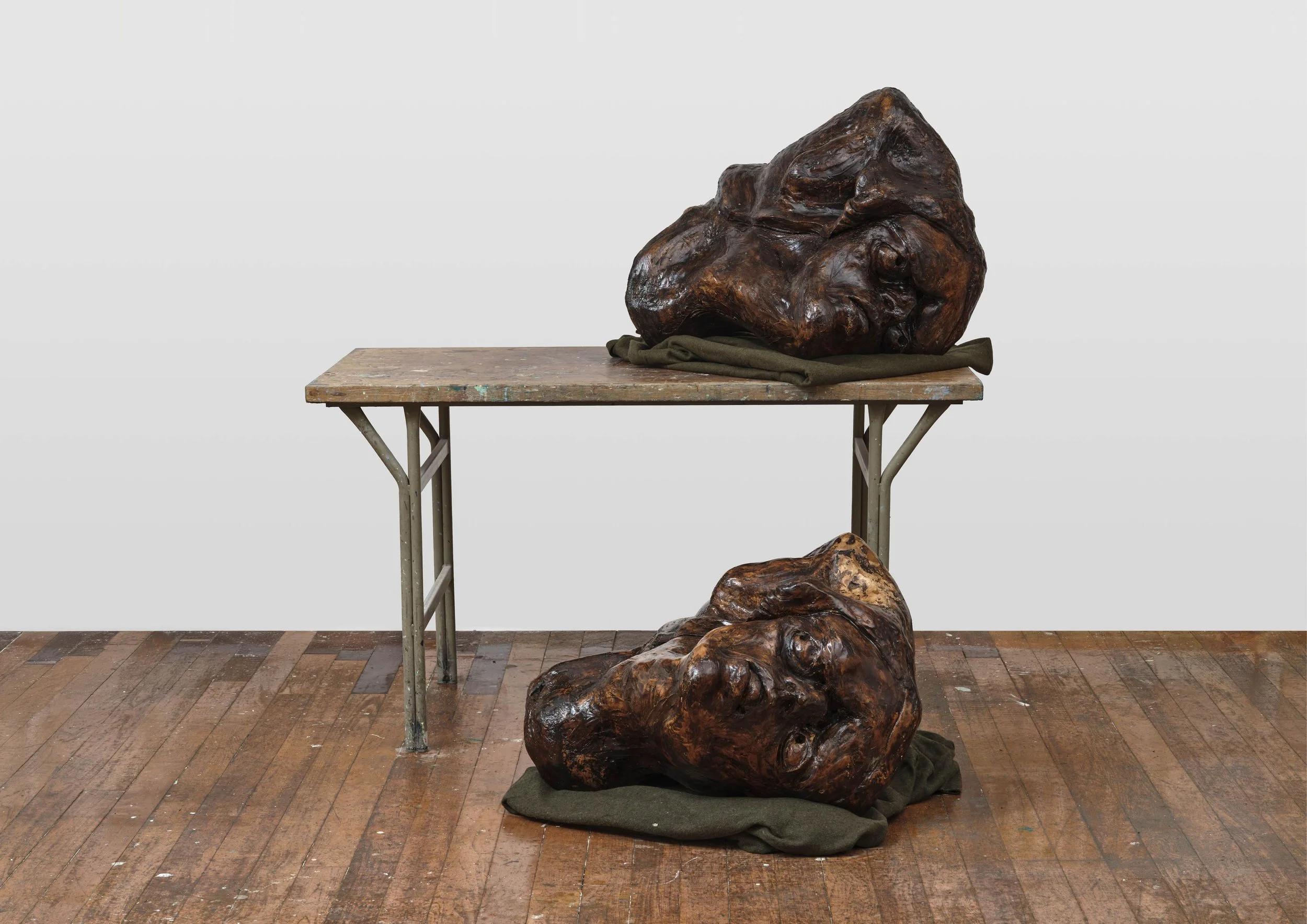
Untitled (two heads) 2026 Photo by Fine Art Documentation

Untitled (two heads) 2026 Photo by Fine Art Documentation
The surfaces of your sculptures show marks, textures and signs of change. How important is the evidence of making in your work, and what do you want viewers to sense through those material traces?
I think that clay has an exceptional ability to capture emotional resonance of touch and intent in it’s surface. It has a memory. If you take a peace of clay and rip it apart and then put it back together, the tear will remain inside of it. I’m interested in trying to give the work with a sense of time and depth and emotion that is tangible in the way where meaning shifts outside of what can be explained. I’ve recently started to experiment with mould making and combining multiple variations of the same figures to see how far I can go from the original while still retaining feeling and momentum. I also think there is a lack of touch in a lot of contemporary art at the moment. A flatness and lack of time and involvement that leave an impression of cool indifference and I think I’ve become drawn towards the opposite of that.
Tell us a bit about how you spend your day / studio routine? What is your studio like?
My studio is a former hospital ward, with a lot of space and a few enclosed cubicles where I can do really messy work. The work goes through different stages. There is a period of improvisation and making on different scales simultaneously. I feel I work better when I have to focus on several things at once and can move between different works. They usually feed into each other. One will gain momentum when the other is stuck and one will be like an escape from the other.
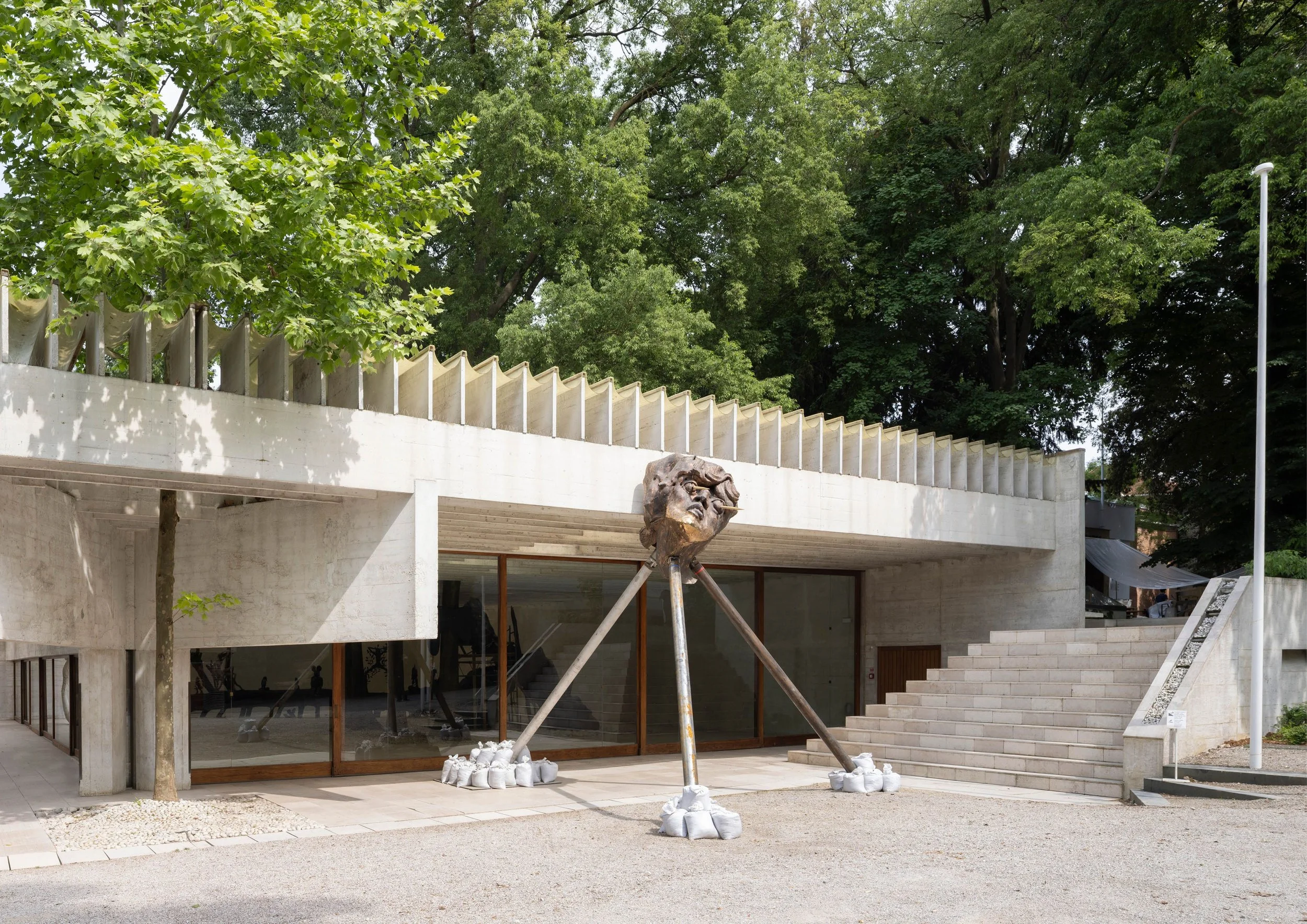
Ritual City, 2026, photographer Pirje Mykkänen
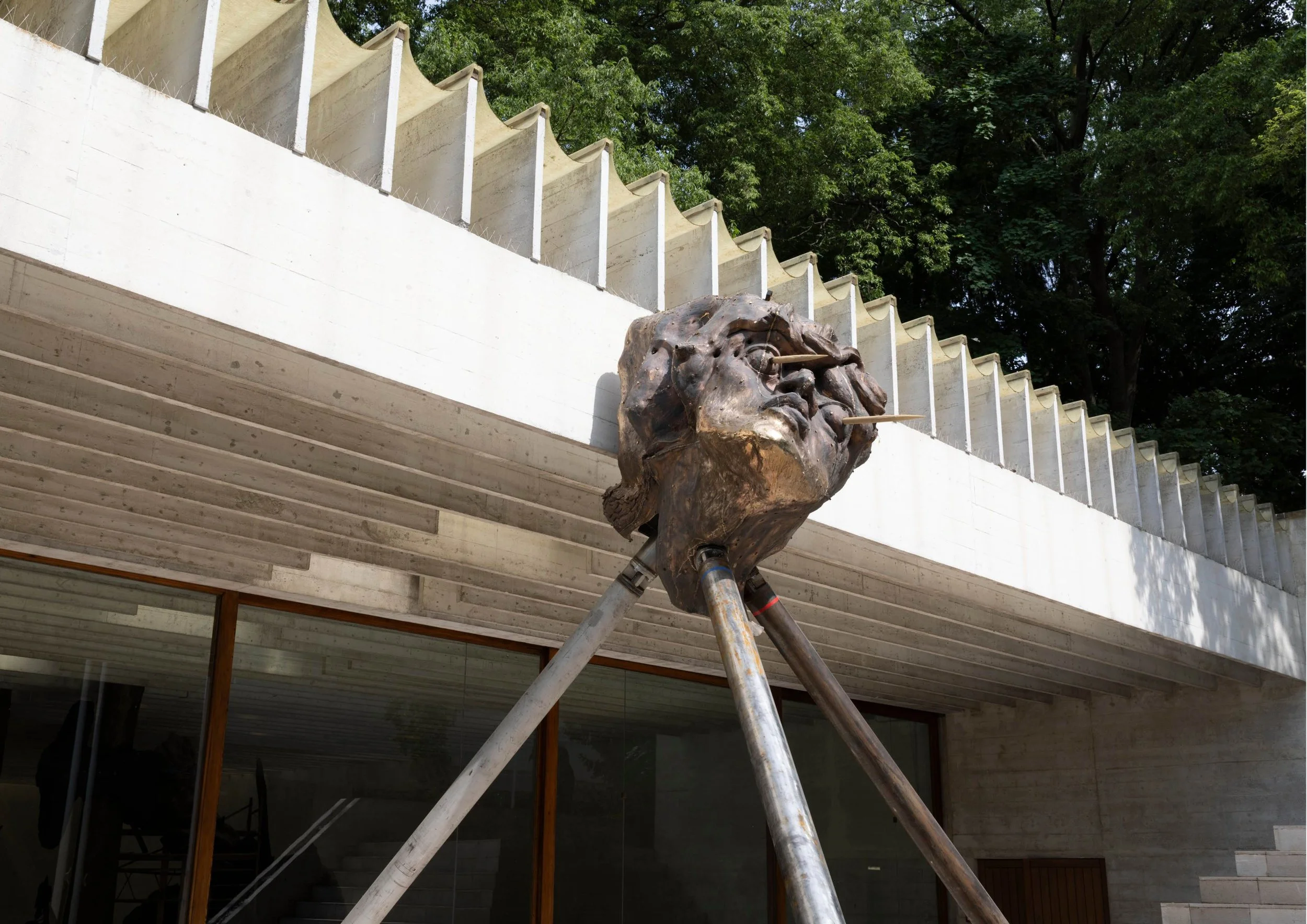
Ritual City, 2026, photographer Pirje Mykkänen
What artwork have you seen recently that has resonated with you?
Valentina Kozinets, an outsider artist from the north Russian village of Sovpolye. My friends Pavel and Sasha Rotts discovered her work by chance 10 years ago. She never exhibited in her lifetime. She made incredibly charged works by painting on boards that she took from shipping parcels and she would often destroy the works after having made them. There are only 20 works that survived. We arranged a show with them at St. Chads in London and it the work had such a force you could almost sense it even before entering the room. It was incredible.