“I try to use humour as an ‘in’ to a work before presenting the deeper meaning behind it.”
Our interview with Noel Hensey explores a multidisciplinary practice shaped by curiosity, humour and an interest in finding meaning in everyday things. Working across different materials and forms, Hensey encourages viewers to look beyond the familiar and question how they understand the world around them. In this conversation, he reflects on the role of chance, the value of slowing down and how humour can open the door to deeper ideas.
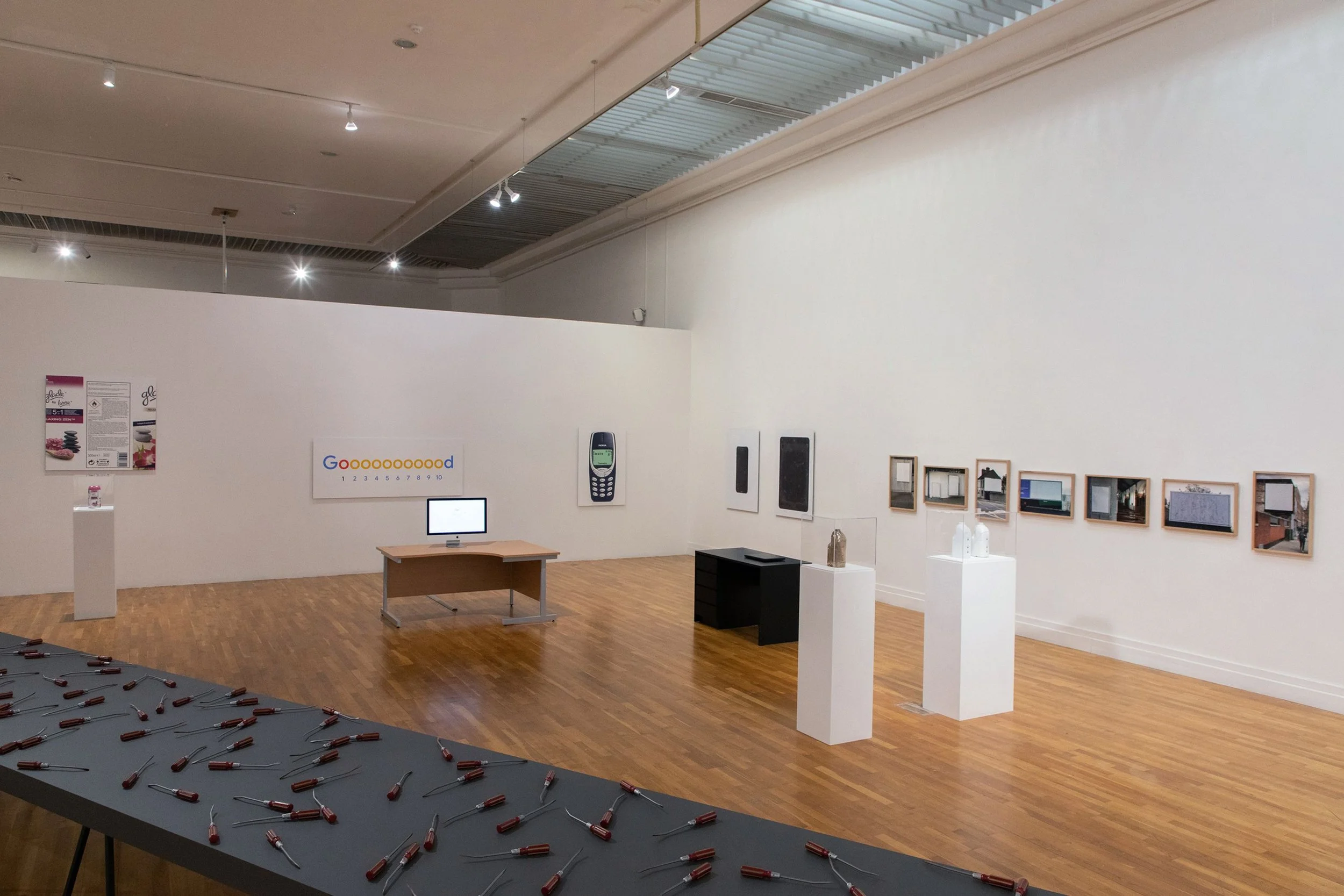
‘Key Learnings from Cross-Market Synergetic Alignment’ Exhibition Installation at the Royal Hibernian Academy (RHA), Dublin, 2026. Photo Credit: Michael Donnelly (www.michaeldonnellyphotography.com).
Could you tell us a bit about yourself and your background?
I am a multi-disciplinary conceptual artist who lives and works in Co. Kildare in the east of Ireland. I studied art at primary and secondary school level, but my parents thought a more practical third level course, one where I could earn an income after would be more suitable, so I undertook the BSc (Hon’s) Technology and Design course at the University of Ulster (U.U.), N. Ireland. The course was split between two U.U. campus’s, one of which was the Art College in Belfast, and it was here that I was exposed to a lot of contemporary art. On a gap year from the course I started making art for myself in order to process a mental health condition I had started to experience. On leaving college, I took a number of roles in the fields of technology and design that left me with enough time and money to pursue my art practice. This pattern continued for a large number of years, interspersed with progression in my exhibition activity, before I decided to undertake post-graduate Fine Art education in the U.K.. After a number of years of applying I was fortunate to be accepted on to the P.G. Dip Fine Art course at Chelsea College of the Arts, London, I went on to complete the MA Fine Art course at Chelsea and have been working full-time as a professional artist since 2010.
Your work often brings together everyday objects, images, and spaces in unexpected ways. How do you decide when something you have collected or noticed has the potential to become part of a finished piece?
I wrote a revised artist’s statement recently that read: ‘I hate nearly every artist's statement I've ever read. They are generally highly impersonal and at worst incomprehensible. It would be great if they were short and to the point. I'll go first: ‘I see things that most people don’t see and then I show them to you’’. Basically, when I’m talking about seeing I mean that I see meaning in things, that’s when they have the potential to become part of a finished piece.
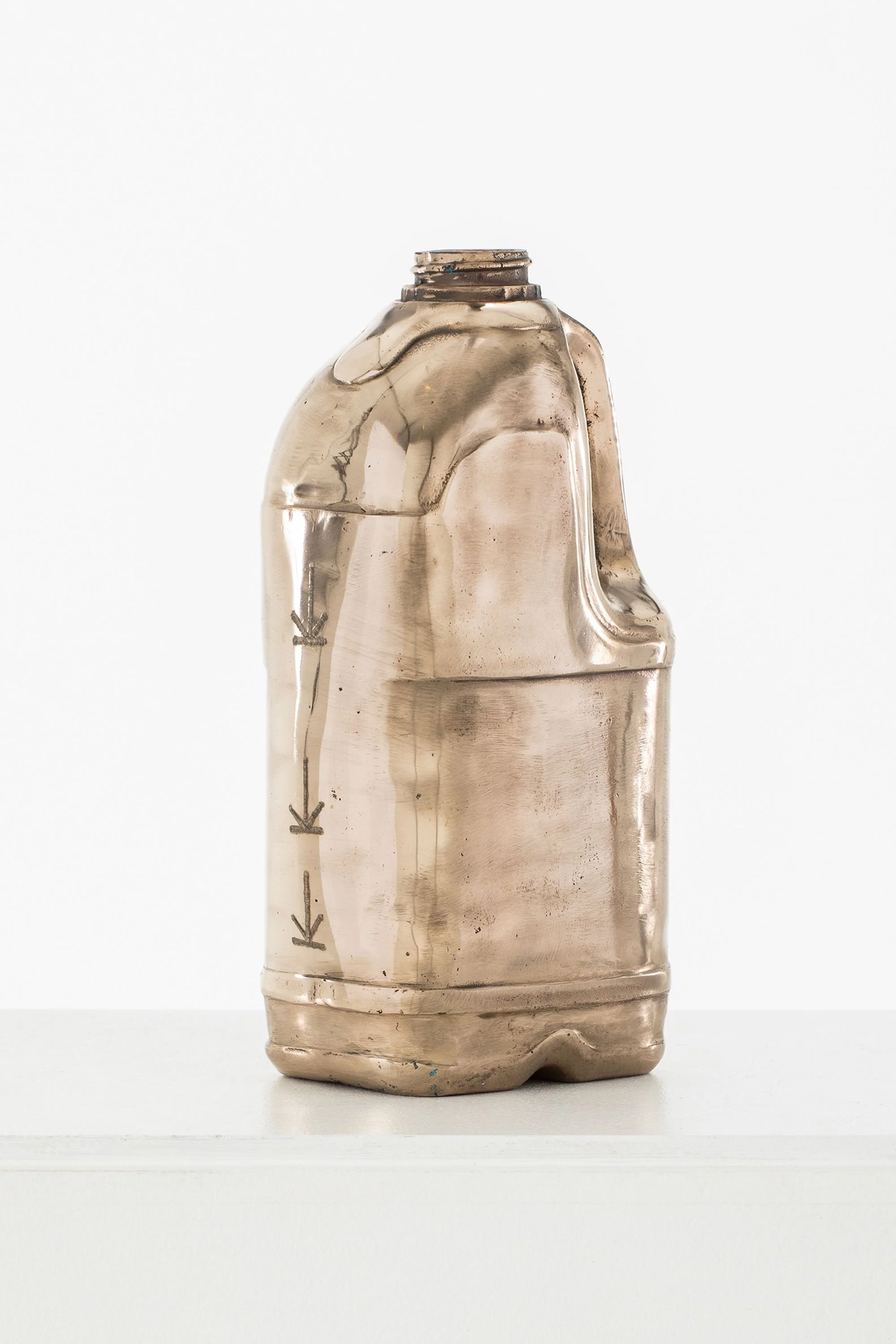
‘Spatial Definition’ No.2, 2024. Photo Credit: Michael Donnelly (www.michaeldonnellyphotography.com).
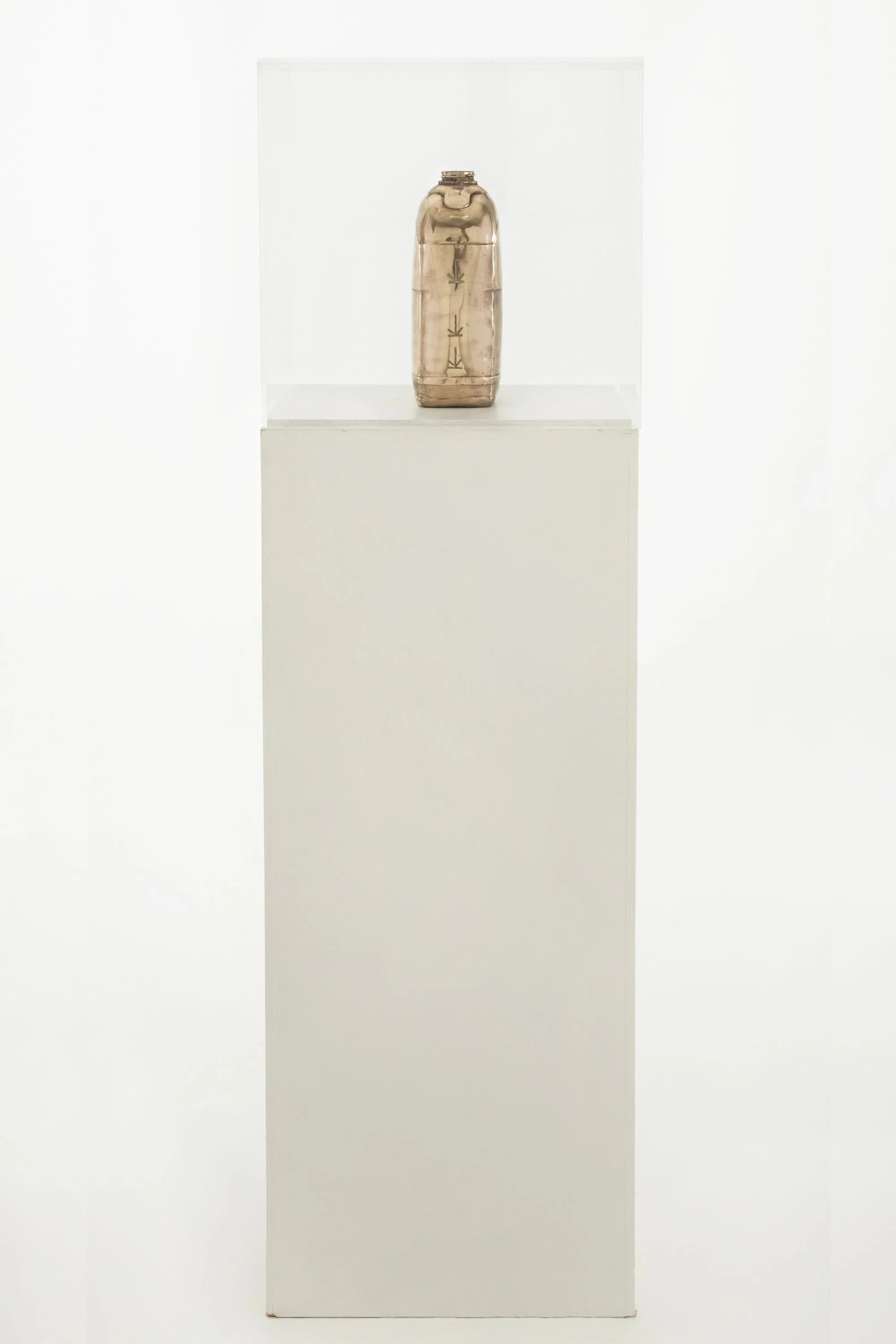
‘Spatial Definition’ No.2 (Installation), 2024. Photo Credit: Michael Donnelly (www.michaeldonnellyphotography.com).
There is a quiet humour in parts of your practice, but it often sits alongside more serious questions about belief, attention, and how we make sense of things. How do you balance those different tones while making the work?
Humour is an often misunderstood property in art, the last thing you want is to exhibit a work that’s a cheap quip or one-liner, that people laugh at before walking away from and forgetting within seconds. I try to use humour as an ‘in’ to a work before presenting the deeper meaning behind it. I had a work recently exhibiting in Dublin that the partner of an artist friend saw. The work entitled ‘Synchronicity’ No.1 is a sculpture consisting of a pair of ‘Snickers’ work trousers filled with ‘Snickers’ bars and is concerned with synchronicity, specifically how chance encounters or occurrences combined with obsessive thinking can lead to its creation. He said that when he originally saw the work he laughed out loud and then when he noticed that the work-trousers where also named ‘Snickers’ he realised that there was more to the work, so that’s the reaction I’m after. There is a quote about humour by the author John Marmysz that I return to a lot: ‘Humour can be understood as understanding reality, but refusing to be constrained by it’.
Many of your works seem to shift the viewer’s awareness of a space, whether through objects, images, sound, or installation. What do you hope happens for someone as they spend time with your work?
Through encountering my work, my main hope is to slow down or stop art viewers habitual or semantic thought processes, so that a mental space opens up for them. The main inspiration for this process is the practice of meditation. As the historian and intellectual Yuval Noah Harari said about his first instructions on meditation that "just observing reality as it is" means watching your present-moment experience without judgment, without trying to change it, and without chasing a specific goal.
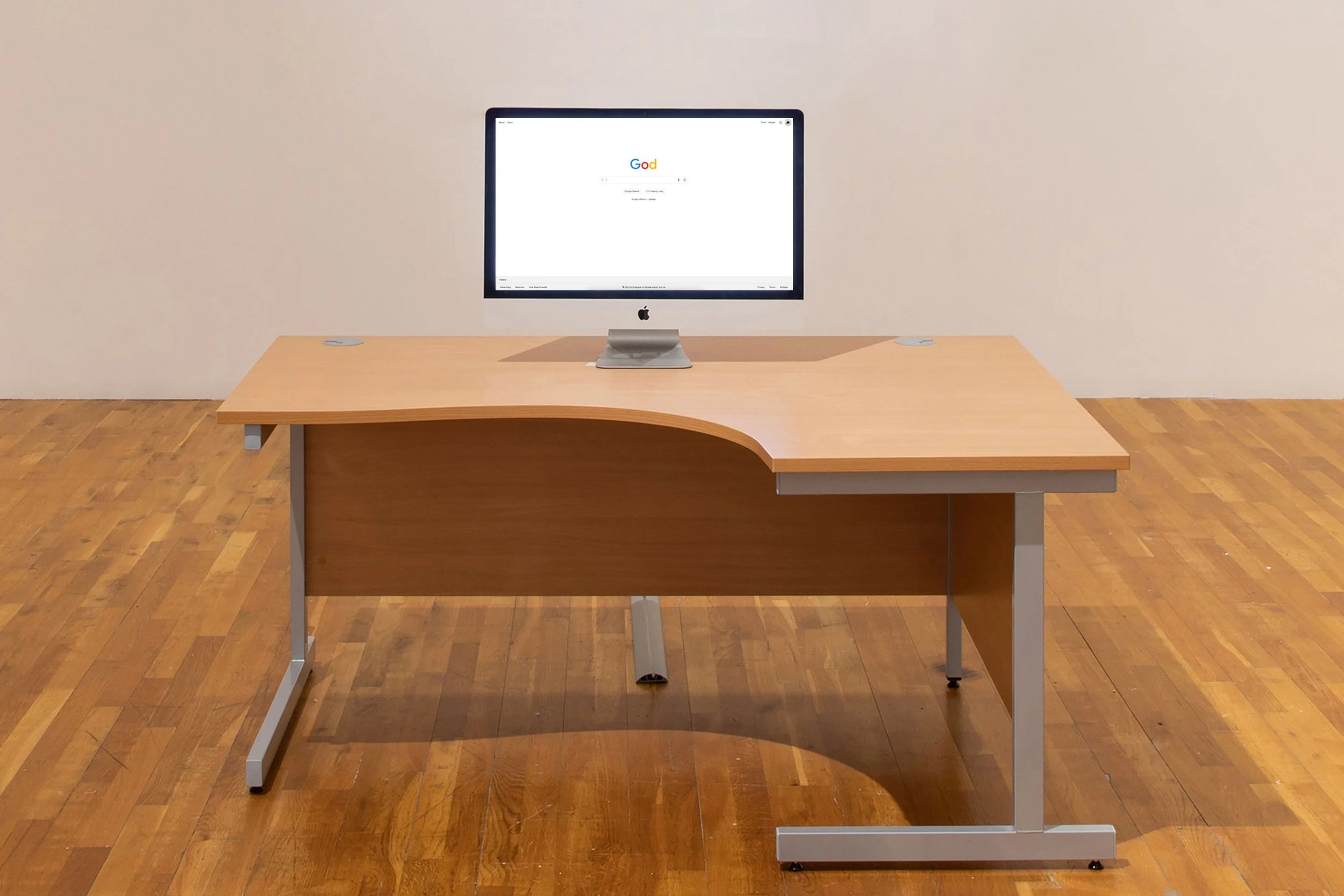
‘God’, 2026. Photo Credit: Michael Donnelly (www.michaeldonnellyphotography.com).
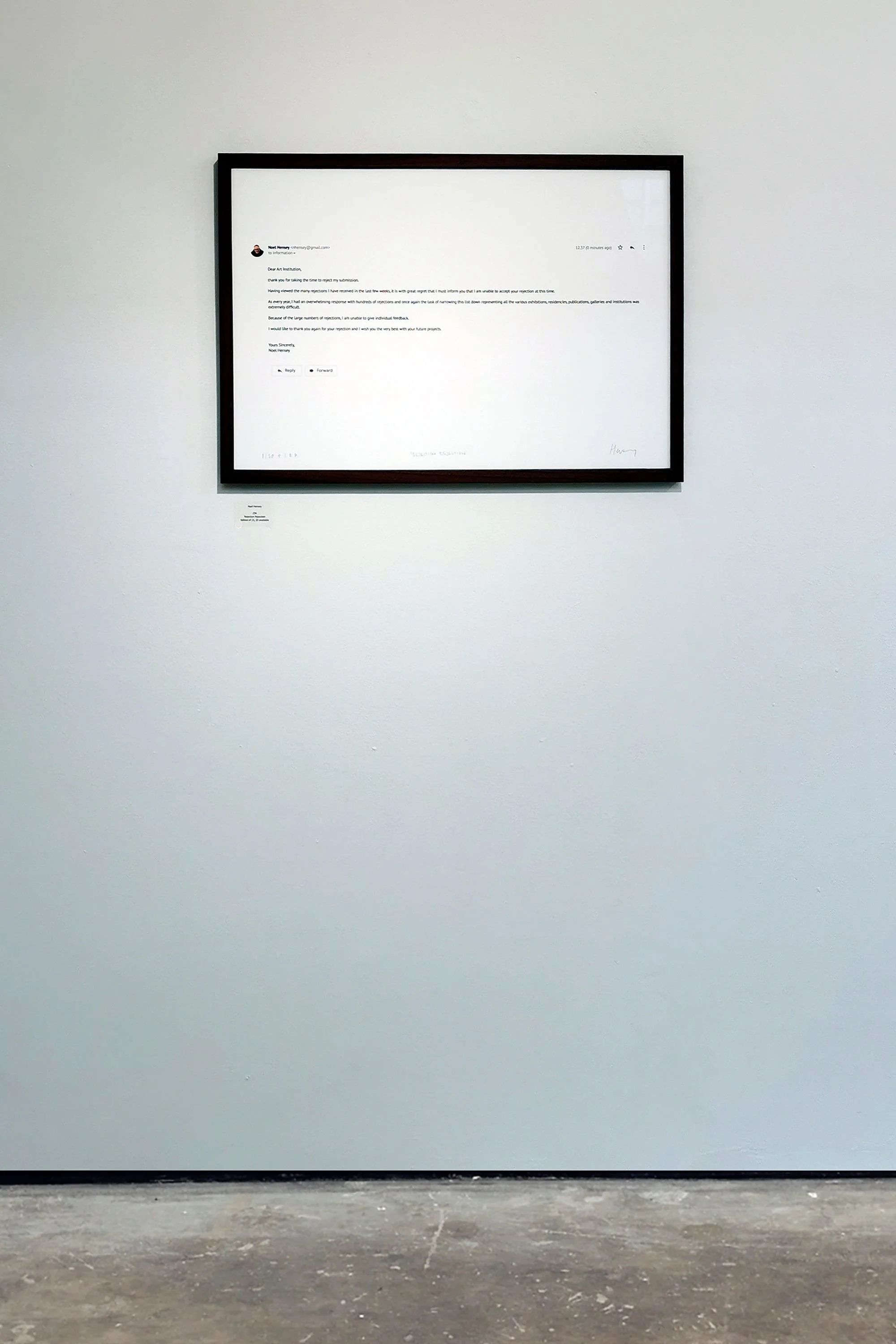
'Rejection Rejection' (Installation), 2021.
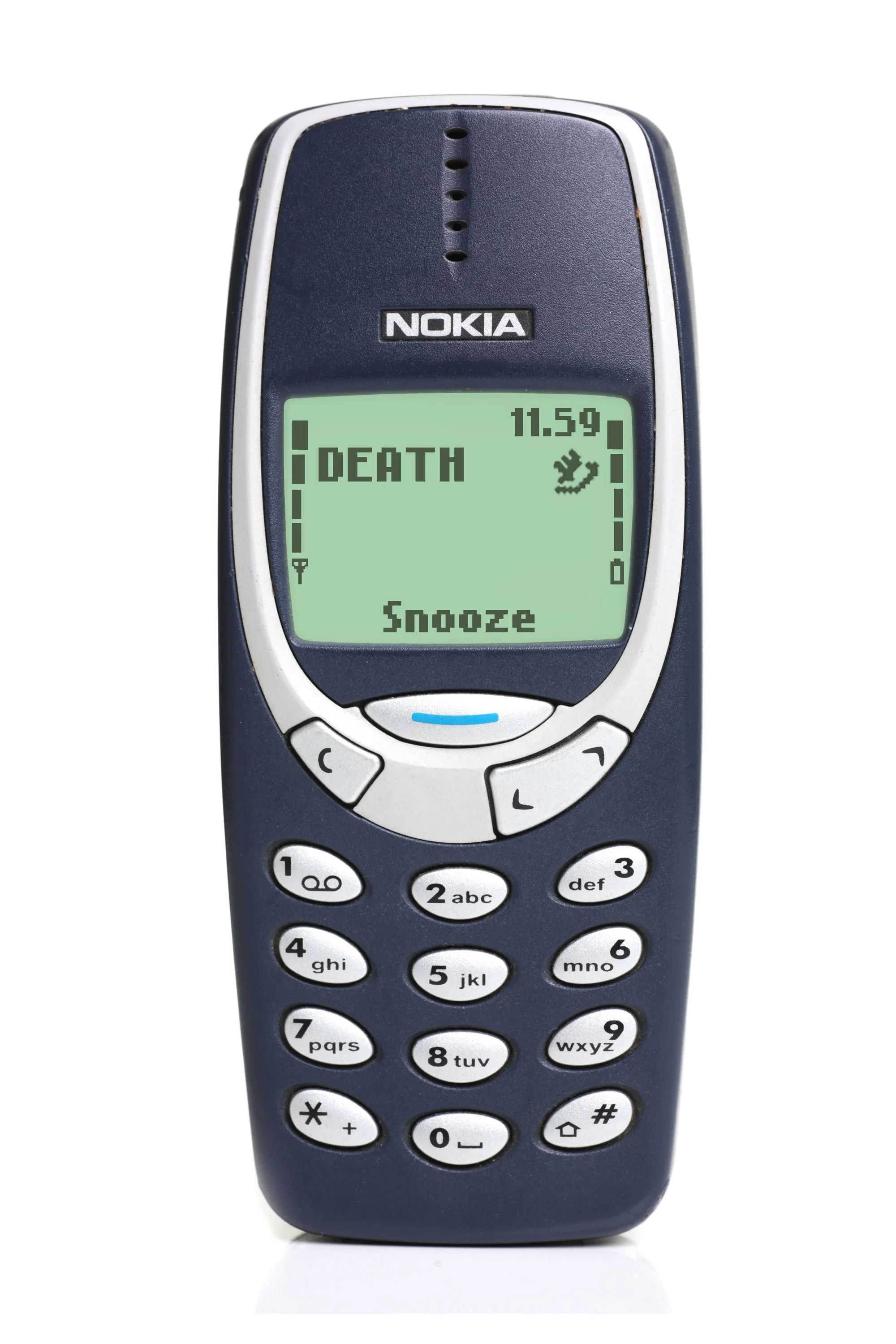
'Memento Mori' No.2 (Nokia 3310 Version), 2026.
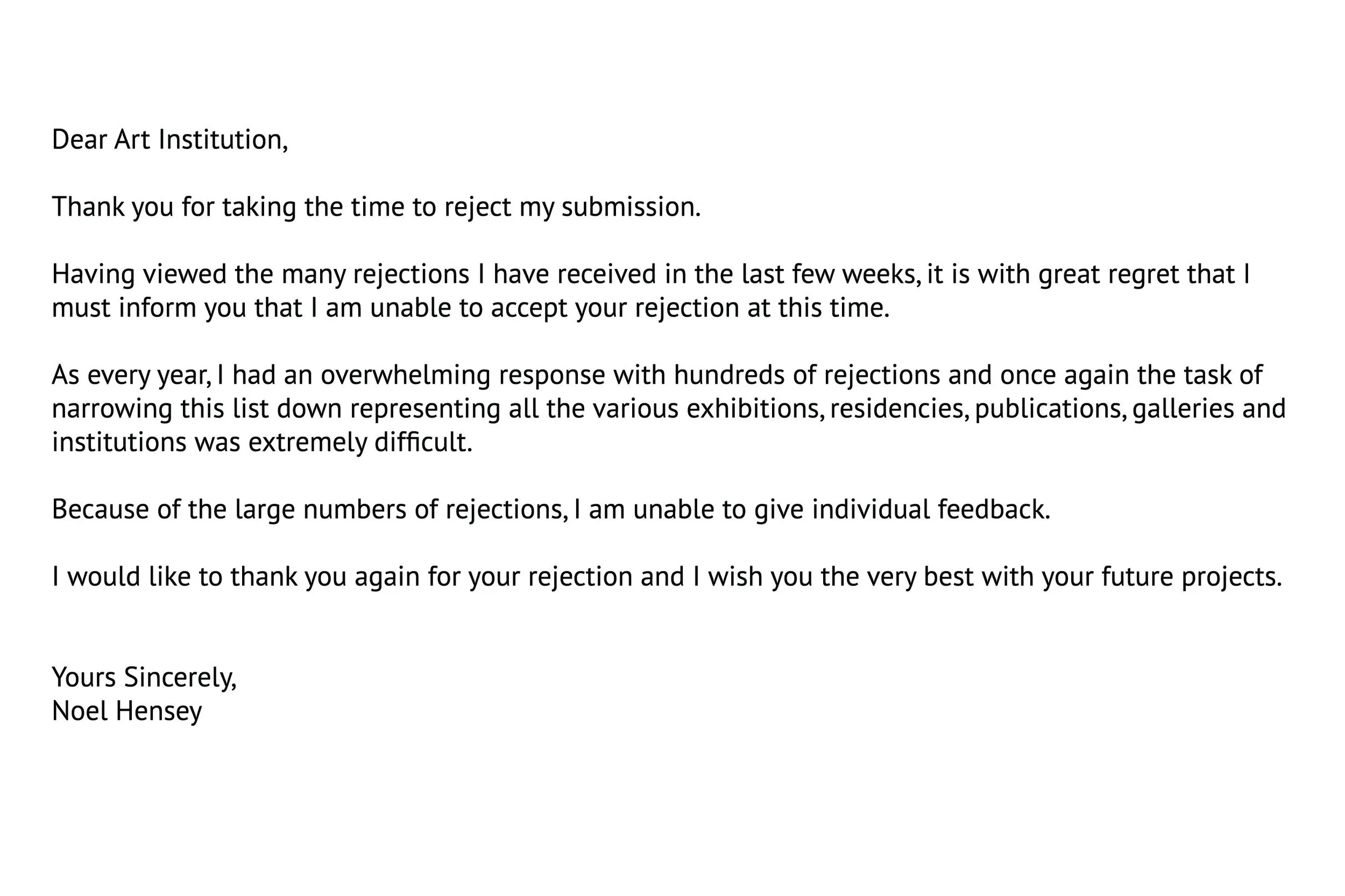
'Rejection Rejection' (Detail), 2021.
Tell us a bit about how you spend your day / studio routine? What is your studio like?
No two days are the same for me. When I have a large project, like a solo-show I try to have a more disciplined routine. This usually involves waking up stressed, drinking a lot of coffee before going for a walk around two parks, in the area, to alleviate the stress! I return home and start in on a ‘To Do list’ I have complied from the night before, this usually involves communicating/meeting with various fabricators, technicians etc. I have out-sourced the production of the work to, answering and writing emails, promoting my work on Social Media etc. The bigger projects are more an exercise in project management than anything creative. In the evening, I listen to music and usually go for another walk to wind down from the day. I live in a small two bedroomed apartment and have converted one of the rooms into a studio. I’m not a classical studio artist, in that, I out-source a lot of the production of my work. What the studio is good for though is a designated space to think. I hang working drawings I’ve made and relevant imagery to the projects I’m working on on the walls and sit and think through them there.
What artwork have you seen recently that has resonated with you?
As someone that has suffered with fatigue/burnout since starting work as a professional artist, a work I have been thinking a lot about recently is Maurizio Cattelan and curator Jens Hoffmann’s ‘Sixth International Caribbean Biennial’. The ‘Sixth International Caribbean Biennial’ was a fake art Biennial that featured no artwork and instead sent artists on a tropical holiday in St. Kitts in the Caribbean. Cattelan and Hoffmann announced the biennial, complete with the familiar machinery of a major art-world event: promotional material, press releases, sponsors, a prestigious international artist list and coverage in the art press. They invited around ten prominent artists, artists who were highly visible on the international biennial circuit at the time. The invited artists spent a week swimming, dining, and relaxing instead of working. If I had the means, I would like to host my own version of the Biennial, where I would have an open submission call out for the most stressed and burnt out of my artist peers.
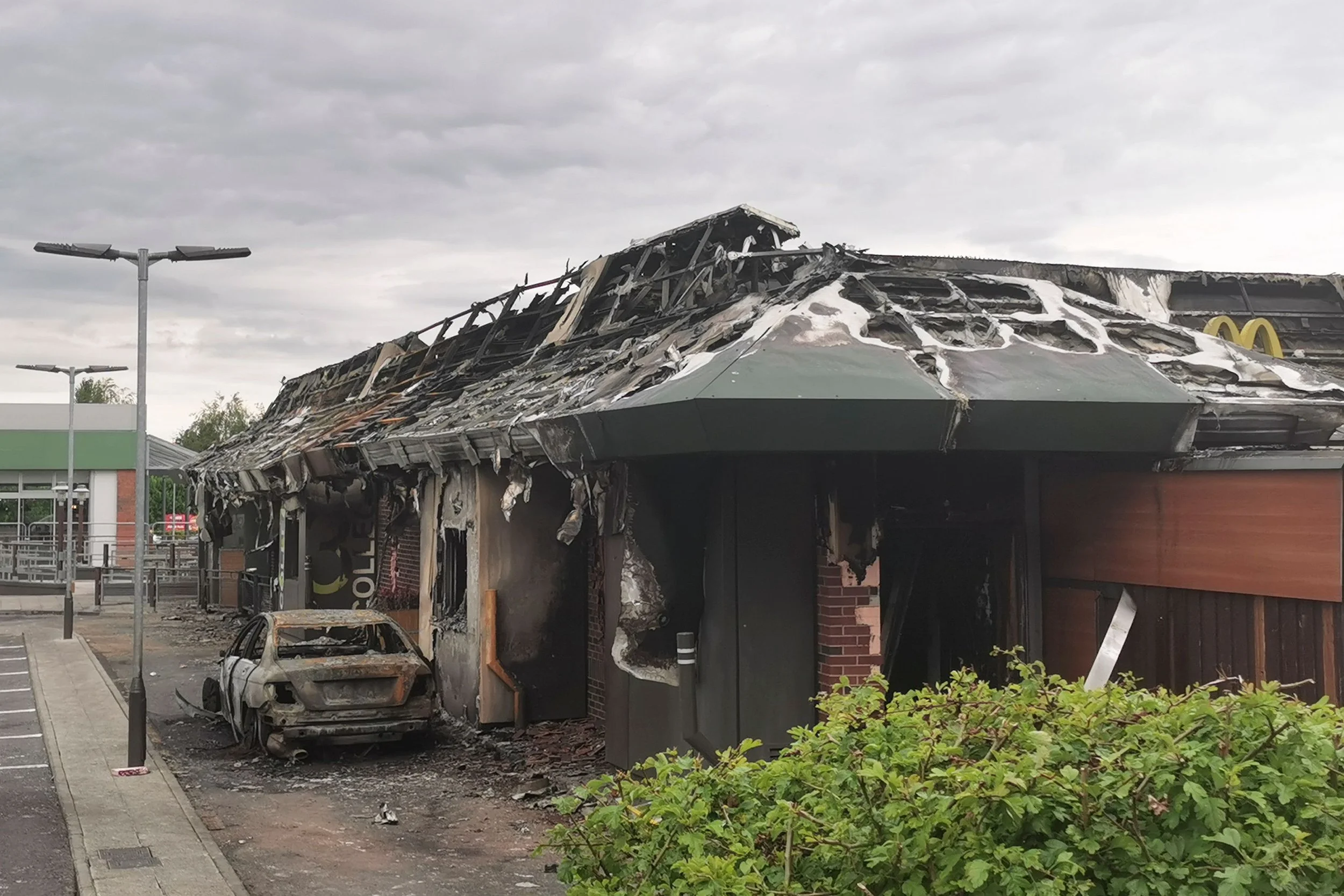
'Identity' Series (McDonalds Drive-Thru Fire Edition), 2023.
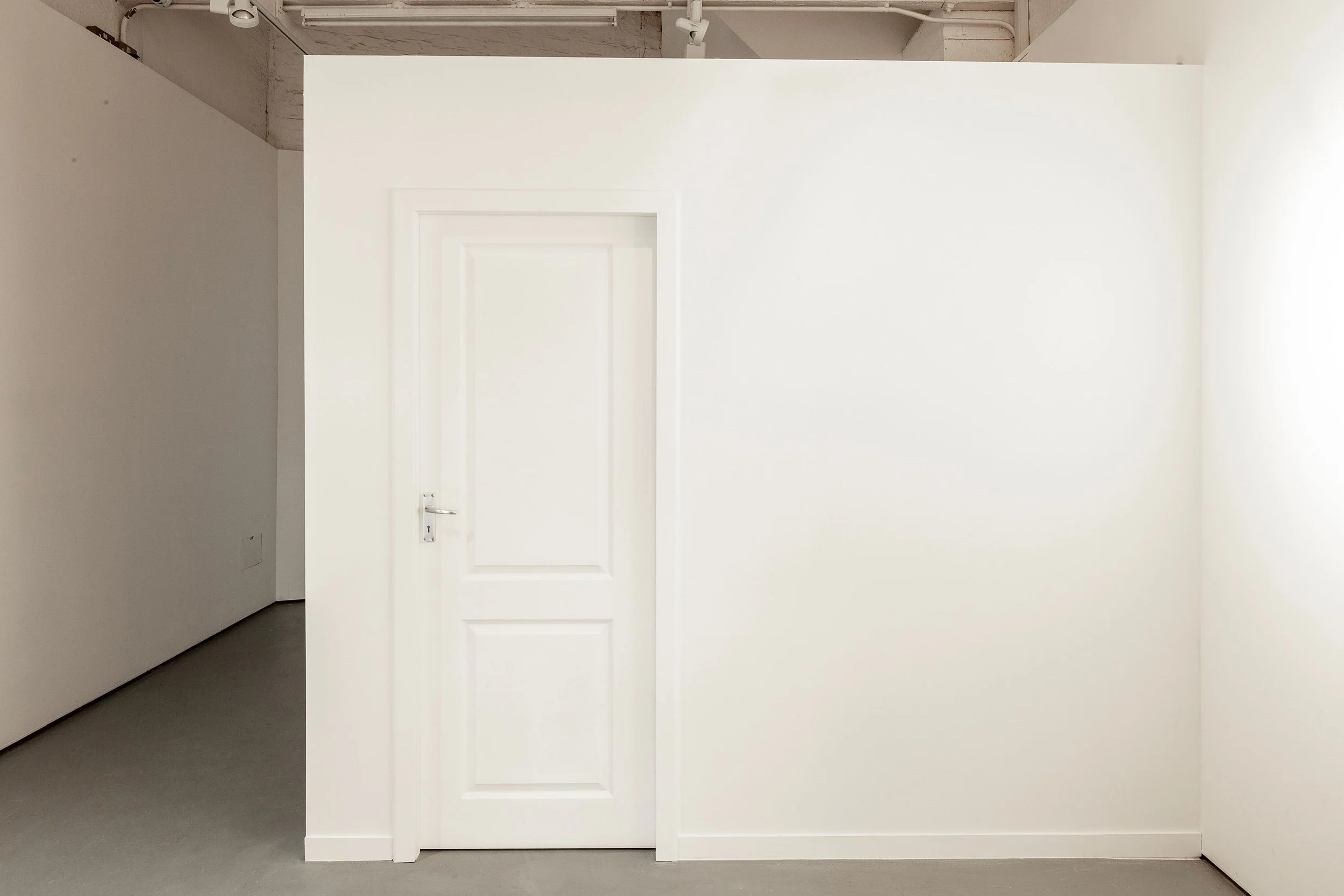
'Police Squad!' or 'Openness' Sculpture, 2023. Photo Credit: Sally Ann Norman (www.sallyannnorman.com)
Is there anything new and exciting in the pipeline you would like to tell us about?
Later this month, I am partaking in ‘The Good Neighbour’ exhibition at Esker Arts Centre, Co. Offaly, Ireland, I also have a work in the ‘Outhouse Art Auction’, Outhouse is a prominent community and resource centre for the LGBTQ+ community located in central Dublin. The work I’m showing for ‘The Good Neighbour’, is entitled ‘Spatial Definition’ No.2 that is a cast bronze sculpture of a 2ltr carton of milk. The work is concerned with the absurdity of trying to define space. The work also references the practice of borrowing basic food items, like milk from a neighbour. In 2028 I will have my first major institutional solo-exhibition at Highlanes Gallery, Co. Louth, Ireland. Highlanes Gallery is housed inside a restored, early 19th-century former Franciscan Church. I plan to show a development of a work entitled ‘Sound Garden’. The work is a site-specific installation concerned with the creation of mental space, specifically the role of our senses in this process. It is inspired by traditional Japanese rock gardens (Karesansui). The rocks in this case are represented by speakers, the sounds of the speakers in turn represent tradition elements found in gardens, that is: fountains, bridges etc. Details of the work can be seen in my 2016 Floorr Magazine, Issue No.2 interview.