“When I create a photograph, I am trying to find a visual equivalent for an experience that might be difficult to capture, to create something that allows the feeling that I am interested in to have a material presence.”
Our interview with Yoanna Walden explores a photographic practice shaped by personal experience, historical research and the staging of images. Using found objects, handmade props and her own body, Walden creates carefully constructed photographs that examine systems of control, psychiatric institutionalisation and the social construction of madness. In this conversation, she reflects on the relationship between personal history and image-making, the stories held within everyday objects and the power of photography to communicate difficult experiences.
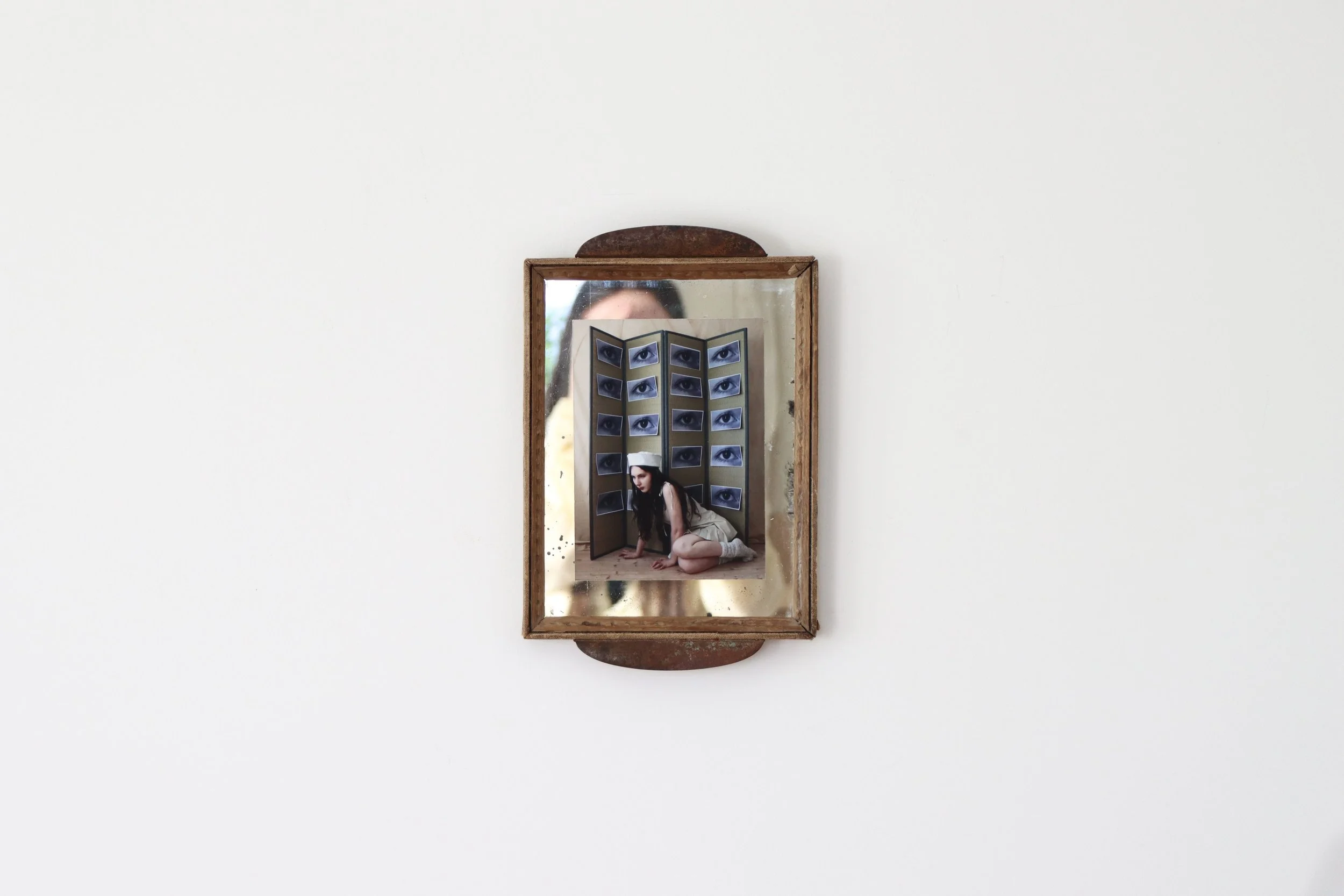
Observations, 2026
Could you tell us a bit about yourself and your background?
I am a photographer, born in 2003 in Aberdeen and currently based in London, who stages images using found objects, diy props, and my own body. My practice, rooted in both personal experience and research, interrogates systems of control and the social construction of madness. For my most recent body of work, The Lunatics’ Common Room, alongside drawing on personal and familial narratives, I engaged with historical texts concerned with psychiatric institutionalization, finding words and passages that resonated and inspired me, sparking visual impulses that I then turned into photographs. I presented 18 images from this series in a solo exhibition in September (2026) at Four Corners Gallery, London. I left school at 15 and have no secondary qualifications or undergraduate degree. I returned to formal education only last year when I was accepted onto an online MA in Creative Practice through Make Happen Institute, which I have now completed. I am now doing my second MA, in photography at The Royal College of Art. My unusual educational trajectory is something that I view in a very positive light, as it has encouraged me to think and function outside the box and given me the opportunity to intensely pursue my own path and interests.
Your photographs often feel carefully staged, with the body, objects, and rooms working together to create a sense of pressure or restriction. How do you decide what needs to be physically built or performed in front of the camera, rather than suggested more indirectly?
When I create a photograph, I am trying to find a visual equivalent for an experience that might be difficult to capture, to create something that allows the feeling that I am interested in to have a material presence. I try to physically find, make, modify or perform what the impulse needs, using objects and staging to make an experience felt rather than explained or depicted. I do want to evoke certain feelings in the viewer, as I have things that I really want to communicate, so I do try and direct the range of possible interpretation through the use of techniques that enhance that feeling of constraint or pressure.
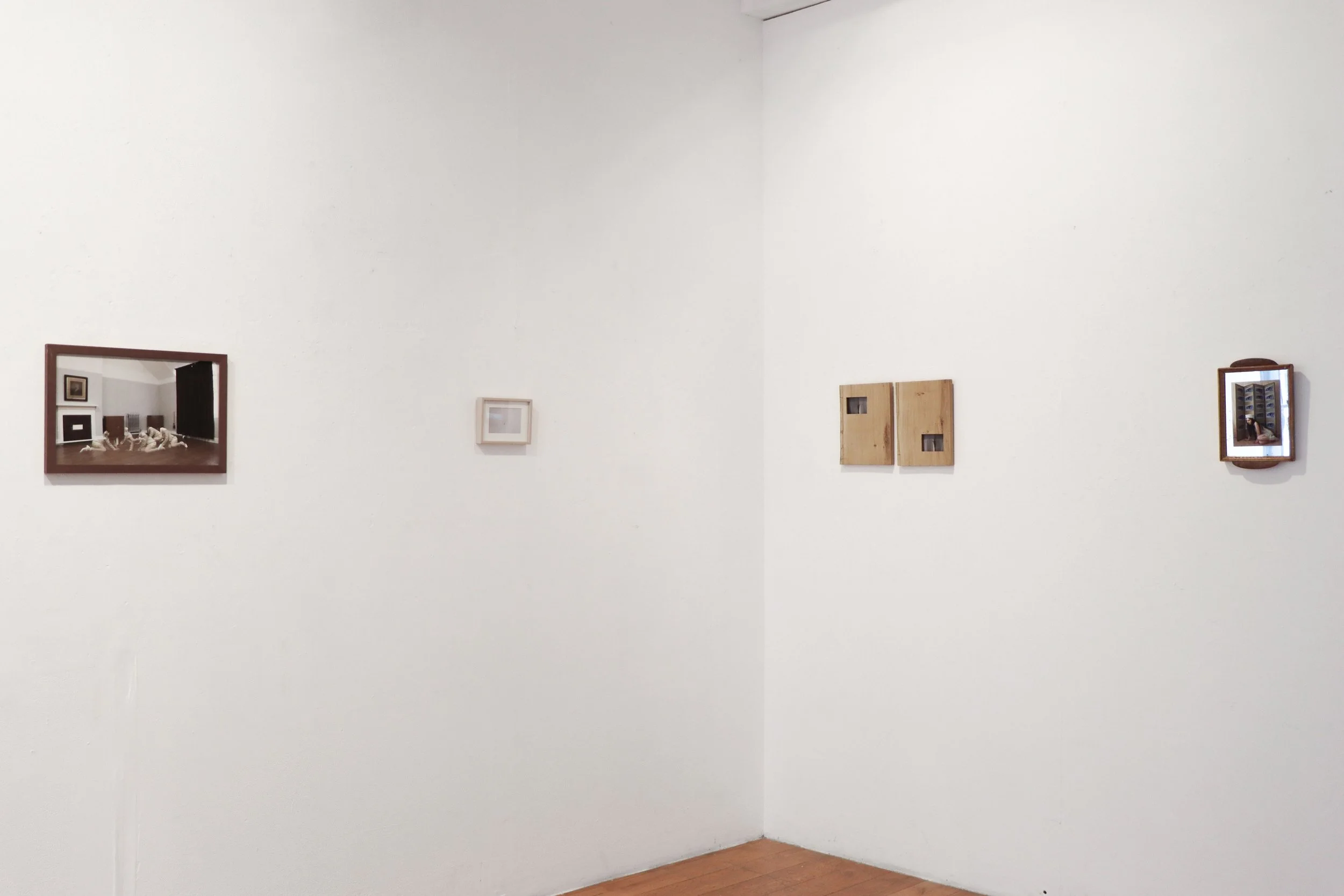
The Lunatics' Common Room, Four Corners Gallery, 2026
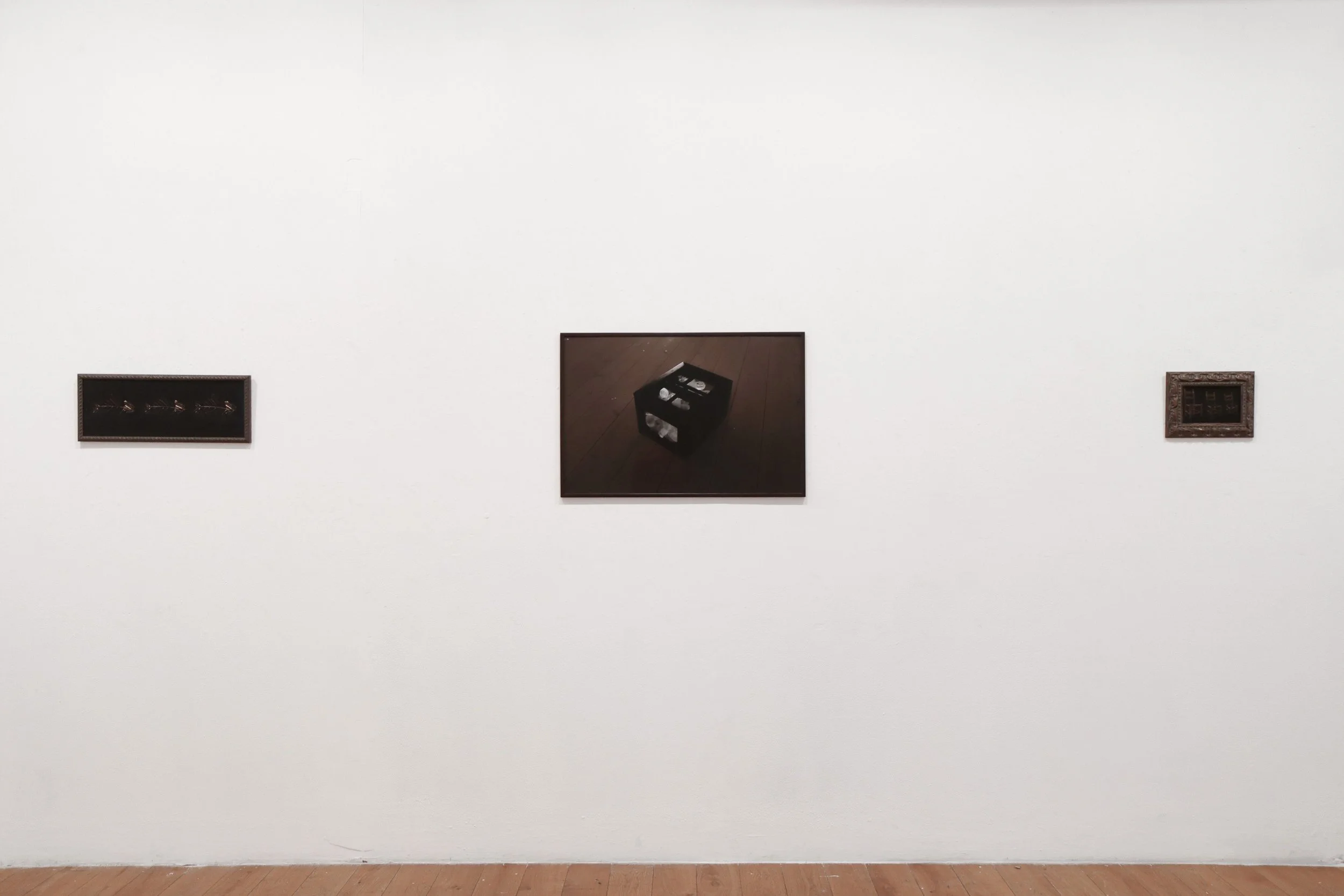
The Lunatics' Common Room, Four Corners Gallery, 2026
Found frames, worn surfaces, and handmade props seem to play an important role in how the images are encountered. What draws you to these kinds of materials, and how do they shape the mood or meaning of the work?
The wear on an object is a trace of the history that lives within it. I do not conceal the imperfections of the found frames I use; I welcome them as evidence of the stories of the frames themselves and of the people on whose walls the frames previously hung. Some of the props I use are truly ‘worn’, whilst with others I have added signs of wear (scratches, gouges etc.) myself, to convey the story that I am trying to present. Handmade props arise in the first instance out of necessity; you can’t always find what you want, so you have to make it yourself. I’m happy if things end up looking a bit diy, as it’s evidence of life, that there is a person behind it.
Tell us a bit about how you spend your day / studio routine? What is your studio like?
I am very much at a transitional stage at present regarding my workspace and my routine, as I have just started the MA Photography course at the Royal College of Art, where I currently have a spot in a shared studio. Most of my work previously has been done in my studio at home in Sheffield, formerly my bedroom (I slept in the living room). It is full of props, framed and unframed prints, backdrops and other paraphernalia. In terms of my current routine, I can’t say that I have properly settled into one yet. It is a new experience to have a good chunk of my time dictated by an in-person academic schedule, so the challenge will be to establish a working rhythm that incorporates this. London is an exciting place to be as an artist, and I hope to take advantage of the opportunities that it offers.
Your work brings together personal experience, family history, and wider histories of control and care. How do you approach making images from sensitive material while still leaving space for viewers to bring their own associations to it?
In my work I draw on many experiences of “madness” and psychiatric detention from the 1800’s to the present day and my sources range from historical texts to my own experience of hospitalisation 10 years ago. Drawing on my personal mental hospital experience brings a strong emotional charge to my research and creation process that allows me to approach the subject matter from a place of solidarity. Although my work is based in specific experiences, and I always make sure that accompanying information is available, I don’t want to simply throw that information at the viewer. Art can be at its most powerful when the experience of viewing the work is not overly mediated by ancillary contextual information. I know what an image means to me, and I know the histories behind it, but I don't want that knowledge to become a set of instructions for the audience. I'd rather create an image that creates intrigue and fosters curiosity, allowing space for the work and viewer to meet one another as though it’s a person-to-person interaction. Everyone brings their own experience and knowledge to this encounter, and I have been very interested to see which images resonate and how with different viewers. I have been particularly touched by the reactions of other people who have experienced psychiatric detention who shared with me their feelings of recognition and validation upon viewing the work.
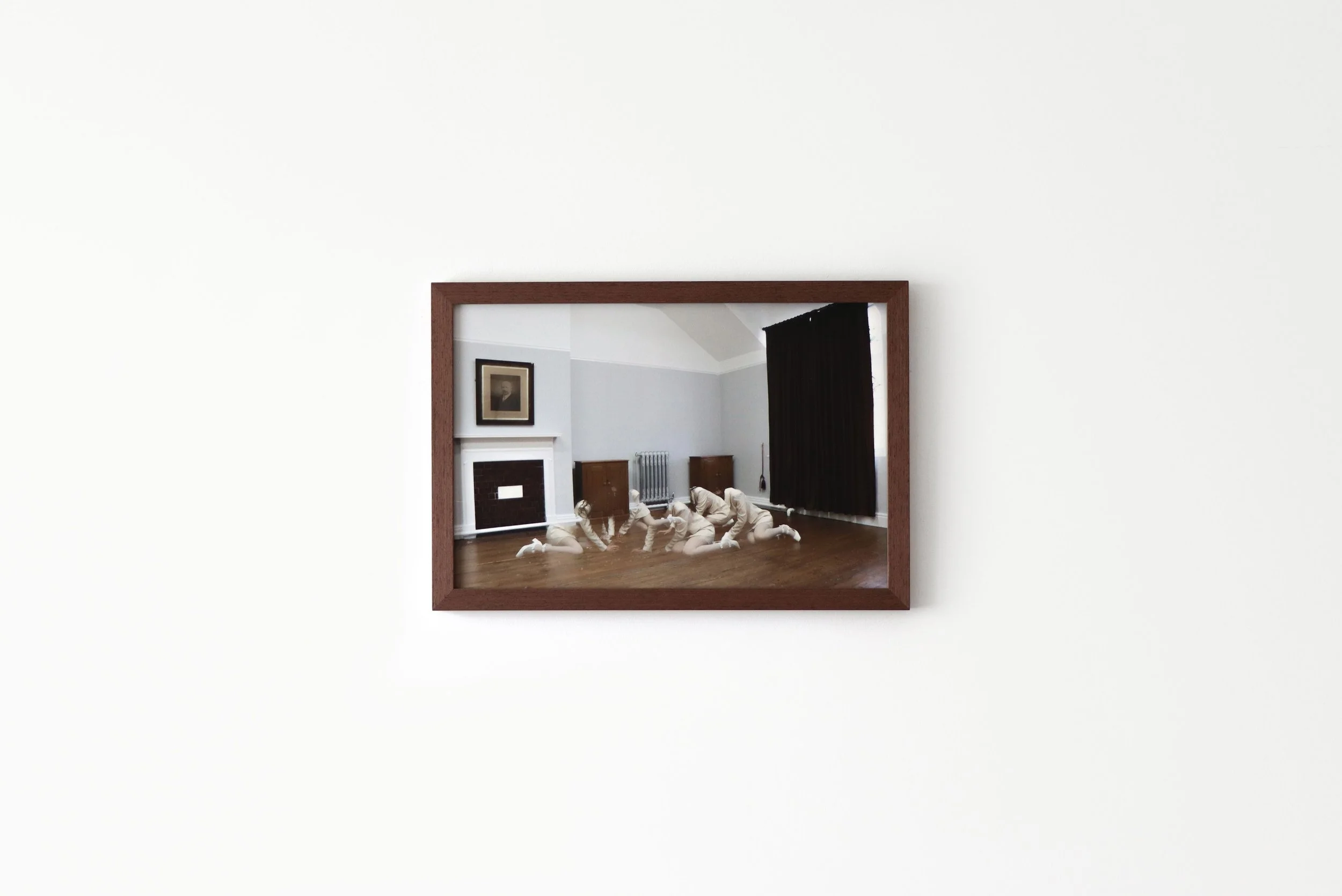
Restraint, 2025
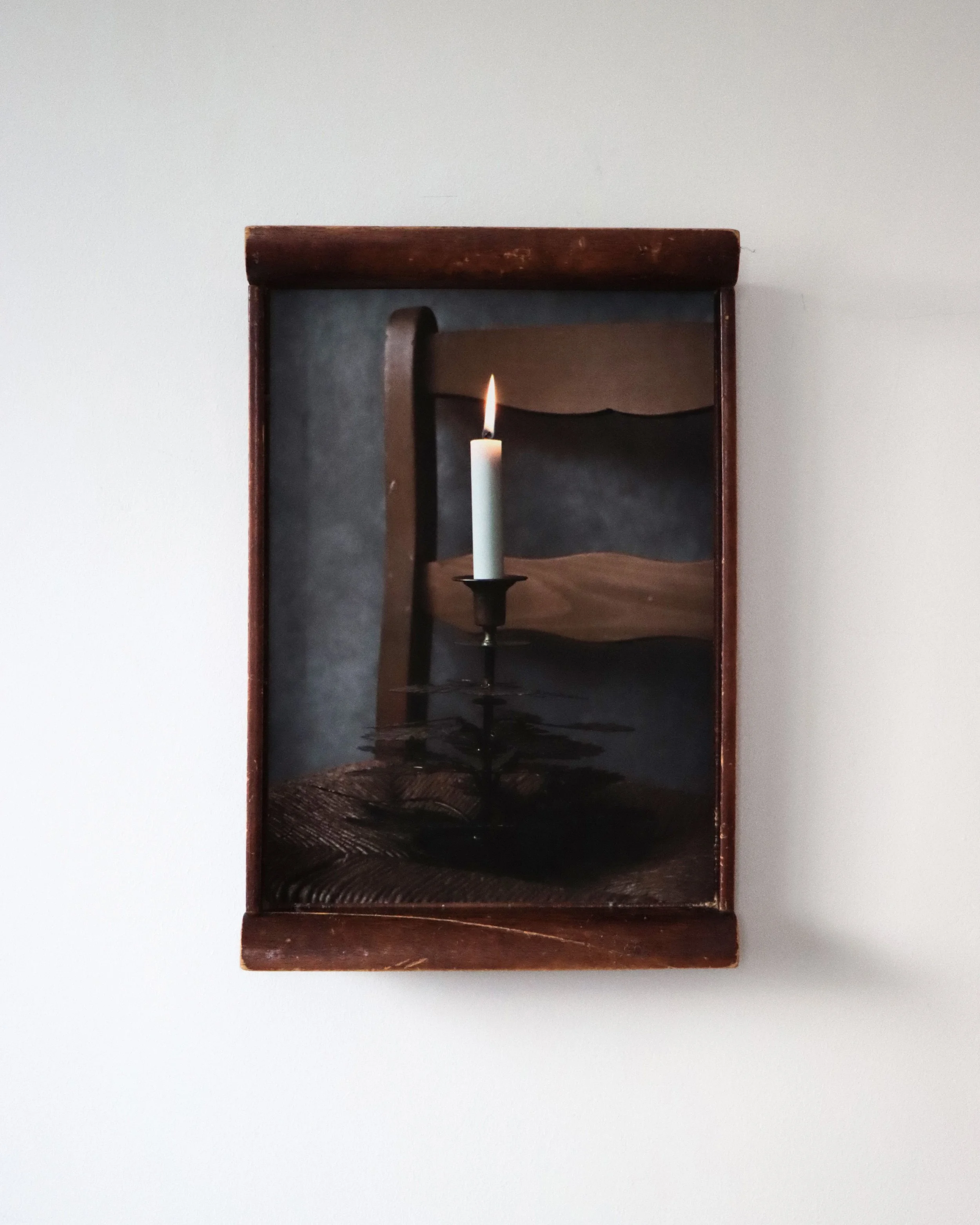
Solace, 2025
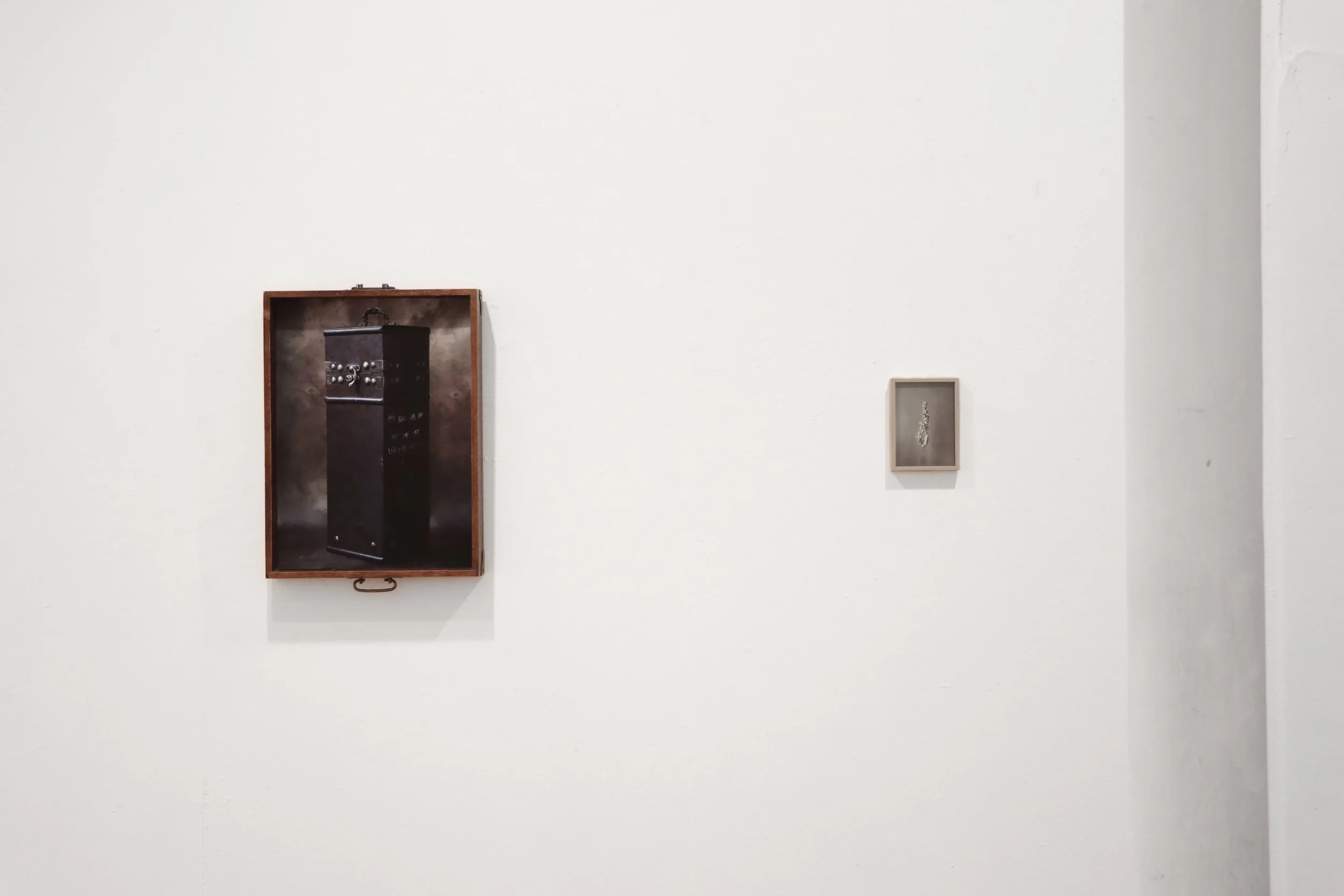
The Lunatics Common Room, Four Corners Gallery, 2026
What artwork have you seen recently that has resonated with you?
I went to see the Leonora Carrington exhibition ‘The Symptomatic Surreal’ at the Freud Museum this summer, and really appreciated the works displayed and the curation. I was particularly drawn to her extremely fine pencil drawings of horses, emerging faintly from mist or nothingness. Whilst at the museum I also encountered Wolves Sitting in a Tree, by Sergei Pankejeff. I was very struck by it and brought a fridge magnet version home with me!
Is there anything new and exciting in the pipeline you would like to tell us about?
I am in the early stages of planning my next body of work, scouting for shooting locations and bringing my ideas into focus. I’ll be creating images exploring the interaction between institutions and the body with a focus on the life and work of French author Valérie Valère who published a searing autobiographical work and two novels between 1978 and 1981 that are untranslated and not well-known in the anglophone world. Now that I am based in London, I’m looking forward to utilising the Eurostar for frequent trips to Paris whilst working on this series.