Danielle Brathwaite-Shirley
"We sought to strike a balance between it being quite avant-garde but also maintaining a human element that would encourage people to stay in the space."
"we sought to strike a balance between it being quite avant-garde but also maintaining a human element that would encourage people to stay in the space."
UK artist Danielle Brathwaite-Shirley works at the intersection of gaming, technology, and archival practice. Here, she reflects on creating THE DELUSION at Serpentine Gallery, the reactions it has sparked, and how her interactive worlds expand the way stories are preserved and shared.
Danielle Brathwaite-Shirley's exhibition THE DELUSION is at Serpentine North from 30 September 2025 - 18 January 2026.
Could you tell us a bit about yourself and your background?
I'm an artist and a tech nerd. I'm very interested in video game history and archiving history. I grew up in London and studied art, but I was originally planning to study physics. Gaming for me is a nice middle ground between the two. My career emerged from having a very good London community and trying to figure out how to archive those voices. A lot of my background has focused on working with different communities to try and figure out how to preserve their voices.
The show, titled “THE DELUSION” at Serpentine, feels both inviting and unsettling, with its draped arcade forms, glowing imagery, and hand-drawn figures. How did you approach creating a space that merges theatre, sculpture, and gaming?
We set out to create a space that, on the one hand felt inundated with references to the current political climate, but on the other also felt comfortable enough for people to open up and have a conversation with a stranger. We began by interviewing a lot of religious figures and activists as well as drawing on elements from my own history that felt grounding such as my grandma’s house. As we continued to build THE DELUSION we sought to strike a balance between it being quite avant-garde but also maintaining a human element that would encourage people to stay in the space.
THE DELUSION, Danielle Brathwaite-Shirley, 2025. Commissioned and produced by Serpentine Arts Technologies. © Danielle Brathwaite-Shirley, photography: Talie Rose Eigeland.
This project asks visitors to play and communicate inside a divided world. What kinds of reactions or conversations have you seen emerge from people as they move through the work?
It’s been really interesting to see the variety of conversations taking place from people disputing what feminism is today to conversations around war and censorship. I’ve also seen a lot of conversations around people being lonely and anxious and craving a space to open up without judgement. This has been really amazing to see as it was one of our key aims but we weren’t sure whether we’d actually get there. What's been very successful is that everyone comes with their baggage and some people lay out that baggage for us and for themselves which for me is a testament to the entire team and how well THE DELUSION facilitates people opening up.
What artwork have you seen recently that has resonated with you?
I’ve been reading a graphic novel which is part of 2000 AD and it’s the Nemesis collection. There's a character called Nemesis who is a resistance fighter against a fascist religious oppressive regime. It's been quite interesting visually for as it's extremely detailed.
You’ve described your practice as both “archive and insurgency.” How does the show expand your ongoing work of archiving Black Trans histories, and what role does game design play in preserving and reimagining those narratives?
Previous work on archiving Black Trans and queer histories would involve speaking to people, taking photos of them and creating a world and characters around them which is the technique I’ve used now in creating THE DELUSION. The focus of my practice has shifted but that foundational element of archiving Black Trans people in the story has not. What has shifted is the reason why people are playing and what we want them to get out of the experience. Previously who you were when viewing the archive would determine what you see but now it’s much more about using the world to reflect a mirror of who you are and then giving an opportunity to open up a conversation and seeing if there’s parts of yourself that you feel uncomfortable with. It’s not about feeling judgement but just an opportunity to maybe examine it.
In terms of the role of game design I would say games do archive something in and of themselves. However, it’s not that using a game is necessarily a better method of archiving but it’s a better method for people to access the archive. Typically an archive is passive but via the game it becomes more of a conversation. Depending on how you interact with it and what your aim is, the work will react differently to you. In a way it archives the way of thinking more than a traditional archive would.
THE DELUSION, Danielle Brathwaite-Shirley, 2025. Commissioned and produced by Serpentine Arts Technologies. © Danielle Brathwaite-Shirley, photography: Talie Rose Eigeland.
Tell us a bit about how you spend your day / studio routine? What is your studio like?
Currently I have a residency at Sybil so I go there in the mornings and begin the day with a drawing. I then spend some time on emails before doing about 5 hours of rendering and 3D modelling. I'm in the early stages of my next project so I usually write a bit of the story and then render a technique and try it out and then write a bit more of a story. I like to split my days between tech work and physical work, as the physical work feels like a nice break to feel a bit more vulnerable and with the tech work I can get lost in the code.
I have a studio at home and a place at Sybil to work which couldn’t be more different. The Sybil studio is very clean and tidy. My home studio is an absolute explosion of mess! Everything is painted on including my rug and the walls are covered with images that I like. It’s funny because when you see a lot of tech work, especially with digital work, there's an element of cleanliness to it as the wires are hidden away and there’s a nice specially designed TV. By contrast, I like to have a space that’s completely messy and then take the mess of things out to make a more logical system to put into the game. My studio is like stepping into my brain.
Is there anything new and exciting in the pipeline you would like to tell us about?
I’m currently working on my first horror film which mixes live action and 3D animation. I'm also working on a mech game that has no screen. In THE DELUSION we’ve seen how screens often draw people away from connecting so I’m now exploring how to create a game with no screen that is still playable. There’s more exciting projects in the pipeline which will be announced soon!
All images courtesy of the artist and Serpentine Gallery
Interview publish date: 20/11/2025
Interview by Richard Starbuck
Eva Tellier
"I hope the sculptures provoke a sense of uncanny liveliness, an impression that they might breathe, shift, or activate themselves at any moment."
Eva Tellier is a New York–based artist whose sculptural practice blends bodily, alien, and architectural forms. In this interview, she speaks about her multicultural background, her material process, and the ideas that shape her hybrid ceramic works.
Could you tell us a bit about yourself and your background?
I was born in the French countryside in the North of France, to a French father and an Australian mother, so I grew up navigating two cultures and two languages at once. I was raised by my mother in an English-speaking household, even while living in France, and that constant shift between my home environment and the world outside often created a sense of internal duality. Because of this, I learned early on to build imaginative spaces in my mind, places where I could reconcile these overlapping identities. Growing up both in the countryside and in and around Paris made me aware of that tension between the natural world and the built environment and has deeply shaped me and my aesthetic. I’ve always been fascinated by Gothic aesthetics in particular, and that influence continues to guide much of what I’m drawn to today. At eighteen, I moved to Montréal to pursue my undergraduate studies at Concordia University in Studio Arts, specializing in Fibers and Material Practices. Being in a bilingual, bicultural city felt natural and expanded my way of thinking. It was there that I discovered ceramics, which eventually led me to the United States. I later moved to upstate New York to complete my master’s degree in ceramics at Alfred University. My artistic practice has been shaped by these moves and the search for environments that allow me to work and grow. Constant displacement has also pushed me to create grounding, imaginative spaces, alternatives to any single place I could call home. I am now based in New York City.
Your sculptures fuse bodily and alien forms, often appearing part creature, part artifact. What interests you about creating forms that sit between the human and the non-human?
I’m drawn to creating forms that sit between the human and the non-human because I’m interested in collapsing the boundaries we so often rely on to define ourselves. I’m constantly thinking about the tension between what is human-made and what is naturally occurring, and how we construct paradigms and binaries such as living/non-living, psyche/matter, subject/object, in order to perform humanness. The artifacts, technologies, and objects we create become extensions of our collective psyche, revealing how we position ourselves in relation to the organic world. We distance ourselves from that world, sometimes out of fear, discomfort, or a phobic response to the natural. This repression is central to how I think about re-integrating the organic into human experience. My sculptures merge human and non-human qualities as a way to regroup and re-merge these categories, dissolving the separations we rely on but that also limit us. From a maker’s perspective, everything we modify in our environment reflects how we extend our bodies and our sense of self. I think of my process with ceramics as a form of technology, ceramic truly represents one of our earliest material modifications for functional, human purposes. I often return to that first usage of ceramic as I make my sculptures. This technological lineage allows me to explore the body and the ways we extend ourselves by altering our environment and the artifact aspect of the work is just as important as the bodily one. My practice moves constantly between interpretation and the tangible reality of what sits before us. I think a lot about our “human” interaction with the environment about what is built versus what is grown, what is and what could be, and the limits between the emotional experience of being alive and the structured, material world.
Ant/i/bodies, 2025, photo credit: Zander Jonsson
Coma, 2025, photo credit: Zander Jonsson
There’s a sense of both strength and vulnerability in your materials and surfaces, from their muscular structures to their fragile, skin-like textures. How do you approach this balance when making your work?
I’m really inspired by how structures in nature hold both fragility and strength at the same time. I’m always thinking about transformation, metamorphosis, birth and decay and how those opposing forces exist simultaneously in the material world. These dynamics shape both my concepts and how I physically make the work. The balance of strength and vulnerability in the pieces emerges from a constant back-and-forth between control and intuition. Much of my process begins with an emotional or intuitive impulse, driven by a desire to create forms that provoke a bodily empathy in the viewer. Over the past year, I’ve been building primarily through a tubular coiling system, of constructing with hollow, anatomical tubes and then carving into them. These tubes suggest muscular or skeletal structures, yet they are always exposed, punctured with open pores that introduce a sense of fragility and porosity. Despite this vulnerability, the forms often hold themselves with a proud, even defensive posture. This tension extends to the surfaces: I use them to navigate attraction and repulsion, inviting the viewer closer through seductive textures while simultaneously unsettling them. Many elements on the forms function as both ornament and armament, decorative yet protective, reflecting how acts of adornment can also serve as acts of defense. I translate these reflections through particular choices of material; clay offers strength and permanence, while silicone, wax, and bioplastics introduce softness, intimacy, or ephemerality. The anatomy-like forms are carefully constructed, but the exoskeletal details emerge intuitively, almost as if generated by the material itself.
The pieces carry a strange liveliness, as if they might breathe or shift at any moment. What kind of reaction or feeling do you hope these sculptures provoke in the viewer?
I hope the sculptures provoke a sense of uncanny liveliness, an impression that they might breathe, shift, or activate themselves at any moment. I’m deeply interested in illusion, fiction, and mythology, so creating forms that sit on the edge of animation is central to the intrigue I want viewers to feel. I aim for a response that is both attracted and unsettled, especially because parts of the work resist familiar notions of visual pleasure or humanness. Elements of the abject, such as detached hair, help cultivate that ambivalence, pushing the viewer into a space where fascination and discomfort coexist. Material and textural variation also plays a key role. Combining ceramic with softer or stranger surfaces introduces a sentient quality that interrupts the inertness we typically associate with sculpture. My strategy is to pull viewers in through multiplicity and a maximalist aesthetic: dense surfaces, layered textures, and intricate anatomical suggestions. Ideally, once drawn closer, they linger long enough to consider what these bodily elements might signify within the utopian or speculative worlds I imagine for them.
French Knitter, 2025, photo credit: Zander Jonsson
Twisted Wings, 2025, photo credit: Zander Jonsson
Hornette (taille de guepe), 2025, photo credit: Zander Jonsson
Tell us a bit about how you spend your day / studio routine? What is your studio like?
I’m very much a morning person, so my studio day usually starts early. I wake up and head straight to the Museum of Arts and Design, where I’m currently in residence on the sixth floor. Having a studio in Manhattan has been incredible, I open the space to the public three days a week, and the remaining days offer quiet privacy to focus on my work. I typically begin with administrative tasks: answering emails, checking deadlines, handling applications and then move into the physical work of the studio. Most days involve extruding tubes; the core building system for my ceramic sculptures. I usually have several pieces in different stages: some drying, others at the leather-hard stage ready for carving, and others waiting for coils or finishing touches in silicone, wax, or bioplastic. My routine stretches across many activities that sustain the practice: forming shapes, repetitive motions, intuitive carving, sketching ideas, recording thoughts, and reading influences ranging from Gothic writing to queer ecology and post-humanist theory. My studio itself has drawings pinned to the walls, shelves full of materials, large works on the floor, and a wall-mounted extruder. By the window overlooking Central Park, there’s a bean bag where I nap and think about future ideas
What artwork have you seen recently that has resonated with you?
A recent artwork that resonated deeply with me came from the Burke Prize finalists’ talks at the Museum of Arts and Design this november. Hearing the artists speak about their practices was incredibly inspiring and I was especially moved by the work of this year’s prize winner, Hai Wen Lin. Their approach rooted in care, deconstruction, and a kind of building-by-unbuilding, felt connected to my own interests. They create kites that borrow the language of clothing, using structure and fabric to imagine ways bodies might move, extend, and take flight. What struck me most was how these kites become metaphors for freeing or expanding the self, suggesting the various possibilities of existing in space. The work’s blend of material sensitivity, poetic imagination, and deviation from traditional functionality resonated strongly with my own dedication to form and process. There is a utopian and mythic quality in how they portrays movement, and embodiment, one that connects with my interest for hybrid forms and my reflections on what it means to inhabit a body or allow it to extend beyond the limits imposed on it.
Is there anything new and exciting in the pipeline you would like to tell us about?
I’m currently still an artist fellow at the Museum of Arts and Design, where I’ll be working in the artist studios until the end of February 2026. Having several more months in that space is very exciting, especially as the residency will culminate in an artist talk on January 9th. The talk will be followed by an open-studio evening where I’ll transform my space into a small exhibition, giving visitors a chance to see the works I’ve been developing throughout my time there. Another great prospect is that my best friend and artist, Joël Brodovsky-Adams and I are setting up a new studio in Sunset Park, Brooklyn. This marks an important transition, as I’m fully anchoring myself in New York City and building a long-term working environment here. All of this combined makes the coming months feel full of growth and new creative energy.
All images courtesy of the artist
Interview publish date: 20/11/2025
Interview by Richard Starbuck
Zijing Zhao
“My fascination with mythology is something I can’t quite control. I’m drawn to the way myths hover over the real world like a layer of mist, always more beautiful, more seductive than what we call ‘reality.’”
Zijing Zhao is a London-based artist whose moving-image practice blends mythology, digital worlds, and feminist explorations of the monstrous body. In this interview, she discusses her approach to simulation, her influences ranging from Buddhist legends to science fiction, and the collaborative world-building she develops alongside Rui Shi.
Could you tell us a bit about yourself and your background?
Hi! I’m Zijing Zhao, most of my friends call me Chocho. I was born in Nanchong, Sichuan, China. I’m an artist and researcher currently based in London, working mainly with moving image, animation, and digital media. After graduating from the Royal College of Art with an MA in Contemporary Art Practice, I’m now pursuing a practice-based PhD at Chelsea College of Arts. My research focuses on the monstrous body from a feminist perspective, exploring what creates the fear of the female monster, and the deeper philosophical and gendered questions that lie within it.
Your films often feature hybrid, shifting bodies that seem to exist between the digital and the physical. What draws you to using simulation as a way to explore identity and transformation?
I’ve never been quite sure how to answer this question, because my understanding of simulation might be a bit different from many artists working in digital art. My practice with moving image, animation, and digital media is very much grounded in materiality and labour, all my works are intentionally low-efficiency and highly labour-intensive. In my film Br00dm0ther’s e-Fable, for example, the work might appear to be purely simulated, but I was actually searching for a sense of materiality through simulation, something that emerges from the act of making itself. I built the figure of Br00dm0ther in Blender almost as if I were sculpting it by hand. What fascinates me is how labour blurs the boundary between simulation and reality, it becomes a form of re-enchantment, where making itself turns into a magical act.
Br00dm0ther’s e-Fable, 2024
Br00dm0ther’s e-Fable, 2024 (still)
There’s a strong sense of mythology in your work, where figures appear both human and non-human. How do you approach creating these beings, and what kinds of narratives or references shape them?
My fascination with mythology is something I can’t quite control. I’m drawn to the way myths hover over the real world like a layer of mist, always more beautiful, more seductive than what we call “reality.” When I retell these stories, I’m not simply reconstructing the past, but creating worlds that point toward the future, which imagined by forgotten pasts, buried under excessive violence and hyper-capitalization. This fascination probably began in my childhood, watching the beautifully crafted Journey to the West animations produced by the Shanghai Animation Film Studio. Those films first sparked my interest in Chinese folklore and Buddhist mythology. Later, as an undergraduate at Renmin University of China, I took courses in the Faculty of Literature that introduced me to Greek mythology, while my studies in philosophy opened a window into Taoist cosmology. What interests me most is how myth can re-enchant reality, how it allows us to learn new ways of knowing. For instance, Journey to the West reflects systems of bureaucracy and imperial hierarchy; Nezha’s act of self-disembowelment and rebirth from a lotus can be read as a queer narrative of transformation. In Mountain of Flames, a collaborative work with Rui Shi, we reimagine the story of Princess Miaoshan’s transformation into Guanyin from Chinese Buddhist legend — a myth that beneath its transcendence, still echoes the cruelty and bloodiness of women’s destinies that continue to play out in our world today.
You collaborate with artist Rui Shi on a duo project called. Could you tell us how this collaboration started and what ideas you’re exploring together through it?
We first met at the Royal College of Art, and our collaboration began during the pandemic in 2020, right around the time we were about to graduate. We were both locked down in our flat in Battersea, the world outside felt apocalyptic. Our shared fascination with mythology and science fiction naturally brought us together. The first work we made as a duo was the stop-motion animation Mountain of Flames. My obsession with myths and speculative fiction, combined with Rui’s background in concept design for sci-fi films, helped us build worlds in a very intuitive way. We’re now both doing our PhDs at UAL, and our conversations have expanded into queer theory, hauntology, monstrosity, video games, and horror narratives, ideas that keep evolving and keep us both excited.
Tell us a bit about how you spend your day / studio routine? What is your studio like?
I love walking to my studio after breakfast. At the start of the day, I usually write notes or make quick sketches, trying to capture the shapes I saw in my dreams. They often find their way into my next work. When I am painting, the studio feels very physical and material. When I am animating or editing, it turns into a kind of digital cave, with headphones on and several screens around me, and my sense of time slowly disappears. I enjoy shifting between these two states. The manual process reconnects me with materials, while the digital side brings me into a trance-like focus.
The Mountain of Reincarnation, 2020
Mountain of Flames, 2020
Miaoshan, 2023
What artwork have you seen recently that has resonated with you?
There are too many artists and artworks I love, so I would like to share a manga I recently revisited instead. It is Dorohedoro by Q Hayashida, whose drawings are filled with incredible energy and detail. Dorohedoro is set in a collapsing, post-apocalyptic world where the boundaries between sorcerers, humans, demons, and ghosts constantly blur, as do the boundaries between life and death. It is bloody and violent, yet filled with genuine love and friendship.
Is there anything new and exciting in the pipeline you would like to tell us about?
Rui and I are preparing a new exhibition titled Every Video Game Depicts an Apocalypse, which is planned to open in London early next year. The project combines multi-channel moving images, sculpture, and interactive digital landscapes, continuing our research into queer ecology and the construction of monstrous worlds. It explores the idea that the apocalypse is not an end, but an ongoing process of transformation.
All images courtesy of the artist
Interview publish date: 20/11/2025
Interview by Richard Starbuck
Blythe Plenderleith
“Icons I am drawn to are not to intentionally provoke for shock value but to observe our own preconceived judgements and prejudices.”
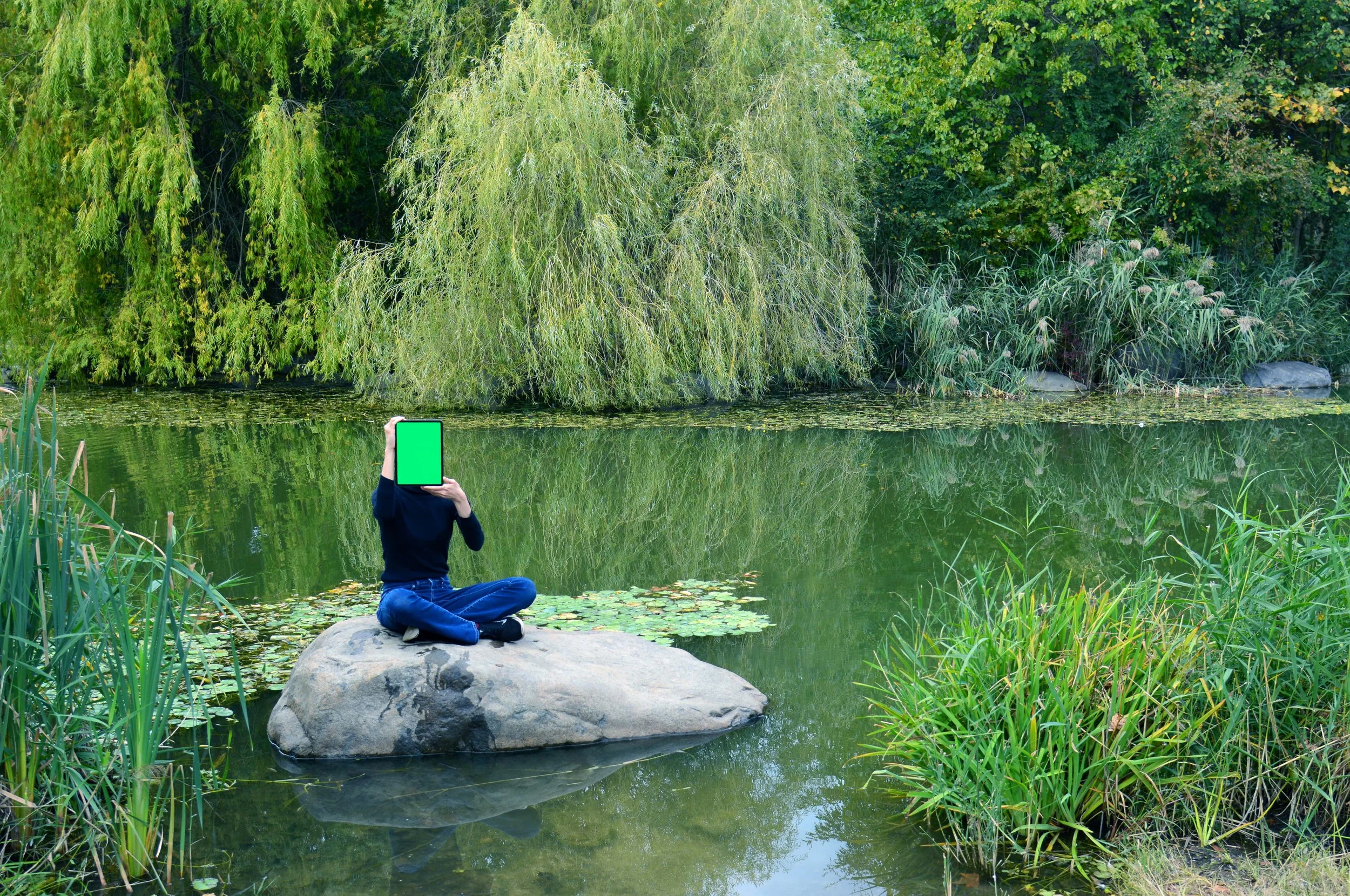
Blythe Plenderleith is an artist whose sculptural works reframe everyday and devotional objects to examine belief, judgement, and the quiet tensions of social memory. In this interview, she discusses the icons that shape her practice, the role of physical sensation in her work, and how small-town narratives continue to inform her ideas.
Could you tell us a bit about yourself and your background?
Day one at the Royal College of Art I was introduced to a posse of peers who made a very interesting analogy. As a full scholarship student I was compared to that of a grey squirrel released into a sanctuary of ‘pure’ red squirrels; before you know it the institution will be overrun with us ‘state-schoolers’ and ‘non-fee-ers’. It was either that, or the assumption I shared the same characteristics: big families, big appetites and big personalities. Like a Top Trumps card, my dominance, aggression, territoriality, appearance and family genealogy were being strategically ranked. I hate to disappoint but I believe I was rather overvalued on each.
Your work often reinterprets familiar or decorative objects, from devotional figures to household forms, in unsettling ways. What draws you to these icons, and how do you decide when something crosses the line from comforting to provocative?
I relish the saying ‘crosses the line’. It’s an altogether dangerous position to tell or be told what has or hasn’t crossed the line. Though, the knee-jerk reaction that is inherent in all of us when confronted with information or iconography is fascinating. Hence the icons I am drawn to are not to intentionally provoke for shock value but to observe our own preconceived judgements and prejudices. Equally, I’m drawn to objects that provide space for conversation and debate; including discourse that may not be popular opinion.
Bed of Hails, 2021
Bed of Hails, 2021 (detail)
Pieces like the bed of small figurines or the darkly sculpted furniture suggest both reverence and discomfort. How important is physical sensation, the body’s relationship to touch and material, in the way you want viewers to experience your work?
People are walking experiences. I’ve never felt the need to spell out something to a viewer because they’ve already lived it in some form. I do however play on those experiences, merging the intuitive with the affected. Most situations are multifaceted so using physical sensation and the body’s relationship to touch and associated emotions are important. Like emotions, the viewers will sometimes experience my work with intimacy and imbalance.
Much of your practice appears to reflect on small-town life: its customs, values, and contradictions. How do those environments influence your ideas, and what do you find compelling about revisiting them through your work?
I don’t think small-town life is necessarily geographical. Of course the name suggests otherwise but for me it resides in the characteristics. I’ve met many an individual who describe anyone living outside of London a ‘country bumpkin’ and for me this is where the paradox and contradictions begin. Clearly said culprits have been blessed with a social grace they believe others have not. Nevertheless, I’m always drawn to observing a stereotype; in this case the notion of the unsophisticated and provincial or ‘where ordinary people live’. I enjoy giving value back to the oversimplified image.
Roses or Nails, 2021
Fathom (i), (v), (vii), Ongoing
What artwork have you seen recently that has resonated with you?
Niki de Saint Phalle and Jean Tinguely: Myths & Machines at Hauser and Wirth, Bruton showcased many: [Petit Autel] (Small Altar), Chandelier and Le Cercle Infernal de la Mort. A gentleman tried to interact with one of the ‘anti-machines’ as if trying to start a chainsaw. I don’t think I’ve ever seen an invigilator move with such vigour. I find the interchange between people and things fascinating and I wondered what Saint Phalle and Tinguely would have thought about this interaction they managed to create with their work. Though, one of the more memorable comments came from a viewer when visiting Phyllida Barlow: Unscripted. An elderly lady entered the gallery, turned to her son aghast and exclaimed ‘Why have you brought me into the store cupboard?’. The lady was entitled to her reaction but was met with equal eye rolling, pursed lips and tutting from others. Moments like that resonate with me. A collection of artworks managed to create momentary upheaval which lasted no more than entering the gallery space and leaving.
Tell us a bit about how you spend your day / studio routine? What is your studio like?
It differs. I’m out of the studio as much as I’m in it. Visiting locations, meeting people and observing objects is as essential to my practice as the making. I’ve never been a clock in and out kind of person hence the only routine I follow is a deadline. The studio. 2-jumper temperature. Space constantly yo-yos. Need shoes.
Is there anything new and exciting in the pipeline you would like to tell us about?
After months of negotiation, I will soon be spending time in Pennsylvania, working with the Amish community to realise new work.
All images courtesy of the artist
Interview publish date: 20/11/2025
Interview by Richard Starbuck
Entung Liu
"The screen represents the essential, yet rapidly dissolving, boundary between the physical self and the digital framework of contemporary culture."
Entung Liu is an interdisciplinary artist whose performance-led practice examines the shifting boundaries between the body, technology, and digital culture. In this interview, Liu discusses the role of the body as a communicative medium, the cultural force of screens, and how transformation shapes both her performances and her critique of contemporary life.
Could you tell us a bit about yourself and your background?
I was born in 1995 in Taipei, Taiwan. As an interdisciplinary artist, my work explores the intersection of visual art, performance, and technology through various methods, including performance, photography, videos, installations, paintings, and sound. I received a BFA in Multimedia Art from Taipei National University of the Arts in 2018 and an MPS in Interactive Telecommunications Program from New York University in 2022. My artistic vision is rooted in transforming the absurdity of daily existence into a transparent mirror, reflecting the invisible social issues hidden beneath the fantasy of technology. Drawing on my interdisciplinary background, my creative process establishes an intensive connection between the body and space. This practice is keenly focused on how corporeal gestures and the resulting shifts in eyesight can disrupt and shift public awareness. The execution of this vision occurs through dedicated multimedia practices and collaborative participatory theater, operating on the belief that 'Daily life is a theater, and the theater is life.’ Participation is employed as a compelling method to unfold static social structures and reimagine the existing world. Through these immersive actions, my practice ultimately seeks to reveal the complex relationships between body, identification, technology, nature, and life.
Performance is central to your practice, often unfolding in public or everyday spaces. What draws you to use the body as your main medium, and how does performing in these open environments influence your work?
The body is my most direct medium for genuine communication and connection. It is simultaneously durable and fragile, making performance an act of self-exposure where I can shed daily masks and escape the controlled world. Conceptually, my practice emphasizes the relevance of the organic form in contrast to the pervasive drive of technology. When AI and ideas of brain duplication promise immortality or a body-less existence, I find this ideology of the unlimited to be dangerous. The body's limitations—its vulnerability and inevitable process of decay—are precisely what create value and lead us to cherish. This conceptual focus extends to the environment. The uniqueness of open environments—their historical context, original functions, traces of activity, and the people on site—is a critical stage setting for my performances. There are visible and invisible rules in every public space that reveal existing social structures, and I enjoy playing with them. I invite participants to observe, listen to, and interact with the environment in unexpected ways, and to rediscover it through the process. The boundary of a space also influences my work, and it is like a collaborator, with whom I like to learn from and respect via my body and performance.
Too Bright To Be Painful - #FF8000-2, 2022-2025
Too Bright To Be Painful - #80FF00-2, 2022-2025
Too Bright To Be Painful - #FF0000-2, 2022-2025
Screens appear in a couple of your projects, sometimes replacing or framing the body. What do you think screens represent in our culture today, and how do you use them to question how we see and present ourselves?
It is an insightful question that gets to the core of my current practice. The screen represents the essential, yet rapidly dissolving, boundary between the physical self and the digital framework of contemporary culture. I grew up witnessing the evolution of screens, from the bulky, weighty "body" of the early television to the invisible, potentially implanted interfaces of the future. This technological trajectory—the loss of the screen's physical mass—parallels its increasing cultural omnipresence, making it an unseen, inescapable medium. In my work, where screens literally frame or replace the body, I question this invisibility. The screen is not just glass; it is a powerful apparatus driven by algorithms, data, and AI. This ecosystem often disguises profit-driven bias as reality, creating a distorted spectacle. This tool, rather than solely addressing human issues, frequently magnifies social bias. By using the screen, I explore the contemporary dilemma: How do we present an authentic self when we are constantly performing for, and being viewed by, both others and the algorithms? The screen forces us into a state of dual consciousness—we become both the performer and the viewer of our own identity, making daily existence a continuous act of digital performances.
In several of your performances, the body is transformed through surface and gesture, creating a striking sense of distance and abstraction. What role does transformation play in your work?
Transformation is a crucial lens for viewing my work, acting both as an internal mechanism for discovery and an external critique of digital culture. In the series of works <Too Bright To Be Painful>, transformation begins with the body's gesture. I apply the mimicry of animals, making the human form appear unusual, to explore the profound relationship between humanity and the natural world. This internal, embodied shift, driven by the focus on non-human movement, heightens my sensory engagement with the environment, allowing me to perceive small details often neglected by a typical visitor. The abstraction and distance viewers recognize is vital for the conceptual subject: the digital transformation of the body itself. The work critiques how easily efforts and emotional nuances become erased when the body is rendered as a clean, bright digital signal on a screen. By maintaining stable, seemingly comfortable gestures that actually require intense effort to hold, I pose a question to the viewer: How painless is it to consume information on your screens? This transformation highlights the danger of passive consumption, restoring the felt quality of pain and effort into the supposedly smooth digital image.
A Daily Theater, 2022
I Am Where I Am, 2021
Tell us a bit about how you spend your day / studio routine? What is your studio like?
My creative process is fully integrated with my daily life, operating around a highly flexible routine. Since most of my art is performance-based with digital recordings, I don't require a traditional studio space, which allows for immense mobility and adaptability. I dedicate weekdays to the necessary conceptual and administrative groundwork. Before and after my 9-to-5, I focus on critical tasks, including editing video and photographic content, organizing digital assets, writing for applications and grants, and planning for upcoming exhibitions and performances. I also keep a notebook close at hand in my office to quickly capture ideas and inspiration. The intensive execution, which includes performing and recording, is strategically scheduled for the weekends. It allows me to have uninterrupted blocks of focused creative time. My current "studio" is a minimal and flexible living space. I prioritize highly movable furniture, allowing me to easily transform the environment into a temporary workshop for painting, rehearsing, and building installations. This fluid approach keeps my practice dynamic and fresh, and I enjoy it for now. However, if I need a permanent studio space in the future, I still want to have a designed studio at home where I can fully immerse myself in creative activities.
What artwork have you seen recently that has resonated with you?
I have recently been re-exploring the work of pioneering performance artists, including Francis Alÿs, Tehching Hsieh, and Ana Mendieta. Mendieta's <Silueta Series> has deeply resonated with me. These ephemeral, earth-body works—female silhouettes created in natural landscapes using materials like mud, sand, or flowers—explore powerful themes of identity, violence, and the spiritual connection between the body and the earth. Inspired by Mendieta's approach to traces and imprints in nature, I began to investigate what a body’s physical printing on technology truly entails, and how the relationship between the human and natural world is shifting in the digital age. This led me to the concept of the "Body of Technology." While technology is often perceived as cold, intangible, and inanimate, I aim to challenge this by deliberately foregrounding its sensory and material experience. I invite participants and viewers to engage with technology through its often-neglected, bodily qualities: vibration, materiality, temperature, sound, taste, and smell. By prompting this imagination of a technological body, I subvert existing digital narratives and advocate for a necessary re-embodiment of the contemporary digital era, urging a new way to connect with the mediators that shape our lives.
Is there anything new and exciting in the pipeline you would like to tell us about?
Lately, I have been working on a new project called <Existing in You>, which explores immigrant identity by combining field research, photography, performance, and AI. The project was inspired by my personal experience navigating the U.S. visa system. Last year, despite submitting all required documents on time, my H-1B application was denied without a clear explanation. The unlawful process led me to sue USCIS for procedural errors; after six months, I finally received my visa. While the outcome was positive, the experience left me questioning the role of bureaucracy and technology in shaping the lives of immigrants. Did anyone actually read my 100-page submission, or was it skimmed—or even processed—by AI? How does a state apparatus distinguish between a “real” person and an AI-generated identity? These reflections became the foundation of <Existing in You>. I plan to start presenting the project in 2026. For those interested, welcome to find new updates on my website and Instagram. Additionally, my work, <I Am Where I Am>, is currently on view as part of the exhibition 'Dislocated,' presented by Midwest Nice Art. Feel free to take a look!
All images courtesy of the artist
Interview publish date: 20/11/2025
Interview by Richard Starbuck
Rui Shi
“Hauntology is, for me, inseparable from queer experience in digital space.”
Rui Shi is a London-based artist whose work moves between digital worlds, sculpture and moving image, exploring queer identity, hauntology and the politics of virtual space. In this interview, Shi discusses how game environments shape our sense of self, the role of wandering and transformation in their films, and the collaborative myth-building they develop with artist Zijing Zhao.
Could you tell us a bit about yourself and your background?
I’m an artist from China, currently based in London. Trained in stage and spatial design, I started out building environments for magazines and sci-fi film productions, thinking about how images choreograph bodies in space. I later shifted into Fine Art at the Royal College of Art, and I’m now a practice-based PhD researcher at UAL, focusing on queer identity in digital space, especially within video game worlds. Alongside this, I develop sculptural and moving-image works that shuttle between virtual landscapes and physical matter.
Your films draw on digital worlds that feel both familiar and uncanny. How do you see your work reflecting or questioning our experience of living in an increasingly virtual age?
This question is very close to my current PhD research. I’m deeply influenced by Mark Fisher’s idea of hauntology: even though our world appears increasingly wrapped in technology and digital interfaces, the underlying images and narratives are still endlessly haunted by dominant cultural patterns. For me, digital space should hold the potential for radically different perspectives and bodies to appear, but in reality it’s heavily shaped and constrained by existing entertainment industries, especially mainstream gaming. That’s why my moving-image works often start from within those systems: I use screen recordings of popular video games, together with mods and in-game interventions, as my raw material. Hauntology is, for me, inseparable from queer experience in digital space. The figures that move through my works feel more like ghosts or glitches than stable characters.
They drift between virtual landscapes and physical reality, never fully at home in either. In that sense, the films are less about representing queer identity in a fixed way, and more about tracing these haunted, in-between states—how queer bodies navigate a culture that keeps “updating” its surface while repeating the same structures underneath.
You also collaborate with artist Zijing Zhao on a duo project called. Can you tell us about the project and how it connects to your individual practice?
During my two years at the RCA, Zijing and I became increasingly drawn to Asian mythologies and apocalyptic visual worlds. When the pandemic suddenly suspended the usual rhythm of life, we were confined at home and started to seriously explore how digital space could intersect with mythic and folk narratives. I became obsessed with end-of-the-world and sci-fi settings, and with building atmospheres through set and environment design, while Zijing has a very strong sense for myth-based and speculative storytelling. Together we turned to stop-motion animation as a way to make experimental films, using it to test out questions that still stay with us now, from links between gender identity and East Asian myth, to monstrous female bodies, to worlds that are constantly mutating and evolving. These early projects really shaped how I work today: they taught me to treat sculpture as a kind of world-building and to use moving image as a space where myths, bodies and environments can keep being rewritten.
Ghost Through the Looking Glass, 2024
Ghost Through the Looking Glass, 2024 (still)
Ghost Through the Looking Glass, 2024
Across your practice, there’s a feeling of characters searching or wandering through fragmented landscapes. What interests you about using the moving image as a way to explore identity and transformation?
For me, these “wandering characters” are a very honest image of a queer state of being. Whether they appear as humanoid figures, monsters or partial, broken bodies, they are always in a kind of loading phase: no longer who they were, but not yet who they might become. Moving image is naturally suited to this sense of incompleteness. Time can be stretched, paused, looped, and identity stops being a fixed outcome and becomes a sequence of small attempts, glitches, failures and reboots. I am also very interested in the idea of getting lost. When characters drift through fragmented landscapes, they are not just lost in space; they are testing different paths, different bodies, different ways of existing. Working with moving image allows me to layer multiple spaces and perspectives at once, so these figures can keep switching skins, becoming plants, wormholes, interfaces or weapons. Through this constant wandering, I want to suggest that identity is not a stable point waiting to be discovered on a map. It is more like an ongoing motion of adjustment, a process of tuning, mutating and rerouting yourself in response to the worlds you move through, both digital and physical.
Tell us a bit about how you spend your day / studio routine? What is your studio like?
On most days I start by going to the boxing gym. That bit of training puts my body under pressure in a good way, and my mind drops into a kind of meditative focus. After that I have breakfast with Zijing and we head to the studio together. My studio is full of plaster and stone pieces. I usually put on a playlist I love and begin carving. The repetitive, physical rhythm of carving is very calming for me, almost like a grounding ritual. Throughout the day I move back and forth between different activities in the studio: playing video games, watching moving-image works, editing footage and making small sketches. Shifting between these modes keeps the work alive, and the games and images often slip back into the sculptures and films in unexpected ways.
Phantoms, 2023
Mountain of Flames, 2020
What artwork have you seen recently that has resonated with you?
Recently I was really struck by Ed Atkins’ exhibition at Tate Britain. The way he works with text, voice and digital bodies creates a space that feels at once intensely intimate and strangely disembodied, which speaks very directly to my own questions about how we “live inside images” today. The way vulnerability, failure and repetition play out again and again through these constructed virtual figures has stayed with me, and it continues to shape how I think about narrative and the digital body in my own work.
Is there anything new and exciting in the pipeline you would like to tell us about?
I’m currently working with Zijing on a new exhibition titled Every Video Game Depicts an Apocalypse, which will be shown in London early next year. The project brings together multi-channel moving image, sculpture and interactive digital landscapes, and continues our ongoing research into queer ecologies and the construction of monstrous worlds.
All images courtesy of the artist
Interview publish date: 20/11/2025
Interview by Richard Starbuck
Sofia Viol
“The absurd becomes a tool to access something emotional but indirect - a crooked route to honesty.”
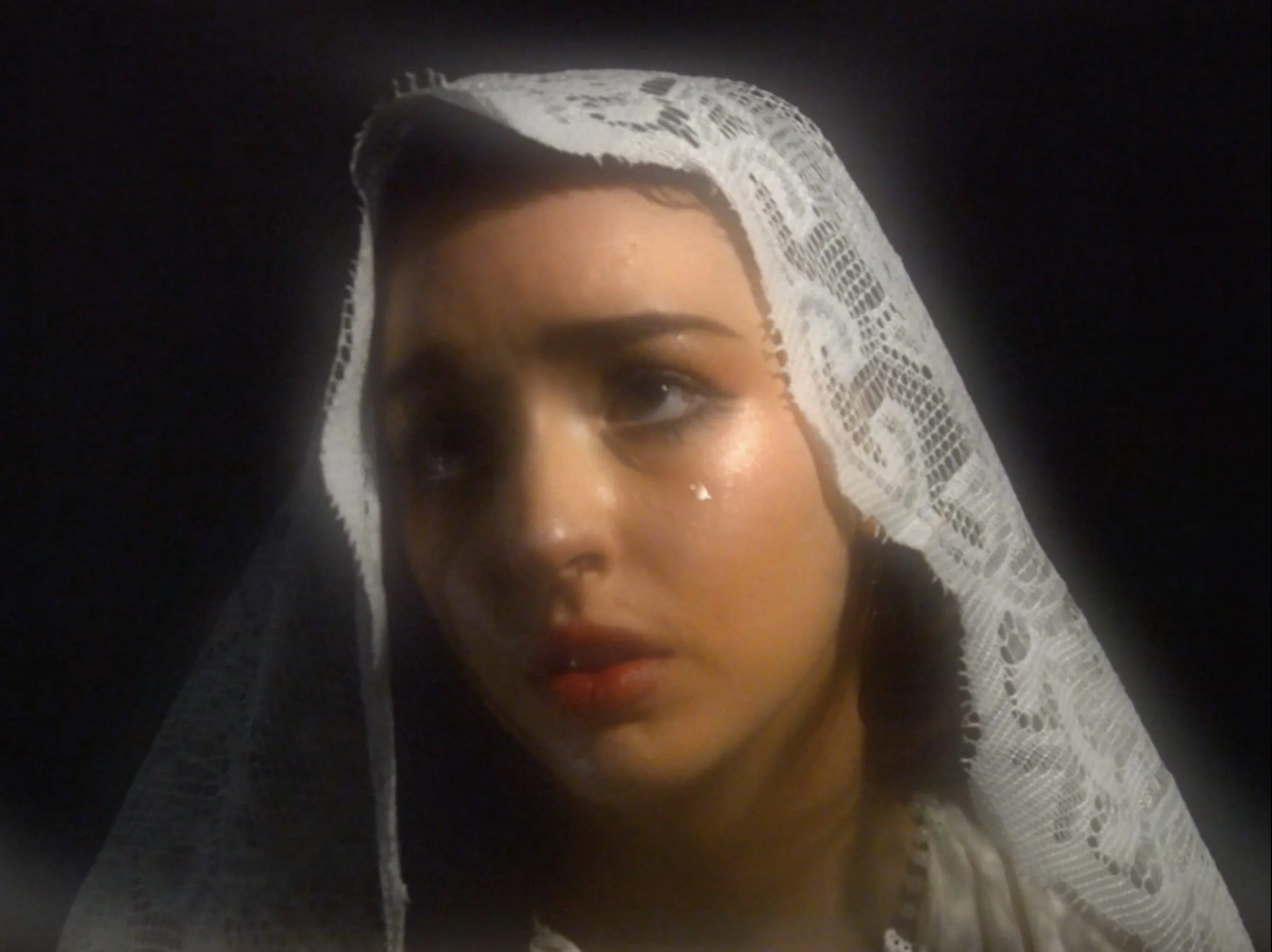
Sofia Viol is a Sweden-based painter whose work blends folklore, humour, and unease into dense, layered compositions that move between intuition and art-historical influence. In this interview, Viol discusses how her imagery develops through instinct and accident, the role of absurdity in her paintings, and the material processes that shape her textured, shifting surfaces.
Could you tell us a bit about yourself and your background
Where I grew up in the north of Sweden, there wasn’t much art around. When I moved to London at nineteen, I suddenly found myself immersed in different art scenes through my studies and by working for other artists, which was very exciting. That experience, together with my art education, shaped me profoundly.
It was really when I moved back to Sweden, within the feeling of isolation during those first years after leaving London, that I discovered my own visual language. I began to combine the trolls of my childhood with the wilderness of London and my interest in art history. It’s interesting how movement and physical distance from the recent past can create the space to gather and translate everything you’ve accumulated - onto the canvas.
Your paintings weave together figures, symbols, and patterns from a wide range of visual sources. How do you approach selecting and transforming these references in your work?
My process is intuitive - a pattern or a particular image triggers something, and that becomes the starting point, almost like drawing a simple line to break the surface of the canvas. This summer I took part in a group exhibition based on the Surrealist idea exquisite corpse. It struck me how closely this method reflects my way of dealing with imagery. A way of putting images together to avoid predicability. As the work develops, with more layers, more languages and more mistakes overlapping - I begin to make more conscious decisions. It sets up these echoes - like how poetry works, a chain reaction. If I have recently been to visit the collection at Mauritshuis in The Hague a still life mandarin might slip in somewhere or if I simply have seen a frog behind my studio door. So the sensation and the state of the work develops over time. Together, these elements shape and guide the emotional tone of the work. They might collide, hum together, or dissolve completely. It is a way of tricking my paintings into accidents, though they usually end up getting stuck in their own strange logic.
Plywood face, 2024- installation shot 'Hoodie Toe', Andys Gallery
Oh!, 2024
Walk, 2025
Stolen Forest, 2025
There’s a distinct mix of humour and unease in your paintings. What role does play or absurdity have in how you develop your imagery?
I’m interested in that unstable space, where humour, absurdity, and unease coexist. Humour and absurdity are vital energies in my work, they often come from my own amusement, a way of entertaining myself and keeping myself open and curious within the work. They create space for the unexpected, for things to go wrong, or to turn strange. When I let humour enter the painting, it disarms both me and the image - it becomes less about control and more about play. Often, absurdity emerges from mismatched fragments: an over - proportioned arm that doesn’t quite fit, a gesture that repeats, a face that appears where it shouldn’t or a smoking cat. The absurd becomes a tool to access something emotional but indirect - a crooked route to honesty. You are aware of the fact that you are looking at something that you cannot describe, that you can only understand or not understand. So you’re arriving at a knowledge that cannot be translated into words. It creates an instability on the surface, I think this is where the image slips in-between spaces of sincerity and irony, the decorative and the awkward.
Texture and surface seem to play a big role in your paintings. What kinds of materials or techniques do you find yourself returning to, and why?
I’m interested in the materiality of painting and its surface, It’s a central part of the painting process - how I think through painting. New materials can open up many channels for freer thinking and new possibilities. Since I often work with art historical references, I look at and emulate how others have approached the surface - how the Impressionists handled the brush, how Picasso drew, or how De Chirico constructed perspective for example. For a long time, I worked on linen, but recently I’ve been using cotton canvas, applying dyed water and fabric dye to create depth. I’ve also used iron dust mixed into the ground in order to build up the surface. I like the unpredictability that comes from layering materials that don’t entirely agree with each other - it creates friction, a surface that resists being too smooth or resolved, almost a kind of productive frustration I’m addicted to painting, but I also get bored - so I keep searching for new materials and ways to engage with the surface. At the same time, I don’t think I’ll ever truly tire of a simple brush and oil paint. I often return to sanding, scraping, and repainting, allowing traces of earlier versions to remain visible. Those buried layers create both texture and memory, a kind of sediment of time and decision. I want the surface to feel slightly off, even uncomfortable.
'Four', 2024 and 'Other Tales', 2024- Installation shot, 'Hoodie Toe' Andys Gallery
Selfie V, 2024 and Selfie II, 2024, Installation shot 'Hoodie Toe' Andys Gallery
Tell us a bit about how you spend your day / studio routine? What is your studio like?
My studio is very close by, situated right next to a nature reserve. I occasionally have snakes visiting. The space itself isn’t particularly big, but it’s my safe space - a place where I can forget myself. It’s filled with paintings, materials, and an old armchair where I sit and look at what I’ve done. I’m very cut off from the outside world there, sometimes I open the door and find it’s suddenly full-blown winter, as if I’ve been moving between different worlds. My house often feels like a shell, since I spend most of my time in the studio. I don’t have a strict routine, I’ve tried for years but never managed to keep one. I rarely go there early in the morning. Once I’m in, though, I can easily lose track of time and I stay late. I usually listen to music while working - for a long while it was Baroque, now it’s Kraftwerk -I seem to need something repetitive at the moment.
What artwork have you seen recently that has resonated with you?
I recently revisited the work of Bill Lynch. I really love his paintings on found wood. His spontaneous brushstrokes and the moiré patterns of the rough boards often become integral to his compositions, the grains transform into the skies, still water or just part of its composition. I think I’m drawn to his work because I can relate but also its very different approach to my own paintings - quiet mystical drama, open, almost dissolving, where mine tends to build and collide. His surfaces breathe; mine resist. Lynch shows how material and story can merge together. His work reminds me of how much can be done with so little - just paint, intuition, and trust in the moment. It’s profoundly poetic.
Is there anything new and exciting in the pipeline you would like to tell us about?
I’m currently developing some new work for a project with an artist friend that explores more sculptural forms using stoneware ceramics — though I won’t say too much yet, as it’s still in progress. I’m very excited about where it might lead and how it might connect back to my paintings. I’ll also be doing a couple of residencies soon, and I’m especially looking forward to the one in Mexico City next year. It will be interesting to see how I relate to my work in such a different place - discovering their imagery and their own versions of my local trolls.
All images courtesy of the artist
Interview publish date: 20/11/2025
Interview by Richard Starbuck
Ciana Taylor
“Using character allows me to create distance; it acts as a lens that reveals belief systems and behaviours that once felt completely normal but now appear strange or unsettling.”
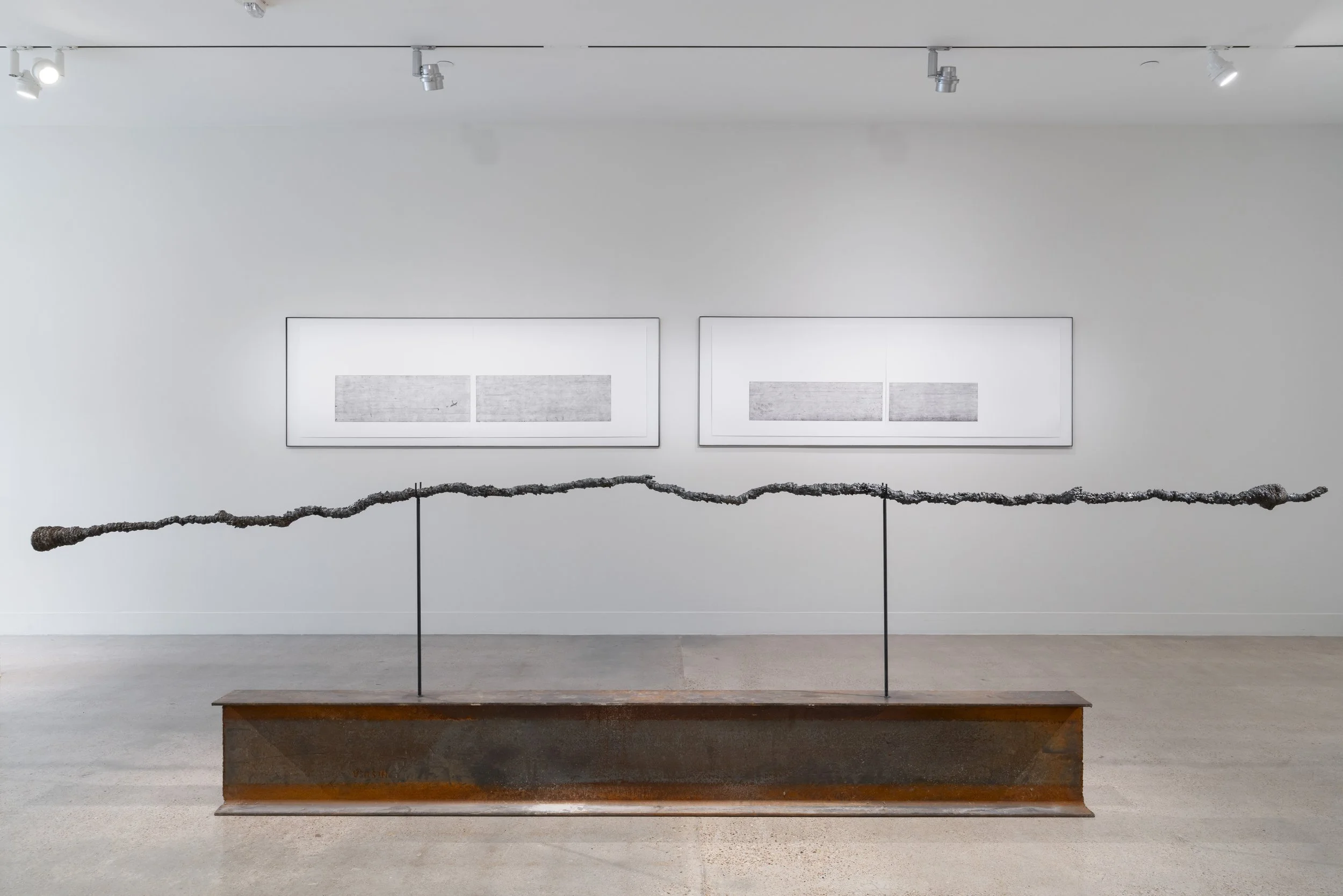
Ciana Taylor is a London-based Irish artist whose moving-image practice blends archival research, performance, and installation to explore belief systems, cultural memory, and the lingering influence of Ireland’s religious past. In this interview, Taylor discusses how character, tension, and atmosphere shape her work, and how she builds immersive environments that draw viewers into questions of identity, history, and contemporary ritual.
Could you tell us a bit about yourself and your background?
I’m an Irish artist, born in Dublin but raised in Bahrain before returning to Ireland at thirteen. Ireland itself plays a huge role in my practice; it's a place that is so joyful yet shadowed by its history, so progressive yet deeply traditional. That duality is something I return to again and again. Like most artists, making has always been a refuge for me. I didn’t fully recognise that until after school, when I was working as a waitress and pursuing acting. I really felt the loss of my weekly art classes and realised that taking time to think and make was something I needed to do regularly. So I stopped acting, started painting again and eventually went on to study Fine Art at Chelsea College of Art, London. Art school was liberating - it gave me permission to experiment and be a bit weird. I started writing more, making films on my iPhone and soundscapes on GarageBand. I loved how all the elements began to converse with each other and developed a rhythm. I got really into video art by artists like Laurie Anderson, John Smith, Patrick Goddard and Johan Grimonprez, and into the research process itself: immersing myself in a subject and letting it guide my life for a little while. The films became a kind of diary - a collaboration between the subject matter, my lived experience, and the threads that connect the two.
Your practice often transforms archival research into deeply atmospheric works. How do you approach translating historical material into moving images or installations that feel emotionally charged and contemporary?
It’s a very intuitive process for me. I do a lot of digging, and when I find something that resonates, I just know. It feels exciting. There’s usually something subliminal in it - a small gesture, a tone, or a detail that feels like a clue, something that helps me understand what I’m investigating a little better. I collect these fragments, and when I start putting them together, a flow emerges. I usually lead the editing with a soundscape. The feeling translates through that process; it becomes a form of communication, almost like passing a baton from one person to another. I think what makes the work feel contemporary is that it’s innately experimental. I don't really follow any traditional rules or structure while I’m making. I’m not trying to recreate the past objectively; I’m reinterpreting what I find, what resonates with me, and recontextualising it in ways that speak to the present - it’s fuelled by my own experiences and relationships. I think when you lead with that, people can feel it.
Sex Education for Girls, 2023
Confession Booth, 2024, Captured by Ben Deakin
On Data as Dust, 2025, made collaboratively with Jamie Seechurn (@Thameswater), Captured by Benjamin Werner
Interstice, 2025, made collaboratively with Jamie Seechurn (@Thameswater), Captured by Benjamin Werner
Your films touch on the legacy of the Catholic Church and its impact on women in Ireland. What do you want audiences to sense or question when they encounter these themes through your use of character and performance?
I want audiences to experience a sense of tension. Using character allows me to create distance; it acts as a lens that reveals belief systems and behaviours that once felt completely normal but now appear strange or unsettling. By embodying something from that time, I can hold it up for examination - creating a space where viewers can reflect on how a completely different ‘normal’ existed not long ago, how it shaped lives in ways that are still relevant today, and how unstable our current normal really is. In my piece Sex Education for Girls, ‘Angela’ is gentle, yet her attitude toward sex is puritanical and awkward. I want to confront people with that, to encourage them to question their own experiences and assumptions. Our sense of morality and opinions are shaped by the systems we grow up in, and it’s important to consider who we might be - or what we might believe - if we had been formed by different circumstances. When I work with performers, it’s about exploring that complexity: examining my own perceptions of right and wrong, and inviting audiences to do the same.
The presentation of your work combines sculpture, sound, and multi-screen projection, creating a space that feels part cinema, part ritual. How do you think about installation as a way to shape how viewers physically and emotionally experience your works?
I went to church a lot as a child and was actually quite religious. I loved the cinema too; both were quite formative for me. In a way, the church and the cinema share a similar function: they both ask you to suspend disbelief and give yourself over to an experience. Installation asks the same thing, and it can achieve that same sense of collective focus and awe. It’s a visceral language: your whole body has to enter the space to experience it fully. The space itself becomes the work - sound, visuals, and objects combine to create a particular feeling - a bit like a church, or a cinema. I think a lot about rhythm, creating a push and pull between familiarity and obscurity. I want the films to exist in conversation with their surrounding environments, inviting people to feel into the experience, make their own connections, and draw their own conclusions.
The Old 9-5, 2025
The Homes We Build, Still, 2025
Tell us a bit about how you spend your day / studio routine? What is your studio like?
My flatmate and I have converted the living room into a combined living and studio space, so I guess I live in my studio. It’s been working really well - I can roll out of bed and get straight to work. Mornings are when I feel sharpest and most creative, so this setup stops my head from getting muddied by a commute. I usually start the day writing, which helps me keep track of my dreams and check in with where I am creatively. That, in turn, guides my ideas for the day. My routine is a mix of structure and wandering. I make a list of things to focus on, then sit and work for as long as I can, whether that's with clay, paint, or editing. At some point, I'll take a walk, film, and let ideas come naturally. I walk a lot, and bring my camera with me when I can. Sometimes I'll work from the British Library, which is a great environment for researching, planning, or editing. If I need to work with metal or do some casting, I go to the London Sculpture Workshop.
What artwork have you seen recently that has resonated with you?
I recently watched A Want in Her by Myrid Carten at the Irish Film Institute, and it blew me away. I thought it was incredible. The film follows Nuala Carten, an addict and Myrid’s mother, who goes missing somewhere in Ireland. It blends home‑movie footage, phone recordings, performative sequences of Nuala directed by Myrid, and a thorough visual investigation of Myrid’s surroundings in Donegal. Myrid clearly adores her mother, but you can see that the relationship is strained. Nuala is complex - she’s difficult, but she’s very likeable. At its core, I think it’s about trying to love someone without losing yourself. It captures the duality of Irishness that I mentioned earlier very well, too. I’d consider the film more an artwork than a traditional documentary; you can really see Myrid’s background as a visual artist. I relate a lot to her process - collecting footage and reflecting on family archives. It’s definitely had a big influence on the work I’m doing at the moment, and I guess reaffirmed my attitude towards making.
Is there anything new and exciting in the pipeline you would like to tell us about?
I’m currently working on my largest body of work to date, an ongoing project exploring faith, identity, and Irish culture. I’ve just spent a month in Ireland filming and interviewing women about their experiences of the country’s recent shift toward secularism. The project has since expanded to include queer voices, members of alternative religious sects, and born-again Catholics. I’ve been collaborating with my friend Molly Mew - who I worked with on Sex Ed - to create visuals inspired by these conversations. Alongside this, I’ve been collecting footage across the Irish landscape and in domestic spaces, and working with musicians to make soundscapes from the material I’ve gathered. I’ve also been experimenting with sculpture and using new materials, so the project is evolving across multiple forms. The work asks what forms of spirituality emerge when traditional religion dissolves, tracing how Irish identity continues to negotiate its spiritual inheritance - the echoes of Catholicism, folk mysticism, and the personal mythologies that arise in their absence. It contemplates how we construct our own cathedrals from fragments of culture, history, and home.
All images courtesy of the artist
Interview publish date: 20/11/2025
Interview by Richard Starbuck
Nathan Anthony
“My interest becomes about ‘how’ rather than ‘how well’ something has been made; it gives me an indifference towards right and wrong.”
Nathan Anthony is a British sculptor whose work explores process, material logic, and the blurred line between the handmade and the mechanised. In this interview, he discusses his approach to repetition, gesture, and invented fabrication systems, as well as how different bodies of work relate to each other within an exhibition space.
Could you tell us a bit about yourself and your background?
I’m from the UK. I was born in West Sussex to Belgian and South African parents. I grew up in commuter-belt Kent with my mother and later inner London with my father. I’m not intentionally trying to mine anything from my childhood for an artistic origin story, but I’ve come to think of it as somewhat significant that I really enjoyed attempting to impersonate accents as a child. Art at school felt like a distinct learning experience that wasn’t just copying off the board or being told information. It was embodied and happened by doing. It felt like you could have a personal stake in it. I wanted to keep pursuing that feeling so I studied for a joint art-practice and history of art degree at the University of Edinburgh finishing in 2014. After that I worked various odd jobs; oriental carpet cleaner, hospitality staff, gallery invigilator, a failed stint at the BBC, and eventually as an artist-in-residence and art teacher in three different schools. This was a productive period as I was able to use their facilities to make my own work and keep developing my practice. I went to the United States to pursue an MFA at The University of Texas at Austin in 2023, graduated in May this past summer, and am based in Austin for now.
Your sculptures often play with weight, texture, and balance, materials that seem both industrial and handmade. What draws you to exploring these physical contrasts?
I think anxiety surrounding proficiency in some traditional skills has often led me to invent strategies that mediate or mechanise my fabrication processes. For me, these invented techniques lessen the burden or relieve pressure on the ‘artist’s hand’ both conceptually (in relation to value judgments) and literally (when there is a lot to do!). My interest becomes about ‘how’ rather than ‘how well’ something has been made; it gives me an indifference towards right and wrong. This lower stakes studio environment frees me up, lets me take risks and get lost in what I am doing. I want the will of Juhani Pallasmaa’s ‘thinking hand’ to emerge. An example is an ongoing series of works in which I hand build various forms (like blocks and mounds) out of clay that has been extruded through a metal die designed to recreate the ridged profile of a modelling plasticine called Newplast. It's a tragicomic attempt by an individual to do the impossible job of an entire factory, or a rogue employee misusing company machinery for their own ends. I’m intrigued by what comes out of these fordist glitches or factory errors. What shape can a herniated disc bulging from the spine of capitalism take?
Muscled Memory, 2021, Photographer: Reinis Lismanis
Calendar Object, 2025, Photographer: Alex Boeschenstein
Several of your works seem to record traces of physical action, pressing, looping, folding: Where process becomes part of the form itself. How important is repetition and gesture in the way your work develops?
They are both very significant. I rarely make one of something. Repetition is important because often I am figuring out how to make something for the first time, so it takes a few attempts, each a little better than the last. I might not know why I’m doing something, or what I want when I’m starting, but I find I can distill and clarify my intentions through this repetitious process. That is why I’ve often been drawn to iterative processes like casting and printmaking that generate multiples. They promote thinking through making and allow me to see different possible versions. I’ve handled gesture in different ways. I mentioned bypassing the ‘artist’s hand’ already. Often it's been about making visible anonymous indexical marks that record time and indicate someone else's presence as a stand in for myself. For instance I’ve made intaglio prints of used chopping boards from the kitchens of a school I worked at. They were impressions of expression. More recently I did the same thing with metal kickplates taken from the bottom of doors in the building where I was studying. But sometimes my own gesture is present. A work like ‘Calendar Object’ is an example of that. I repeatedly stacked circular mig welds on top of each other to incrementally build up a long and spindly organic form in steel.
Many of your installations create a quiet dialogue between objects, as if each piece is responding to another. How do you think about the relationships that form between your works in space?
I’ve always thought of myself as a drag and drop artist in that I’m generally hyper focused on the practicalities of making the thing itself and not on how it will be exhibited. Compromising my work flow by attempting to simultaneously make curatorial decisions seems like such a crass inconvenience. I’ve got horse-blinkered tunnel vision until it's complete and self-sufficient. Then I finish and it won’t fit out the studio door! I do tend to work on different series concurrently so I can bounce back and forth between them when I get stuck or bored. Resolving one work might happen in the background whilst working on another. There's a porousness to working like this and different works can end up influencing each other even if their origins and materials are unrelated. These unwitting relationships that germinate in the studio perhaps crystallize in an exhibition setting when everything is shown together, but it takes some distance and hindsight for them to be visible. Recently I’ve found that Charles Sanders Pierce's sign categories; icon, index and symbol are a helpful way to think about works with distinct representational modes all sitting together in space. Circling back to liking impressions, I seem drawn to adopting a different visual language for each project. They are Trojan horses. It's like one voice, splintered into regional accents, trying to harmonize in space. Hopefully that creates a productive dissonance.
Raw Meat, 2021, Photographer: Reinis Lismanis
Stack, 2025, Photographer:Baptiste Despois
White, 2022, Photographer: Joseph Konczak
Untitled, 2023, Photographer: Reinis Lismanis
Untitled, 2023, Photographer: Reinis Lismanis (detail)
Tell us a bit about how you spend your day / studio routine? What is your studio like?
I'm in a transitional stage as I just finished an intense period of study and am figuring out my next steps. I don’t have my own studio at the moment, but I’m an adjunct lecturer teaching sculpture classes at a university, so I have access to the facilities there. If I’m working on something, I normally do it after classes when it's emptier. In the past few years I’ve been lucky enough to have had consistent access to tools and specialist equipment through my employment, but I do worry about becoming completely institutionalised and overly reliant on these resources. I think it's important to stay supple and be able to respond to any environment. I’ve also made ongoing works that require very little; collecting abraded pool cue chalks from bars, repairing used scratchcards with silver leaf, sticking sand from different beaches to entire rolls of sellotape. I’d like to use these untethered approaches more often. Plenty of things from just being in the world feed into my practice somehow. In particular, walking and noticing things. Rebecca Solnit suggests its rhythm is the pace of thinking. Photographing urban flotsam and jetsam, jotting down fragments of thought. Cycling is a way I love to experience a city, and by public transportation. It sounds weird but I like commuting, it's just stolen time to daydream. Listening to the radio is very important to me, especially in the evening.
What artwork have you seen recently that has resonated with you?
I recently revisited the purpose-built gallery for Cy Twombly’s work at the Menil Collection in Houston. His sculptures in particular always move me. At the Museum of Fine Arts Houston I saw plenty I wasn't previously aware of. A photogram by Zana Briski that was made in situ at night and captured the profile of black bear in motion. A large draped fabric form cast in bronze by Joseph Havel. Harry Bertoia’s delicate brazed brass rod constructions. I do become aware of a lot of art online. Lately, I was excited reading about Kara Walker’s subversive new sculpture ‘Unmanned Drone’ which is a disassembled and reconfigured Confederate bronze equestrian statue. I wish I could have seen June Crespo’s exhibition ‘Danzante’ at Secession in Vienna in person. Her sculptures looked impressively guttural and uncompromising. There's plenty of younger artists I admire. The inflatable latex sculptures of a French artist called Ken Sortias beguile me. I love the quiet cast aluminium works of London based Mathew Peers. I felt very energised coming across the practice of Sophie Friedman-Pappass. In particular her ‘Kiln Building’ works, which are a series of bespoke kilns shown as charred sculptures after being fired. Tangentially, I also recently learned about an older Danish ceramicist called Nina Hole who’s ‘Fire Sculptures’ were monumental forms constructed and fired on-site by wrapping them in fibre blankets.
Is there anything new and exciting in the pipeline you would like to tell us about?
Back in August I made some large unfired clay sculptures on wooden palettes using an extruder in situ at McLennon Penn gallery in Austin as part of a duo exhibition titled ‘Ortland Leathe’ with an artist called Selina Wagner. Unfortunately I had to destroy them at the end of the show as they were too fragile and cumbersome to be transported to a kiln. I have just started a ceramics residency at The Dougherty Arts Center in Austin and I’d like to use my time there figuring out how to fire this type of large scale work.
All images courtesy of the artist
Interview publish date: 20/11/2025
Interview by Richard Starbuck
Michelle Lee Johnson
“I am very content with a polyvalent practice; it is a blessing to continue being surprised by where an idea leads to.”
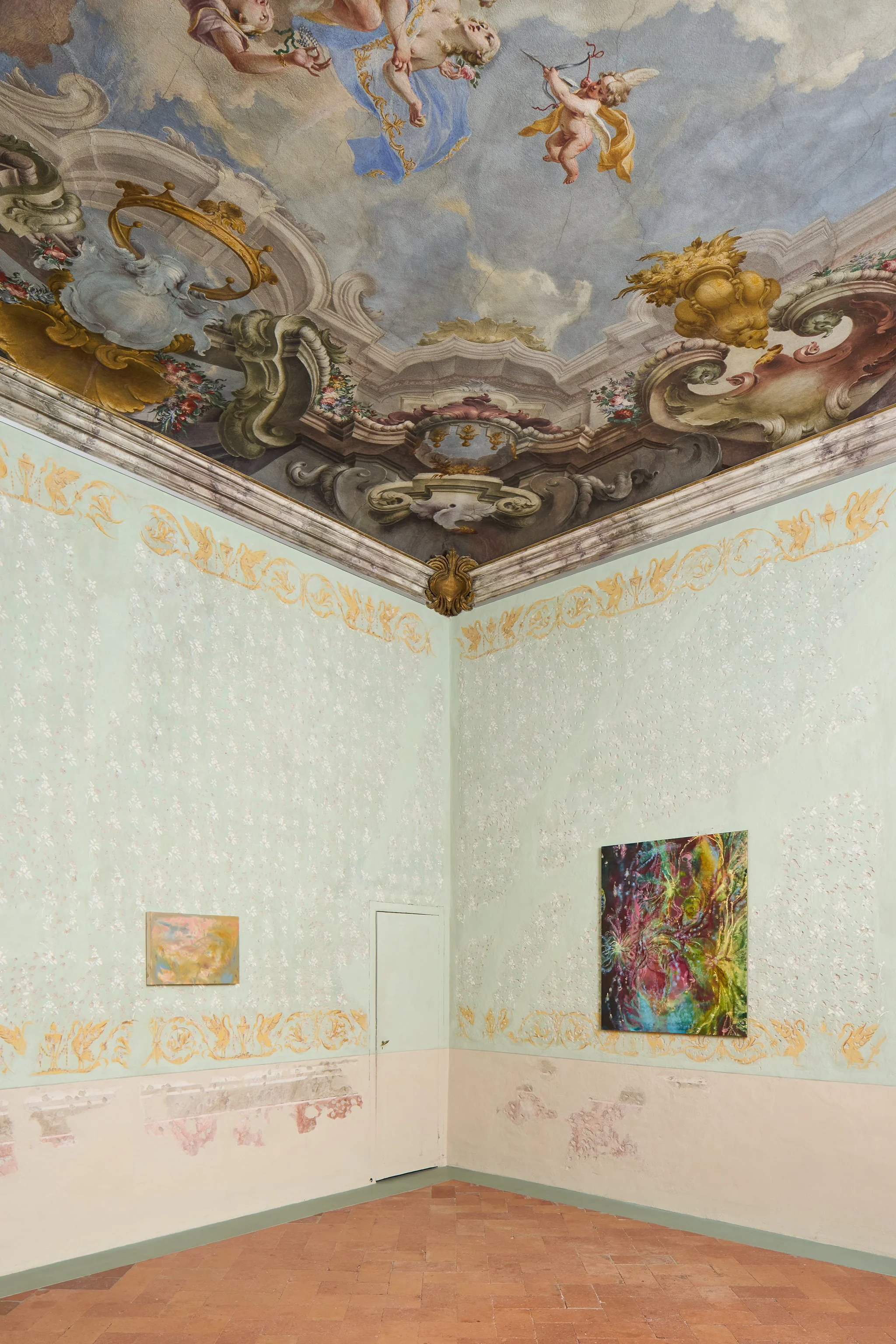
Michelle Lee Johnson is a London-based interdisciplinary artist whose work moves between sculpture, installation, and film to examine how systems shape emotion, behaviour, and belonging. In this interview, she discusses her polyvalent approach to making, the role of humour and affect in her work, and the ideas behind her recent projects exploring performance, surveillance, and public life.
Could you tell us a bit about yourself and your background?
I went to an interdisciplinary studies school in undergrad, where, back in 2015, it was a fresh idea to academia, and I essentially designed my curriculum as a research-based arts practice; although at the time I was not aware of that being a “normal” process or even a recognised field in the arts. After graduating, I worked as a set designer in New York and LA. I’ve always been interested in place – you might call it site-specificity but sometimes it's also an interest in a liminal sense of place – and working in production scaled up my skill and confidence to develop installation-based sculpture and film. Creatively, set design provided unique challenges and material explorations that were almost addictive, but I couldn’t reconcile how wasteful it all felt; the labour, time, money, and actual trash that accumulate from every brand campaign, commercial, editorial, just for it to be cut to 4:5 aspect ratio as an Instagram reel to scroll past. I knew my soul needed to return to the slow thoughtfulness of my art practice. I ended up pursuing my masters at Goldsmiths, and the experience helped me to further understand how the research and making aspects of my practice mutually inform one another. Looking back, I experienced both polar ends of the spectrum to land where is best suited to me; somewhere more flexible to exist across it all.
Your work often shifts between sculpture, installation, and film, yet there’s a consistent focus on how systems shape our emotional and social lives. What connects these different strands of your practice?
I find every project needs approaching on its own terms. I am very content with a polyvalent practice; it is a blessing to continue being surprised by where an idea leads to. That sentiment has taken time to accept, largely due to growing a strong sense of trust in myself. I think that’s why I struggle to claim research-based, because I also follow intuition. I try to meet an idea wherever it is, responding to it with how to make in service of communicating that idea. I also have a strong sense of taste and a clear set of concerns, and so I believe it shows up across all the mediums I work in. I think, at its core, each variation connects under a fundamental question of belonging. Refining this process relied on and continues to involve the support from the people I love, who understand me and my practice. I’ve received plenty of guidance past the hurdle of: “does this make sense?”. It goes beyond nothing being made in a vacuum; creativity thrives amongst kin. One outcome of this community has opened up an on-going collaboration with my friend and artist Emilia González Salgado.
'be still,' 2024
'Jester 7,' 2024
Public Sentiment, 2024
In your film, a melancholic clown endlessly repeats a commute through public transit, a space that’s both collective and isolating. What interested you in using this character as a lens to explore performance, conformity, and shared emotion in public life?
Recently, I’ve been thinking about how affect shapes our attachments, whether to other people, belief systems, politics (Eve Kosofsky Sedgwick’s writing on affect theory is especially influential here). The clown offers a very direct reference to our emotional lives, while also recalling a historical figure of public dissent; the jester who performs to power. An arguably queer figure, the clown in my film doesn’t fully inhabit any role; they aren’t quite a traditional clown, yet they also fail to present as the professional persona they attempt to perform. I wanted to capture that moment of feeling one amongst many, when individual inner lives can sometimes feel united in a shared public space, often felt most intensely collective during a protest. However, this sense of communion is complicated by an overt exhibitionism in the film, calling to a strange cultural coexistence of hypervisuality and severe isolation. How we might feel together or disconnected seems almost indistinguishable. The clown’s emotion cycles from playfulness through despondency and exhaustion to fleeting joy, echoing the rhythm of the daily commute. This looping trajectory becomes a metaphor for the affective dimensions of labour; its repetitive gestures, small performances of endurance, and moments of dissonant relief. In this endless moving circuit that demands performance, emotion becomes both expression and constraint.
Humor and irony appear throughout your work, often alongside themes of alienation and control. How do you see tone functioning, as a way to create distance, provoke reflection, or invite empathy?
It’s a good question, and I might not have a conclusive answer. I think, at least in part, we live in absurd times, and humor and irony are useful operational modes to recognise the deceptive quality of extractive and exploitative systems. I would never want to come across as trivialising; rather, I look to disarm a viewer to be open to the tonal shifts present in the work. Humor can be uniting, and irony is critical without being didactic. There are discrete moments of manipulation or questions of consent in my work, especially around my interest in surveillance. I hope the provocation is reflection, operating as a mirror to our inevitable participation in structures of power or alienation. Ultimately, I think it comes down to a question of whether its function can be attributed to my intention or its reception, so I’m always interested to hear from a viewer how it reads.
'force with no net sum' in collaboration with Emilia González Salgado, 2025
'Judas hole,' 2025. Image Credit: Amelie Mckee
UL11, UL12, X, UL14, 2023
Tell us a bit about how you spend your day / studio routine? What is your studio like?
I prefer an early start to the studio and I need my space to be organised, or at least arranged where I know where everything is. I am usually working on a few separate projects in various stages at once, so the day could be planned for research or material development, and unfortunately likely some admin too. Once I start constructing a piece, I will stay working until late into the night and continue ceaselessly until fabrication is done. I know I can become quite obsessive, which I counteract by pacing myself to allow for the ideas first to evolve over time, as they need. An artist during a studio visit advised me to place new ideas somewhere you can always return to, and where you can leave them to be unresolved until the timing is right. The epiphanies always arrive through passive thinking for me, so I try to spend time in my day under conditions that naturally facilitate processing my thoughts. I find walking operates as an extension of my studio; I take a lot of photo references of what I pass on the street and I am building the habit of writing down ideas right as they come to me. I enjoy reading during commutes — currently captivated by Sean Ashton’s ‘MASSIVE MASSIVE OIL SLICK’ — since I find the hum of a bus or train helps my brain focus. Wherever I am, I keep attentive to my surroundings; that willingness to engage produces a lot of unexpected pleasure.
What artwork have you seen recently that has resonated with you?
Karimah Ashadu’s solo exhibition ‘Tendered’ at Camden Art Centre is an exceptional show. Most notably ‘MUSCLE’ struck me for its multisensory balance of softness and precision; an approach I find profoundly aspirational. I’m drawn to filmic practices like Ashadu’s that situate themselves in proximity to a subject or a story rather than attempting to explain for it; what filmmaker Trinh T. Minh-ha describes as “not speaking about, just speaking nearby.” Her works are intentionally not documentaries – for many critical reasons – operating instead with an acute awareness of the filmmaker’s position and a refusal to occupy the place of authority that role can afford. I also appreciate how Ashadu foregrounds the physicality of the moving image, both in how the films are installed in space, how she manipulates the camera in her films, and how she uses sound to immerse the viewer. The result is an experience that feels both intimate and expansive, grounded in empathy yet aware of the structures that shape how we see.
Is there anything new and exciting in the pipeline you would like to tell us about?
I will be releasing an artists’ book in December with my collaborator Emilia González Salgado as a continuation of our exhibition from this past summer. I’ve enjoyed returning to text and drawing as a part of the process, especially since I currently work full time. It is the not-so-glamorous reality of great opportunities, like the exhibitions and residencies I was fortunate to experience this year; you’re forced to make up for the time by rebuilding your financial subsistence. However, I’m very excited for some of those funds to go towards production of a film I’ve been developing for over two years now. I aim to start shooting in the late winter, so the film is planned for release in mid 2026.
All images courtesy of the artist
Interview publish date: 20/11/2025
Interview by Richard Starbuck
Dino Cama
“My surfaces feel layered and weathered because I want them to look and feel like they went through something to get here. Because that’s been my life.”
Dino Cama is a Denmark-based artist whose sculptural paintings draw on memory, displacement, and the inherited weight of Balkan history. In this interview, he speaks about growing up between cultures, the women who shaped his worldview, and how weathered materials and reclaimed wood become a way to process survival, trauma, and transformation.
Could you tell us a bit about yourself and your background?
My family fled the balkan war In 1992, and ended up in Denmark In 1993. My parents actually met In a refugee camp in Macedonia and fell In love. So I really am a product of war. A war baby. There for I was born In Denmark In 1994, but always have had strong ties to what I still call Yugoslavia. My mom is from Bosnia, and my father is from Montenegro, so every summer that is where we headed back to. As a child I used to sit and draw for hours, obsessively. But then my teenage years happened and I started being more interested in teenage activities. A whole decade went by, and It wasn’t until I attended Fashion Design School in Copenhagen in 2015 that I slowly picked it back up again. But I really first got fully back into it when the pandemic hit in 2020, I was 25 years old then. Seeing the world slowing down and closing, really did a lot of good for me. I enjoy that slow paced life, with not to many people around. I can think and feel better.
Your work often captures the feeling of memory, traces of homes, histories, and experiences that seem both personal and collective. What first drew you to explore these themes of place and remembrance through your practice?
Really I think the answer lies within having really strong women around me my whole entire life. Seeing how they cope with tragedy, loss, things that would just break you. But because they decided that was never going to be a factor, in how they would live their lives it never did. Not living with hate, not living with a grudge or destain. These are all things that carry a certain mental heaviness, that can take away from your true self and your soul. I mean for the first 4 years of my life we lived out of suitcases, just waiting for the news that everything had come to an end and we could return back home. My grandparents were always 5 minutes away from us, and I would be at their house more than my own. Growing up, just being curious, asking questions. I couldn’t believe what they went through. And here you are today. Still laughing, still smiling, making the best of everything. I guess that gave me a sense of never wanting to be ungrateful, and speaking for the generations that had come before us. A voice for the voiceless in a sense. So these themes just happened to take over through my work, it was never planned, just destined.
No Pork In His Diet, 2024, installation shot by Mikkel Kaldal
Documenta, 2025 Photography by Mikkel Kaldal
The surfaces of your works feel layered and weathered, as if carrying physical and emotional residue. How do you approach the materials you use, especially wood, to reflect ideas of time, change, or trauma?
I remember one of my earliest memories in life, was that I wanted was to escape the daily race. For some reason I understood this very early. Not being stuck in traffic at 7 o’clock In the morning trying to get to somewhere you really hate to be, but you have to be there. I really think this is one of the biggest tragedies in our lives, and I really believe this gives trauma on a level, over the years, we can’t truly comprehend. That’s why I think I have such a hard time to this day, doing things I have zero interest in. I don’t want to compromise, I see no reason for it. Art is a way to survive for me. It is the only thing I have ever enjoyed and been disciplined at. Things I find of the street also have that strong sense of survival. I go to the woods and find more material that any art store I can find. The smell of wet wood is enchanting. It has endless possibilities in it, and I can leave a lot of mistakes on the table. That I later can bend and tear, and become very excited about, and go further with. It ends up being a very meticulous process. My surfaces feel layered and weathered because I want them to look and feel like they went through something to get here. Because that’s been my life. I spent years and years just being lost, not knowing what to do with myself. But still feeling like I had something to offer.
Many of your pieces sit somewhere between painting and sculpture, with a strong sense of weight and texture. How do you think about form and material when moving between two and three dimensions?
If you go back to Bosnia today, even Sarajevo. You can still see bullet holes in most buildings and houses. Poverty is a real thing for many still, and people use anything sustainable to rebuild. That is what gave me the sense, that I could move so much across mediums. Anything I can recycle, and make into something that can be used is a win. Wood is such a powerful natural tool. I realised that when building these pieces bit by bit, it also became this sculptural object and gave me a chance to move away from the traditional canvas. I then took this idea further, and it dawned on me the same was possible to do with cardboard, textiles and styrofoam. Nothing is off limits to make into art & beauty. We need more of it, especially with the state of the world these days. So when I build these works it’s about my gut feeling when it’s done. I want it to represent strength and moving forward. Not dwelling on things. Being able to escape. A transformative journey. I try to have a tactile approach, with nuances of manipulation of the material. And then let that lead me into the kinda mark making, and movement I want to put on it. Almost like a song you dont quite know yet, but you choose to try and sing along.
Savant King, 2025 Photography by Mikkel Kaldal
Rope, Fur, Velvet, 2025 Photography by Mikkel Kaldal
The Pijaca, 2025 Photography Mikkel kaldal
Tell us a bit about how you spend your day / studio routine? What is your studio like?
My studio sits on a big farm, with a small lake in the backyard in the outskirts of the city. No more than a 10 minute drive from where I reside. In the summertime I like to sit there for some moments, smoke a cigarette and look at the water before starting painting. It is the perfect place to work, as it’s got that quiet to it I am looking for. It is a very brutalist space, and gratefully so I have all the room I need for larger scaled works. If I’m on a deadline for a show, I will usually get to the studio early in the morning. But on normal days I will get in around noon, and go at it until night breaks out. I try to get at least 7-10 hours in everyday. And when I do get home I usually sit and draw, or write anyway. So it’s just a non stop process. I then hit a ceiling, and have to step back for a couple of days and go live a little, to think about everything. The work has to sit with me for a bit before I truly know how I feel about it. Unless it is one of those rare occasions when you hit a zone in the studio, and finish something you just know right away is good.
What artwork have you seen recently that has resonated with you?
I recently saw this large scaled work, titled Tempest (Concave) by the late great abstract expressionist Jackie Saccoccio. And it just knocked me out. Her understanding of color and mark making was immense. MASADA - 1993 by Ouattara Watts is also a work I keep coming back to. He is to me one of the great maestros we have left.
Is there anything new and exciting in the pipeline you would like to tell us about?
Just after the new year I have a group show coming up In Venice at Centro Espositivo San Vidal - Spazio SV in January. Followed by a pop up show In Milan to end January with. I am also currently working on my first publication of poetry, set to come out In the spring of 2026 with Supertime books Copenhagen. And I have a duo show planned to happen this coming February.
All images courtesy of the artist
Interview publish date: 20/11/2025
Interview by Richard Starbuck
Seohyun Oh
“I’m drawn to the intersection of the spiritual and the natural because I’m interested in capturing moments that feel both fleeting and timeless.”
Seohyun Oh is a South Korean painter based in London whose intuitive, abstract works explore perception, memory, and the shifting space between the real and the imagined. In this interview, she reflects on how rhythm, movement, and fleeting sensory impressions shape her atmospheric landscapes, revealing a practice grounded in intuition, fluidity, and the delicate interplay between nature and inner experience.
Could you tell us a bit about yourself and your background?
I’m a painter originally from Seoul, South Korea, but I’ve spent the past several years moving between Chicago, London, and South Korea. I’m currently based in London, where I completed my MA in Painting at the Royal College of Art in 2024. Before that, I earned my BFA in Painting from the School of the Art Institute of Chicago. My practice explores perception, memory, and fleeting moments that are difficult to articulate. I’m drawn to the subtle rhythms and movements in everyday life, translating those impressions into abstract, intuitive paintings. I like working in that space between reality and imagination, where something feels familiar yet slightly transformed.
Your paintings seem to move between the real and the imagined, blending organic forms with a sense of light and rhythm. How do you approach building these fluid, atmospheric landscapes?
I approach my paintings not as depictions of specific places, but as a way of exploring perception and feeling. I usually start with impressions , fragments of memory or fleeting moments , and let those guide the gestures and forms in the work. I spend a lot of time layering, reworking, and sometimes obscuring surfaces; that process helps me stretch and dissolve forms, creating a sense of movement and fluidity. Light, texture, and rhythm are really important to me. I think of them almost like musical elements, shaping how the painting unfolds and how the forms interact. My process is very intuitive , I respond to the energy in the studio, the flow of the brush, and often the music I’m listening to. In the end, I’m less interested in depicting a real landscape and more in capturing the sensation of perceiving something as it shifts , that moment when the real and the imagined begin to blur.
"Minestrone", Palazzo Monti ,September 2025
Music and movement seem to play a role in how your compositions unfold. Do you see painting as a performative or time-based process?
Yes, I see painting as both a performative and time-based process. Music and movement play a big role in how my compositions unfold. Listening to music while I work often influences the gestures I make and the rhythm of the marks, creating a kind of improvisational flow. Each movement feels performative, like a note in a larger composition, and the act of painting becomes a dialogue between my body, the materials, and the emerging image. At the same time, painting is very much time-based. I move around the studio, layer, rework, and revisit surfaces repeatedly, letting the work evolve gradually. The way a painting unfolds over hours or days mirrors how perception and memory shift, making time itself an essential part of the process. In that sense, the work exists both as a performance in the moment and as the accumulation of moments stretched across time.
Many of your works suggest a connection between the spiritual and the natural. What draws you to these themes, and how do they shape your use of colour and form?
I’m drawn to the intersection of the spiritual and the natural because I’m interested in capturing moments that feel both fleeting and timeless. Nature, for me, is never static, even the most solid forms seem to vibrate, shift, and transform. There’s an energy in landscapes, light, and weather that feels almost intangible, like it exists somewhere between the visible and the felt. Exploring this in my work allows me to consider how perception, memory, and emotion interact with the world around us. This approach really shapes the way I use colour and form. Rather than representing things literally, I focus on their essence , the mood, rhythm, and resonance of a moment. Colours often emerge intuitively, responding to the emotional quality of the scene or the energy I feel while working. Forms stretch, dissolve, and recombine, creating abstract fields that hover between reality and imagination. In this way, my paintings become a space where the natural world and an inner, spiritual experience coexist, inviting viewers to engage with both simultaneously.
Feels, 2025
Aurora, 2025, Photo by Petro Gilberto
Hair of the Dog, 2025, Photo by Petro Gilberto
Tell us a bit about how you spend your day / studio routine? What is your studio like?
My studio is currently based in Camberwell, London. It’s a large shared space divided between four artists. I really enjoy that quiet sense of community, it helps me focus while also feeling connected to others. I usually go to the studio after breakfast and start the day with drawings. It’s hard for me to go straight into painting; drawing helps me loosen up and find a rhythm. Listening to good music is also really important it sets the mood for my day and creates the kind of positive energy I need. Probably this is true for many artists, but especially for me, because my work is very intuitive. Being around good vibes really affects how my paintings develop. During the day, I move fluidly between paintings, layering, reworking, and responding to what’s happening on the canvas. Sometimes I step out to a nearby coffee shop when I need a break or some fresh air, especially after long stretches of focus. My routine really depends on how I feel: when things flow, I can paint all day; if not, I might work for a few hours and then go back to my flat , meet friends, or visit an exhibition. It’s a balance between discipline and allowing space for intuition to guide me.
What artwork have you seen recently that has resonated with you?
I recently went to Paris to see Disco by Vivian Suter at the Palais de Tokyo. The show featured 493 paintings created over the last 20 years, and it was incredible to see the life of a person unfold across a single exhibition. What really struck me was how free and honest her paintings are — there’s such energy and directness, a sense that she’s fully following her own impulses. Seeing that kind of openness sustained over such a large body of work was truly inspiring.
Is there anything new and exciting in the pipeline you would like to tell us about?
Yes, absolutely , there are a few things I’m really excited to share. I’ll be presenting a new body of work at NADA Miami with Andrew Reed, which feels like an important moment for me. These pieces were developed over the past several months and reflect a shift in both tone and approach within my practice. Preparing for this presentation has allowed me to further explore the themes and visual language I’ve been working through, and I’m looking forward to seeing how the works resonate in that context. A significant part of this development happened over the summer, when I spent time in a residency in Brescia, Italy. The residency gave me the space and focus to slow down, experiment, and engage more deeply with my materials. Being in Italy , surrounded by a different rhythm of life, architecture, and history , naturally influenced the way I approached the work. It gave me room to rethink certain aspects of my process and push myself into directions I had been considering but hadn’t yet fully committed to. Both experiences , the residency and the upcoming presentation feel connected, and I’m really excited to finally share the results of that period of growth and exploration.
All images courtesy of the artist
Interview publish date: 20/11/2025
Interview by Richard Starbuck