Benjamin Graham Walker
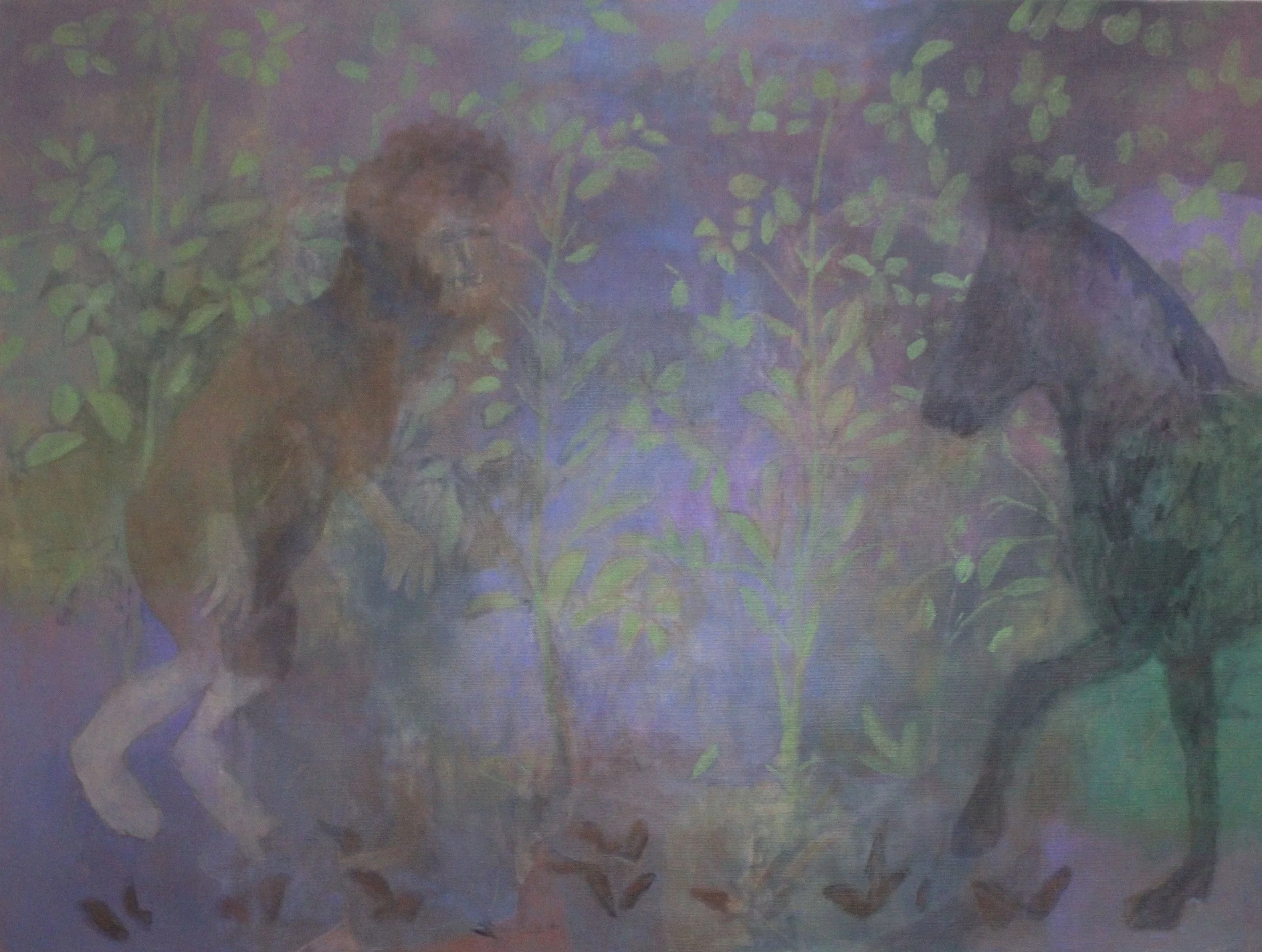
"A successful painting for me is one that seems familiar, comfortable, almost reassuring yet also slightly disconcerting or unsettling or with an odd sense of melancholy. I sometimes think of it as comparable to visiting a place where everyone you knew has long since gone."
Our interview with Benjamin Graham Walker offers a fascinating look into the world of a painter whose work lingers in the space between comfort and unease. Drawing on memories of a suburban British childhood in the 1970s and 80s, and the half-remembered images of television that shaped a generation, Walker builds and strips back layers of oil paint to create scenes that feel at once familiar and quietly unsettling. From his Kent home studio, he reflects on colour, memory, folklore, and a recent return to painting the wild carnivores that once roamed Britain. What follows is a candid conversation about process, inspiration, and the enduring pull of things half-remembered or perhaps only imagined.
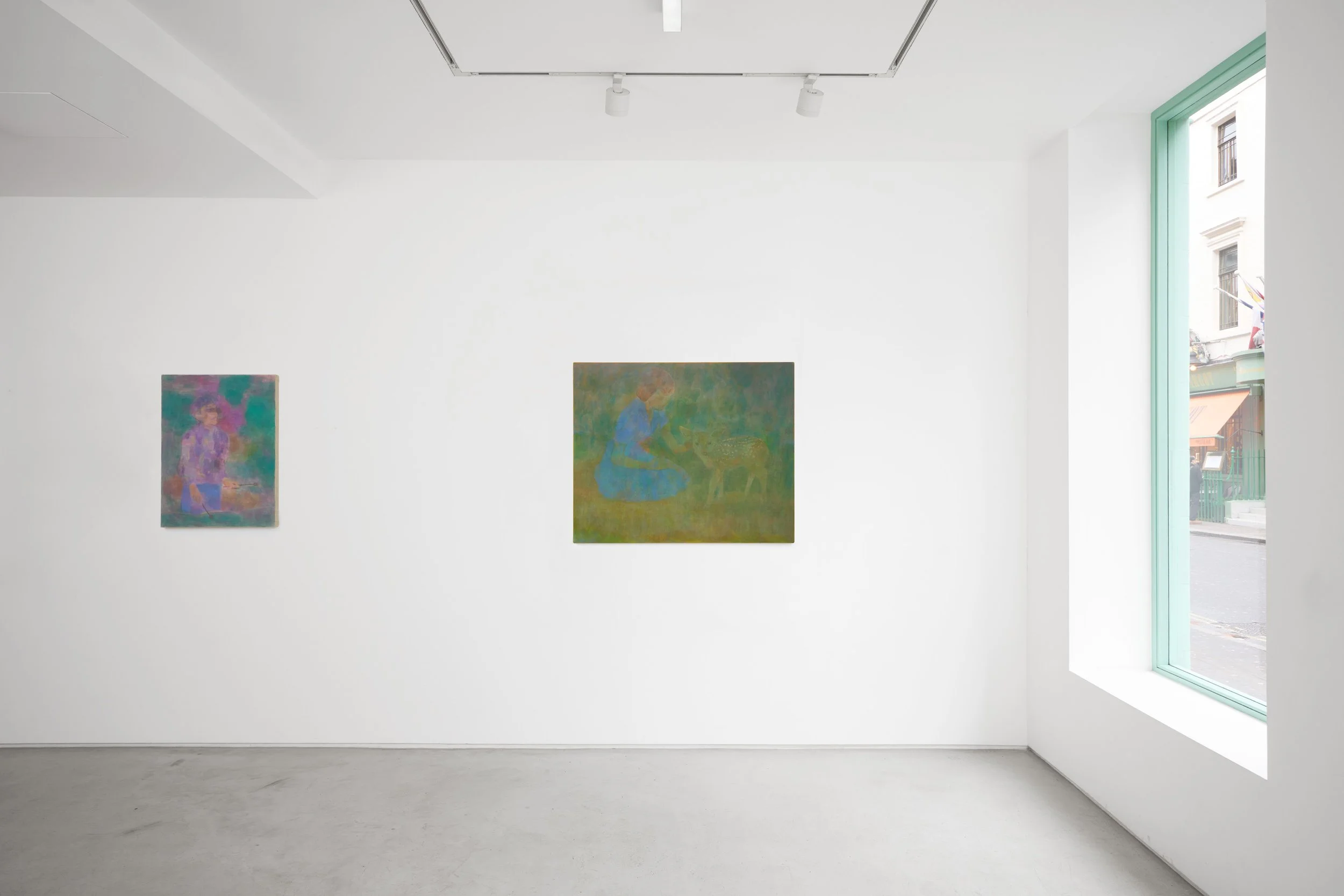
Teatime Dystopia, Soho Revue, London, 2025
Could you tell us a bit about yourself and your background?
I’m a painter based in Kent, where I have a home studio in my flat. I grew up in North West England and studied in Sheffield in the 1990s and then moved to London in 2000 where I lived until 2014, when I moved to Kent. After having a Live/Work flat in my last few years of being in London, and enjoying having everything I needed all in one space, I wanted to carry on with a similar set-up. I was lucky to find a location that was affordable but with good transport links to London so travelling to see exhibitions or go to private views is pretty easy.
There is a strong sense of something familiar yet unsettling running through your paintings, as though they capture moments that sit somewhere between comfort and unease. Where does that tension come from for you, and how do you decide when a painting has struck the right balance between those two feelings?
My work is based on memories of my own suburban upbringing in the 1970s and 80s and of imperfect but persistent memories of the most affecting tv or educational programmes. Many dark and challenging programmes were made in this time, but there was no means of recording them (for most people) and no expectation that one would ever see them again. This results in a feeling of longing for lost things. I try to express these thoughts in the paintings. The source material, culled from books, internet searches, stills from vintage tv shows and films, is selected for its peculiarly British strangeness and understated sinister quality, and often contains elements of the supernatural, folklore, the unknown, or science fiction. A successful painting for me is one that seems familiar, comfortable, almost reassuring yet also slightly disconcerting or unsettling or with an odd sense of melancholy. I sometimes think of it as comparable to visiting a place where everyone you knew has long since gone.
Your paintings have this quality where figures and scenes feel like they're dissolving or emerging from the surface, almost like a fading memory. Can you talk about how you build up and strip back layers of paint, and what role that physical process plays in the meaning of the work?
Some images become not only ingrained in the memory but can even affect a world view. These are the ones I select for recreating on canvas, but the majority will eventually be painted over and never be visible. The process of making paintings can be quite long, often months and occasionally years. I work on many paintings, usually dozens, at a time. Having unresolved canvases taking up space can feel a huge failure, so I remind myself I am far from alone – many painters return to paintings time and time again, and that’s just how it sometimes needs to be. The early stages of a paintings are building up thin layers of oil paint, waiting for each layer to dry before adding the next one. I always have a composition drawn on the canvas at the start but this invariably changes during the course of making the paintings, contours are obscured or hidden under paint, different ideas reveal themselves and maybe new source material found. I use coarse grained linen so am able to build up layers, scrub out paints with turps, alter, re-work over and over, and still retain the rough surface that I enjoy painting on. I try to assess what information from the source material is needed, and what can be omitted or hidden. I hope this contributes to giving a sense of something half-remembered, inaccessible, or possibly imagined, a perpetually unsettling village in the 1970s.
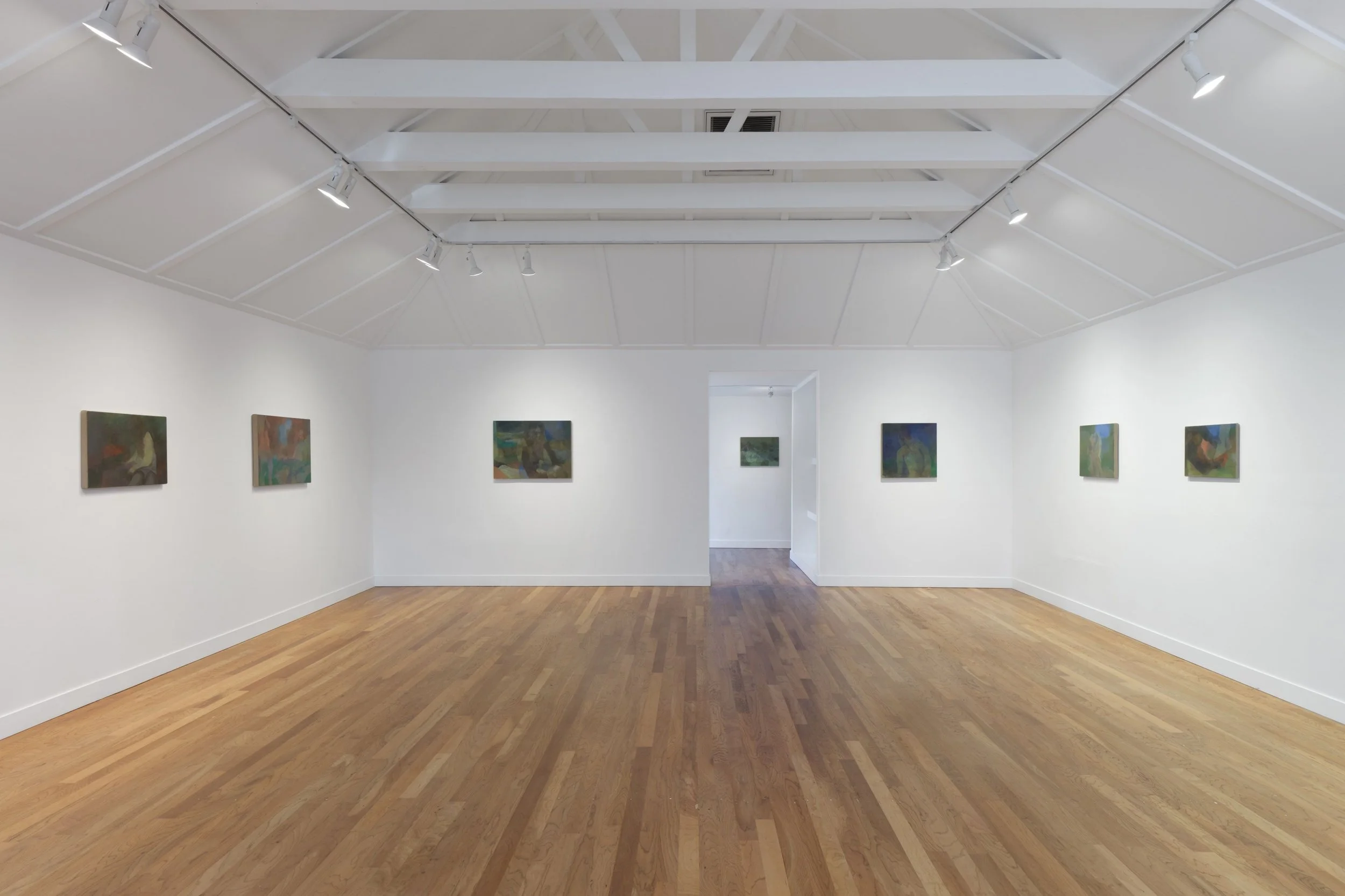
Life Without God, M+B, Los Angeles, 2023
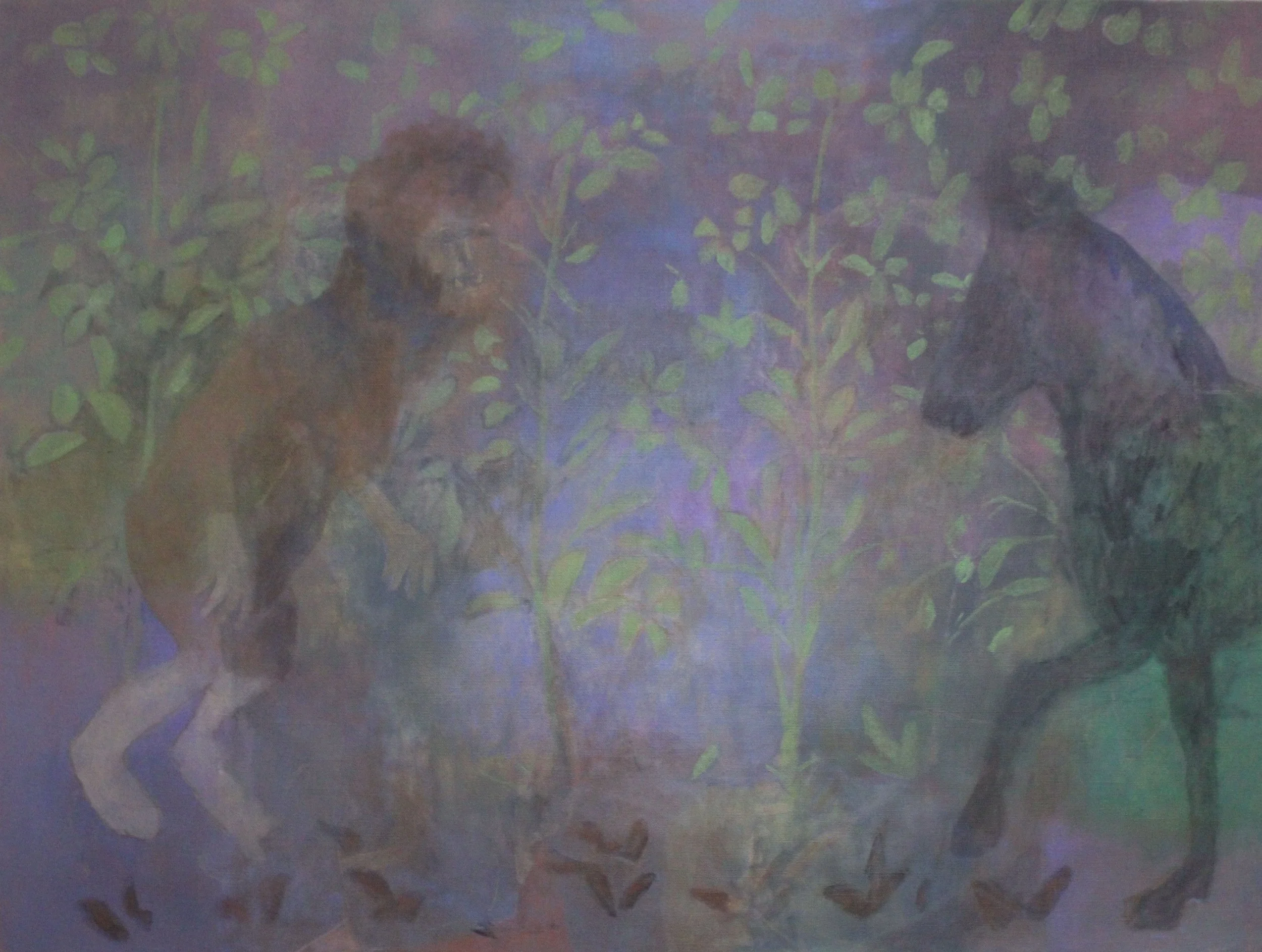
Voices, 2026
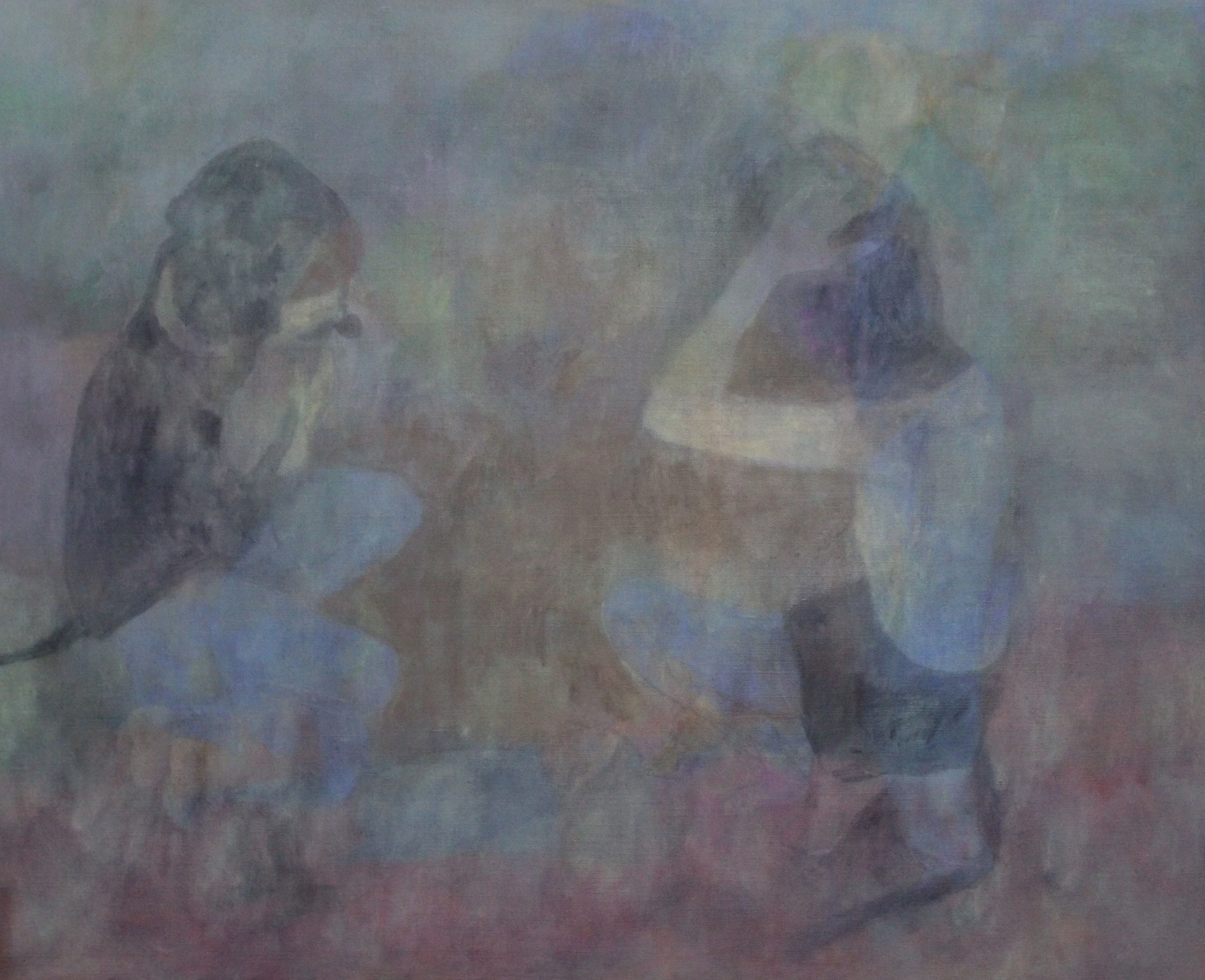
Yersinia Pestis, 2025
Your color choices are really distinctive, with warm oranges and reds sitting underneath cooler greens and blues that seem to push through or muffle what came before. How do you approach color relationships in your work, and do those choices carry specific emotional or narrative weight for you?
I’ve made a real effort over the last year or two to be more experimental, less predictable and naturalistic with using colour. I was lucky to find a huge collection of Old Holland oils on Ebay, including colours and hues I’d never really considered using before. I think it really inspired me to be more open-minded and less rigid about colour, and this, combined with a wider range of source material, gave me a sense of excitement about all the possibilities of new paintings I could make. I find great enjoyment in placing one colour next to another. Generally, canvases begin with layers of warm colours, overlaid often with cooler greens, greys or blues. Working on multiple canvases at a time allows me to build up layers, scrub things out, re-work, paint entirely new compositions over old ones, try different colours. Colours mixed on the palette don’t necessarily work on the canvas, which is partly why so many so many layers are erased or painted over. The colours, without being overly literal or descriptive are authentic in that they capture the Britain that I remember from the late 1970s-80s or give a sense of a time that has passed, and they contribute to giving the pictures a sense of not quite fitting together, existing with an aura of awkwardness.
Tell us a bit about how you spend your day / studio routine? What is your studio like?
I live in a flat just outside London, and use one of the rooms as the studio. Space is therefore limited, but the room is large enough to make work up to 150cm, and there is enough storage space for all the work. I have a day job, so my time in the studio is mainly weekends, some evenings, and annual leave. A typical studio day would begin around 9am, I set up the palette, go through source material I will be using, look at the paintings that I will be working on that day. For the next couple of hours I would work on perhaps two or three paintings, thinking about which colours to mix, and spend a lot of time just looking at the work, and also looking at books about artists. Currently, Carel Weight and Keith Vaughan. I listen to podcasts or music much of the time. Recently I’ve been listening to The Fall, and was reminded how great they were, and for such a long period of time. If she’s not with me already, one of our cats, Lola, usually joins me for coffee at 11am. I spend the rest of the day working on several canvases, going back and forward between different ones, often something happening in one may give me ideas for another. If it’s a good day, and I’m completely immersed in painting, I will forget about everything else.
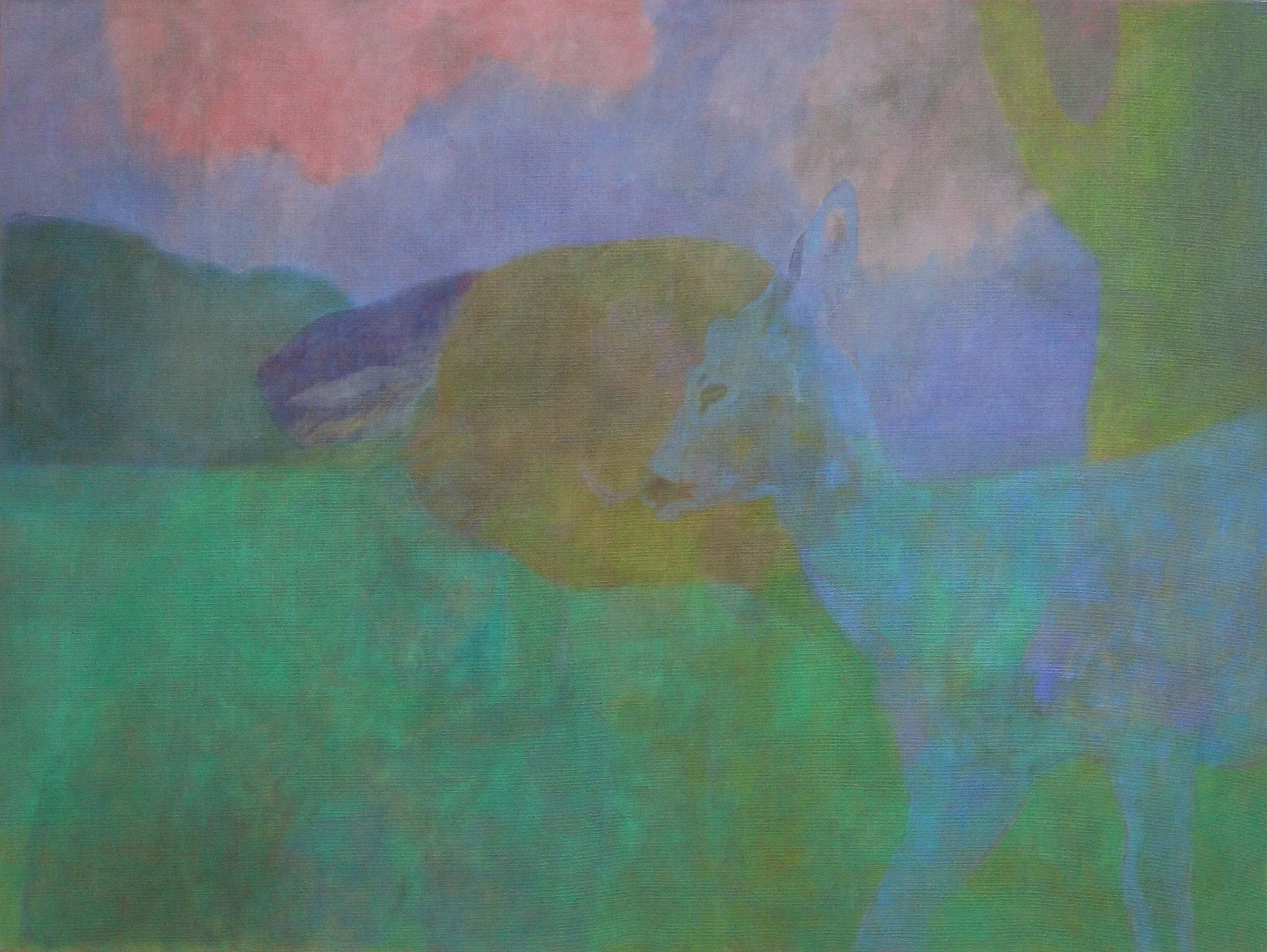
The World Last Summer, 2026
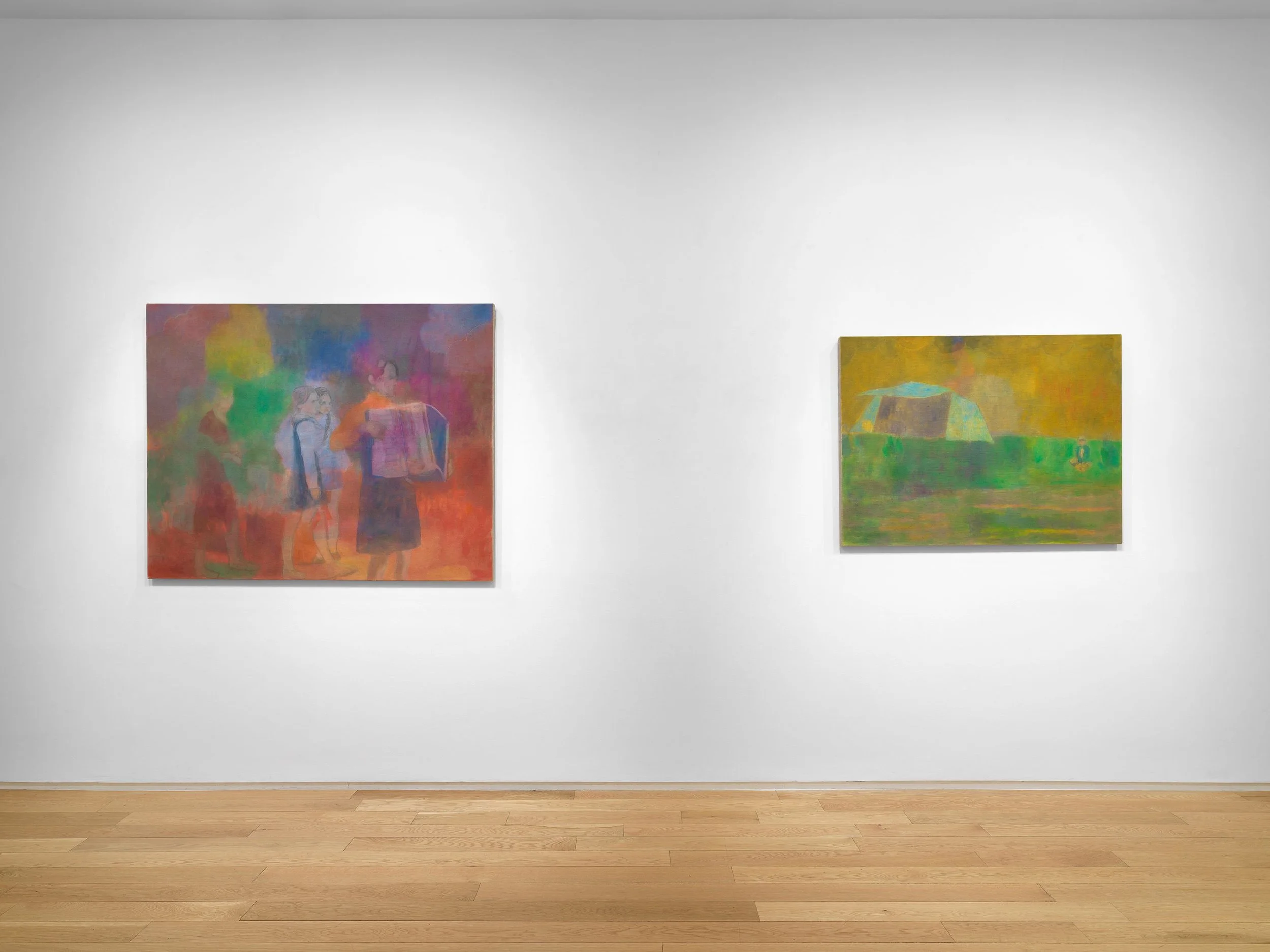
Alexander Berggruen Gallery, New York, 2024, Photo: Dario Lasagni
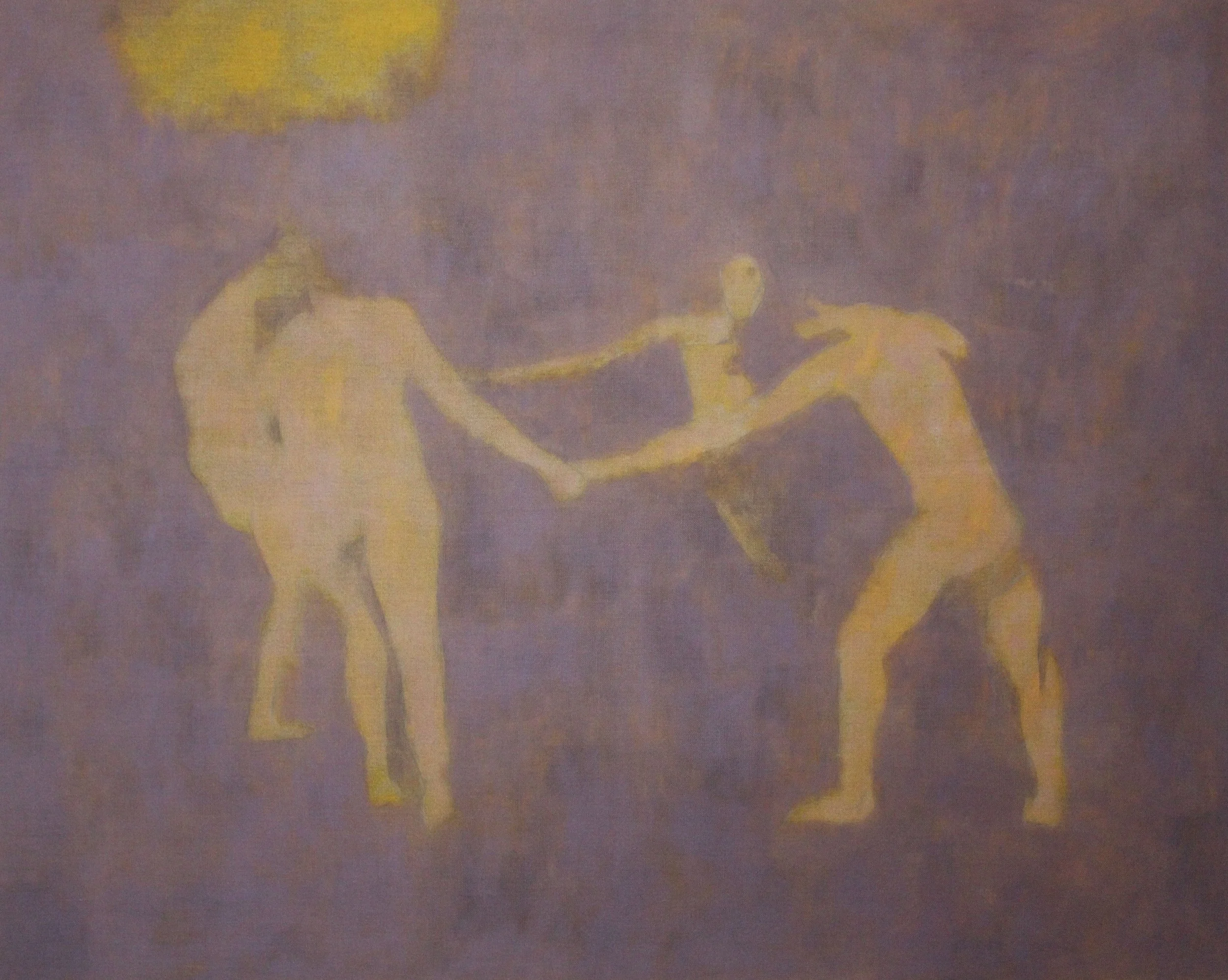
Demons Come In All Shapes And Sizes, 2026
What artwork have you seen recently that has resonated with you?
I am affected and inspired by other media, and I really admire the work of Sean Reynard, who makes short films that are available on YouTube and social media. His films are parodies of 1970s school programmes, Open University and the like. They are bizarre, deeply odd and the attention to detail is impressively accurate. The colours, décor, props and soundtracks combine to make something familiar but uncomfortable and disquieting. A series called Stare With Mother Follows Shortly mimics the interludes between long ago childrens’ programmes, but recreates them as uncanny almost pagan like images with a forlorn, haunting soundtrack. I credit Sean’s work with encouraging me to introduce a slightly comic quality that creeps into to one or two of my paintings, although I not sure many people have noticed.
Is there anything new and exciting in the pipeline you would like to tell us about?
Last year was unfortunately a difficult time for various reasons and for much of it I struggled with motivation and self-belief. Over the past few months I have painted over most of my canvases from last year. I have recently begun a series of paintings of European carnivores. So far I have painted wolves, bears and lynxes, all of which lived in Britain in the long distant past. Interestingly, there is talk of re-introducing lynxes in parts of England and Scotland. As a youngster, one of my main interests was animals, especially wild cats, and I used to draw them all the time, so really this is a kind of revisiting of that interest and of reminding myself how important nature is. I really disliked a lot of my work from last year, so I was very happy to see it gradually disappear and be replaced by a celebration of wildlife.
All images courtesy of the artist
Interview publish date: 09/06/2026
Interview by Richard Starbuck