Yi Hsuan Lai
“These performative acts allow the body to blend into the object and the object into the body, dissolving boundaries and merging into unfamiliar territories.”
Our interview with Yi Hsuan Lai explores a practice that merges staged photography with sculptural assemblage, where body, material, and image operate within a shared structure. Based in New York, Lai works with repurposed and tactile materials to construct precarious, often ephemeral forms that are later translated and reconfigured through photographic processes. The conversation addresses the relationship between photography and sculpture, the transformation of discarded objects, and an ongoing exploration of embodiment, perception, and the shifting boundaries between physical experience and visual representation.
Could you tell us a bit about yourself and your background?
My name is Yi Hsuan Lai, also known as Shan. I was born in Taiwan and am now based in New York. I originally majored in graphic design, and my interest in photography began through capturing still images from theatrical performances. In 2019, I moved to New York to pursue an MFA in Photography at the School of Visual Arts, while also exploring other fine art disciplines such as performance and soft sculpture. This experience expanded the way I engage with photography and led me to approach it as a medium that connects the body, material, and image into a shared structure, bridging physical sensation and visual perception to express my internal world outwardly. My experience of emigration has also produced an ongoing sense of suspension. This condition informs my work, as I explore how the body navigates instability and constructs a sense of belonging within shifting environments. Through a visceral and ambiguous visual language, my work carries a subtle sense of humor and clumsiness, where tension, discomfort, and play coexist.
Your works combine staged photography with sculptural assemblages, where objects, fabrics, and fragments interact with the body in unexpected ways. What draws you to working at this intersection between photography and sculpture?
I am drawn to hand-built sculptural forms as my subject because their tactility transmits an embodied experience, becoming a site where I bridge the corporeal, material, and psychological. Working through my body, the forming process becomes a dialogue between body and material. Through this haptic engagement, forms emerge intuitively, often beyond conscious control, and sculpture arises as a mode of expression. Most constructions are ephemeral and precarious. Photography crystallizes this fragility while capturing uncanny encounters and revealing sensory qualities. It translates tactile and spatial experience into a visual language that compresses space, flattens depth, and creates ambiguity between what is real and artificial. I am interested in this tension, where something feels bodily and immersive, yet distant and illusionistic. Photography becomes a way of sculpting with light, composition, and blending images and objects. I further deconstruct my photographs through irregular cut-out, rebuilding them as physical entities. By printing onto materials such as aluminum and nylon lycra, I bridge the gap between the flat image and its tangible form. These openings expose hidden layers, like a bodily interior or sculptural void, where the image continues to transform.
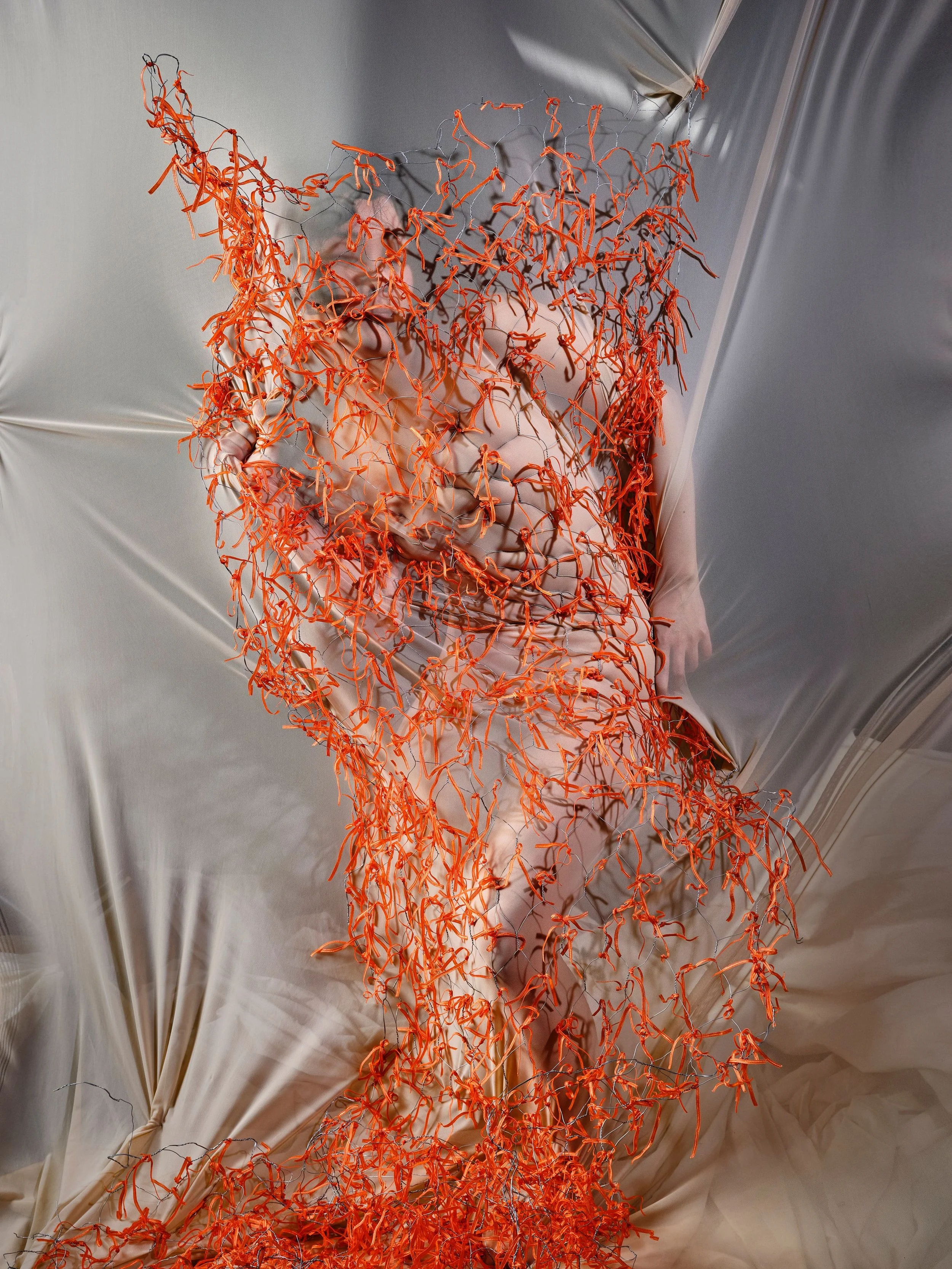
You Become A Fuzzy Fire, 2023
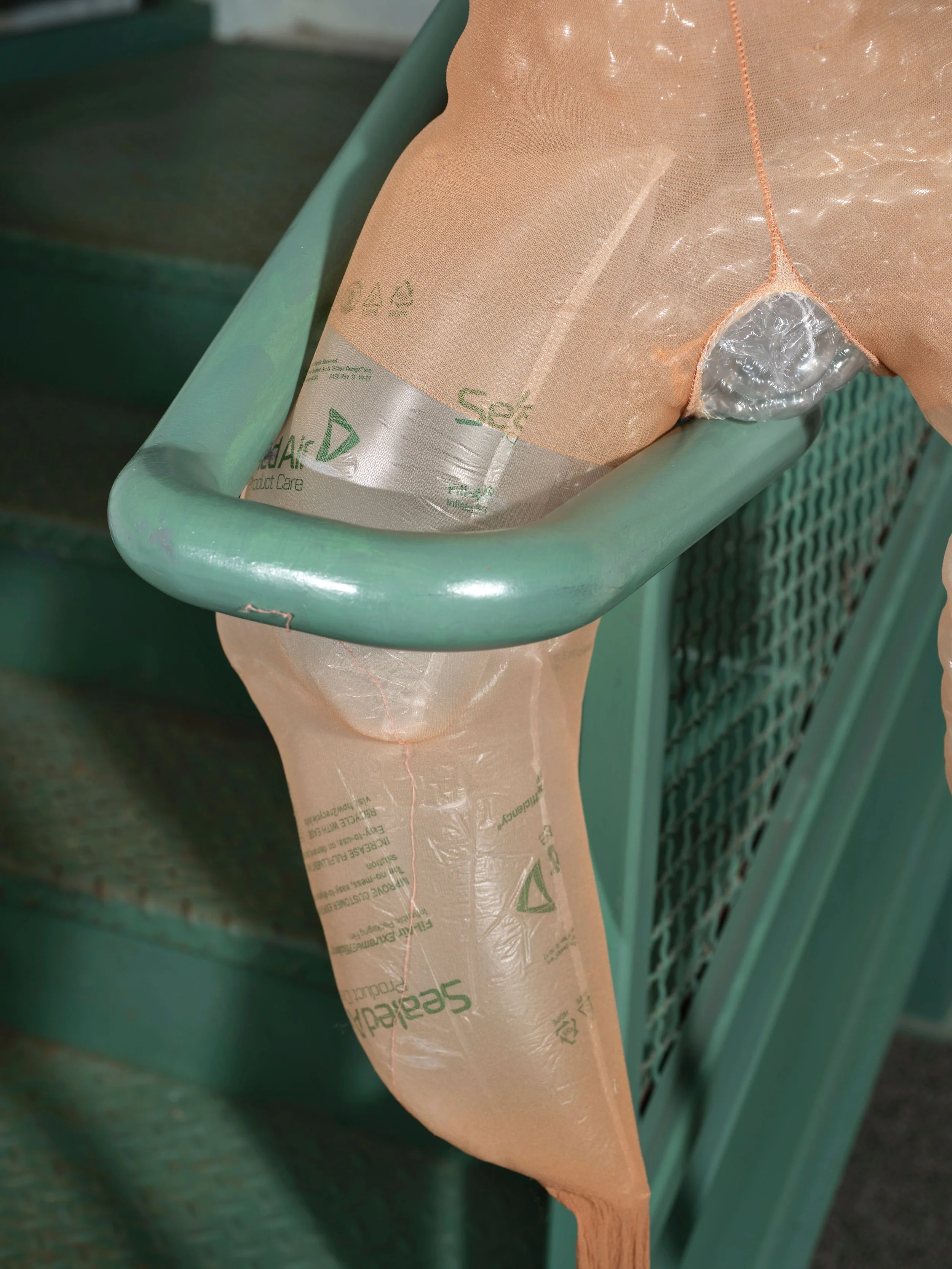
Get in, Get out, 2022
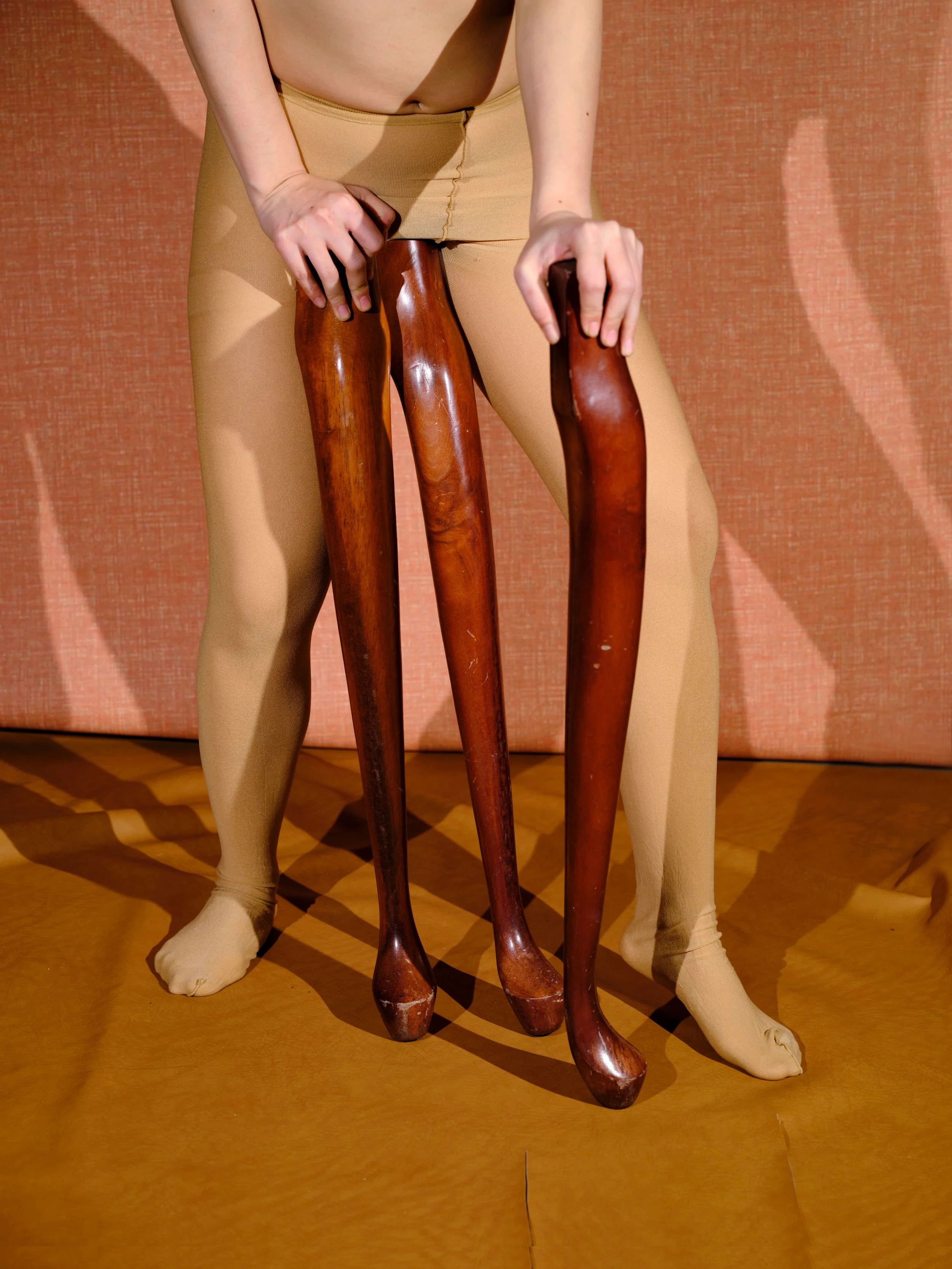
One leg, two legs, three, four, five, six seven legs, 2024
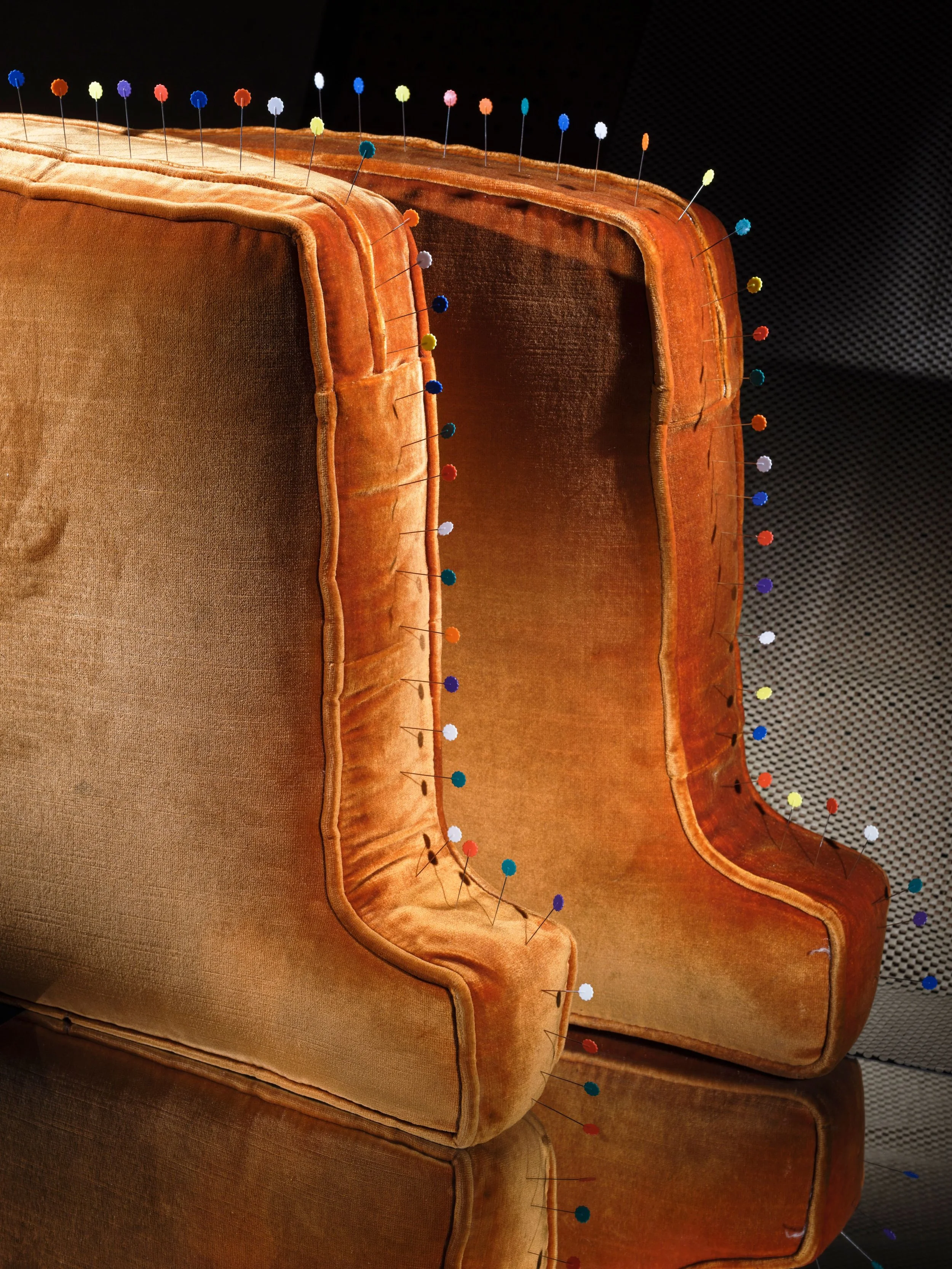
Giant’s tickling, 2023
Many of the materials in your compositions appear to be everyday or disposable objects that are twisted, layered, and reconfigured into elaborate structures. How do you approach selecting and transforming these materials within your process?
I use discarded and repurposed materials because they already carry a history of being used, overlooked, and rejected. These materials exist in a state of transition, no longer serving their original function, which allows me to reconfigure them into new forms and meanings. I reconfigure these found objects into animated, almost living forms that act as collaborators, props, or environments. I collect materials along my daily paths—on the way home, to the studio, or in dumpsters, as well as from thrift stores and creative reuse centers. I take their existing forms as a point of departure, drawn to their shapes, color, texture, transparency, and elasticity. Some objects range from soft to firm, with a tactility that allows bending, folding, and compression, while others are larger in scale and begin to resemble bodily structures or skeletal frameworks. Alongside these found materials, I introduce elements such as foam, latex, and tubing, selected for their physical and visceral qualities. Their stretch, surface, and responsiveness to touch evoke something skin-like or internal, as if they could belong to a sentient being. Through handling and assembling them, these materials suggest interior spaces and organs, blurring the boundary between object and body.
The body appears throughout your work, sometimes partially hidden or merged with objects and environments. What interests you about using the body in this fragmented or obscured way within your compositions?
Growing up, I often felt a distance from my own body. Emotional expression was rarely direct, and the body was expected to remain within certain boundaries of what was considered appropriate. Femininity, in particular, was shaped by specific expectations: it was as if only certain forms could be seen, accepted, and appreciated. Through my artwork, I seek to re-script these narratives, offering an altered perception of how femininity and suppressed emotions can be reconfigured, made visible, and expressed. Corporeality functions as a shared language, a medium that crosses linguistic barriers to convey emotions through a visceral visual form. Using my own body allows me to establish a direct, immediate relationship with materials and surroundings; it is a tool that is always present. When I position myself within the set, my body becomes anonymous and neutral. It acts as a surrogate that adapts, camouflages, and assimilates. These performative acts allow the body to blend into the object and the object into the body, dissolving boundaries and merging into unfamiliar territories.
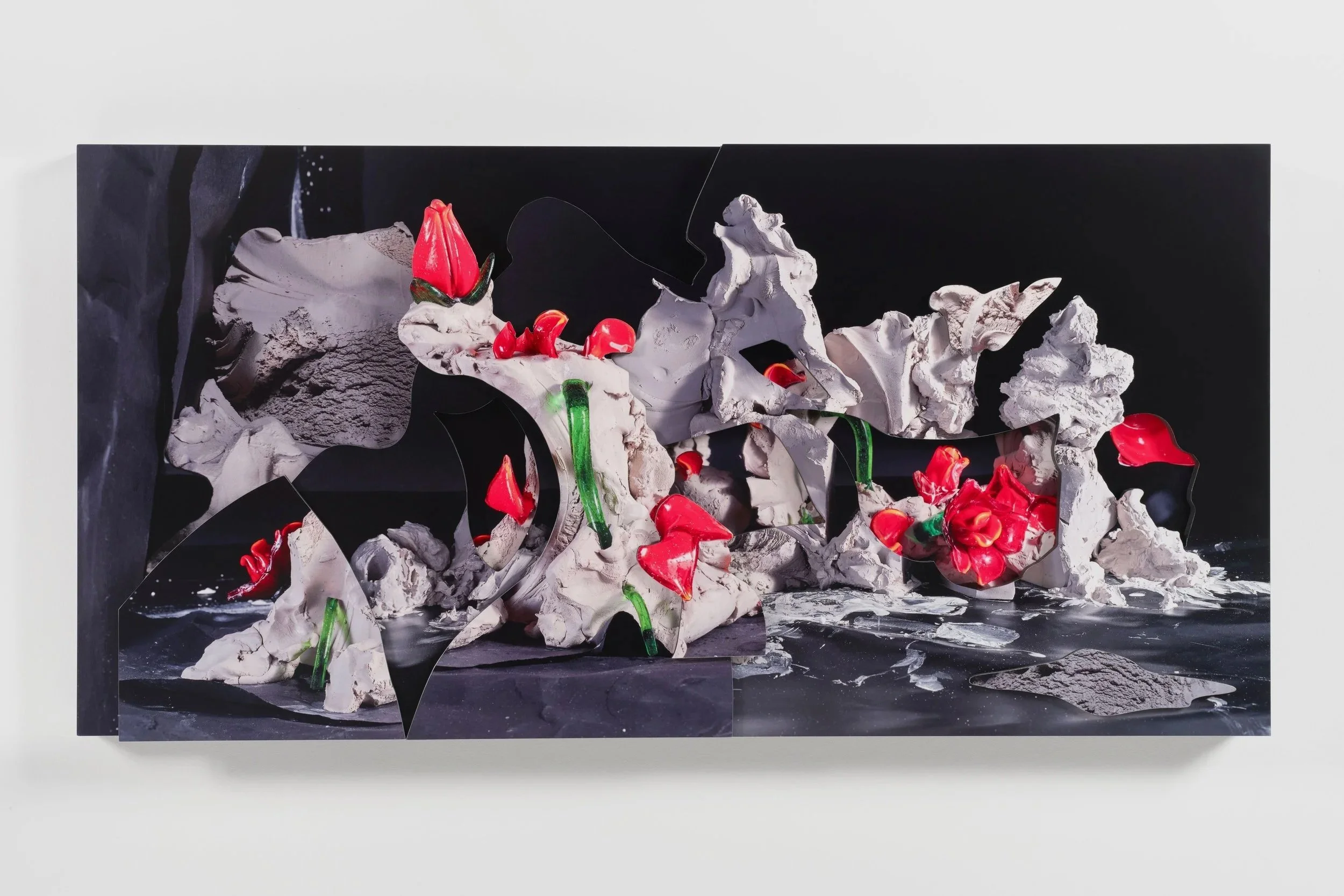
Forward, Backward, Shattered, Flare, 2025
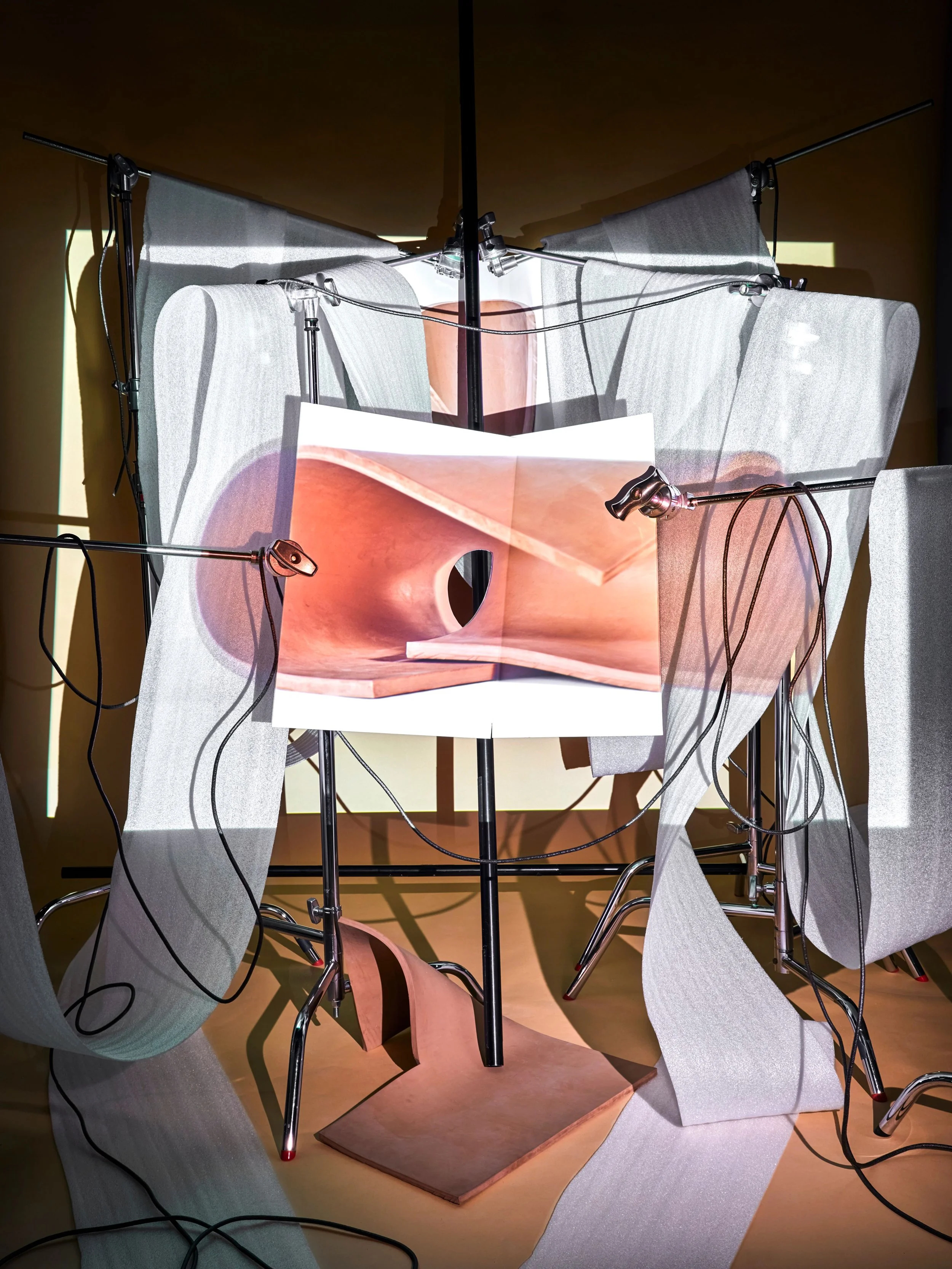
Vocal, 2025
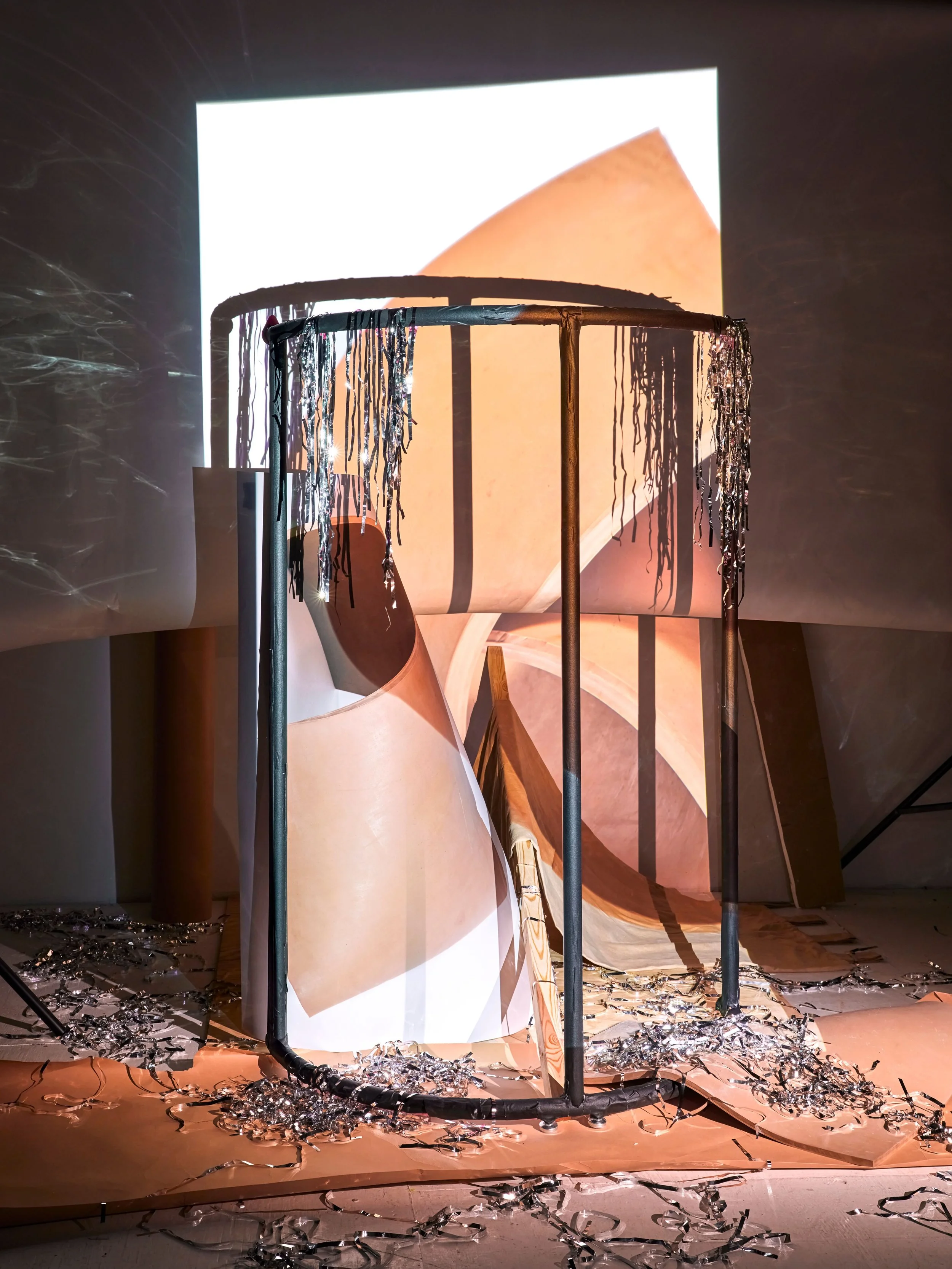
Residual Glitter, 2025
Tell us a bit about how you spend your day / studio routine? What is your studio like?
Due to the nature of my work as a freelance photographer, it is often challenging to maintain a consistent routine; however, I feel like a squirrel hiding my nuts (materials and scattered ideas) in my studio, preparing for moments of inspiration and the chance to take form. My studio stores the materials I want to keep, and the ones I perhaps shouldn’t keep. Whenever I start a set, I intuitively work on structuring it over a few days: sourcing materials from my surroundings, building, taking down, photographing, and rephotographing until I reach an exhausted state. At that moment, I can feel the construction finding its own body to exist in the photos. Last summer, I had the opportunity to be in residence at SoMad, where I worked in a spacious studio for five months. I felt the studio become part of the ecosystem, and the spatial experience of my body changed how I construct my work within the photograph. Some of my work is built through these successive residencies over time; each piece becomes a configuration of my embodied experience at that moment, intersecting with the specific objects and environments I encounter.
What artwork have you seen recently that has resonated with you?
I recently made a trip to Mexico to visit the Diego Rivera Anahuacalli Museum. Built with volcanic stone, it houses 2,000 ceramics and sculptures on display from his collection of over 50,000 pre-Hispanic artifacts, all set beneath geometric, mosaic-like ceiling murals. Navigating the building feels like unpacking a Russian nesting doll; from the moment I stepped through the portal and ascended to the top floor, I realized it is an architectural manifestation of a total worldview. What resonated with me was how history, earthy materials, and the spiritual all connect in this sculptural cosmos. It feels sublime to stand within it.
Is there anything new and exciting in the pipeline you would like to tell us about?
I will be participating in the Focal Point Sector at the AIPAD Photography Show with SoMad (April 22–26), followed by a residency at Skowhegan from June to August. I look forward to these upcoming opportunities to connect with new people and to experiment with new work during the residency.
All images courtesy of the artist and SoMad
Interview publish date: 26/03/2026
Interview by Richard Starbuck