Tim Sandow
“The image remains a state and shows a moment full of possibilities that cannot be completely resolved.”
Our interview with Tim Sandow explores a painting practice grounded in ambiguity, atmosphere, and the rejection of fixed narrative. Based in Wuppertal, Sandow approaches painting as an open system, where images function as unresolved states rather than scenes with clear meaning. The conversation addresses the tension between cinematic expectation and painterly logic, the role of uncertainty in shaping images, and the recent expansion into film as a way to extend questions of time, perception, and narrative beyond the limits of the static image.
Could you tell us a bit about yourself and your background?
Yes, I'm Tim Sandow, I'm a painter and I live in Wuppertal. I was born in Wolgast in East Germany in 1988. Originally, I didn't plan to become a painter. I always wanted to work in animated film. However, I didn't pass any of the final entrance exams at the film schools, so I ended up studying media design and eventually came to art. It was only later that I went to the Academy of Fine Arts in Vienna and studied with Daniel Richter. What interests me most about painting is that it is an open system. A picture can be many things: political, poetic, absurd, or simply a visual statement. I also teach at the University of Wuppertal because I find it interesting to talk to students about painting and see how the medium is changing.
Your paintings often depict dimly lit interiors or landscapes where figures appear caught in ambiguous situations, as if something has just happened or might happen next. What draws you to these suspended moments and the sense of narrative tension they create?
I don't really believe in the idea that a picture functions like a scene from a story. Painting is not cinema. A picture is first and foremost a surface with colors and shapes, and everything that happens in it happens simultaneously. Of course, my pictures feature clearly recognizable figures or situations that give the impression that something has just happened or is about to happen. But this is less a planned narrative than an effect of the fact that we are used to reading images narratively right away. Especially representational or figurative ones. We see a group of people and automatically think: What are they doing there? Who belongs to whom? Who started it? Are they allowed to do that? I'm more interested in the moment when these expectations don't quite come to fruition. The figures stand in a room or in a landscape, but their relationships remain unclear. Perhaps it seems tense, perhaps completely banal. This uncertainty is actually more productive than a clear-cut story. The atmosphere, which may seem cinematic, helps to create a certain mood, but not to explain anything. The image remains a state and shows a moment full of possibilities that cannot be completely resolved.
Your debut film introduces moving image into your practice. What led you to explore film as a medium, and how does working with time, movement, and narrative in film relate to or expand the atmosphere and storytelling found in your paintings?
For me, film was an almost inevitable extension of painting. In my paintings, you can of course make suggestions and leave clues, you can show figures in certain constellations, but they always remain static. In film, on the other hand, you can move these figures—not to stage a plot, but to see how they come across when you give them minimal time. My film is about a plane crash that is never shown. I am not concerned with the event itself, but with the figures who appear in very different places, initially without dialogue, and whom one would potentially associate with each other. What roles do they automatically assume? What social responsibilities are projected onto them? Do we understand their priorities? Time in film is a stylistic device: you let the characters stand a little longer, you give them space, and you force the viewer to engage with them. Movement itself creates expectations, and these expectations can be broken. This broadens the spectrum, which I have noticed is not enough for me in painting, even though the film is also conceived like a painting in individual motifs: that a situation must also be sat out in real time.
Many of the places in your paintings feel familiar yet slightly fictional, as if they might be drawn from memory but altered in some way. How do memories or emotionally charged locations influence the environments you create?
I wouldn't say that I paint places from memory. Rather, they arise from a mixture of observation, experience, and what I take from my personal preferences. I am aware that spaces are never neutral; they carry power, functions, expectations, and certain roles within them, which cannot simply be ignored. When a place in a picture seems familiar, it is because we know certain spaces and situations in a similar way, but at the same time I have changed, shifted, exaggerated, or broken them up. This creates a mixture of logic and fiction that may be a little unsettling. I am interested in how figures react in these environments, what conflicts arise between them and the space, and how viewers appropriate this dynamic. A place is never just a backdrop, but always part of the situation that the viewer interprets. This is central to the effect of my images.
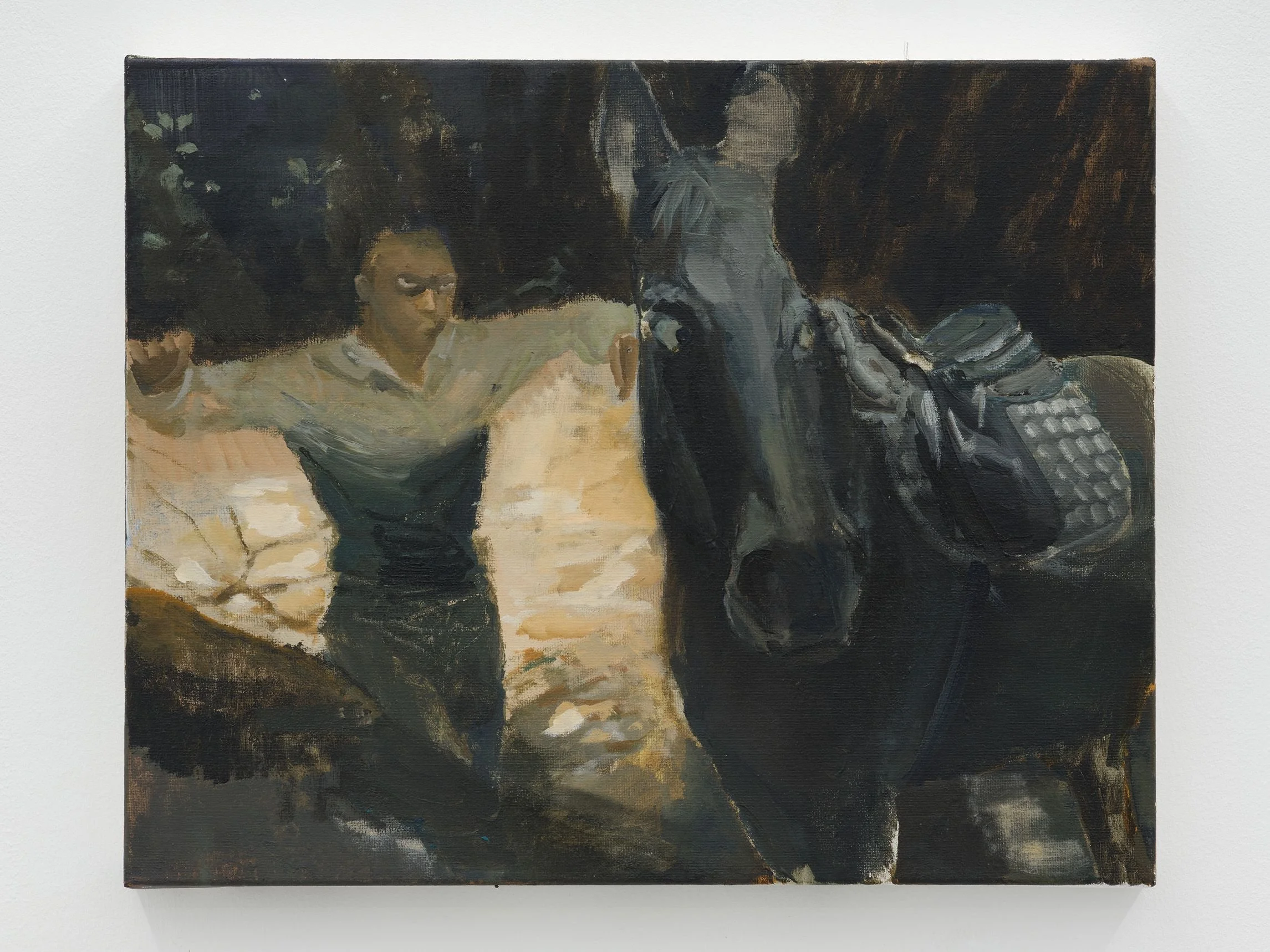
Almería, 2025
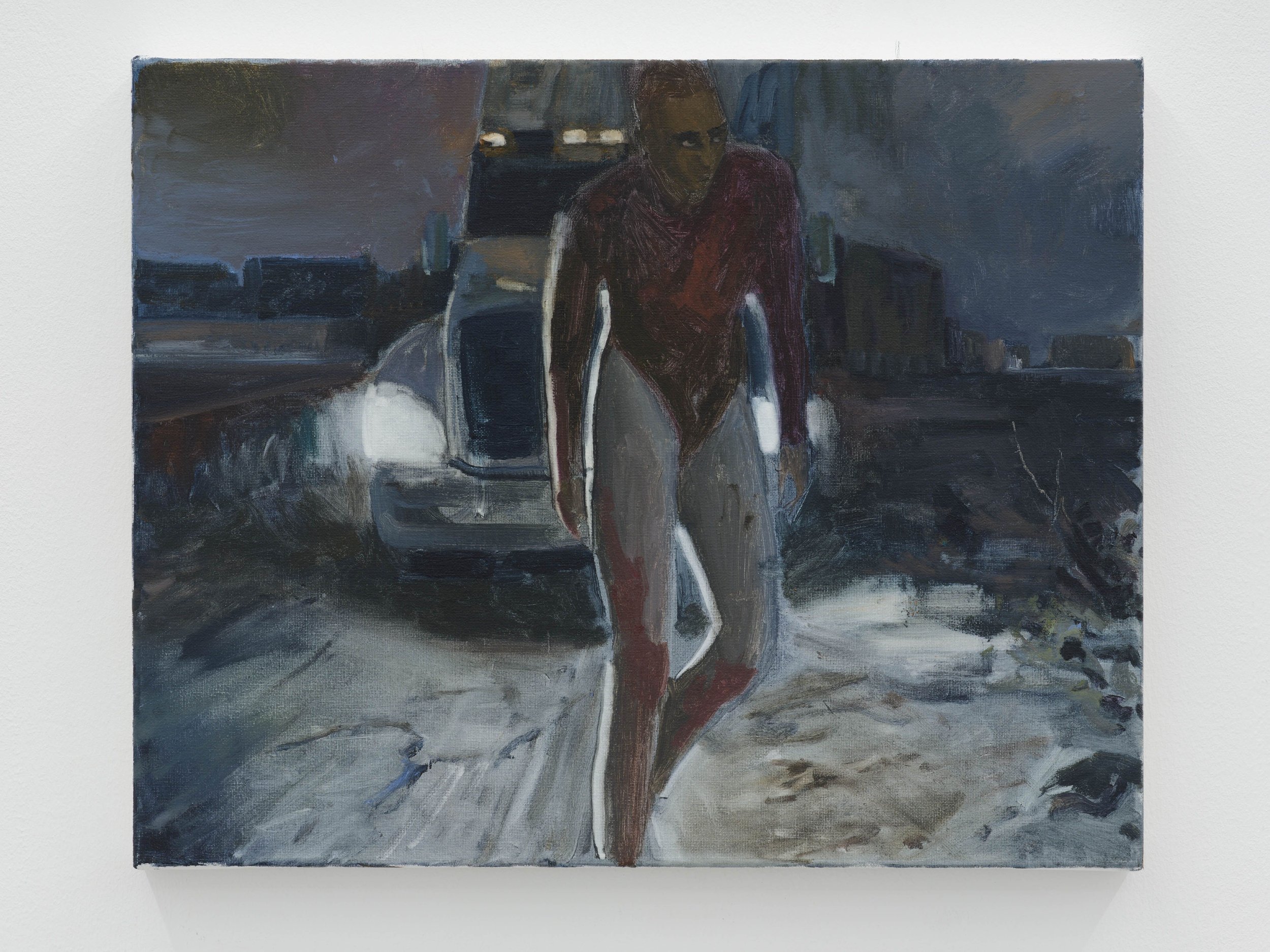
Time is on my side, 2025
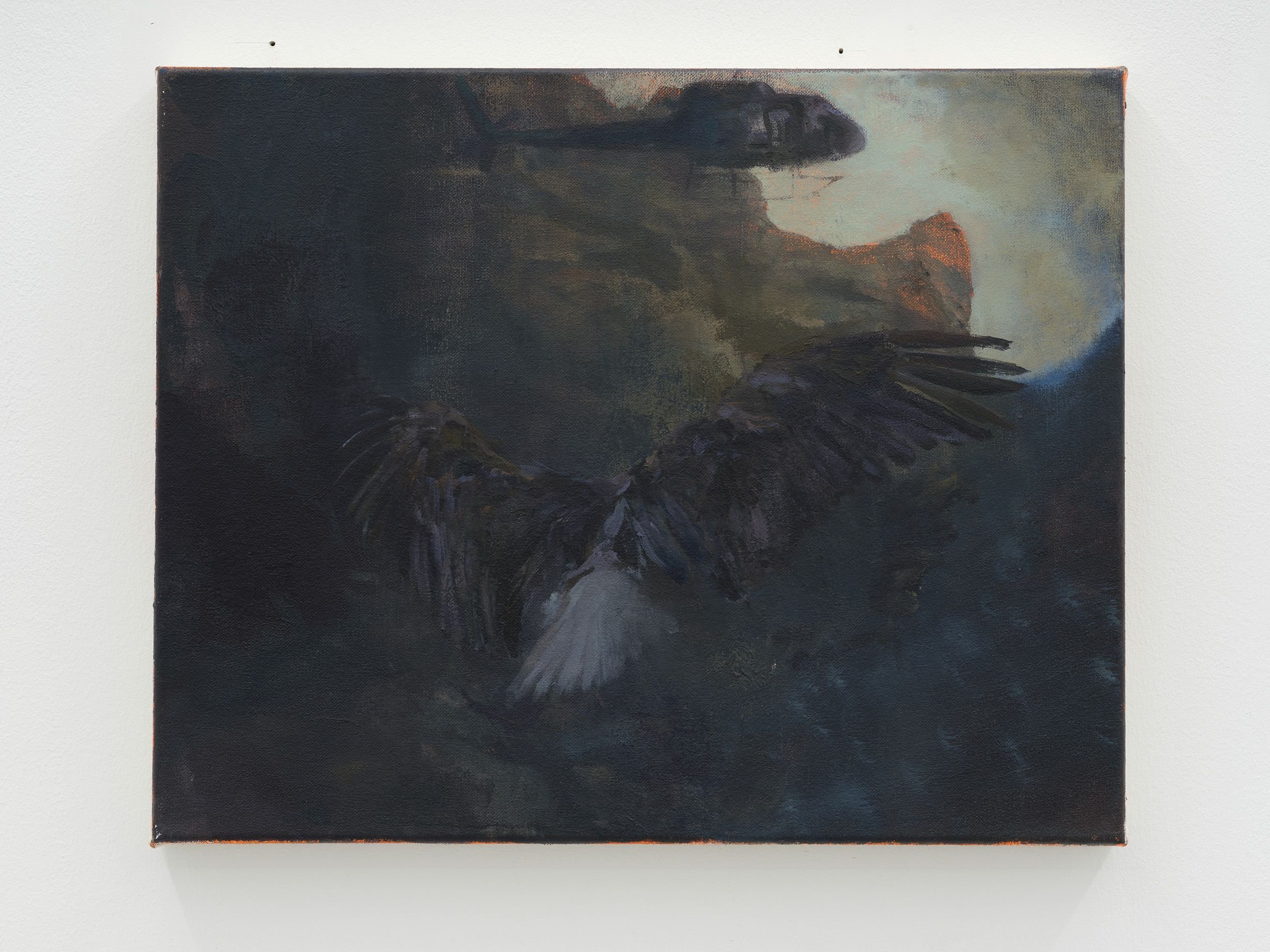
Tony, 2025
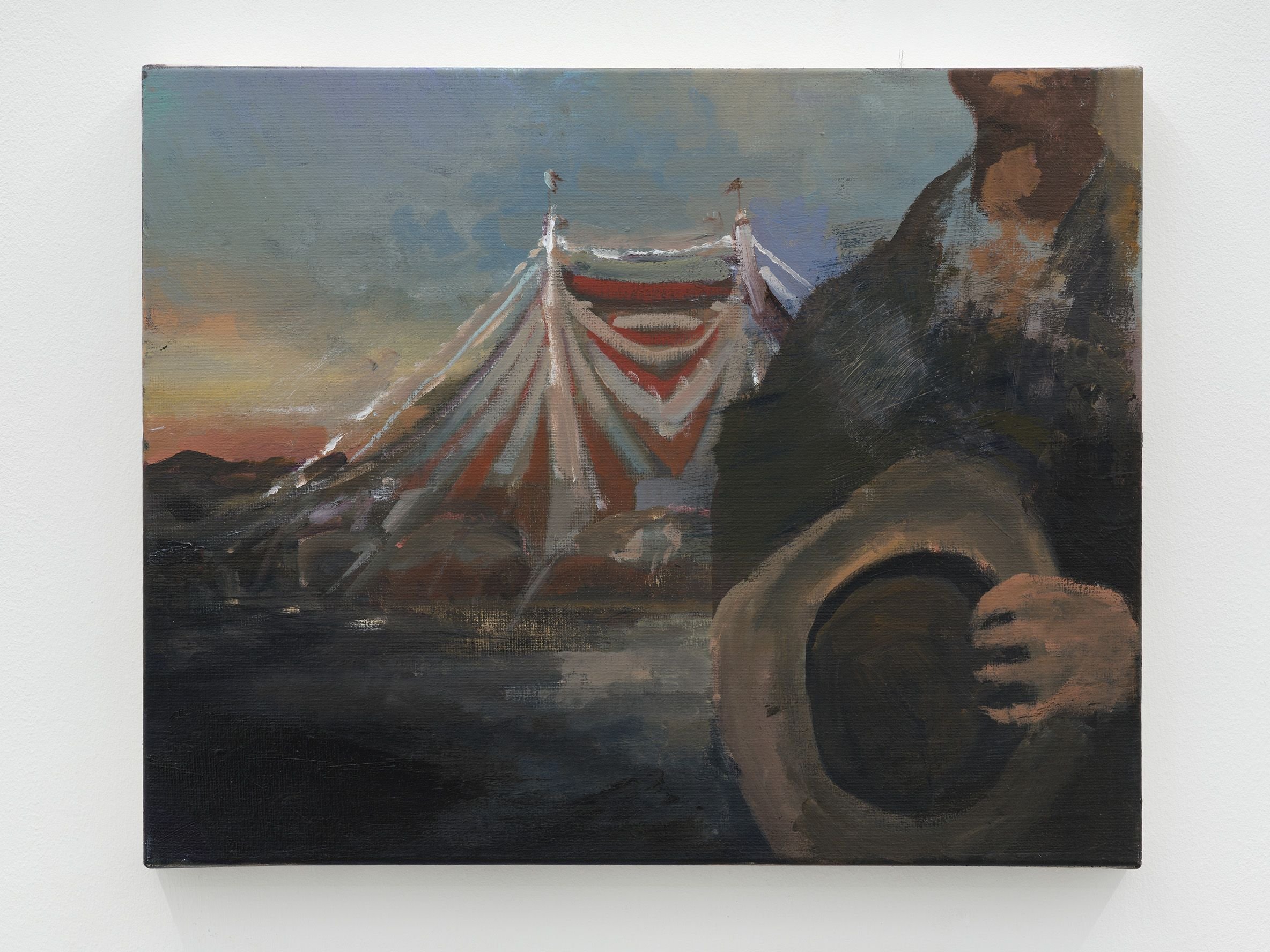
Was meinen Sie mit "schwupps"? / What do you mean by “whoosh”?, 2025
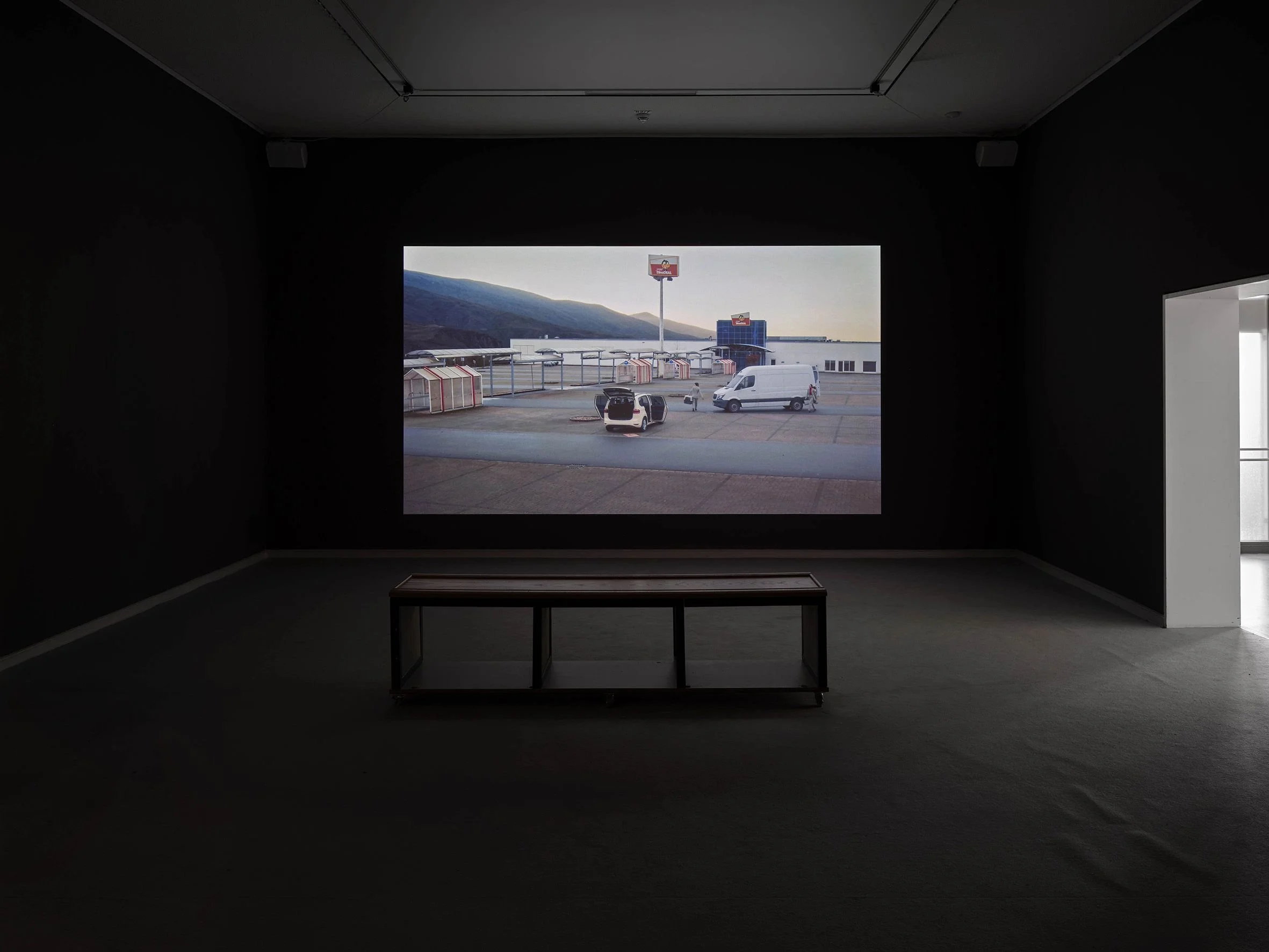
Country Crew, 2025, exhibition view at Kunsthalle Barmen, Wuppertal (Germany), 2025, Photo by Simon Vogel
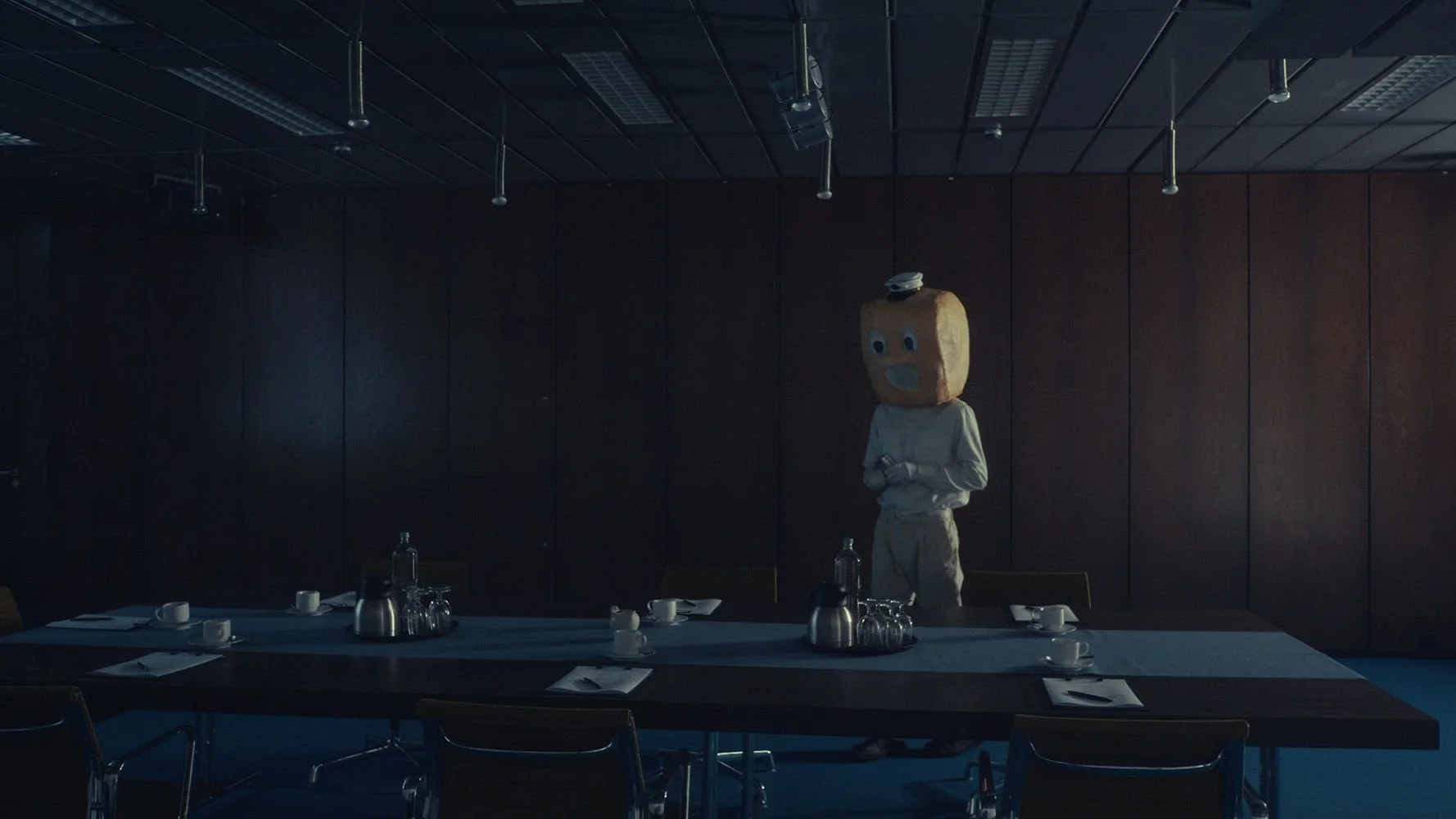
Country Crew, 2025 (film still)
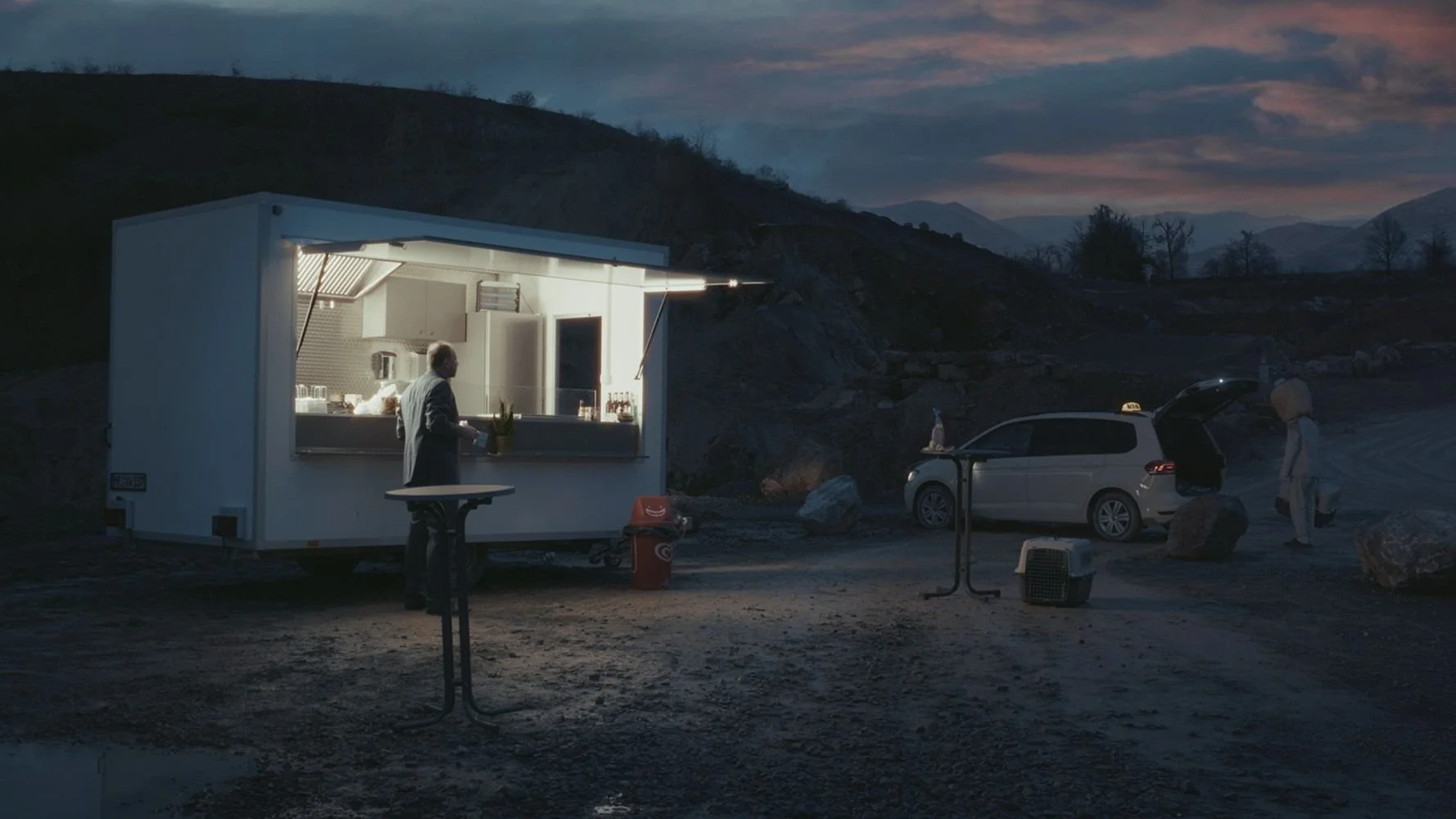
Country Crew, 2025 (film still)
Tell us a bit about how you spend your day / studio routine? What is your studio like?
To be honest, I still haven't developed a really sound strategy where I know for sure what's going to happen in the studio. I often plan the paintings in theory and arrive at the studio feeling quite energized, believing I know a good solution, and then I sit there and once again don't know how to start. Although I now rent a large studio for myself and could work on several canvases at the same time, I usually stick to a single work until something emerges that either fits with my core concerns or suggests a different direction that feels right. These correction loops can take quite a long time. In between, of course, all sorts of things happen: I play guitar, prepare another coffee again, eat something, walk the dogs, go into the garden—all things that are easy to escape into. I'm usually in the studio for at least seven hours, but I can't say how many of those I actually spend painting. Nevertheless, I'm there every day. Christmas, birthdays, it doesn't matter. At some point, the paintings have to be finished. It's simply my job—it's how I make my living.
What artwork have you seen recently that has resonated with you?
My grandfather is also a painter. He often gives me art catalogs, and the last one was by the painter and photographer Theodore Lux Feininger. That's where I first discovered the 1939 painting “Bauhauskapelle / Bauhaus Chapel.” I admire how consistently he executes his composition. Everything seems so precise but also sterile and therefore eerie.
Is there anything new and exciting in the pipeline you would like to tell us about?
In the fall, I will have my fourth solo show with the Droste Gallery in Düsseldorf. So there's still plenty of time to fool around in the studio.
All images courtesy of the artist
Interview publish date: 26/03/2026
Interview by Richard Starbuck