Andrius Alvarez-Backus
“There can be great relief in imagining oneself as an object, not as a form of dehumanization, but as a strategy of sidestepping the essentializing pressures that come with being a subject.”
Our interview with Andrius Alvarez-Backus explores a practice that transforms everyday objects into charged assemblages where body, material, and desire intersect. Working across sculpture, drawing, and painting, Alvarez-Backus engages with themes of intimacy, embodiment, and identity through a language shaped by medical histories, queer experience, and material symbolism. The conversation addresses the merging of body and object, the role of texture and sensation, and an approach to abstraction that resists fixed readings while navigating visibility, opacity, and personal narrative.
Could you tell us a bit about yourself and your background?
My name is Andrius Alvarez-Backus, and I’m an interdisciplinary artist working across sculpture, drawing, and painting. Through the transformation of everyday objects, I amplify their poetic connotations to evoke personal allegories of intimacy, embodiment, and memory. Using mixed media assemblage, my practice interrogates how desire bridges beauty and abjection, and how the semiotics of materials convey cultural meanings. Like many other Filipino Americans, I hail from a long lineage of surgeons, nurses, physicians, and pharmacists. Themes of medicine and repair have always loomed large in my upbringing, which in turn influenced me to probe questions of the body in my practice. I often translate surgical gestures in my work: dissection and resection, incision and excision, sutures and stitches. It’s my way of referencing the larger presence of Filipino medical practitioners across the diaspora, and translating it into a coded visual language. In many ways I also work from my queer identity. I’m inspired by past and present relationships, queer nightlife and communal spaces, the process of gendering and eroticizing bodies, and “queering” found objects by using them against the grain of their intended purposes.
In some of your works, body parts such as feet emerge from or merge with everyday objects, creating the impression that a body is concealed or embedded within them. What draws you to this collision between flesh and domestic form, and how do you decide how much of the body to reveal?
Filmmaker & writer Hito Steyerl advocates reframing the ways we attach emancipatory potential to subjecthood, suggesting instead we consider the liberatory possibilities of objecthood. I tend to agree with her. There can be great relief in imagining oneself as an object, not as a form of dehumanization, but as a strategy of sidestepping the essentializing pressures that come with being a subject. Objects are spared the burdens of identity and mortality, and that feels like freedom to me. I’m also fascinated by forniphilia, a fetish subculture in which humans are used as furniture. It makes me consider the erotics of instrumentalization, and what uncanny magic happens when the body becomes infrastructure. By forging affinities between personhood and thingness, I hope to generate an empowering space between passivity and agency. My integration of domestic forms examines how the built environment shapes selfhood, and how profoundly we become entangled with material culture and articles of comfort. Grafting body parts onto everyday items anthropomorphizes them, quietly queering their use value. How much of the body appears is mostly intuitive. Sometimes, radical exposure is key. Other times, what’s kept hidden drives the conceptual impact, allowing a humble fragment to imply an entire body (or two!).
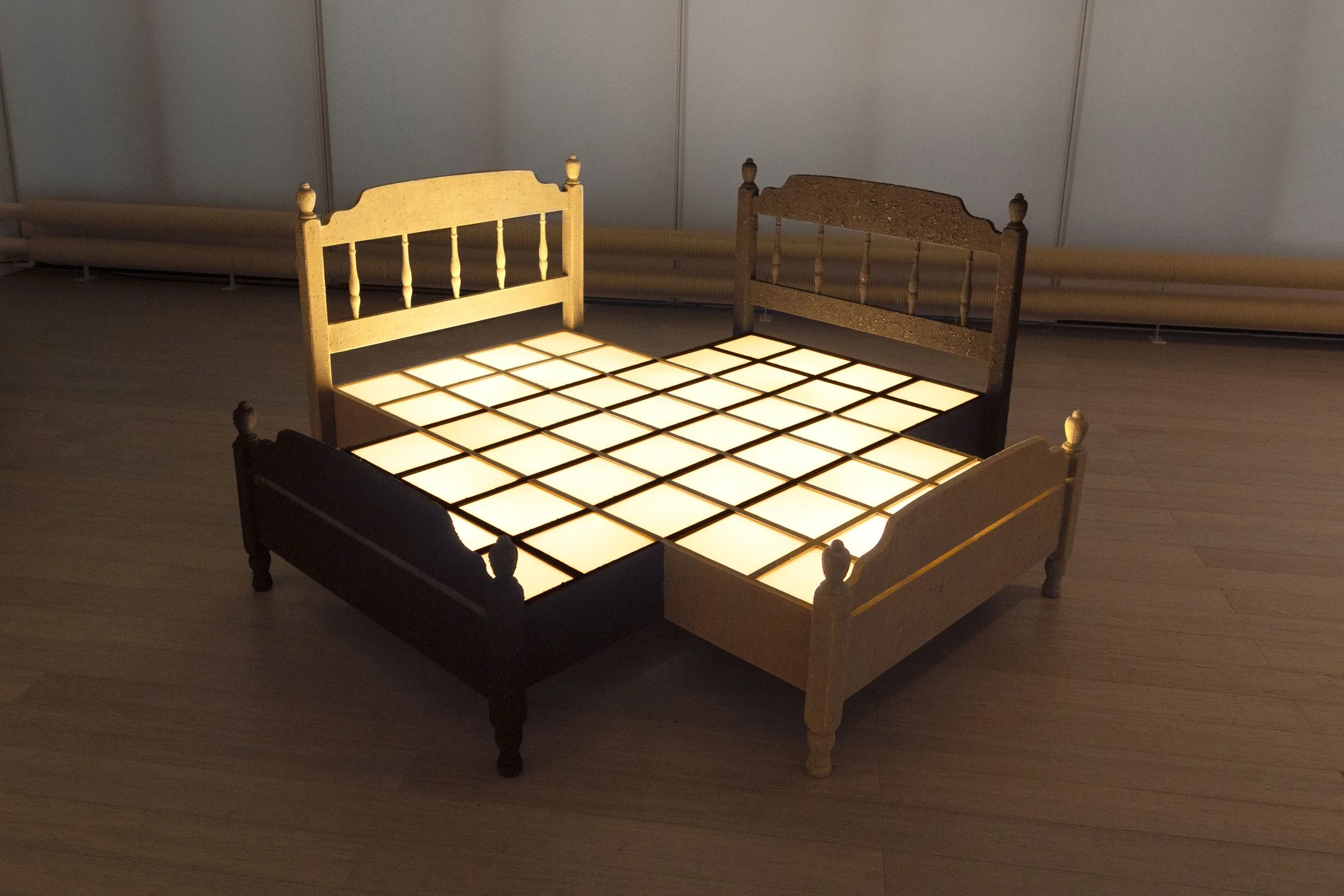
"Take Me With You, Again and Again" 2025
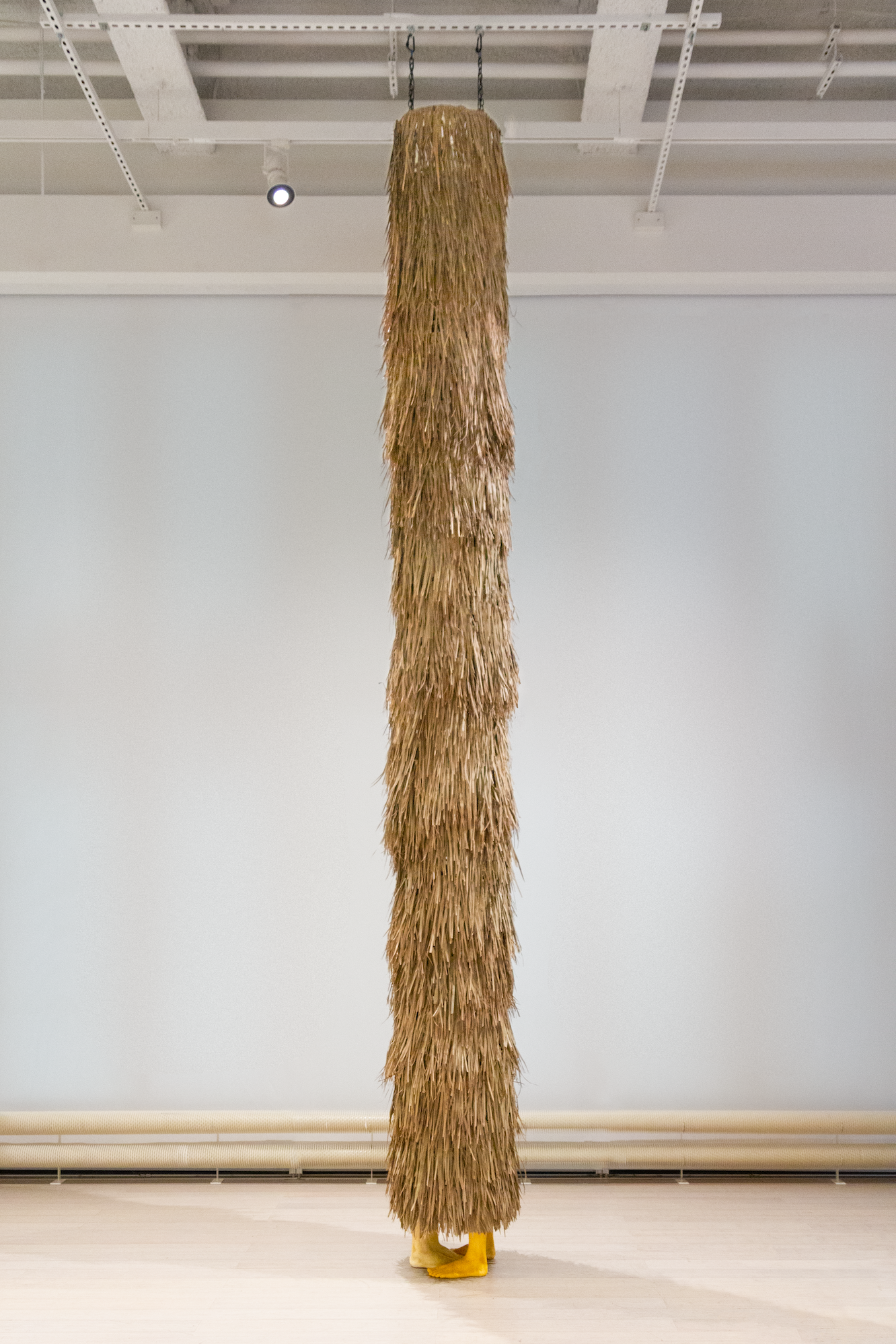
"Be With Me (Not Here, Not There Either)" 2024-25
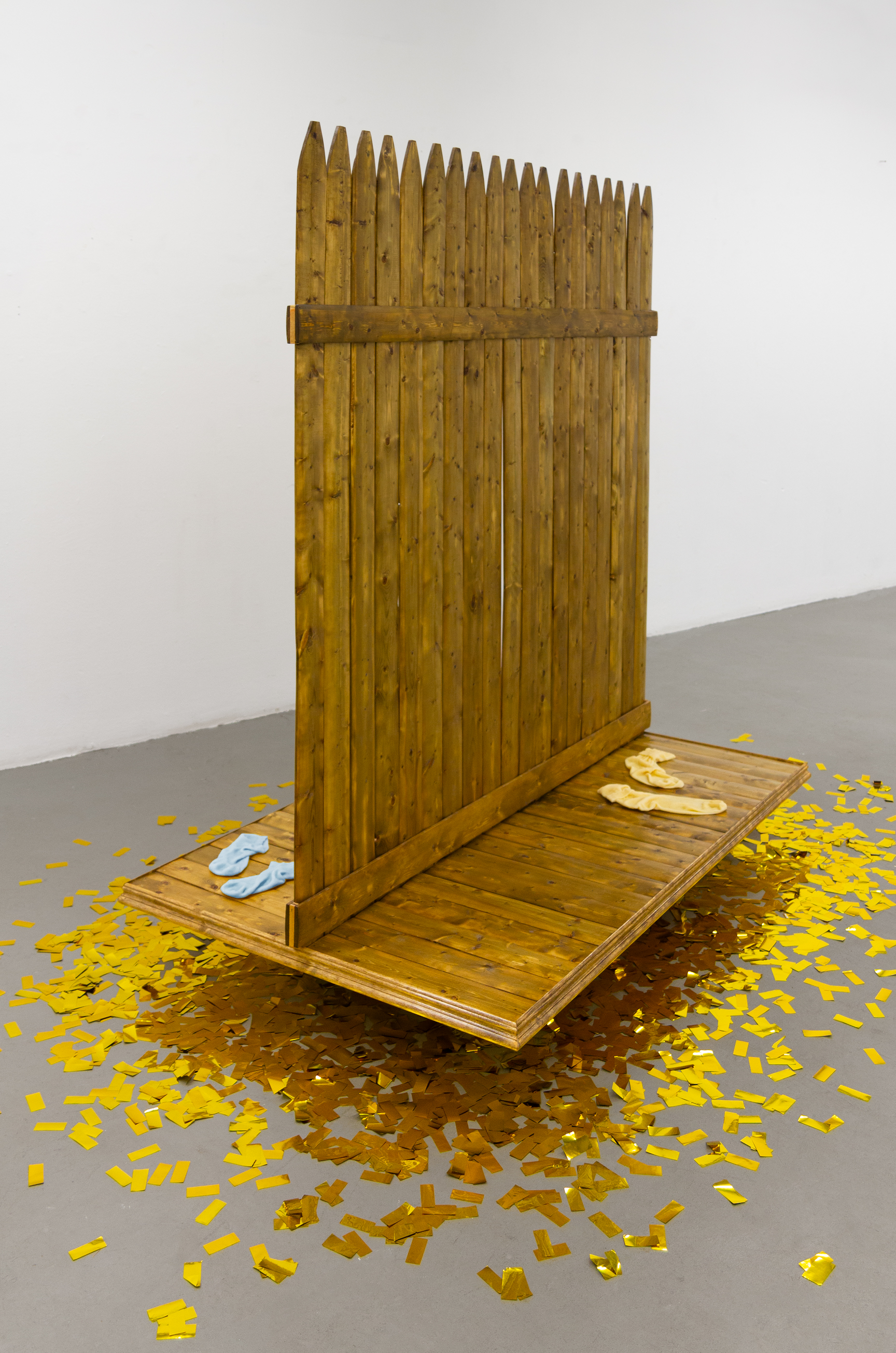
"Towards a Home for Us" 2025
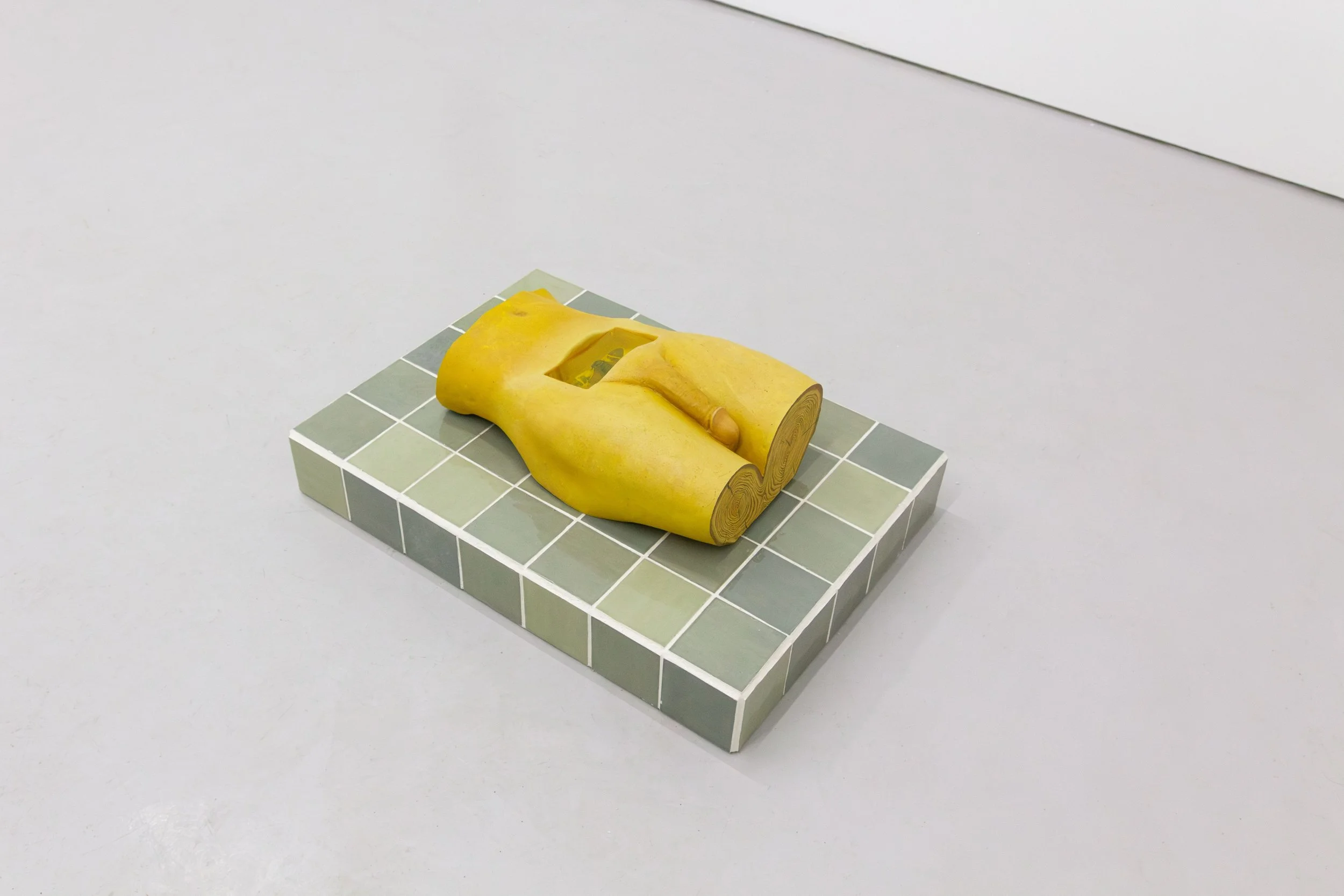
"You Know His Name and I Do Too" 2026
Texture feels central to your sculptures, beeswax, soil, sand, Manila palm leaves, materials that carry both sensual and cultural associations. How do you think about surface as something that seduces, protects, or even disguises what lies beneath?
Texture is usually the first and last thing I think about when making a work. I always prioritize what artist Kiyan Williams calls “haptic intimacy,” or treating surfaces with such care and intention that it invites the desire to touch and feel. In my world, pain and pleasure occupy the same space. As do desire and disgust, fear and fetish. My surface treatments are an attempt to collapse those oppositions, so that viewers both feel seduced and repulsed by them. I want you to feel enticed to touch my work, but warned that you may be viscerally changed by doing so. I also place a great deal of emphasis on site specificity, focusing on where I source my materials and how that origin animates the afterlife of the work. Whether it’s soil from Queens, NY where my grandparents first immigrated, confetti from my favorite queer nightclub, or sand from a cruising beach, I’m intentionally cross-pollinating materials with latent histories, connotations, and cultural charges.
Your practice recontextualizes personal relics and domestic objects in ways that complicate how identity is read. How do you navigate making work rooted in lived experience while resisting the pressure to make that experience immediately legible?
During a conversation with historian David Getsy at SculptureCenter in 2025, artist Tom Burr said he strives to make work from, rather than about, his identity. That sentiment epitomizes my approach. Every piece I make is a distillation of my personal experiences, which are inevitably colored by my identity as a gay Filipino American. I often call on objects or materials that allude to that positionality, but keep them shrouded in the realm of “inside jokes” or coded symbols. It’s a “if you know, you know,” approach. My hope is that certain viewers will recognize the signals, while others can still engage with the work without needing to decode every reference. In mainstream art markets, queer artists of color are often expected to explicitly picture their difference, to render their otherness legible and thus sellable. Playing with abstraction and surrealism allows me to circumvent the pressure to perform identity for a dominant gaze and instead embrace more fugitive modes of making and viewing. Filtering identity through layers of abstraction also reflects the experience of passing, or evading surveillance through camouflage. Opacity then becomes a survival tactic, a form of resistance against the visual systems that recognize and regulate marginalized bodies.
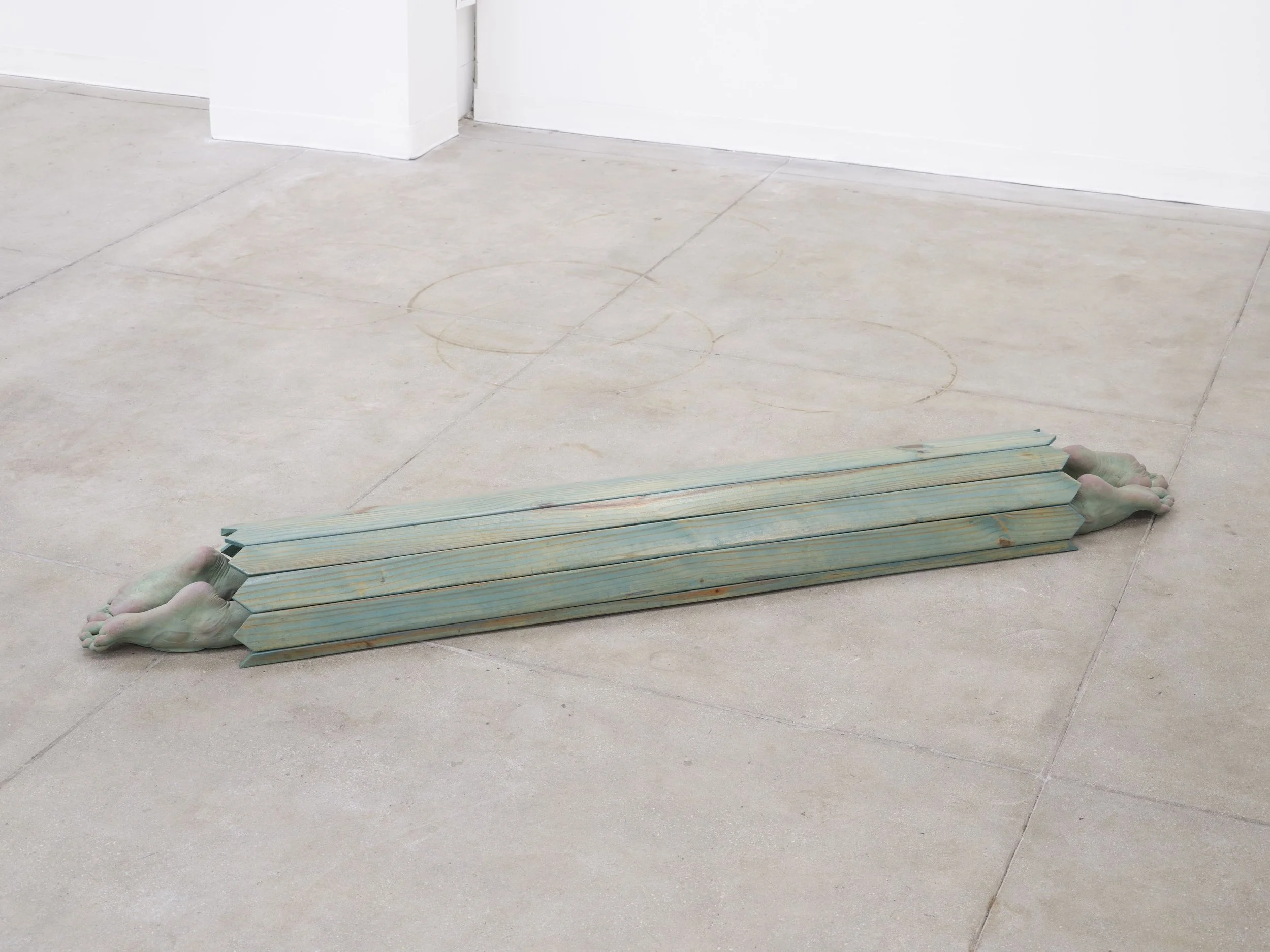
"Meet Me in the Middle" 2025
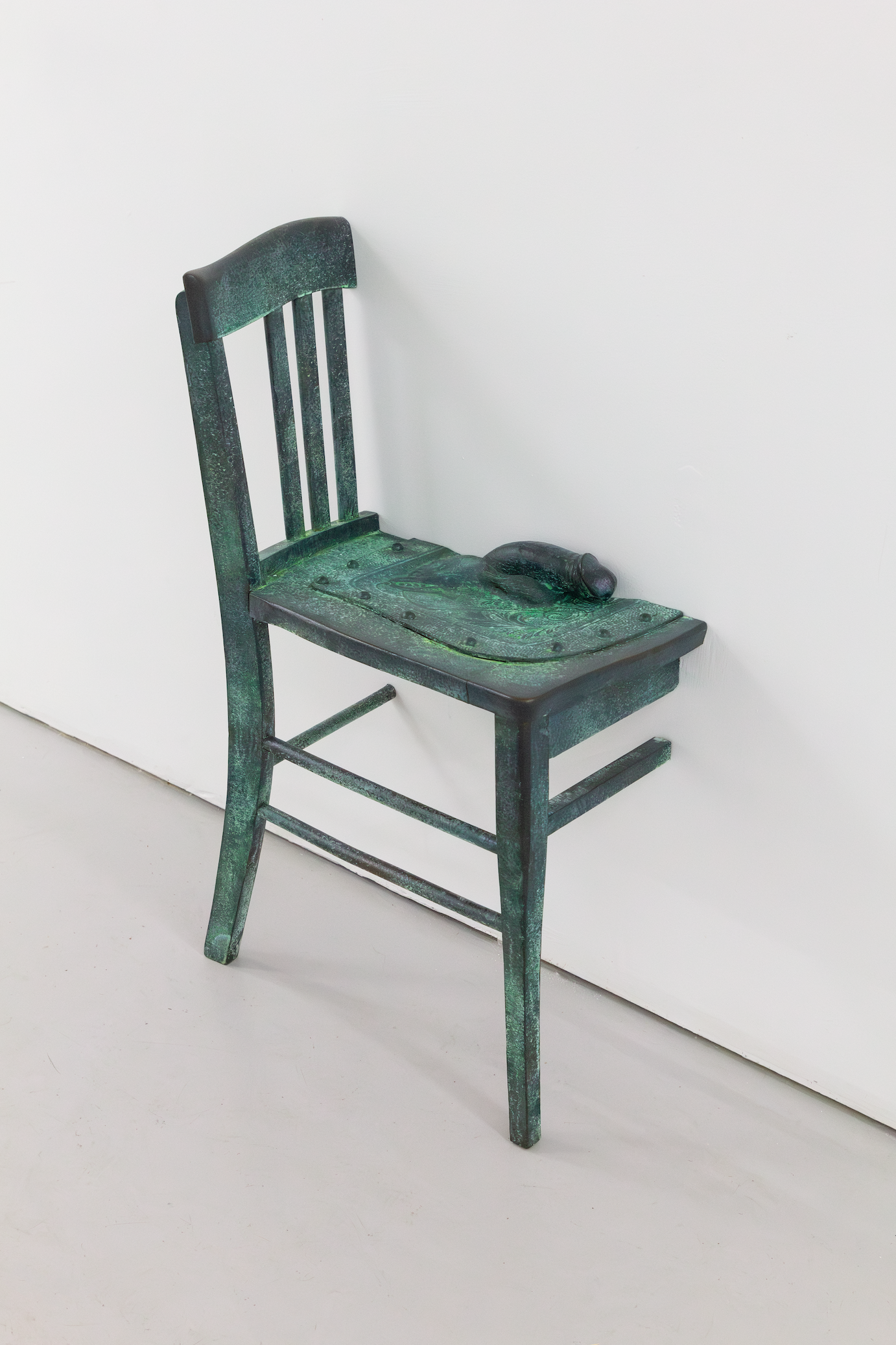
"To Whom I Belong" 2025
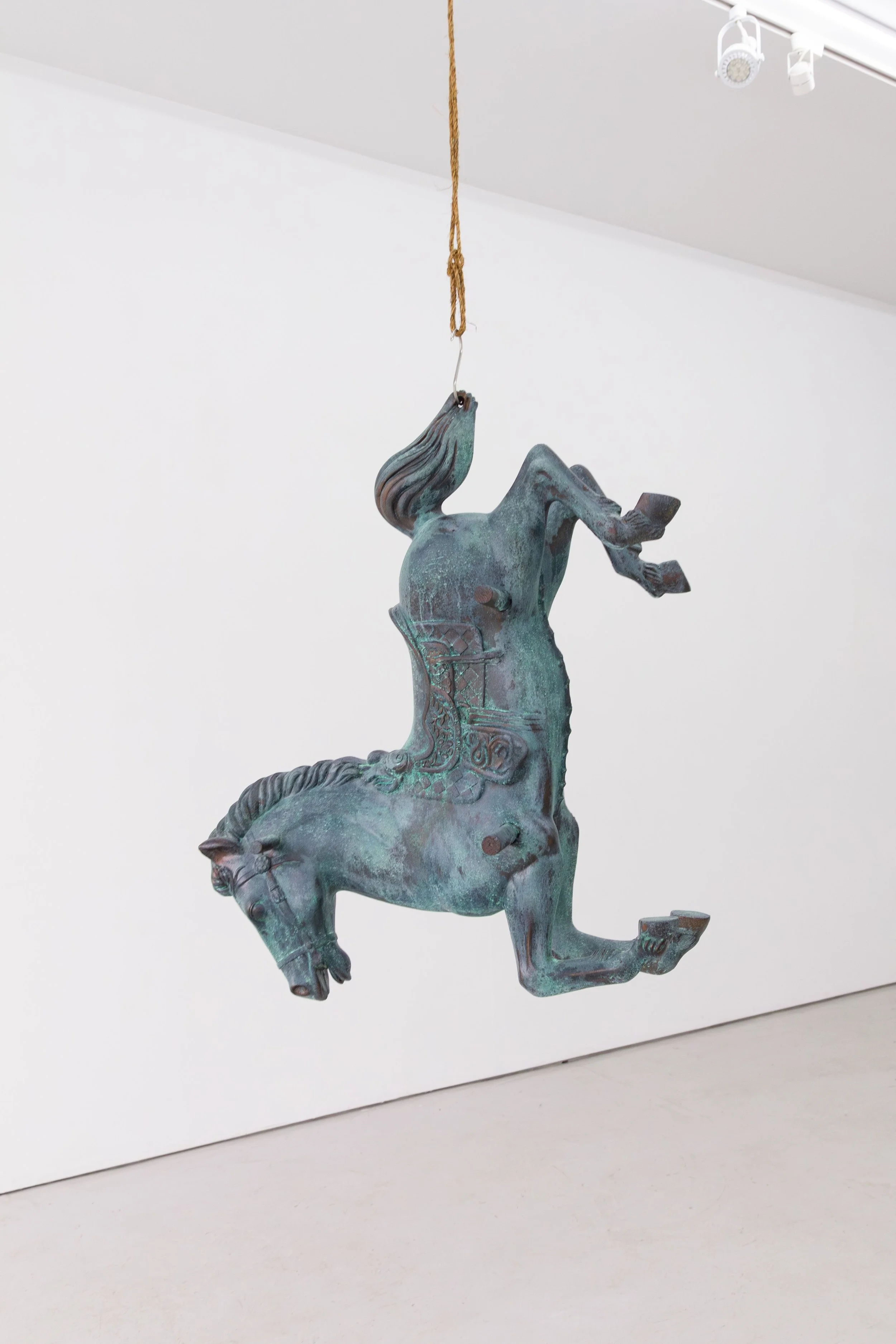
"Are You Still Strong Enough" 2025
Tell us a bit about how you spend your day / studio routine? What is your studio like?
I’m currently an artist-in-residence at Smack Mellon, a nonprofit arts organization in Brooklyn, NY. A typical day usually includes hours of object hunting. I look for potential readymades at local scrapyards, junkyards, thrift stores, dumpsters, and the best store in NYC: the streets and stoops. I search for things with some kind of spiritual charge, and trust the intuition that they will work themselves into a composition one day years from now. When I’m not hoarding, I’m probably in my studio contorting my body in some painful way to mold it, staying still for hours on end to get the most accurate cast. When I need a break from sculpture, I return to my drawing practice, which is mainly observational and meditative. My drawings explore similar themes of “embodiment without bodies,” but through imagery rather than the material and textural strategies I use in my three-dimensional work. Whatever I’m doing, my studio is never silent. I’m usually singing along to disco music or 90s club hits, or watching a concerning amount of “Survivor” seasons.
What artwork have you seen recently that has resonated with you?
I was recently spoiled by a double feature consisting of a Robert Gober exhibition at Matthew Marks Gallery, and a Félix González-Torres exhibition at Hauser & Wirth. I consider those two luminaries my “artist dads,” my primary influences, so seeing concurrent shows by them was quite stirring. They both catalyze the body’s absence to foreground concerns around loss and longing, and they both bounce between object and metaphor to create melancholic discontinuities. Within that, however, there’s also a fair amount of aesthetic and conceptual difference between the two. González-Torres infuses his work with an urgent politic, and Gober utilizes an uncanny sense of humor. I regularly draw from both of those sensibilities, so these exhibitions hit me hard for different reasons.
Is there anything new and exciting in the pipeline you would like to tell us about?
My solo exhibition, “I Want to Know, I Need to Know,” is currently on view through May 9th, 2026 at Eli Klein Gallery. Emerging from a series of health incidents experienced by myself and my family over the past year, the exhibition examines the intersection of my primal pursuit of self-knowledge and the denial of a fully transparent answer in its process. The show consists of 20 sculptures and wall works, and I’m immensely proud of the work that went into them. I will also have a piece in “Stay With Me (Neither Here nor There),” a group exhibition on view from March 14–April 25, 2026 at Gallery Vacancy in Shanghai. It’s my first time exhibiting in Asia, so I’m looking forward to it!
All images courtesy of the artist
Interview publish date: 26/03/2026
Interview by Richard Starbuck