Alastair and Fleur Mackie
“A work feels resolved when the materials settle into a kind of internal logic. At that point nothing more needs to be added or removed, and the structure feels both inevitable and improbable at the same time.”
Our interview with Alastair and Fleur Mackie explores a collaborative sculptural practice shaped by material histories, landscape, and slow, process-driven making. Working with found materials, the duo develops structures that respond to existing forms, behaviours, and systems embedded within objects. The conversation addresses collaboration as an ongoing dialogue, the relationship between materials and environment, and an approach that brings together ecological, geological, and human timescales through acts of balance, transformation, and attention.
Could you tell us a bit about yourselves and your backgrounds?
We were born the same year but in very different worlds. Ally grew up in a coastal farming community in southern Cornwall - a very English childhood. Fleur was born in the South of Cameroon, in a small village in the rainforest, before moving - quite chaotically - between Cameroon, France and the UK. We both eventually moved to London and met at art school in the late 1990s, Ally studying sculpture and Fleur illustration. The London art scene was completely new to us. It was an exciting time to be young artists and a place where we felt free to be ourselves and begin working out what that meant. After graduating we supported ourselves with part-time jobs and began working together intermittently, first from the living rooms of rented flats and later from a studio in a disused storage unit off Hackney Road. In 2011 we left London and moved to a farm on the cliffs in North Cornwall, working from a converted corn storage barn. Our daughter was born in 2013. Living there marked an important shift for us. The work slowed down and began to develop more quietly.
Your sculptures often involve carefully stacked or reconfigured found materials, sometimes placed directly within dramatic natural landscapes. What draws you to this act of balancing and reassembling objects, and how do you decide when a form feels resolved rather than precarious?
Often the materials we work with arrive already shaped by forces that have acted on them long before we encounter them. In that sense the landscape is important, not as a backdrop but as the set of conditions that have brought about those changes. There’s a symbiosis there - you can’t really separate one from the other. Rather than beginning with a fixed design, the work often starts by asking what a material already does and how it behaves. Different materials carry their own ways of being organised in the world. Eggs are stacked on shelves, beads are threaded, timber is worked by a carpenter. We’re often drawn to materials that already carry these kinds of histories or systems of use. Our role tends to follow those tendencies rather than resisting them. A work feels resolved when the materials settle into a kind of internal logic. At that point nothing more needs to be added or removed, and the structure feels both inevitable and improbable at the same time.
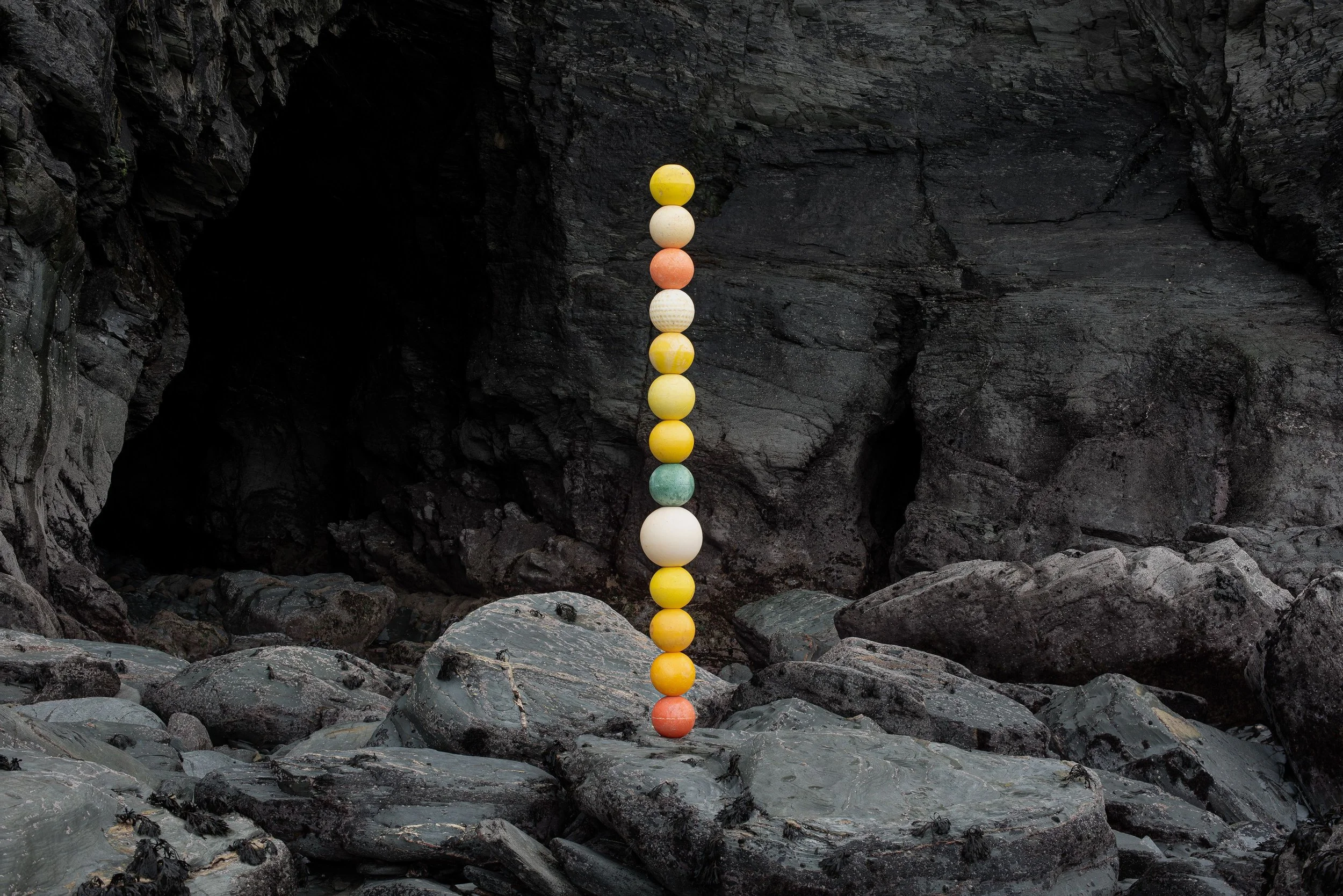
Stack 1, 2024
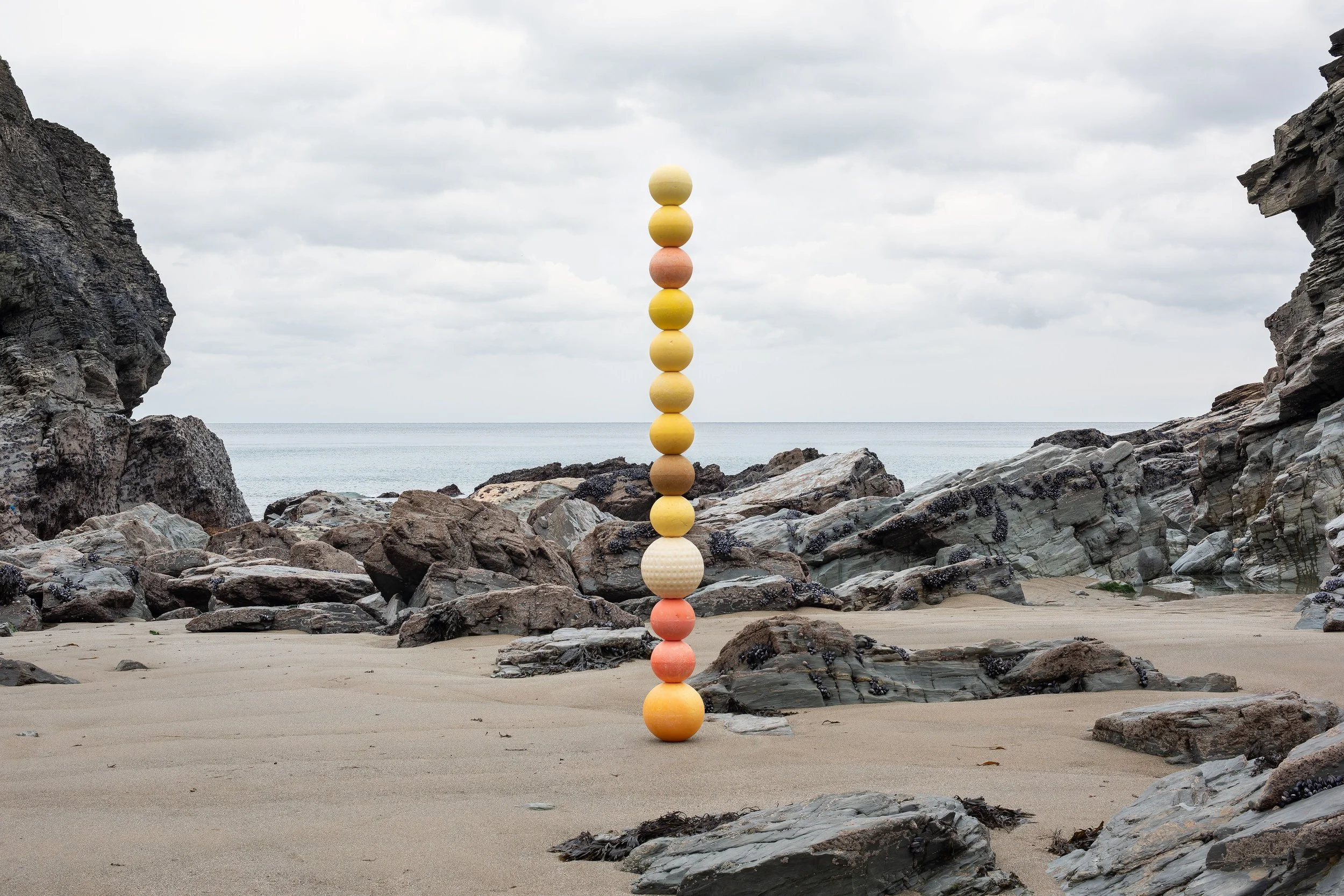
Stack 2, 2024
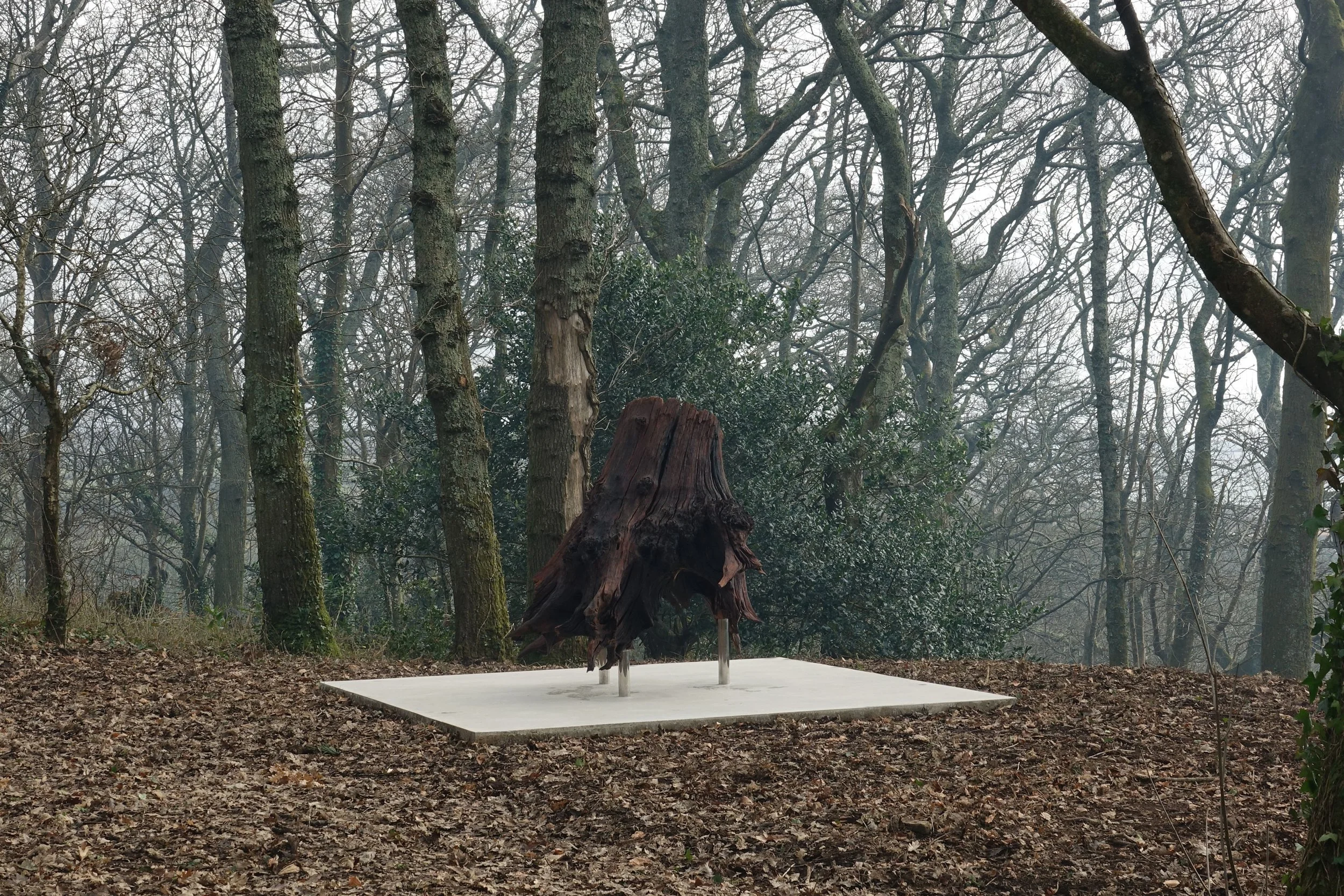
From This Day On - Tremenheere Sculpture Gardens, 2023
You work collaboratively through slow, deliberate sculptural processes. How does working as a duo shape the development of a piece, from sourcing materials to making decisions about form, and how do you navigate moments of disagreement or uncertainty?
We’ve been together for twenty-six years, so working collaboratively now feels no different from working as a single practice. In many ways our working relationship mirrors our day-to-day life: decisions tend to emerge through conversation rather than through one of us arriving with a fully formed idea. We don’t have fixed roles. Instead the work develops through a kind of balancing, where we respond to what the other is noticing or questioning. That exchange continues into the making of the work itself, where decisions about form emerge through the same ongoing dialogue. Our working relationship also plays out in very practical ways. Some of the places we collect materials from can be physically precarious, so one of us will sometimes go while the other stays back. That creates a kind of informal safety system, but it also reflects the way we operate more broadly - our attention shifts depending on what’s needed. Disagreement and uncertainty are inevitable. Instincts sometimes clash, but those tensions can be productive. They help sharpen the work, and resolution usually emerges through a process that continues until things settle into something that feels right.
You describe your practice as engaging with material histories and multiple timescales across ecological and geological systems. When working with found materials, how do you approach their past lives, and what role does transformation play in revealing or reshaping those histories?
Many of the materials we work with already carry long and layered histories. Some originate in biological or geological processes that extend far beyond human timescales, while others have passed through layers of industry before eventually finding their way back into the landscape. What interests us is the meeting point between those histories and the immediate circumstances in which we encounter a material. An object might appear to belong to the present moment - found in a shop or lying in a field - yet it can also contain a much deeper story. Timber may come from a tree that grew thousands of years ago under different environmental conditions, while a fragment of plastic might once have been part of a large industrial system before being broken apart and redistributed by tides and weather. Even those synthetic materials ultimately originate in substances drawn from the earth itself. When we work with these materials we try to be aware of both the immediate situation and the longer chain of transformations that produced them. The role of the work is not to impose a new narrative, but to bring different timescales into proximity so that those histories can be experienced within the present.
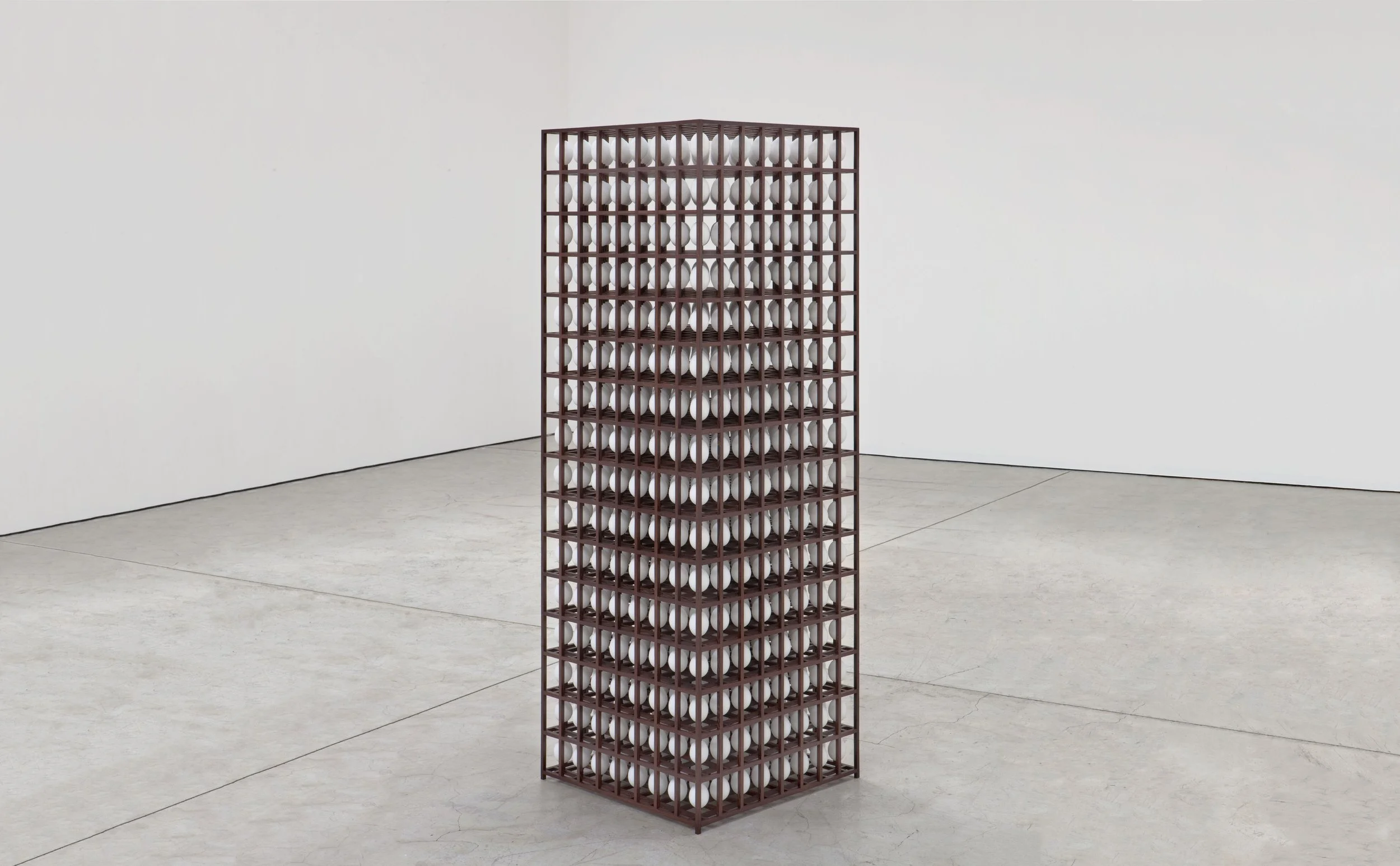
The Well - All Visual Arts, 2013, Photographer: Ian Stewart
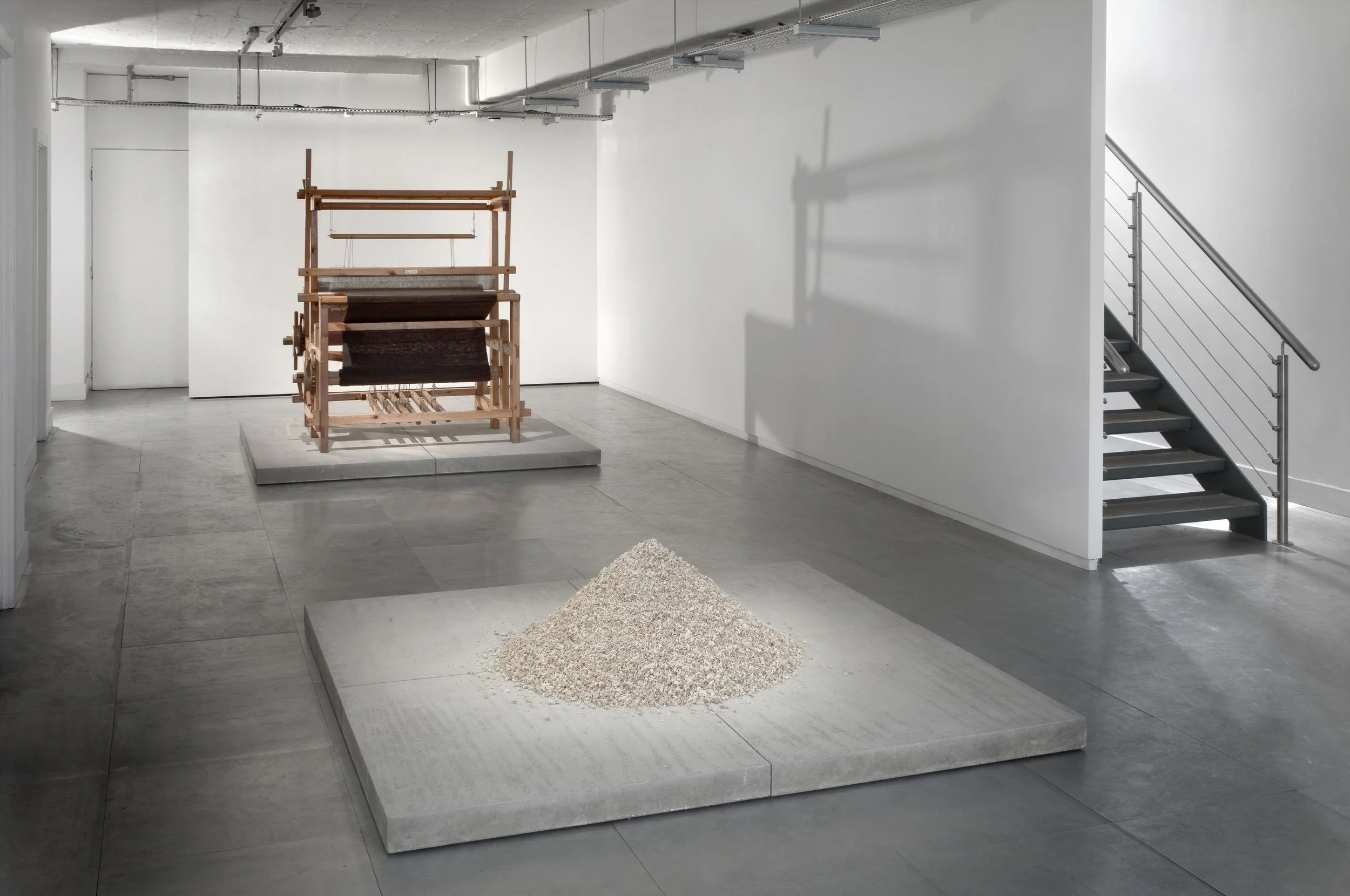
Untitled (+/-) - David Roberts Art Foundation, 2009, Photographer: Tessa Angus
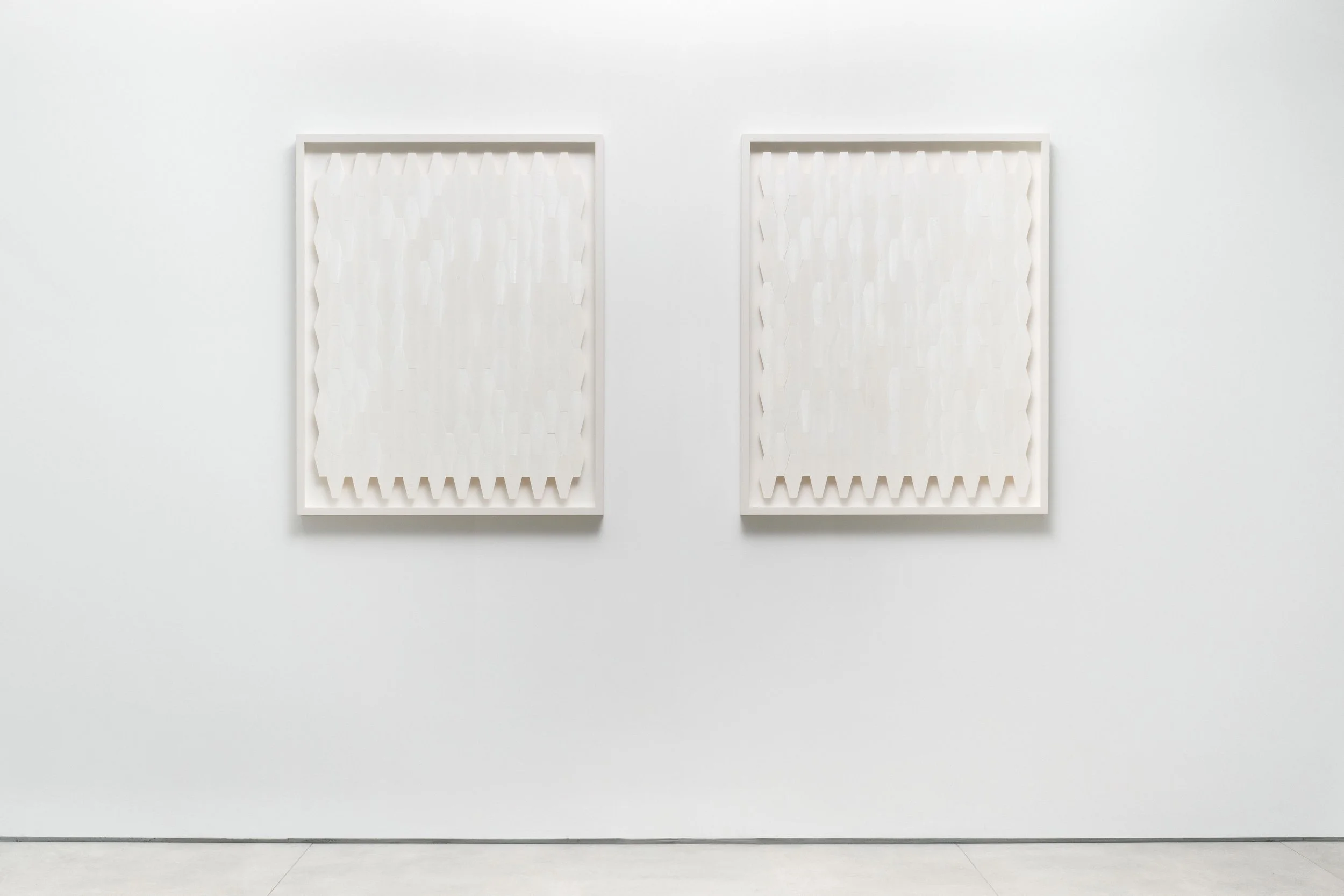
Complex System 157 & 158, 2025, Photographer: Ian Kingsnorth
Tell us a bit about how you spend your day / studio routine? What is your studio like?
We moved into a new purpose-built studio in 2021. It’s our first work space with a flat floor, straight white walls, insulation and running water - the first time we’ve had somewhere that allows us to spend time with the work in a neutral environment. We also spend a lot of time outside - the studio time we enjoy most. Much of the physical work happens there, and walking is also a key part of our process, often where ideas begin to take shape. That kind of work is very much shaped by the seasons, with parts of the coast we’ve more recently been working along becoming difficult to access during the winter months, so the colder part of the year tends to pull us back indoors. Where we live and work is quite isolated, which works well in the summer but can be harder in winter. The day itself begins much like anyone else’s: breakfast, the school run, the occasional domestic disagreement about how Nutella should be applied to a pancake.
What artwork have you seen recently that has resonated with you?
We don’t get back to London as often as we’d like, but do try to make a point of giving ourselves a day once in a while to see shows. One that stayed with us was Richard Wright’s exhibition at Camden Arts Centre. We loved the way the drawings followed the architecture, running across walls and ceilings so that they felt embedded in the fabric of the building. The process was clearly painstaking, but there was no spectacle to it - the result felt very quiet and intense. There was something quite moving about knowing that weeks of careful work would simply disappear when the exhibition ended (or remain forever hidden under layers of wall paint). In contrast, we also saw Ugo Rondinone’s The Rainbow Body at Sadie Coles, which was a completely different experience, but one that also occupied the architecture of the gallery, binding the work and the building together. In this case the space itself was painted in vivid colours that mirrored the sculptures inside. In both cases we really liked how the works were inseparable from the spaces they occupied.
Is there anything new and exciting in the pipeline you would like to tell us about?
A project we’re currently developing has been evolving slowly over the past few years. We’ve been recovering small amounts of gold by hand from a stream near our studio - a process that has taken many weeks of work. The idea is to use that gold to produce a new work that will eventually return to the same landscape from which the material was sourced. To do this we’re collaborating with scientists in the Department of Physics and Astronomy at the University of Sussex, using thin-film deposition techniques - a process that connects the material to its much deeper cosmic origins. The work is still unfolding, but it has allowed us to think about scale in ways that feel quite new for us. We’re working towards a solo exhibition next year.
All images courtesy of the artists
Interview publish date: 26/03/2026
Interview by Richard Starbuck