Nigel Howlett
“The contrast between a cold exterior and human body language interests me because it reflects the world we're living in. Technology is becoming increasingly present in our lives, but we are still human with emotional experiences.”
London-based artist Nigel Howlett presents his solo exhibition “Pursuit of Truth” at Anna Zorina Gallery, New York (May 28 - July 2, 2026). A body of work that reflects on uncertainty, belief, and the act of searching in a time shaped by misinformation and shifting realities. Drawing on a background that spans scenic art and film production, Howlett’s paintings depict anonymous, almost mechanical figures navigating ambiguous environments, balancing a tension between technological surfaces and deeply human gestures. In this interview, he discusses the evolution of his visual language, the slow and deliberate processes behind his work, and how his practice continues to explore the relationship between humanity and an increasingly mediated world.
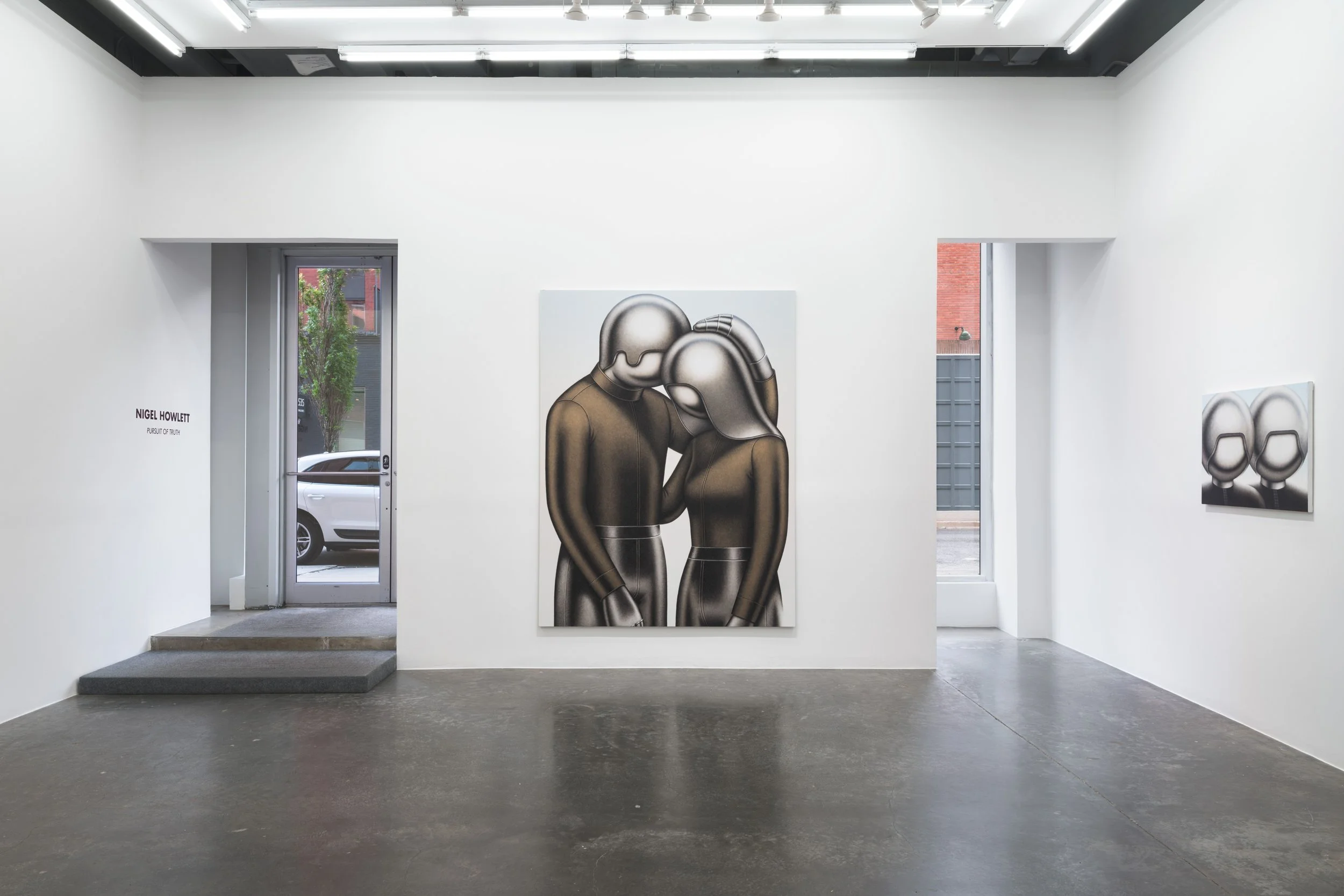
Pursuit of Truth, Anna Zorina Gallery, New York, 2026. Photography: JSP Art Photography.
Could you tell us a bit about yourself and your background?
I'm an artist who lives and works in London. I was born in Croydon and grew up mainly in a place called East Grinstead, although we moved around quite a lot, I think I count 8 houses and four school moves. I studied Fine Art at university, but it wasn't until after graduating that I really found some creative direction. A friend and I rented a small studio in Hackney Wick where we spent years making model landscapes and drawing. Through contacts I gradually found work in the film and television industry as a scenic artist and prop maker, using many of the practical skills I'd developed through making art. Over time I worked my way up to art direction and running my own projects, building sets for commercials and channel idents. Throughout those years I always maintained a studio practice alongside the film work. When Covid hit, everything stopped. It happened to coincide with a period where something clicked creatively for me. I started selling work, galleries started showing interest, and very quickly making art became my full-time focus.
With your solo exhibition Pursuit of Truth at Anna Zorina Gallery in New York (May 28 - July 2, 2026), can you talk about what that title means to you and how the works in this show reflect where you are right now in terms of the ideas and themes you're exploring?
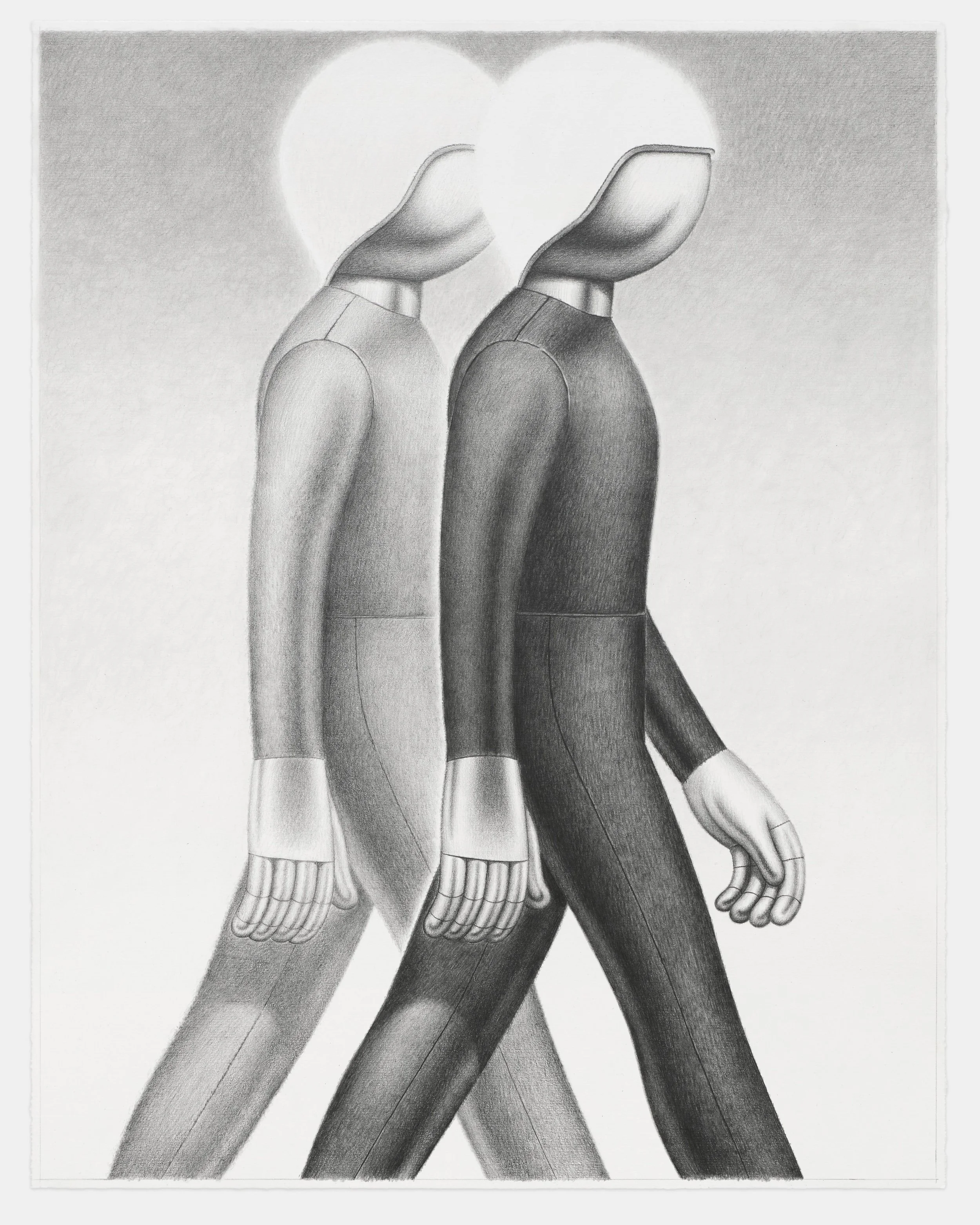
Some of my favourite works in the exhibition depict figures walking or moving.They are heading towards something unknown, but they keep going regardless. The title Pursuit of Truth felt appropriate for the moment we're living through. We exist in an age where images can no longer be trusted, where opinions often seem to carry more weight than scientific evidence, and where misinformation spreads rapidly. It can feel increasingly difficult to know what is true. The paintings aren't intended to provide answers. They're more concerned with the journey or the act of searching. Many of the figures are moving through ambiguous spaces, either alone or as part of a group, navigating uncertainty and possibility. The exhibition reflects my ongoing interest in shared human experience, perseverance, belief and doubt, and how we continue moving forward despite never having complete certainty.
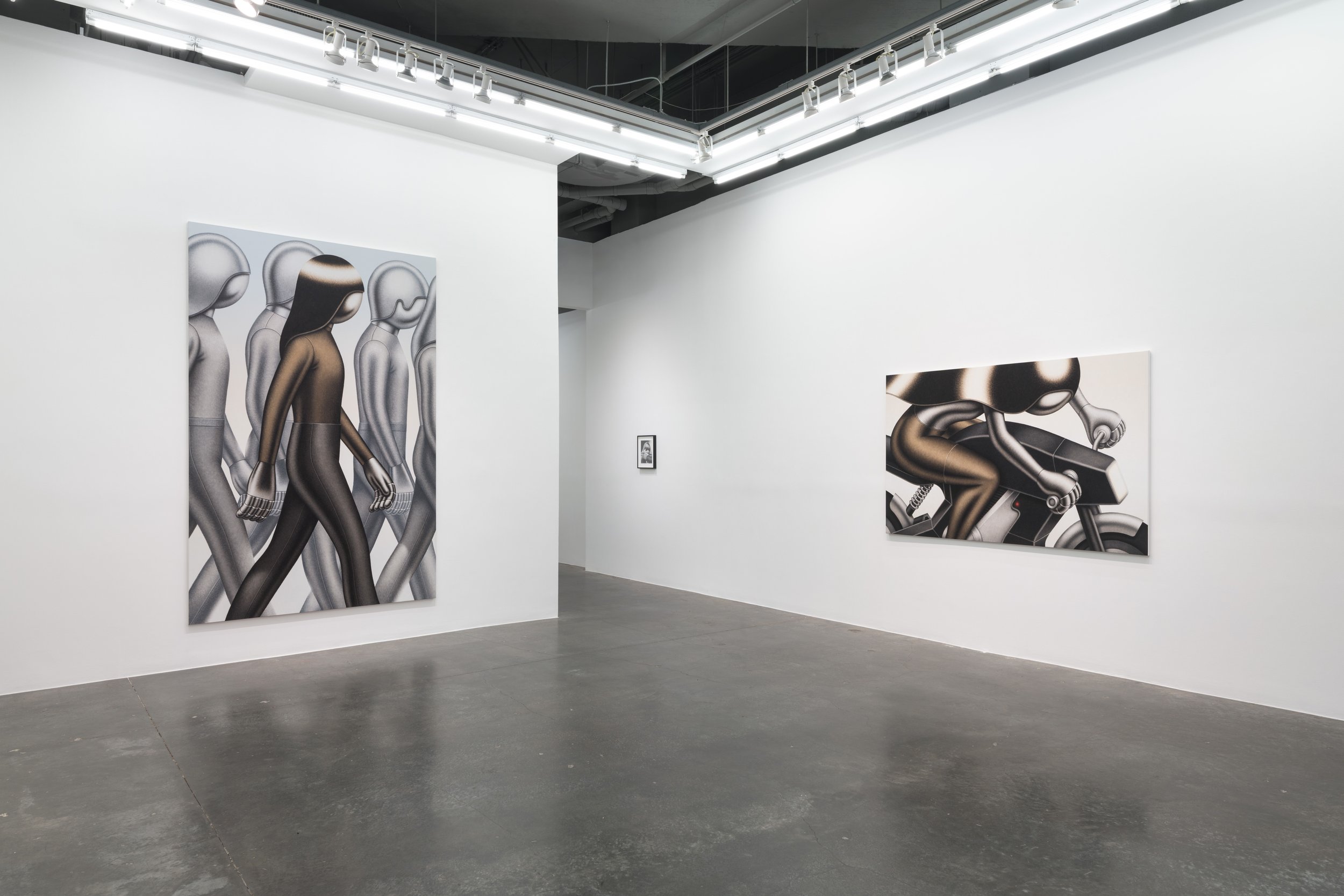
Pursuit of Truth, Anna Zorina Gallery, New York, 2026. Photography: JSP Art Photography.
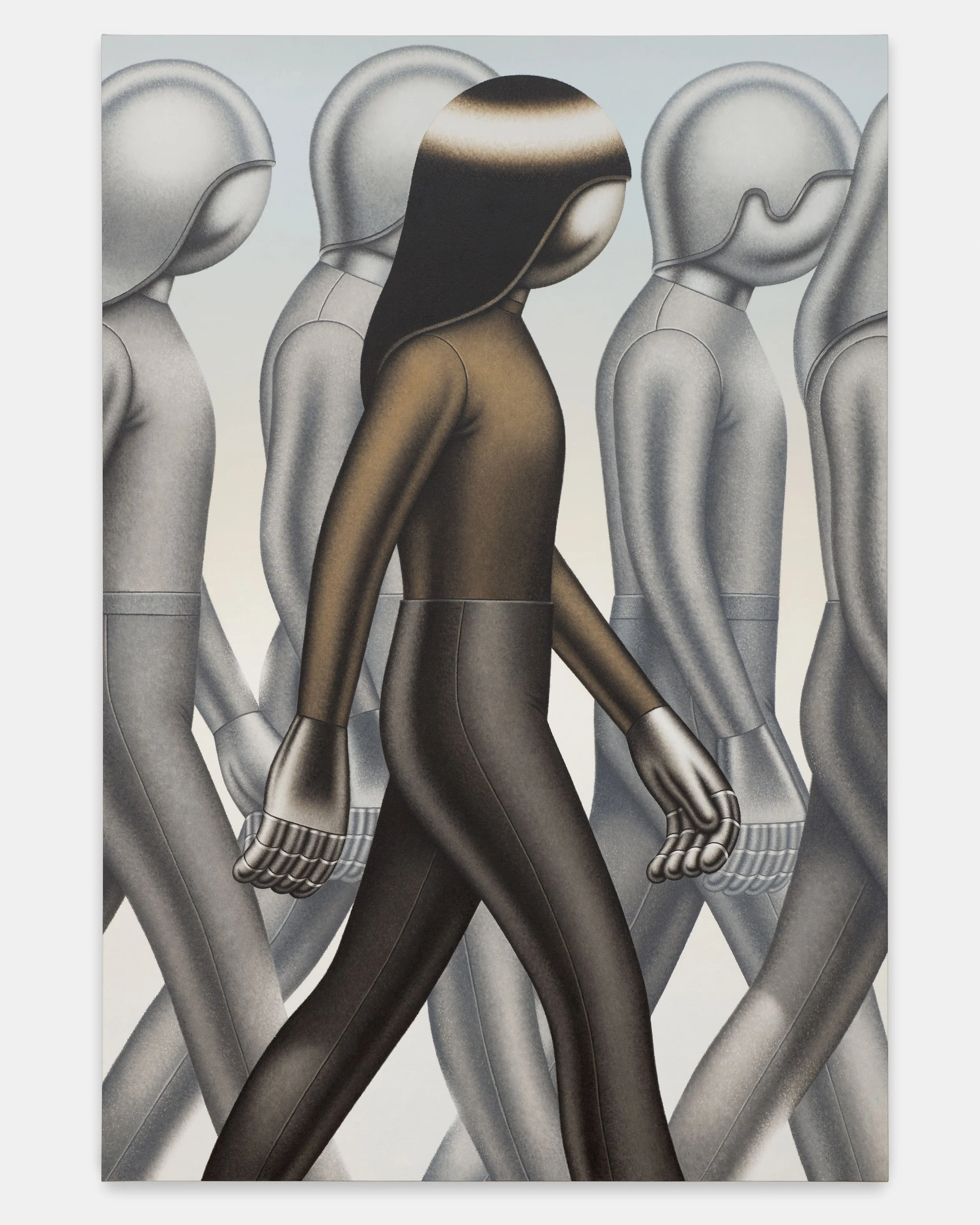
Pursuit of Truth, 2026. Photo by James Bryant
Echo, 2026. Photo by James Bryant
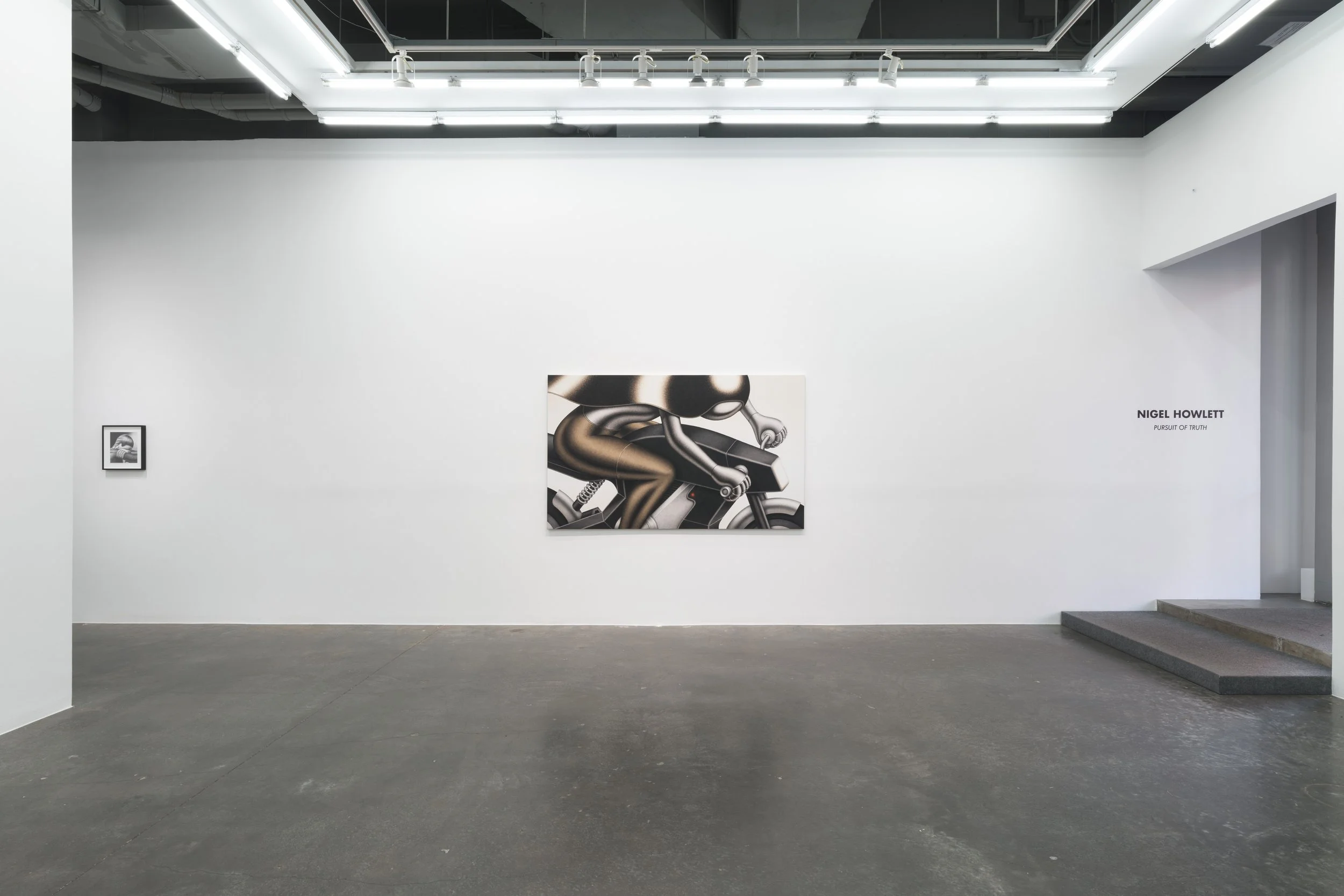
Pursuit of Truth, Anna Zorina Gallery, New York, 2026. Photography: JSP Art Photography.
Your figures have this fascinating quality where they look almost mechanical or armored, yet their gestures and postures feel deeply human and emotional. How did you arrive at this visual language, and what draws you to that tension between the cold exterior and the warmth of the body language underneath?
I don't completely know the answer to that question. The visual language evolved gradually and slowly over many years rather than arriving quickly through a conscious decision. It's quite personal, and I'm often better at feeling my way through ideas than explaining them intellectually. I guess now at the core, I’m interested in the relationship between technology and humanity, and the point where the two begin to merge. The figures appear artificial, anonymous and futuristic, but underneath that exterior they're engaged in recognisably human things. They're walking, hugging, sitting, or searching, normal everyday actions. The contrast between a cold exterior and human body language interests me because it reflects the world we're living in. Technology is becoming increasingly present in our lives, but we are still human with emotional experiences. The figures allow me to explore that tension without being overly literal about it.
Your paintings have a surface quality that looks almost airbrushed or digitally rendered, but they're clearly built through very deliberate, hands-on brushwork. Can you walk us through what a typical painting looks like from start to finish, and why that slow, labor-intensive approach matters to you in a world that increasingly values speed and immediacy?
A typical painting starts with an idea. I’ll keep this in mind or scribble them down on whatever happens to be nearby. If it’s a pose for my figures I can’t easily find reference for I’ll use AI to give me something to work from. Then I'll make a detailed drawing and develop the composition. The drawing is scanned and adjusted in Photoshop until it feels right. I then project the image onto the canvas and draw out the composition. I often adjust proportions a little here too but not by much. After that the process becomes very methodical. I mix colours carefully and work across the painting section by section. My paintings are now completed largely in a single painted pass over many days or weeks. Earlier works were built through multiple layers, but I've gradually simplified the process. The resulting surface with one pass now feels richer, more direct and very distinctive. Although the paintings can look digital from a distance, they're very physical objects. Up close you can see the brushwork and the labour that went into making them. I think that human touch is important. In a culture that increasingly values speed, I still believe there's something meaningful about spending a long time making and looking at something.
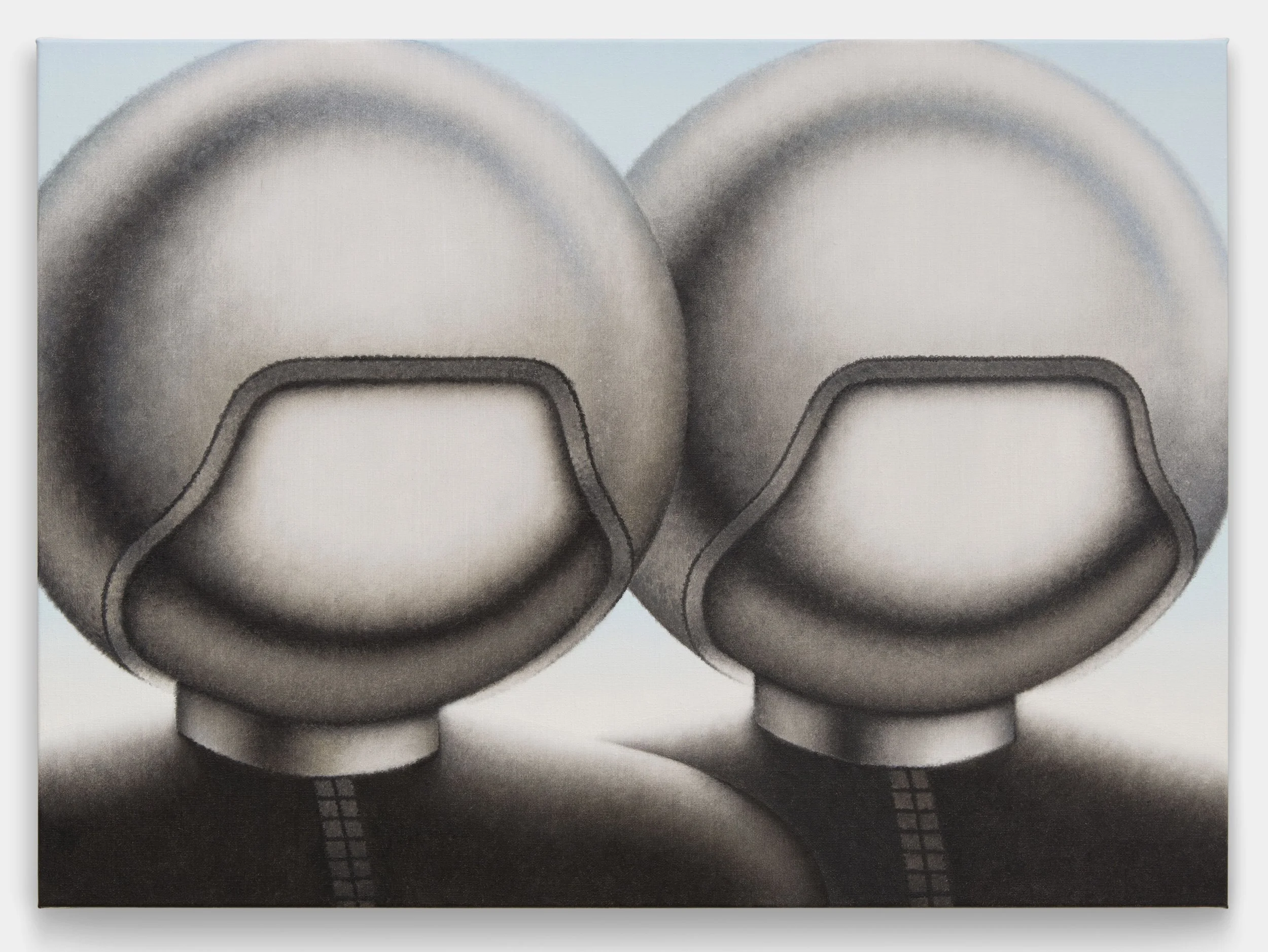
Twin, 2025. Photo by James Bryant
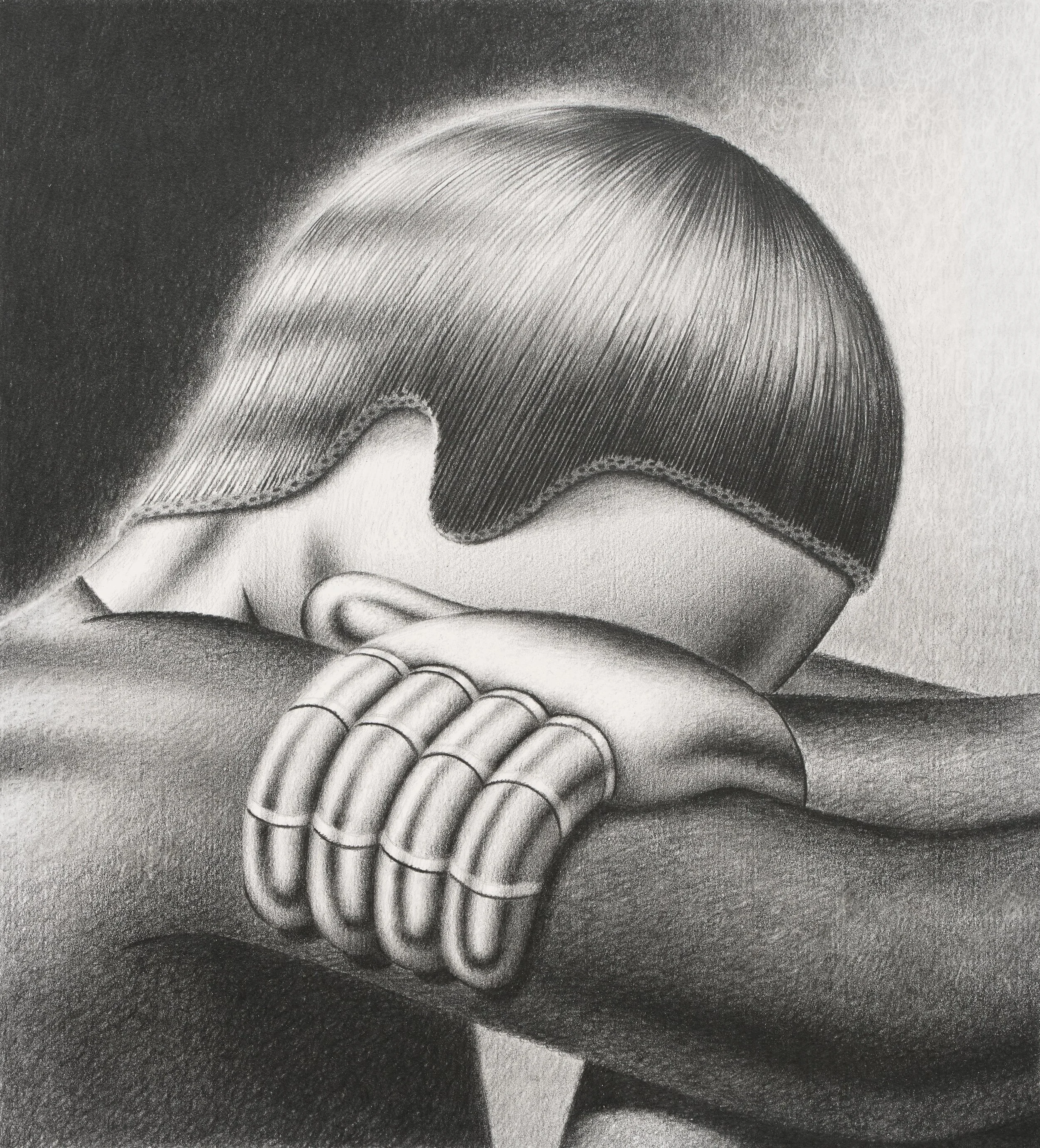
Seat of Subtlety, 2026. Photo by James Bryant
Tell us a bit about how you spend your day / studio routine? What is your studio like?
A good day usually starts with a run. Afterwards I cycle along the canal to my studio in Hackney Wick. The studio is on the ground floor of a modern building and is very spacious and light, which is important given the scale of some of my paintings. I normally arrive between eight and nine in the morning and work until around five or six in the evening. Most of my days are spent painting or drawing, preparing for exhibitions and dealing with the practical side of being an artist. I'm very routine-driven and work in the studio every weekday. Occasionally I'll work on a Saturday, but I try not to overdo it. I've learned that maintaining some balance is important. Running, spending time with my family and stepping away from the studio are all important parts of keeping the work moving forward.
What artwork have you seen recently that has resonated with you?
The first thing that springs to mind is a recent exhibition by Martin Wong at PPOW Gallery, which I saw while I was in New York. It was such an eye-catching show, his style is so distinctive which I’m drawn to. The work is very human, has a comic like aesthetic, I find his work ambiguous, thought provoking, and visually striking. The room of near identical architectural, building like, brick clad Popeye characters is still etched in my mind, hard to explain but if you know, you know!
Is there anything new and exciting in the pipeline you would like to tell us about?
I have a group exhibition coming up in Paris with Long Story Short, which I'm looking forward to. Beyond that, I want to continue pushing the themes that have been developing in my recent work. I'm particularly interested in exploring figures in motion, spending more time drawing and developing a sculpture series that extends some of the ideas from the paintings into a three-dimensional space. I'm also working on an exciting project with Case Studyo, look forward to sharing soon!
All images courtesy of the artist and Anna Zorina Gallery
Interview publish date: 24/06/2026
Interview by Richard Starbuck