Tony Matelli
"I'm working through ideas about displacement—a psychological and spiritual displacement, or rupture, where the coherence of everyday life starts to fall apart."
Our interview with Tony Matelli comes as he prepares for his upcoming solo exhibition “Sideways Dinner” at MARUANI MERCIER in Knokke, opening on 8th August 2026. Known for his hyperreal sculptures that subtly disrupt perception, Matelli explores themes of displacement, instability, and the fragility of everyday meaning. In this conversation, he reflects on the ideas behind the new works and how simple shifts in orientation can transform the familiar into something strange, inviting viewers to reconsider their relationship to the ordinary.
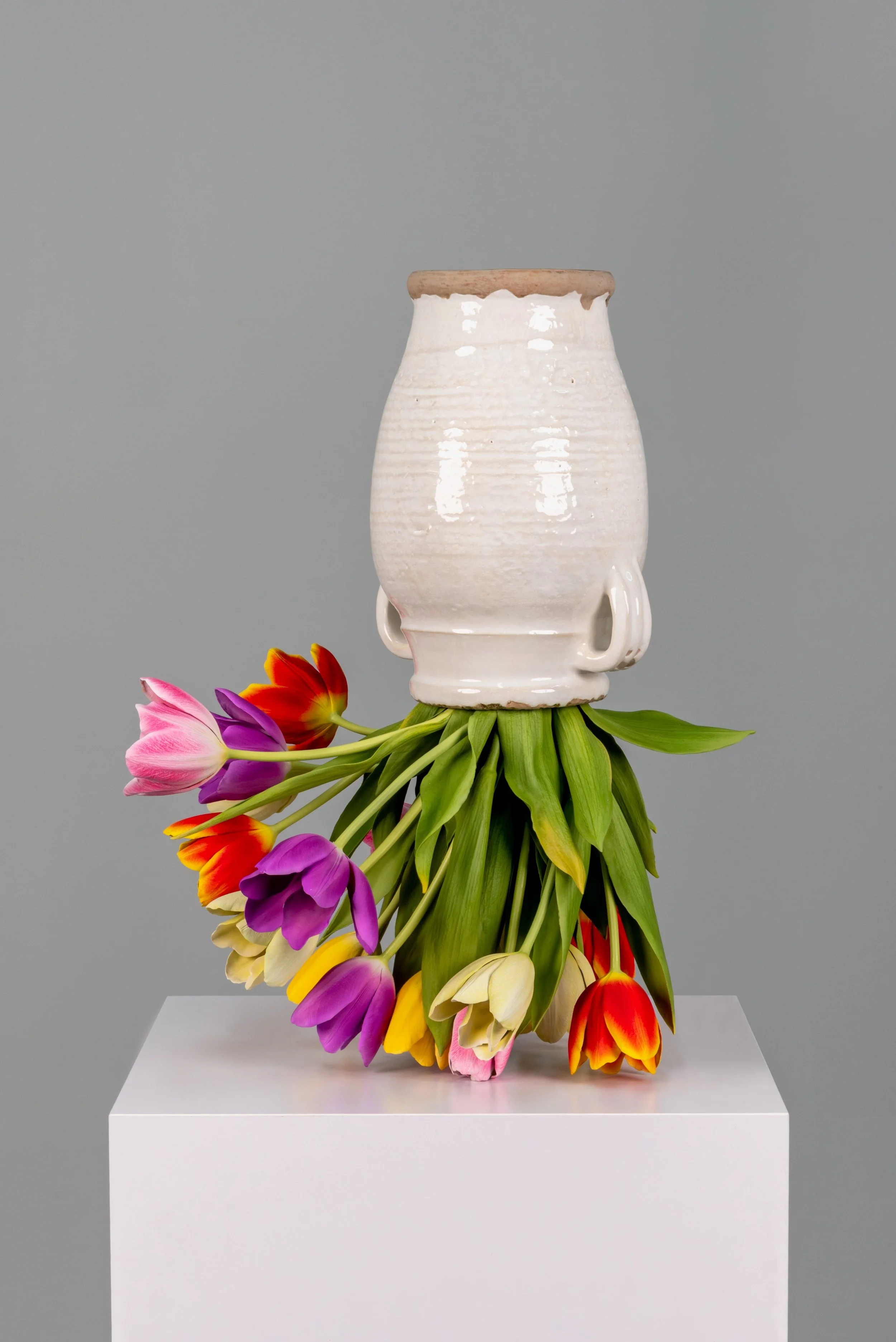
Arrangement, 2026
Could you tell us a bit about yourself and your background?
I live and work in New York City, but I was born and raised in the Midwest. The Midwest has a distinct cultural quality that shaped me, and I see it more and more in my work. There is a practical, plainspoken quality about the Midwest—an aversion to ostentation, a kind of directness. Those qualities track pretty well onto my way of working.
Your upcoming solo show 'Sideways Dinner' opens at MARUANI MERCIER in Knokke on 8 August 2026. As you prepare to bring together your new sculptures, what ideas and themes are you hoping to explore, and what would you like visitors to experience or reconsider about the everyday when they step into the show?
I'm working through ideas about displacement—a psychological and spiritual displacement, or rupture, where the coherence of everyday life starts to fall apart. Our understanding of our identity and our social relations can be fragile. I wanted to incarnate some of the anxiety that is created when those understandings start to break down.
You spend enormous effort making bronze and resin behave like a wilting weed or a tossed-aside flower, then you let gravity look like it lost the argument. What pulls you toward turning things upside down or sideways rather than leaving them as they are?
It's all an effort to make an understood thing feel strange, to see something, I guess, literally from another viewpoint. I wanted to do this in the simplest way possible, without resorting to any kind of "artistic" intervention. I decided that the gesture of simply rotating something could achieve that, creating a sense of wonder and unease without really doing much at all. Almost like a collage: just rotate the image. But of course these are not images; they exist in real space, our space. These sculptures incorporate two types of gravity: the gravity of the original orientation and the gravity that the viewer inhabits. I like that tension.
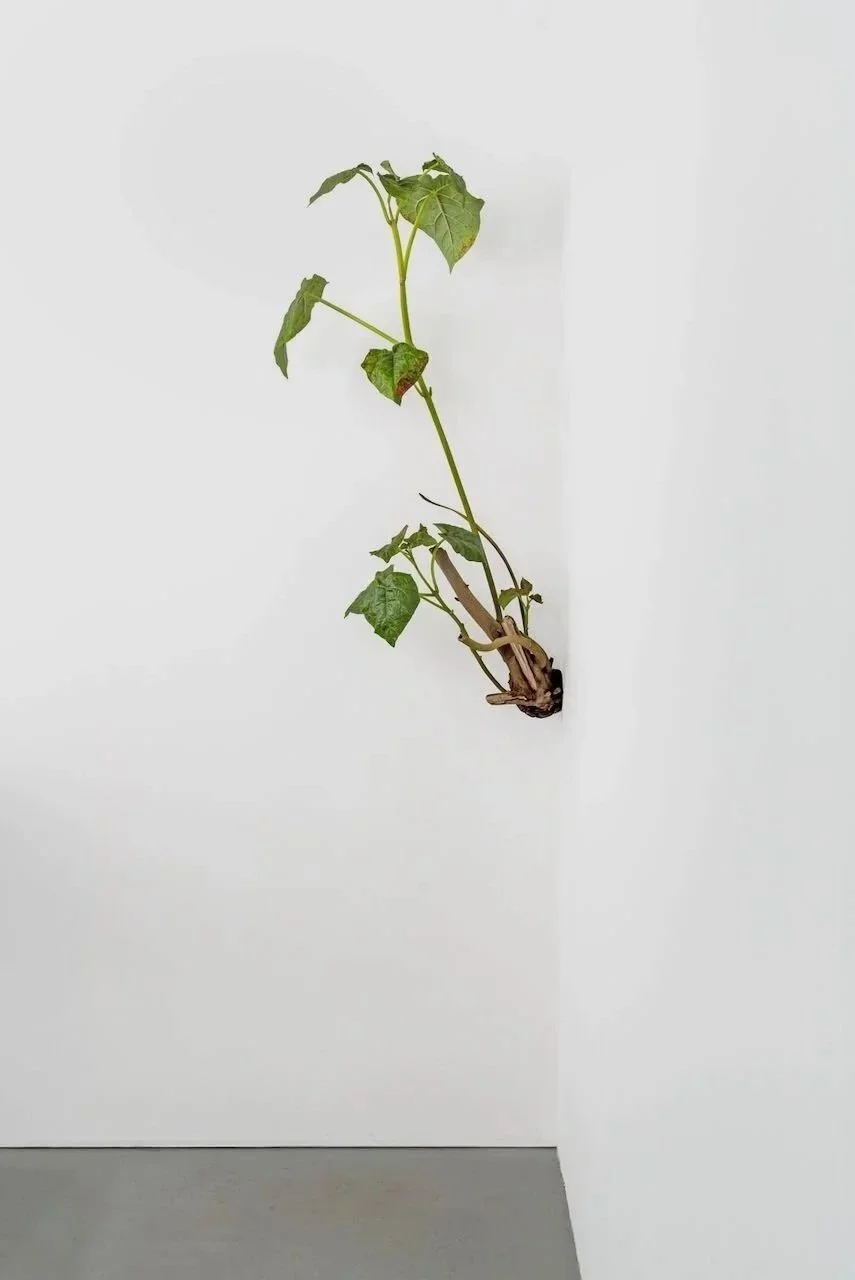
Weed, 2025
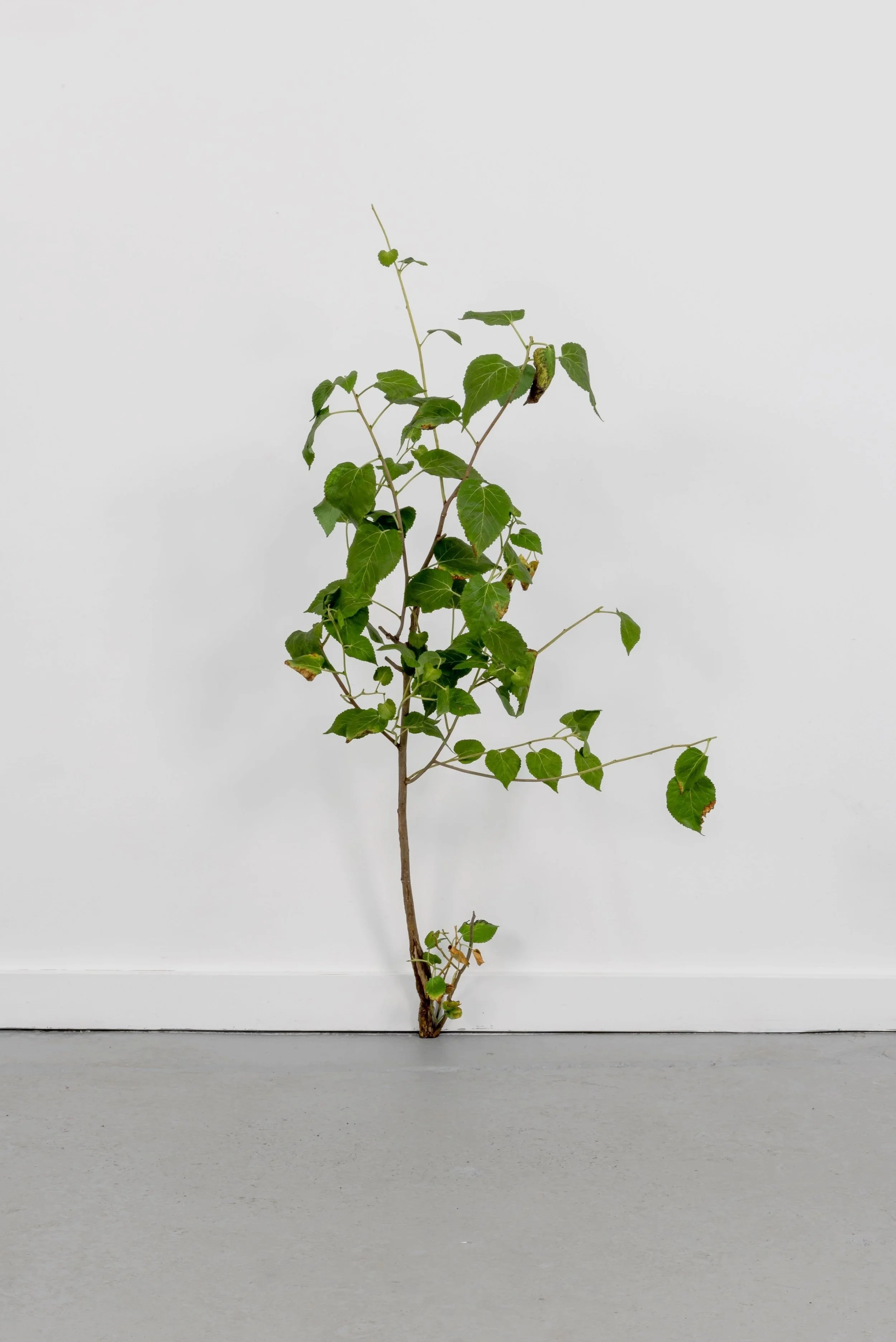
Weed, 2025
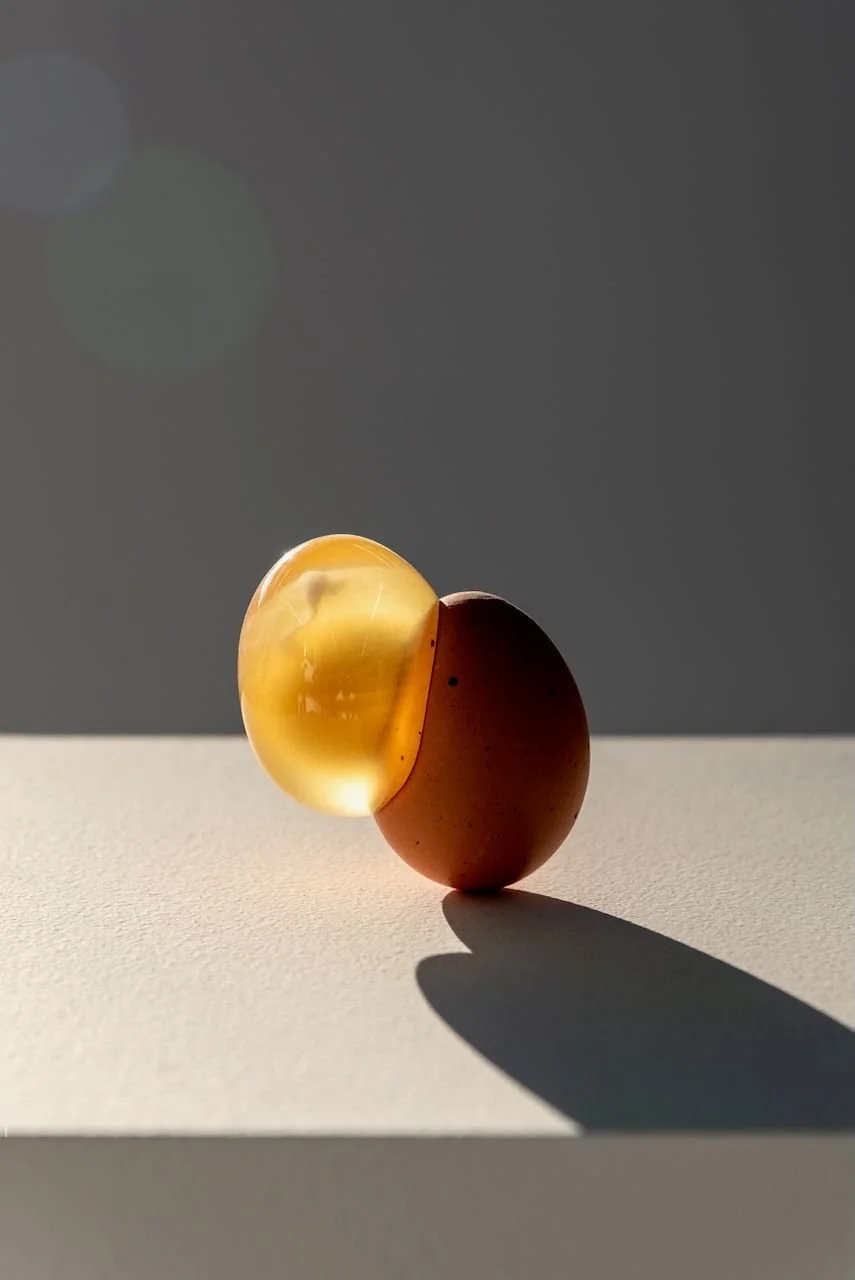
Egg, 2026
The self portrait (Arrangement, 2024) shows you in your actual paint-stained studio clothes with your head folded onto your shoulder, somewhere between a joke and a collapse. When you put your own body through that kind of indignity, how did it make you feel? And what are you trying to get the viewer to register before they laugh?
Well, that work is about a kind of psychic incoherence—a rupture or disturbance within the self, or within the image of the self. I'm in my studio clothes because the sculpture was modeled after a photograph of me looking at something while at work. I kept the clothes because I liked the image of myself as a creator, and of you looking at me looking at a creation. In this sense, it is also a sculpture about looking. But really, the sculpture is pointing to a problem, a philosophical problem. When someone laughs, I think it's because they identify with this problem. It's an absurdity we all feel.
Tell us a bit about how you spend your day / studio routine? What is your studio like?
I work with a staff, so I try to get to the studio a couple of hours before they arrive. I need that time to focus and plan out the day. I put the music on and make sure the vibe is right. Music is on all day, but it's only instrumental—no words. I couldn't even tell you who makes the music; it's just background sound. When everyone comes in, we review what happened the previous night: what shows they saw, what they read, what movies they watched, what caught their attention. This debrief lasts about thirty minutes. It's essential. After we're all caught up, everyone goes to their workstations, and I meet with people individually to talk about what needs to be done. On a good day, I get to work a lot with my hands alongside my assistants. On a bad day, I have meetings or emails or something. It's normal, really. I guess it's like any other workshop, except that we probably talk about ideas more than a mechanics shop does.
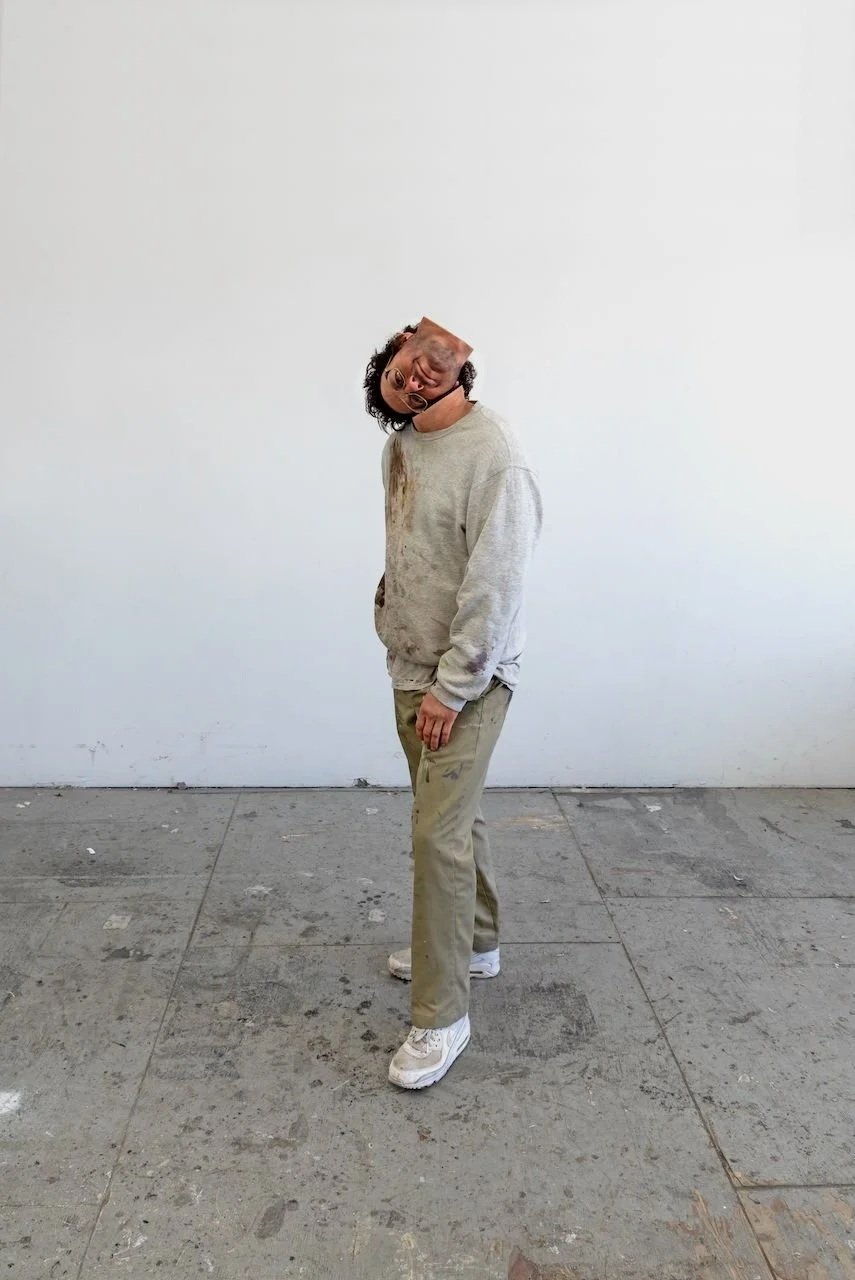
Arrangement, 2024
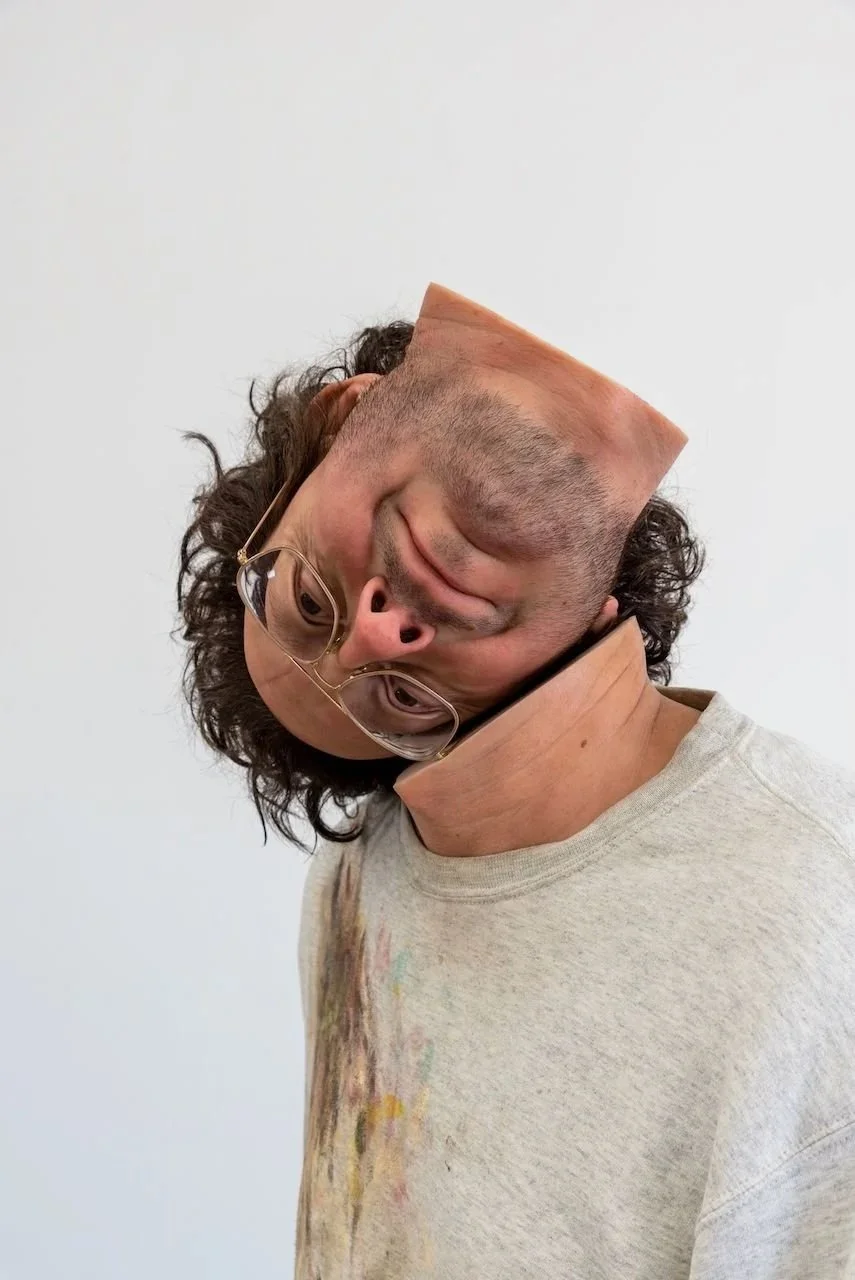
Arrangement (detail), 2024
What artwork have you seen recently that has resonated with you?
There's a Bruce Nauman show up now in New York, a small show that includes one of his hanging heads. Every time I see a work from that series, it takes my breath away. Obviously, it reminds me of my new self-portraits in that the head is disembodied, but it's such a different attitude. The simplicity of the execution and the material makes the work feel immediate and powerful.
Is there anything new and exciting in the pipeline you would like to tell us about?
The next project is to scale up some of my Arrangements to ten feet high for outdoor placement. I've never used scale as a strategy before, but I think it may function similarly to the gesture of inversion. Usually, when artists scale things up, they start to generalize form; things get smoothed out. I want mine to feel extra detailed and crisp, like looking at a flower through a magnifying lens.
All images courtesy of the artist and MARUANI MERCIER
Interview publish date: 25/06/2026
Interview by Richard Starbuck