Sonya Derviz
“Uncertainty is what allows the work to move; without it, a painting can only arrive where you already expected it to.”
In our interview with Sonya Derviz, we discuss her solo exhibition Hover at Bradley Ertaskiran, on view until March 7. Derviz reflects on uncertainty as both a structural and emotional condition within her paintings, exploring how forms emerge, dissolve, and resist full recognition. She speaks about layering charcoal and translucent oil, the tension between visibility and obscurity, and why vagueness is not a failure of clarity but an essential part of how painting holds meaning.
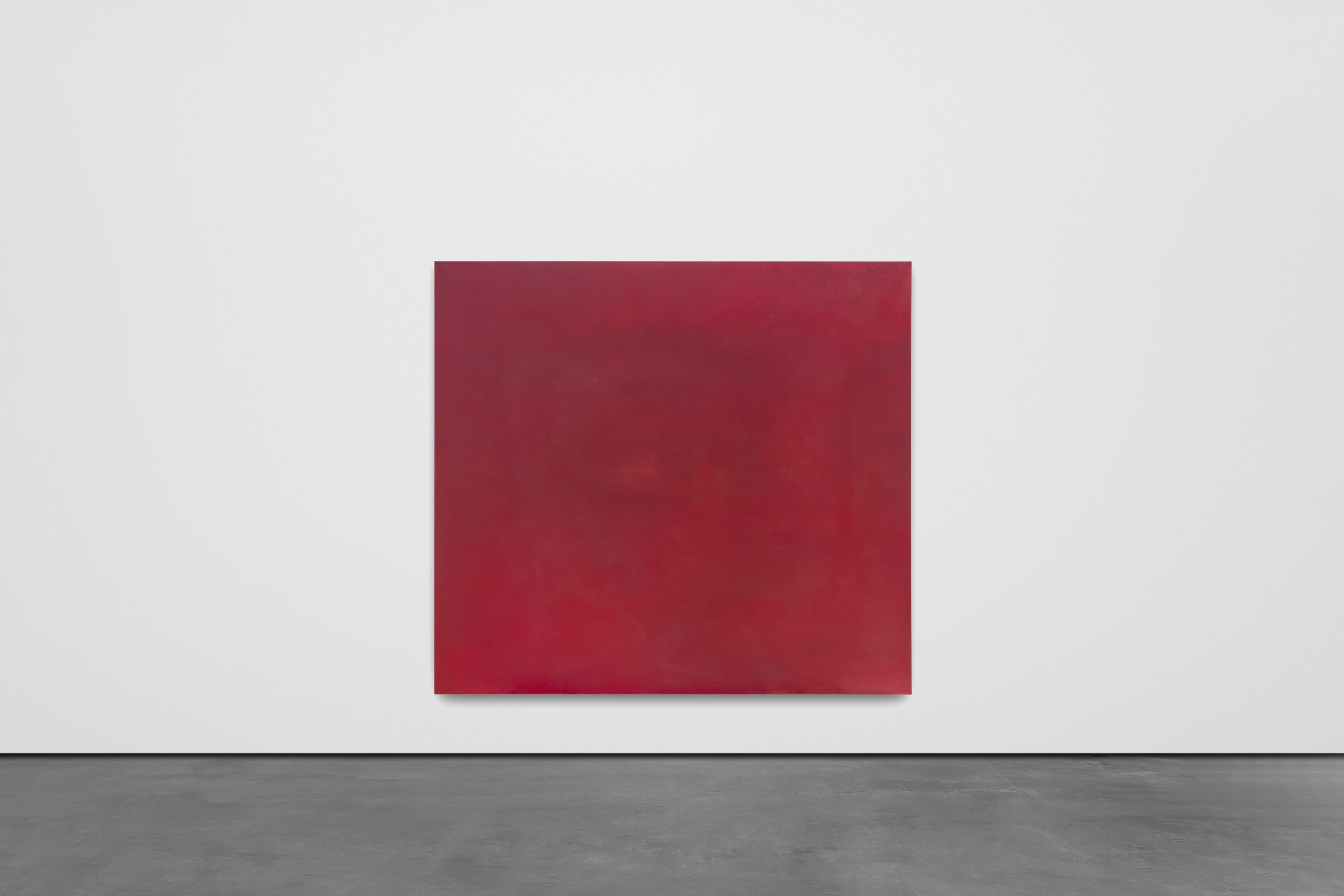
Audience, 2025. Photography credit: Jack Elliot Edwards
Could you tell us a bit about yourself and your background?
I was born in Moscow and grew up mostly in the UK, finally choosing to stay in London. I started painting when I was four or five years old; around then I began going to art school in Moscow, which focused mostly on drawing, gouache paintings of still lifes and illustrations of mostly Eastern European fairy tales. I started working with oil a bit later, and at the Slade I abandoned painting completely for a few years in favour of sculpture and photography. I came back to it toward the end of my studies, but differently. It felt like starting again.
In your solo exhibition Hover at Bradley Ertaskiran, the paintings seem to embrace uncertainty rather than resolve it. What does “hovering” mean to you in the context of this body of work, emotionally, psychologically, or even physically?
"Hovering" refers to a suspended state, something held in relation to laws or structures. If something is suspended, there must be something to be suspended from. Hovering can be both passive and active, conscious or unconscious. It refers to principles of uncertainty. In the paintings, charcoal lines act as anchors but thin layers of oil disrupt and collapse them; forms appear and then lose their edges. Hovering describes that condition: not fully defined, but not lost either. As a title for this show I wanted a word that could describe what the paintings do.
Uncertainty is what allows the work to move; without it, a painting can only arrive where you already expected it to. This is perhaps what makes art so connected to human experience. It is also, I think, a condition of the present moment, where foundational certainty is not just questioned but collapsing, and vagueness is not the failure of truth but perhaps its experience. This space of not knowing feels even more present to me now, when so much of how we live and our interaction with technology is shaped by the expectation of clarity and resolution. I think much of our understanding of the world depended on having a ground.
Your paintings appear atmospheric and spontaneous, yet they are built through carefully layered charcoal and semitransparent oil. How do you navigate the balance between control and chance in your process, and at what point do you decide a work has reached its final state?
One way would be that I reference external material, and I compile collections of these materials. I can use charcoal as a starting point to hint at a specific reference, which feels deliberate. Then I start working in oil, and I use charcoal outlines again and again to re-anchor the composition or to bring in a new reference, new lines, and allow things to react. There is a methodology, and then there is how I respond to these things intuitively. So the painting unfolds through layering, through seeing and not seeing. I paint very thinly, so the opacity of the paint becomes a tool, where marks and gestures settle into layers. There's always an element of chance in the physicality of it.
Many of the works in Hover suggest faces or figures on the verge of recognition, only to dissolve again into abstraction. How do you think about that tension between visibility and obscurity, and what role does the viewer play in completing or destabilising the image?
I don't think a painting can be truly current. It’s material presence gives it a different duration. There are elements I control, what is visible and what is not, but visibility and obscurity are structural in the work, not just decisions I make. What is shown is always shaped by what has been covered. A painting can suggest recognition but does not confirm it. Vagueness here is a structural condition, not a distortion.
I use references, but I don't always need them; sometimes they lead me somewhere that has nothing to do with the reference itself. References are mostly suggestive; combining things that don't fit together creates a tension between fragmentation and coherence. I think that tension is psychological as much as visual, something to do with the boundaries of what the self can hold together. In Kaari Upson's words, "Perhaps the beautiful is more so when it's not an aim but a by-product." The process shapes what the painting is, how it feels, and allows us the kind of knowledge that paintings bring — even though we cannot fully define them.
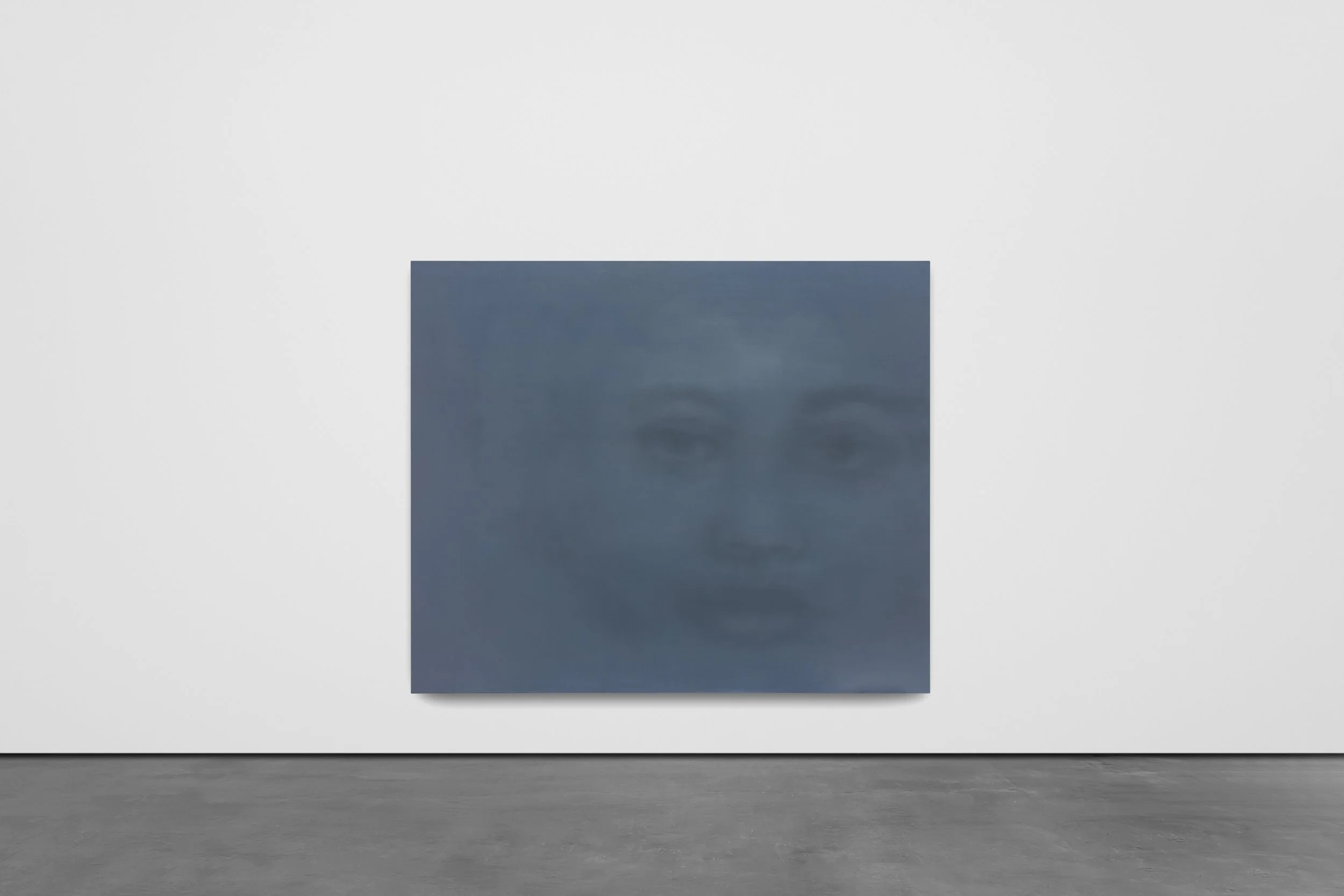
Near, 2025. Photography credit: Jack Elliot Edwards

Installation Shot: Hover, Bradley Ertaskiran, 2026. Photography by Jean-Michael Seminaro
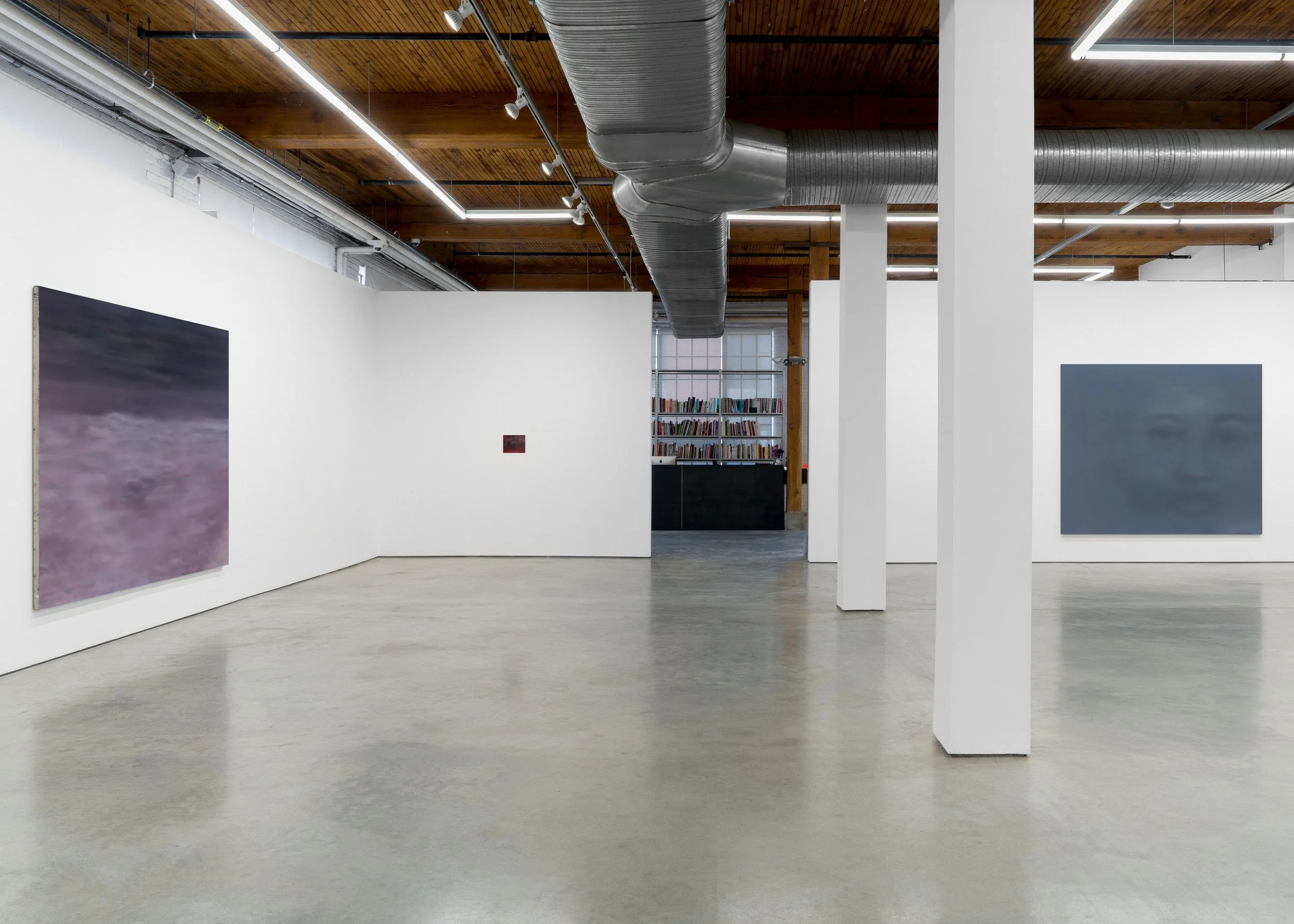
Installation Shot: Hover, Bradley Ertaskiran, 2026. Photography by Jean-Michael Seminaro

Installation Shot: Hover, Bradley Ertaskiran, 2026. Photography by Jean-Michael Seminaro
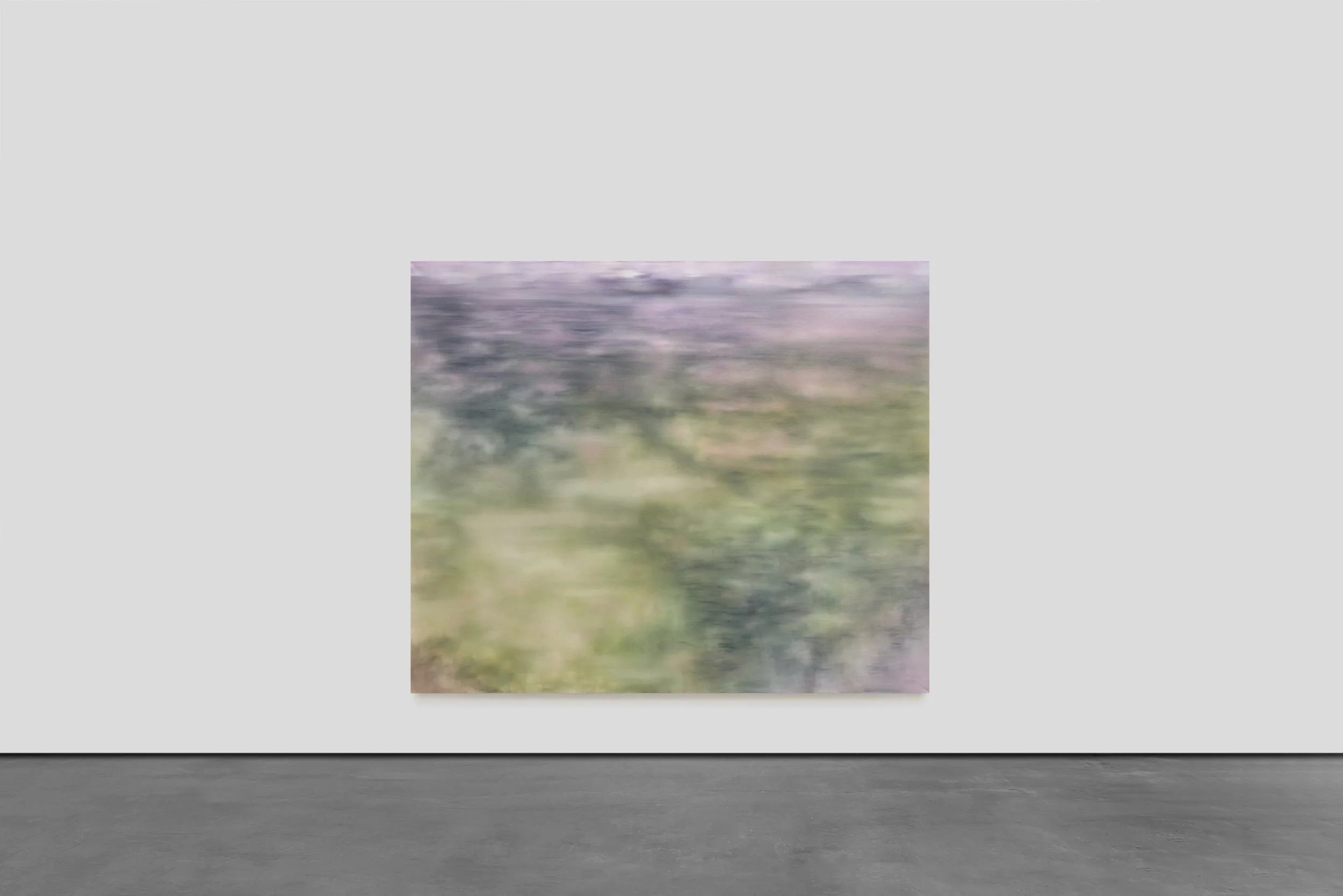
Melt water, 2025. Photography credit: Jack Elliot Edwards
Tell us a bit about how you spend your day / studio routine? What is your studio like?
I usually dedicate focused time to painting; I need to create an environment centred entirely around it. Recently, my studio has been quite empty. I don't like having anything there besides what I'm currently working on, and I no longer keep books or older works in the space. I work on one painting at a time as I don't like to divide my focus. Because I work mostly wet-on-wet, a painting has to be completed all at once, and I want to see significant change in a day's work. Sometimes I can spend a month without painting, focusing on research instead. I like working that way, led by a kind of curiosity rather than a specific idea. I collect images, read, look, all outside the studio. Somehow these activities don't sit well alongside painting; in fact, nothing really does. Painting tends to consume everything until it's finished. And each time, there is something new in how it happens.
What artwork have you seen recently that resonated with you?
I've been thinking about Sasnal, Daiga Grantina, Barbara Wesołowska's show at Michael Werner in London, Karla Black. I often return to Giacometti and Cézanne. I loved Peter Doig's show at the Serpentine, Gerhard Richter's retrospective in Paris, and Kaari Upson at the Louisiana Museum. I also often think about Auerbach's London paintings, Eugène Leroy, Manoucher Yektai, Richter's moonscapes, Mondrian's trees, Rozanova's Green Stripe.
Is there anything new and exciting in the pipeline you would like to tell us about?
I'm continuing to work on new paintings and will be spending a lot more time in the US next year.
All images courtesy of the artists and Bradley Ertaskiran Gallery
Interview publish date: 04/03/2026
Interview by Richard Starbuck