Thordis Erla Zoega
“I enjoy creating works that invite the viewer in. Using familiar objects creates an immediate point of connection and removes some of the pressure people often feel when approaching contemporary art.”
Our interview with Thordis Erla Zoega takes us into her shimmering, shape-shifting world. Working across sculpture, installation, design and architecture, she tells us about her fascination with perception, light and technology, often using materials like dichroic film that transform depending on how the light falls and where the viewer stands. From interactive mirror works to large-scale public commissions for hospitals, hotels and building complexes, her practice invites us to look twice, question what we are seeing, and consider the ever-shifting relationship between physical and digital space.
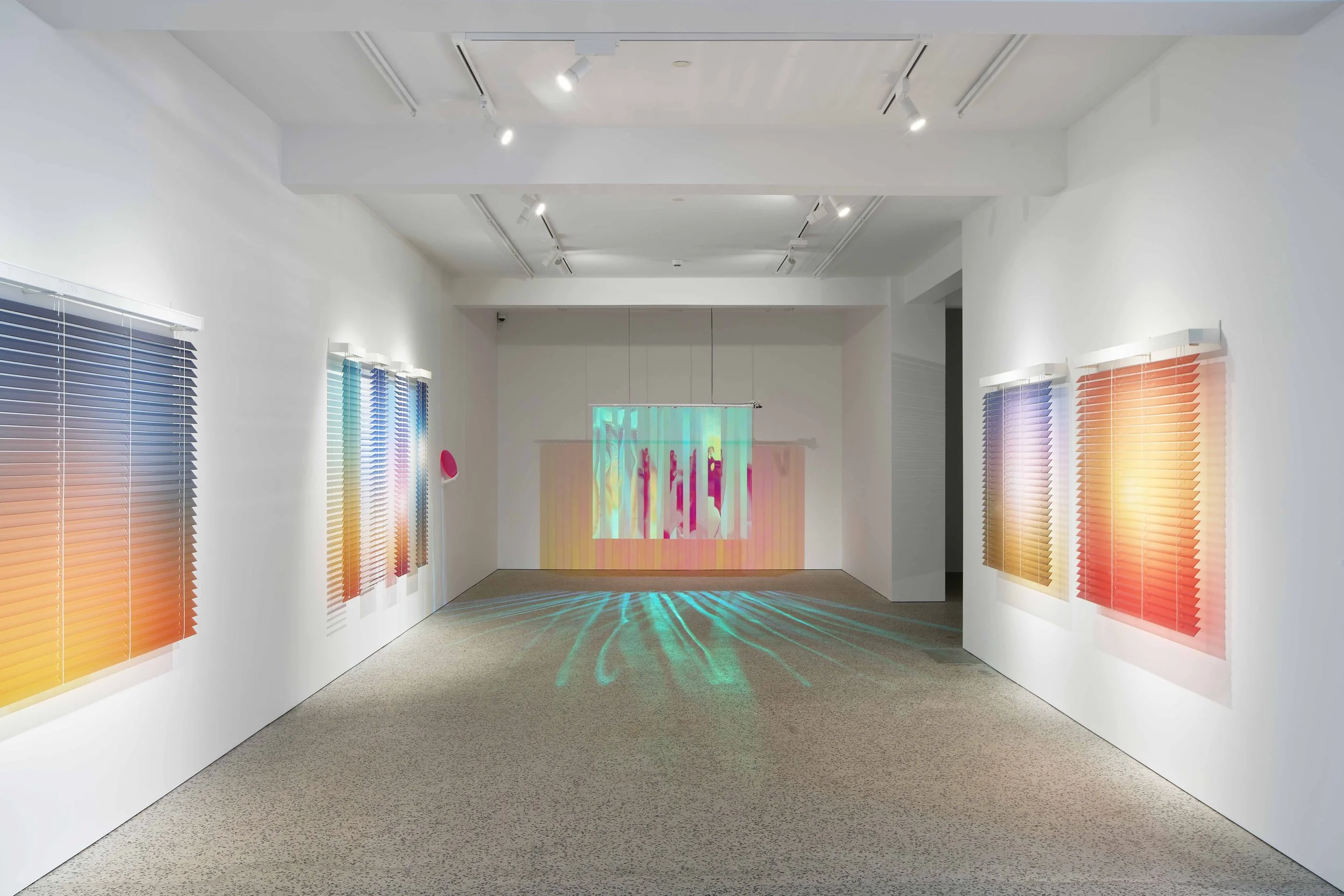
Domestic Sci-fi, BERG Contemporary, 2026
Could you tell us a bit about yourself and your background?
My name is Þórdís Erla Zoëga and I’m an artist from Iceland. I grew up on the west side of Reykjavík, surrounded by family and ocean. I knew from an early age that I wanted to become an artist, but I also always felt curious about living abroad, so when I was 20 I moved to the Netherlands to study fine art in Amsterdam. I graduated from the Gerrit Rietveld Academie in 2012. After moving back to Iceland, I worked for a period in my family’s business before studying Web Development. Even though I quickly realized I didn’t want to become a programmer, the studies sparked a lasting interest in cyberspace, technology and the invisible systems that shape how we live and communicate today. Shortly after returning to Iceland I began receiving opportunities to create public artworks and since then I’ve steadily built up my practice both in Iceland and internationally. My work often moves between sculpture, installation, design and architecture, exploring perception, light, technology, and the relationship between physical and digital space.
Your work often uses materials like dichroic film that shift color depending on how light hits them and where the viewer stands. What draws you to these kinds of materials, and how do you think about the role that a viewer's physical position plays in completing the experience of a piece?
I’ve always been fascinated by optical illusions and materials that make people stop, look twice, and question what they are seeing. Much of my work begins with a simple curiosity about perception and how easily it can shift. I first started working with reflective films while studying at the Gerrit Rietveld Academie. For my graduation project I used a grey/silver architectural film that becomes reflective on the side with more light. When the light is balanced on both sides, the material is both reflective and transparent at the same time, creating a kind of visual misunderstanding that I found fascinating and have been working with ever since. It became a key element in my interactive mirror works, where two people meet through this special sheet of glass and see their reflections blend together, creating an intimate, puzzling and sometimes invasive experience. A few years later, in 2019, I was commissioned to create a public artwork for the Konsulat Hotel in Reykjavík. The way light shifts throughout the year in Iceland has had a strong influence on my work - the long shadows of the short winter days and the endless brightness of summer. I wanted to make a work that could respond to those shifts. By using dichroic film on suspended glass circles, I created Daily Shift, a piece that changes with the sunlight, weather, seasons and the viewer’s position, making him aware of the passing of the day. In making Daily Shift I learned that dichroic film behaves in a very similar way to the grey sun film so a new body of works evolved from there.
Many of your installations seem to sit in a space between something deeply familiar, like a window blind, and something that feels almost alien or futuristic. How do you decide on the everyday objects or forms you reference, and what are you hoping people feel when they encounter something recognizable made strange?
I enjoy creating works that invite the viewer in. Using familiar objects creates an immediate point of connection and removes some of the pressure people often feel when approaching contemporary art. There’s already an understanding of the object, so I can begin to shift or distort that understanding from within. I often hear that my work exists somewhere between art and design, which is probably true. Many of the works have to be carefully designed before they can be built, and I think a lot about how art lives within space and architecture. I spend a lot of time thinking about how artworks live within architecture and how they become part of a space rather than simply objects placed inside it. I’m also drawn to everyday materials and objects that aren’t traditionally associated with contemporary art. In my recent exhibition Domestic Sci-Fi at my gallery, BERG Contemporary, I explored how our daily lives have become even more futuristic than the science fiction films and books I grew up with in the 90’s. For one series of works, Forecast, I transformed venetian blinds into wall reliefs made from UV-printed acrylic glass. The imagery came from conversations with what I jokingly call “the oracle” - artificial intelligence. I asked it to imagine the future views from my window in Reykjavík. The answers varied wildly, but one thing never changed: the sky and the sun were always there. That felt strangely reassuring. No matter how much technology changes our lives, some things remain constant. I think that’s what I was really reflecting on in the exhibition: the importance of staying present and remembering that every generation believes it is living through extraordinary change. The sky above us has seen it all before, and it will be there long after us.
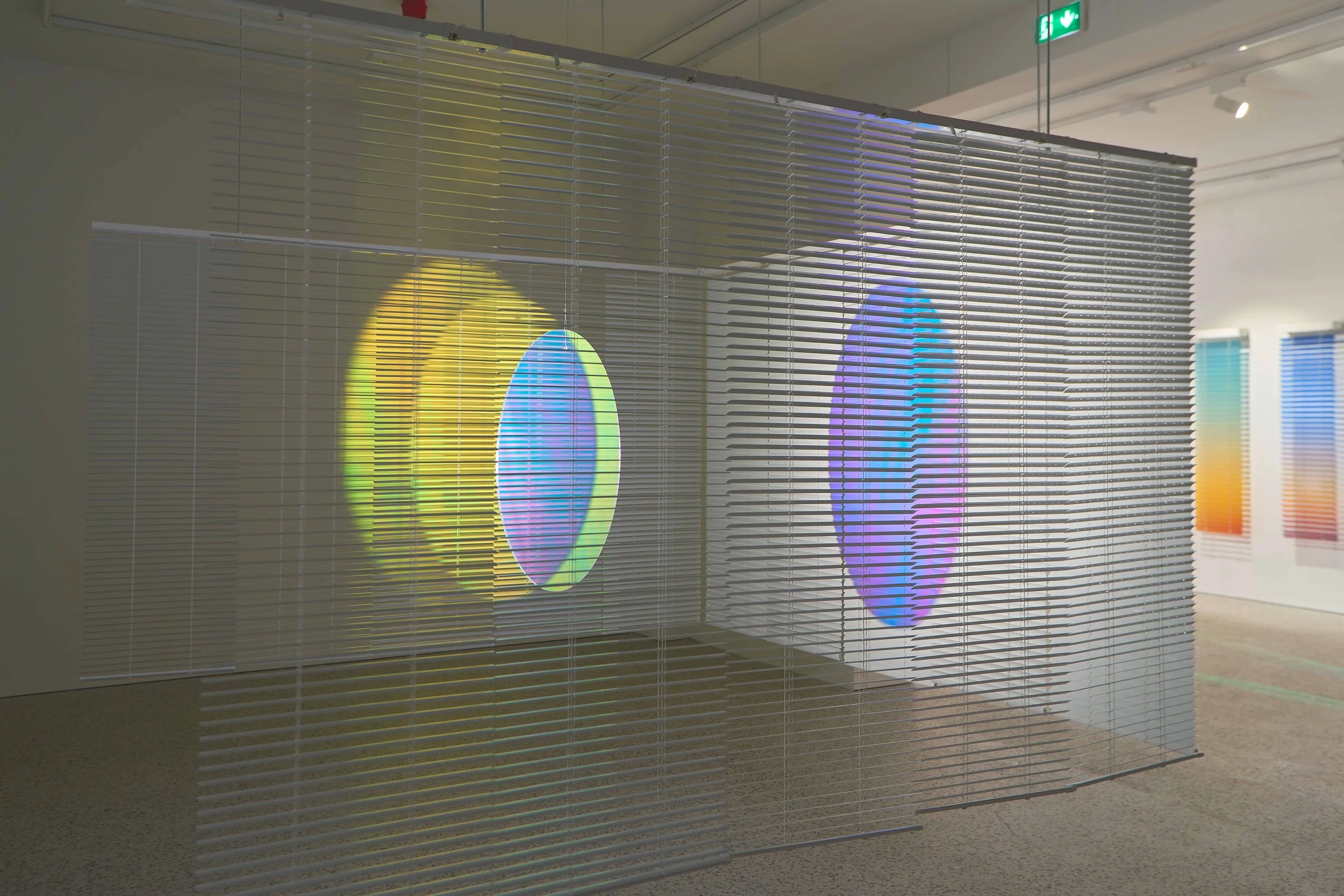
Everyday, BERG Contemporary, 2026
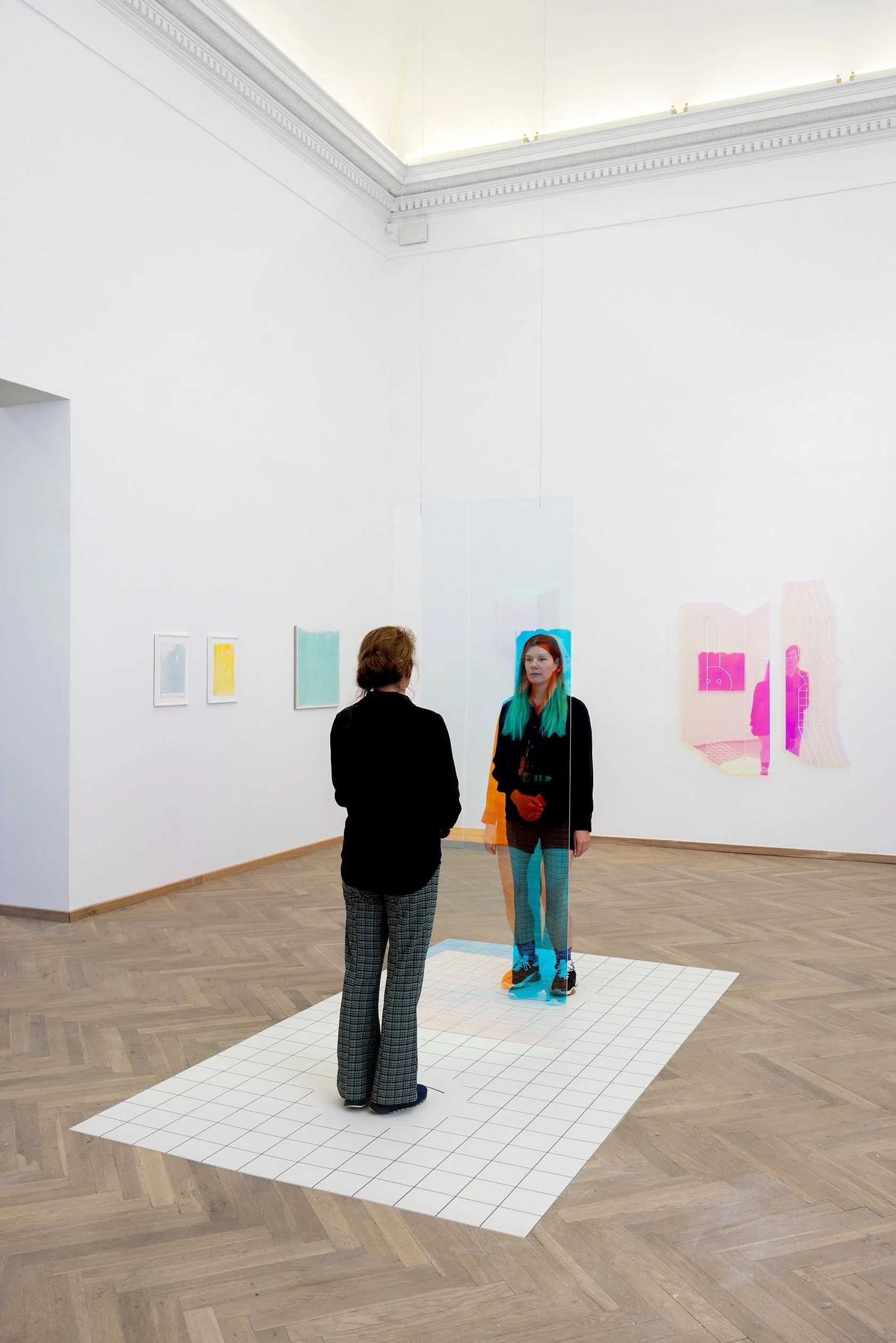
Interface, CHART with BERG Contemporary,2024
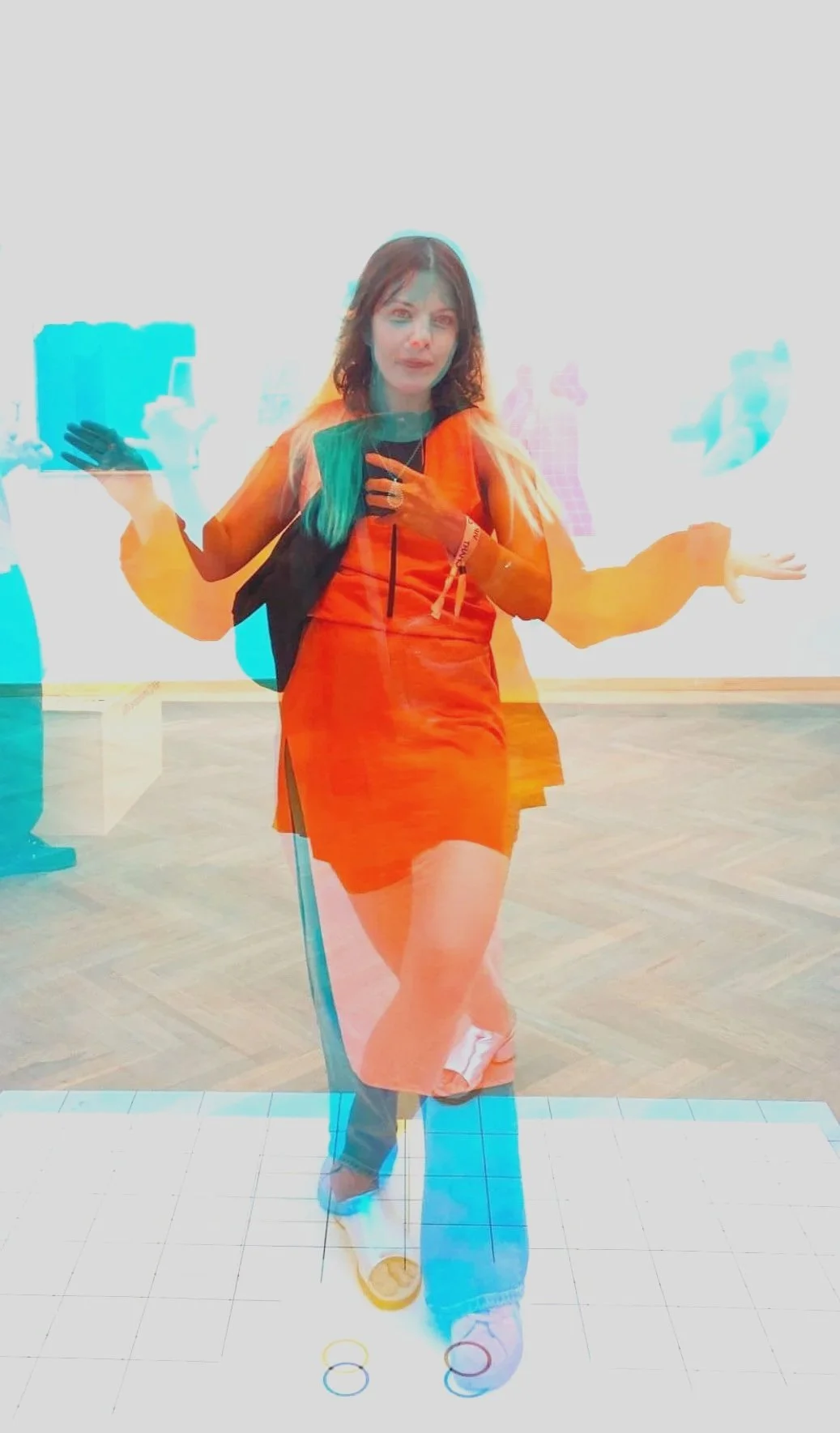
Interface, CHART with BERG Contemporary, 2024
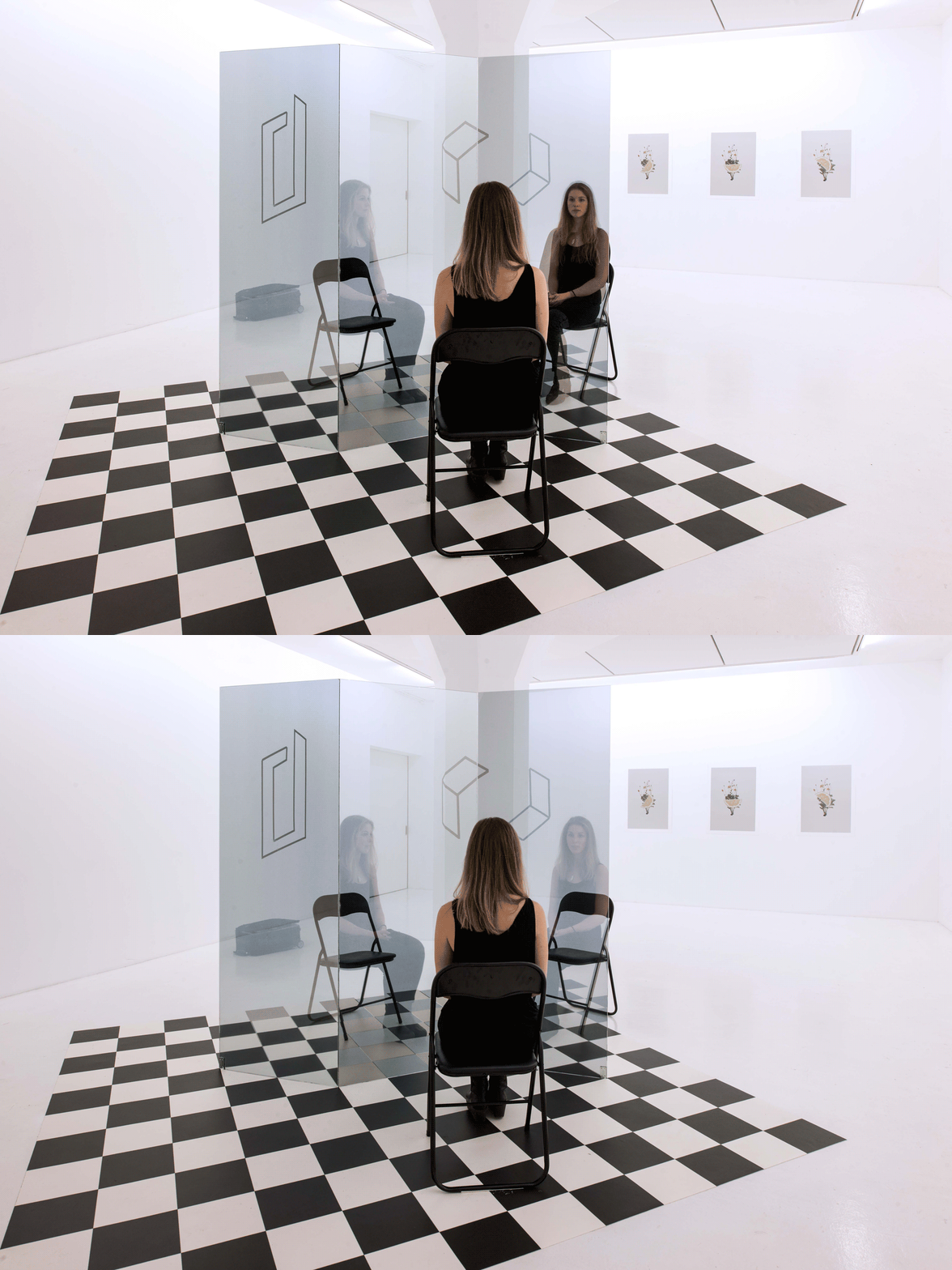
Trilemma, Reykjavik Art Museum, 2015
You work across a wide range of contexts, from gallery installations to public commissions for hospitals and hotels. How does your creative process change when you are making something intended to live permanently in a shared, functional space versus something designed for a temporary exhibition setting?
I approach all projects by first analyzing the space and the context they will exist within. For exhibitions, I usually begin with a concept that has been brewing in my mind and allow the works to develop organically from there. I usually create a floor plan, think about the movement through the space and consider how the works interact with one another. My process often moves between the analytical and the intuitive and sometimes those two approaches clash. Materials frequently behave differently than expected once they enter a space, especially with the reflective works, but that’s often when the most interesting things begin to happen and the work gets a life of its own. Public artworks require a much longer and more detailed process. I often collaborate closely with architects, engineers and fabricators; every detail has to be carefully resolved before production begins. In those situations there is naturally less room for spontaneity, but I still find that unexpected moments emerge during fabrication or installation, good or bad. The work develops its own rhythm and identity through the process. What interests me about public art is that people encounter it as part of everyday life rather than inside a traditional art setting. It becomes part of someone’s routine or environment and that relationship feels very meaningful to me.
Tell us a bit about how you spend your day / studio routine? What is your studio like?
In recent years I’ve started approaching my practice more like a regular job, which for me means showing up every day and working roughly from 9-17. That structure helps me compartmentalize projects and creates a sense of stability, especially when working on several things simultaneously. That said, no two days are really alike. Some days are entirely computer-based, working on sketches, proposals, renderings, editing images or planning installations. Other days are much more physical - applying film to acrylic surfaces, testing materials, building prototypes or experimenting with new techniques. I’m always searching for the “perfect” studio, although I think the ideal space changes depending on the projects I’m working on. Right now I have a studio space in Grandi in Reykjavík, in an old harbor district close to my home, with a view over the ocean.
What artwork have you seen recently that has resonated with you?
I recently saw a retrospective of Steina Vasulka at both the National and Reykjavík Art Museum, which really resonated with me. She was such a pioneer within video and new media art and it was inspiring to see how experimental and forward-thinking her work still feels today. I also recently saw a really inspiring exhibition by Anni Estarriola in Amos Rex in Helsinki. It left me thinking about the work long after I had left the exhibition, which is always a good sign. I’m very interested in artists who explore technology in poetic or human ways rather than treating it simply as a tool.
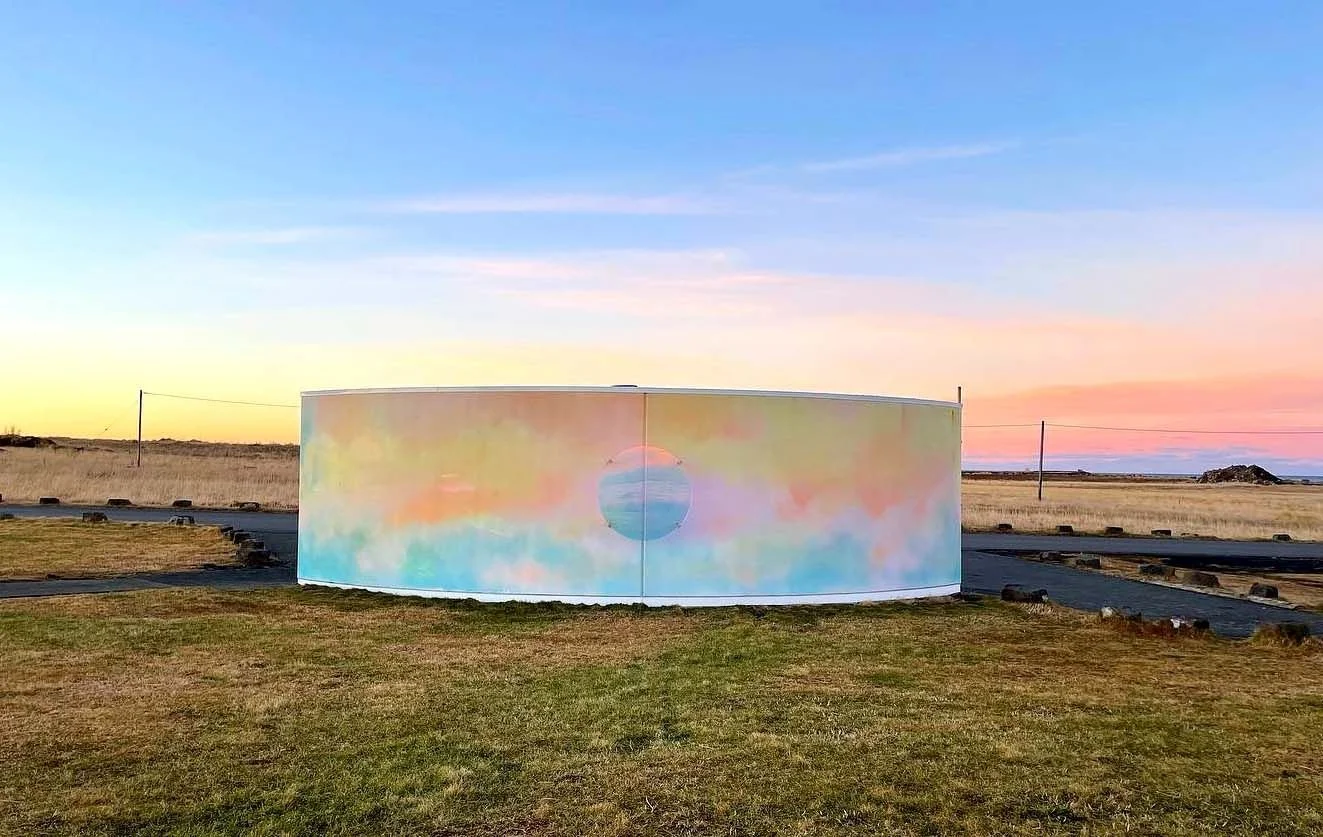
Hue Supply, Grótta, 2022
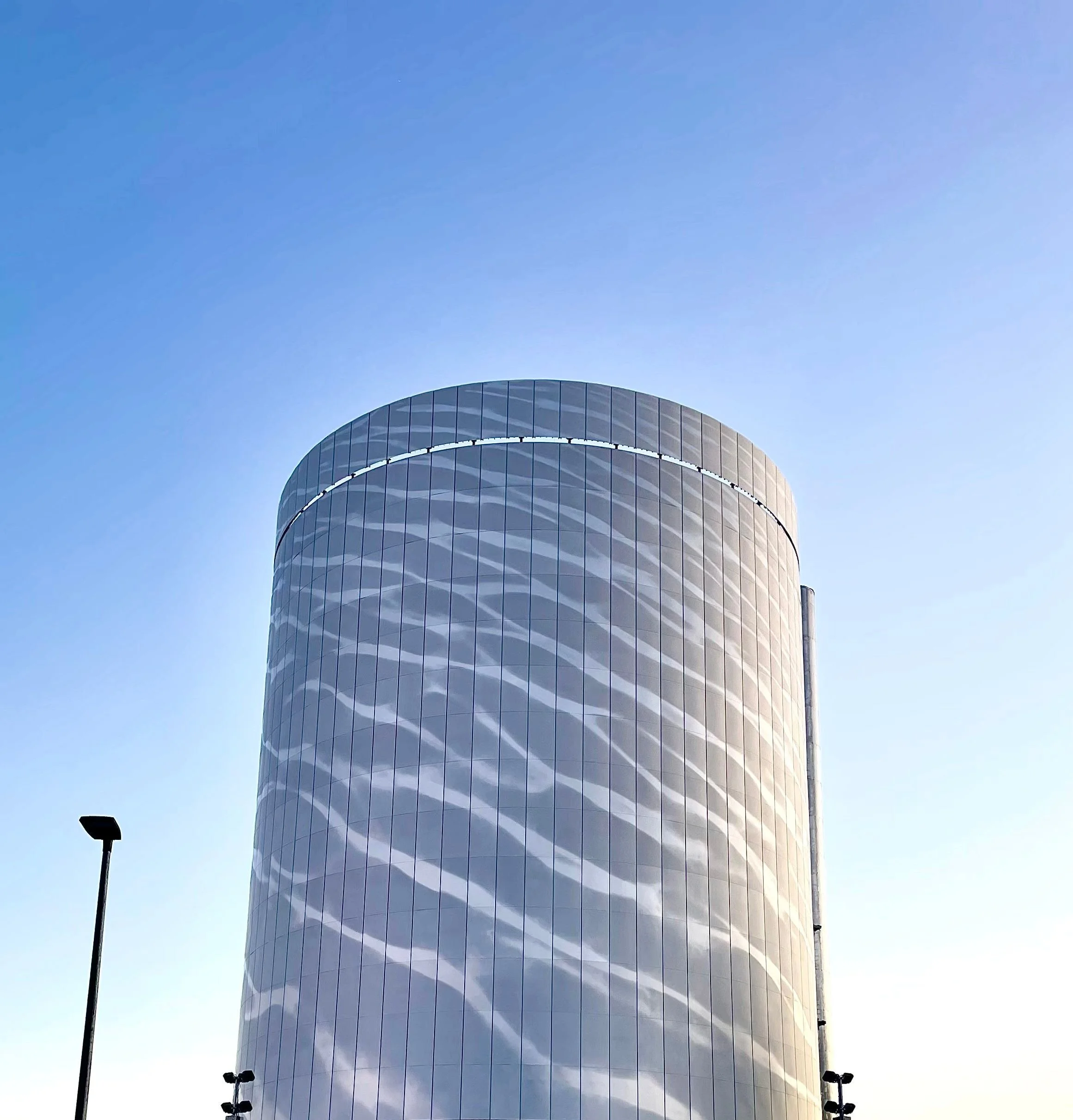
Loop, FORTUM, Espoo, Finland, 2026
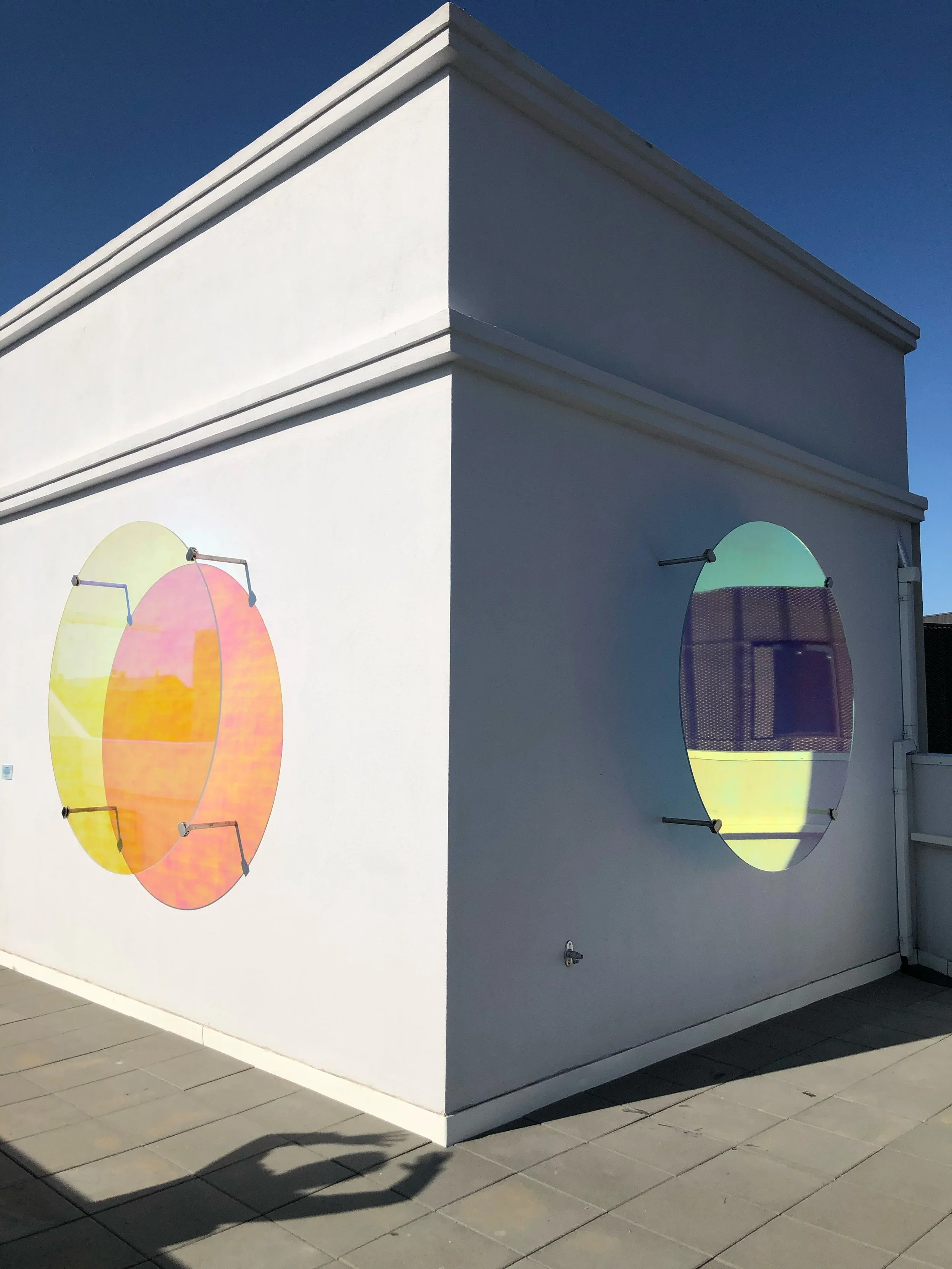
Daily Shift, Konsulat Hotel, 2019
Is there anything new and exciting in the pipeline you would like to tell us about?
At the moment I’m working on three major public art projects. I was recently selected through a competition to create an artwork for the main entrance for the new National Hospital of Iceland. The work will be a large-scale installation made of glass and mosaic and will be realized in 2028. The work is inspired by a cell that also resembles a sunrise or sunset, creating an encompassing space where visitors can sit and relax while waiting in the hospital. I’m also developing a series of lightworks for the entrances of Heklureitur, a large building complex in the center of Reykjavík. The project explores the cycle of daylight throughout the year, allowing residents and visitors to experience both a day and a year as they move through the site. I am essentially creating daylight in the darker entrance corridors of the complex.
Most recently, I completed Loop, a facade commission for a hot water tower for FORTUM in Espoo, Finland. The idea was to transform the structure into a giant wall of water. The facade is made from aluminium, a material that reacts to light in surprisingly similar ways to the surface of water. As the weather and sunlight change, the surface appears to shift and flow, giving the tower a different character each day. It’s always exciting to finally see these long-term projects become real and part of everyday life.
All images courtesy of the artist
Interview publish date: 09/06/2026
Interview by Richard Starbuck