Ben Copolillo
“How a sculpture is made becomes an important lens for examining why it was made.”
Our interview with Ben Copolillo explores a sculptural practice that transforms everyday materials into layered, unstable constructions shaped by process, accumulation, and revision. Working with found objects and accessible materials, Copolillo examines how meaning is embedded within the familiar and how it can be disrupted through reconfiguration. The conversation addresses the role of transformation and excavation in the studio, the tension between structure and collapse, and an approach to making that treats material as both a conceptual and physical test of ideas.
Could you tell us a bit about yourself and your background?
I grew up outside Richmond, Virginia and received a BFA in Sculpture from Virginia Commonwealth University in 2014. Just last year I finished my MFA at University of Texas at Austin. In between I’ve worked around, mostly in woodshops or doing handywork. I’ve shown my work on a limited basis around Richmond, and some in New York and Austin, but mainly kept busy in my studio. I also helped to start an artist run space in Richmond called Valet Gallery with two other friends back in 2016. I don’t think too much about my personal background in relation to my work, but there are certainly things that have shaped my sensibilities and pushed me toward the subversive and the absurd. I grew up in the suburbs and often think back on the material culture of that environment. There’s a familiar critique of the suburbs as a place where consumerism flourishes and produces a kind of complacency or withdrawal. I felt that critique while growing up inside it, which probably shaped how I think about everyday objects and the assumptions built into them.
Your sculptures often begin with familiar objects that are stripped from their original purpose and reassembled into complex structures. What draws you to these everyday materials, and how does their transformation alter the way we read their meaning or value?
Honestly, the best explanation is that these are the easiest things to get my hands on. When I started using pens, I was tired of having to source supplies from very specific places for the more complicated components of my work. I had a bunch lying on the floor of my studio, and I started gluing them together as this immensely simple gesture. But as pens became a material I returned to repeatedly, I started to unpack their ability to operate as something inherently uncomplicated and accessible. Pens are tools for inscription and permanence. Using something so precise to build abstract forms lets me treat conclusiveness as unstable or shifting. More broadly, I see everyday materials as a point of access to some very fundamental perceptions we hold. Our ideas about the world become embedded and normalized in the everyday, and these objects bear the traces of our most ingrained assumptions. To transform, reimagine, or strip them of their usual function breaks the structure of the everyday. Suddenly, the relatable and reliable becomes absurd, or the absurd is drawn out of the everyday: an oil drum sharing the same space as a PB&J.
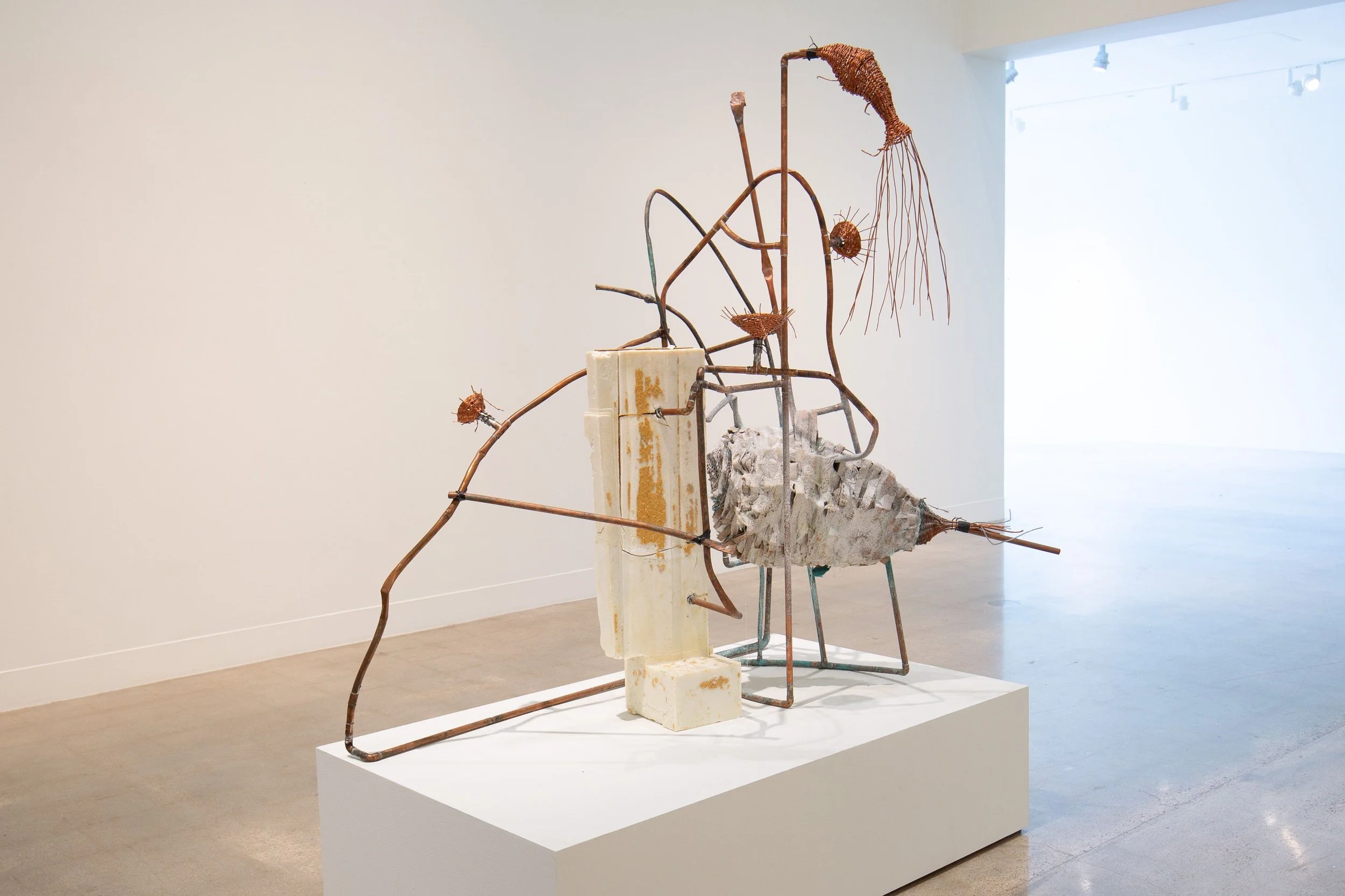
Navel Gazer, 2025
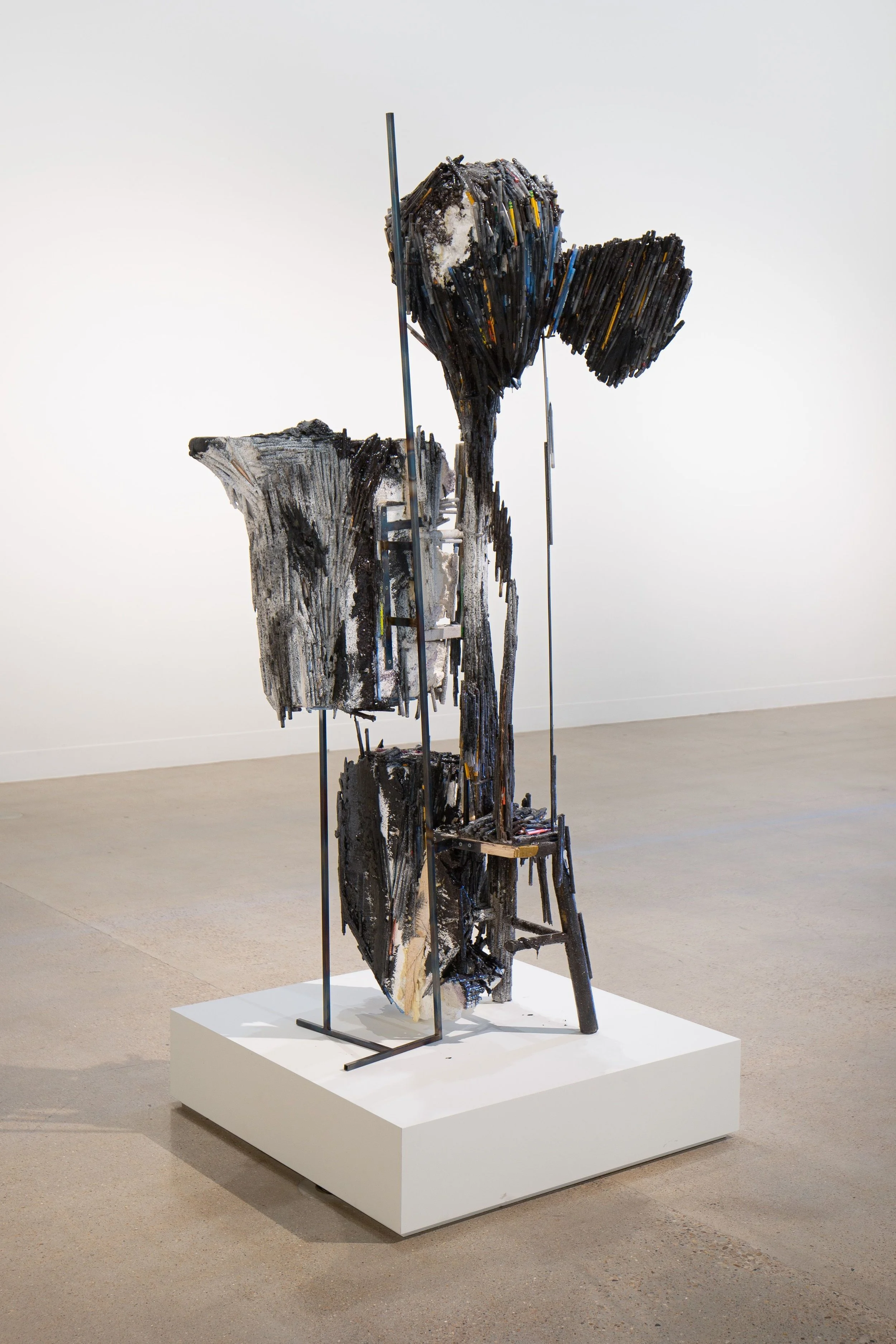
Brooder, 2025
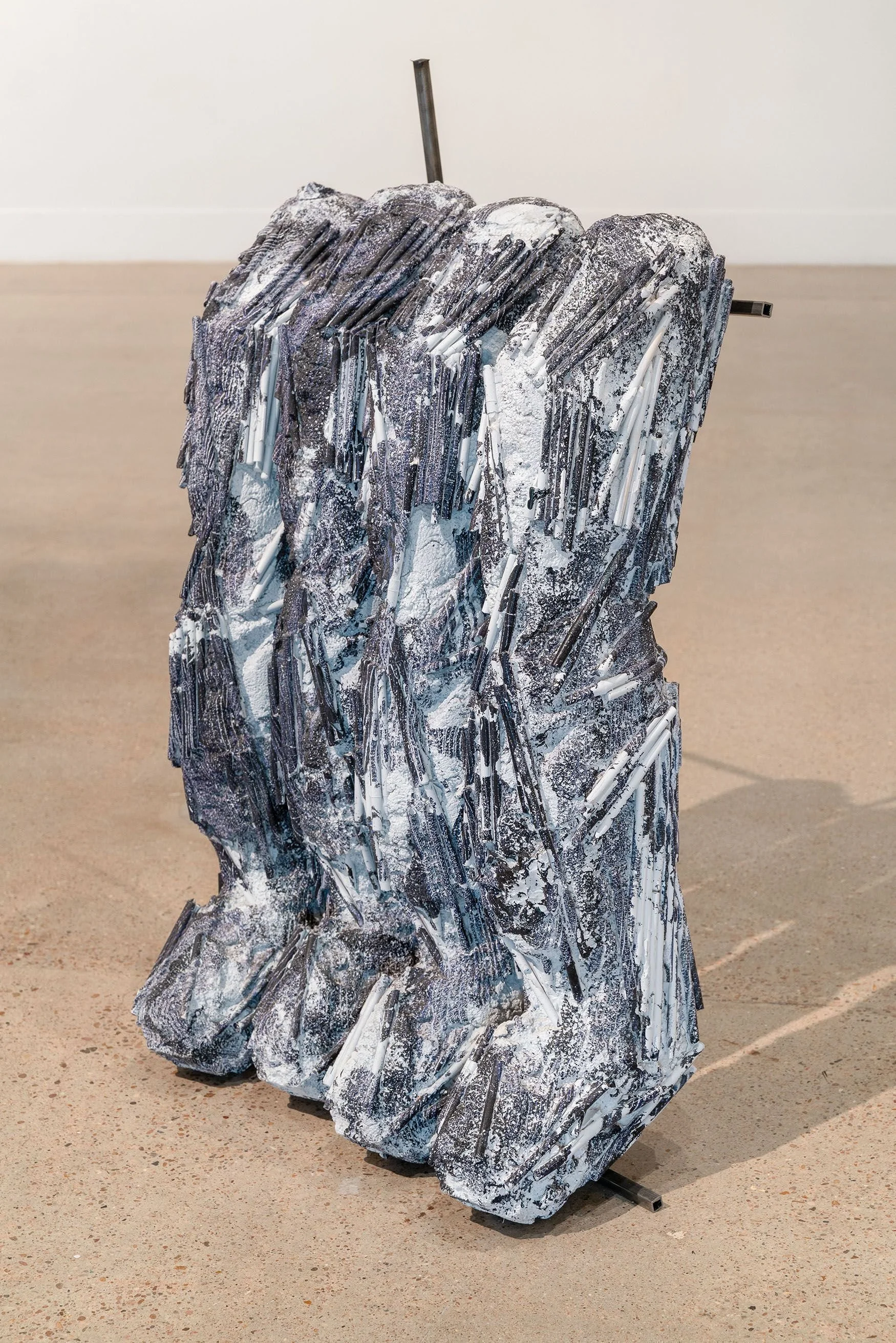
Walker, 2025
Many of your works appear layered, eroded, or partially concealed, as if they have undergone a process of excavation or decay. How important is this idea of physical transformation in your studio process, and how do you decide what to reveal and what to obscure?
I find this layering is mostly a product of the way I work. I have a need to take things past a certain threshold before they finally open up. I'm usually playing around with things in my studio—adding a bit here, stripping back there. It’s this incremental transformation that produces the layering. The process creates a kind of cumulative effect, with layers responding to one another as they build up. As the work develops, certain relationships begin to take on more weight, and an element of the piece that once felt crucial becomes the substructure for a new and more valuable addition. The eventual excavation lets me dig back through the piece and reclaim earlier moments, affirming the process as an important component of the work. How a sculpture is made becomes an important lens for examining why it was made. Additionally, I think things have a great energy while they’re being made: little bits of writing on them, paint samples, evidence of time inscribed through labor. I'm much more interested in the legibility of a visual language than in some austere, impregnable sublimity.
The forms in your sculptures feel both industrial and organic, combining rigid frameworks with materials that seem fragile, corroded, or deteriorating. How do you think about the tension between structure and collapse when building these assemblages?
I see this as a result of how the materials I select tend to interact. If I want to draw on the associations of an ephemeral material, decay becomes an inevitable part of the work, and vice versa. This can also enhance the structure of the piece. As I try to connect disparate and unstable elements, the supporting structure has to adapt and become more sophisticated. As the materials I use become more expansive, so does the armature. I also find a lesson in embracing the ephemerality of a piece, tied to meaning-making. Sculpture is important to me because it is a physical endeavor. Any idea I have has to pass through the physical and meet the test of real things. It gives me a reality check. In this way, the material works as a counterbalance to conceptualism and ensures that it is never completely dissolved into symbolism. If I use a loaf of bread to make a metaphor, eventually it will get moldy and turn to mush. The material in the work helps reiterate that our ideas don’t live in a vacuum. After all, we ourselves are unstable and ephemeral.
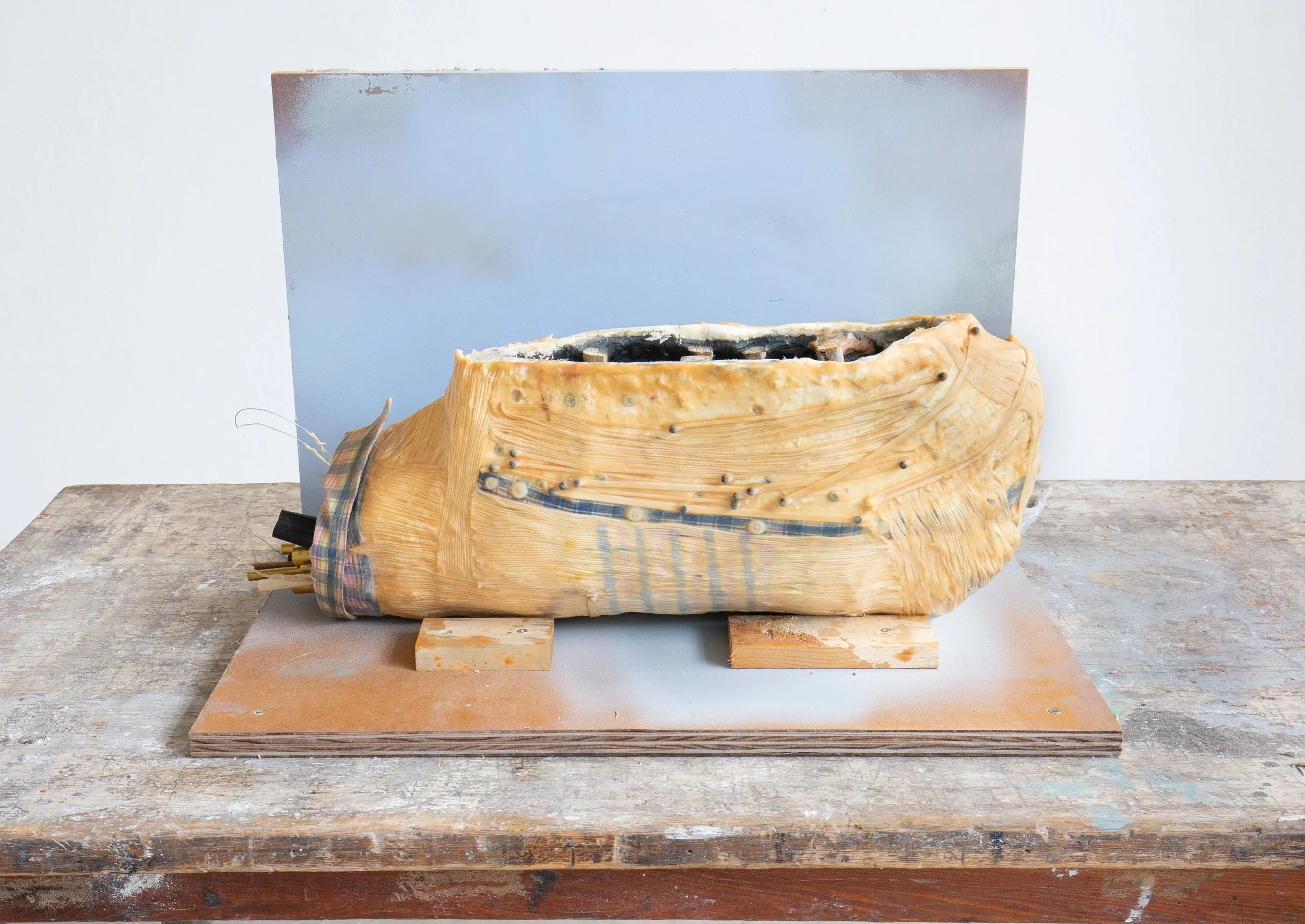
Untitled, 2024
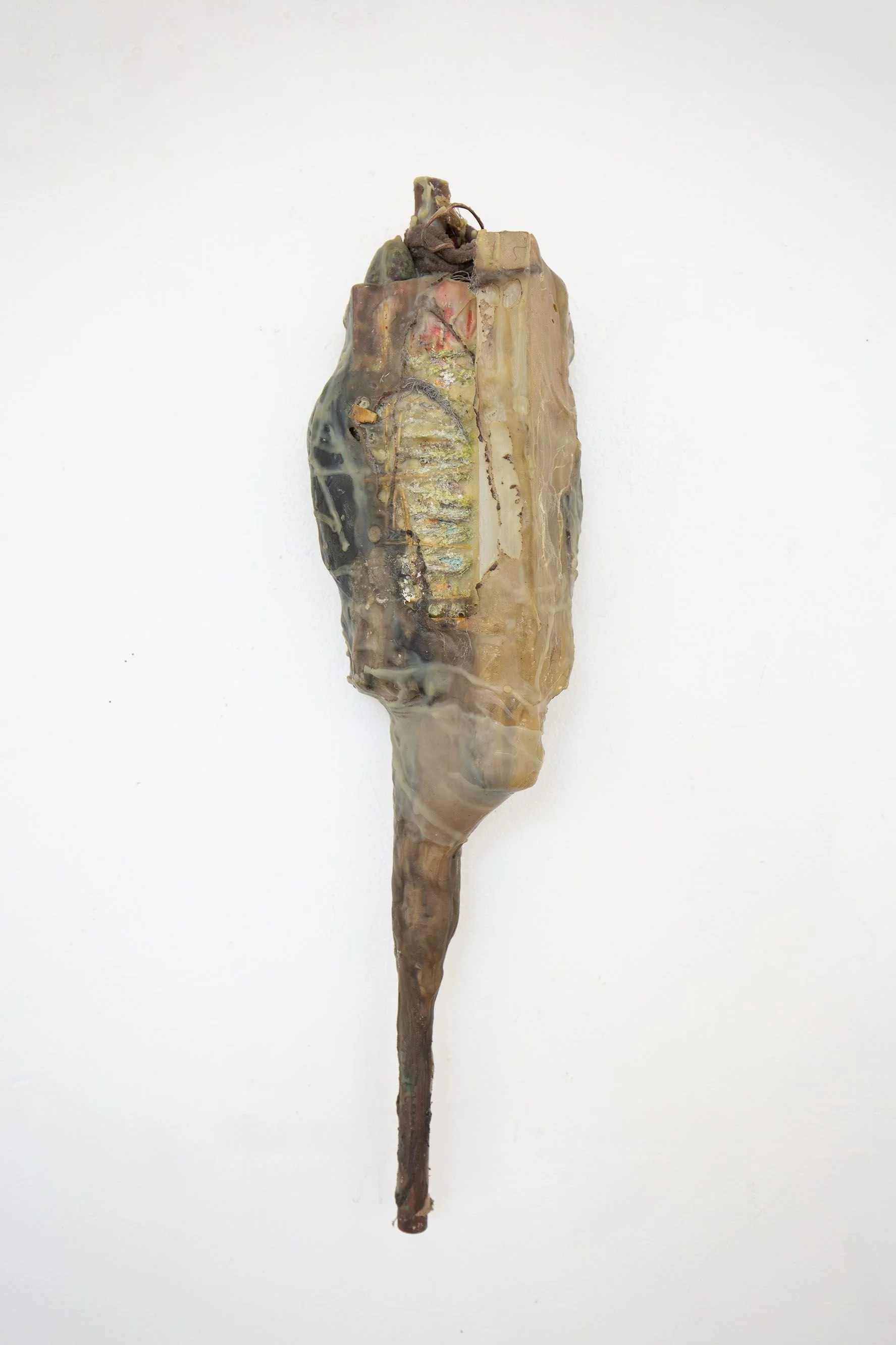
You Will Pay 3$, 2024
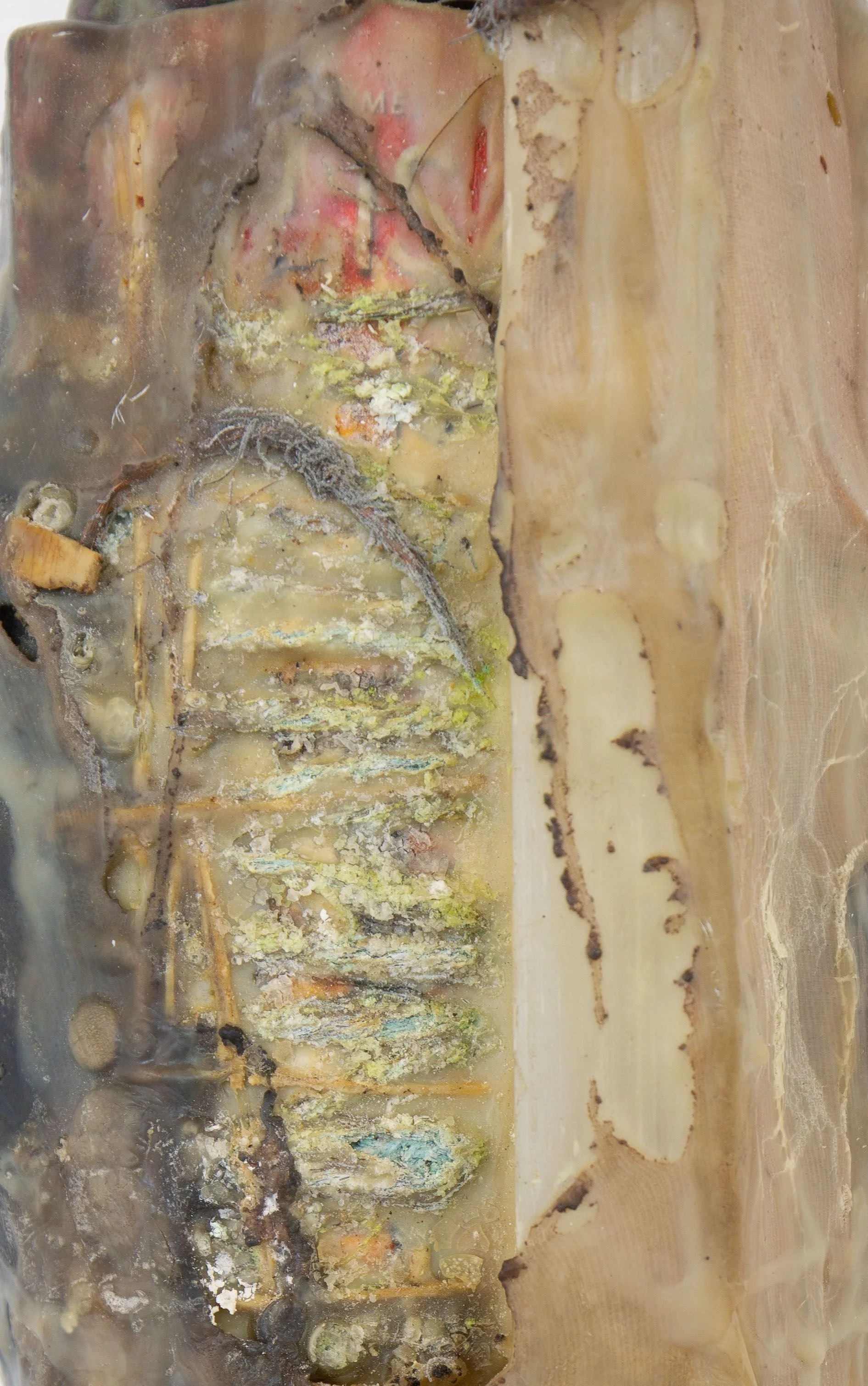
You Will Pay 3$, 2024 (detail)
Tell us a bit about how you spend your day / studio routine? What is your studio like?
I wish I had a better regimen in the studio, but I’ve always been a bit scattered, moving through cycles of investment and recovery. One recurring dynamic in my process is the tension between designing and making. I invest in both stages very intensely, and each has its own unbreakable ethos. The conceptual or brainstorming side wants the work to be robust and full of thought. The making side wants to remain interested and physically engaged with complex processes, regardless of the cost to the piece’s original intention. I’ve taken to bringing rugs into the studio because I end up on the floor so much. By the end of a piece, I’m making my way back into the conceptual framework—reassessing, excavating, and recalculating to find my way back to meaning.
What artwork have you seen recently that has resonated with you?
I went up to the Hirshhorn about a month ago and had a lot of fun strolling through their permanent collection. I got totally sucked into these three really crude sculptures by Jean Dubuffet made of iron slag and cement. I also saw these modest Degas studies in plasticine and beeswax at the National Gallery. I was happily surprised to see that these pieces have lasted this long without deforming, since the material stays permanently malleable. It was almost like he had just set them down after working, so you can still really feel his hand in them. In the same room were these absolutely gorgeous and meticulously illustrative paintings of the life of Joan of Arc by Louis-Maurice Boutet de Monvel. The combination of these two series made for a really fantastic juxtaposition. More generally, though, I’ve been taken with the work of Charles Long and June Crespo over the last year. Both have given me permission to work in a way that feels very open and self-affirming. I watched a walkthrough Charles Long gave of one of his shows where he describes “work” as the translation of suffering into meaning. I’ve been thinking about that for a while.
Is there anything new and exciting in the pipeline you would like to tell us about?
There is a project I’ve been excited to begin that directly engages with the ideas of structure and collapse mentioned above. I’m trying to push the range of materials I work with and use processes of decay and preservation metaphorically as the basis for a group of sculptures that play with memory, experience, and fleeting moments. I’m about to build a crude dehydrator and have been learning about different preservation practices, from embalming to traditional food storage. I’ve been dreaming about really letting myself do whatever I want with the work, not holding myself to strict formal concerns and just doing things because I find them interesting. For example, a coworker of mine introduced me to making duck decoys, and I’ve been whittling a small one in my spare time to add to a piece. If I can figure out how to make all the materials work together, I think it’ll be pretty fun to see how they come out.
All images courtesy of the artist
Interview publish date: 26/03/2026
Interview by Richard Starbuck