Guest Artist Frame 61 Guest Artist Frame 61

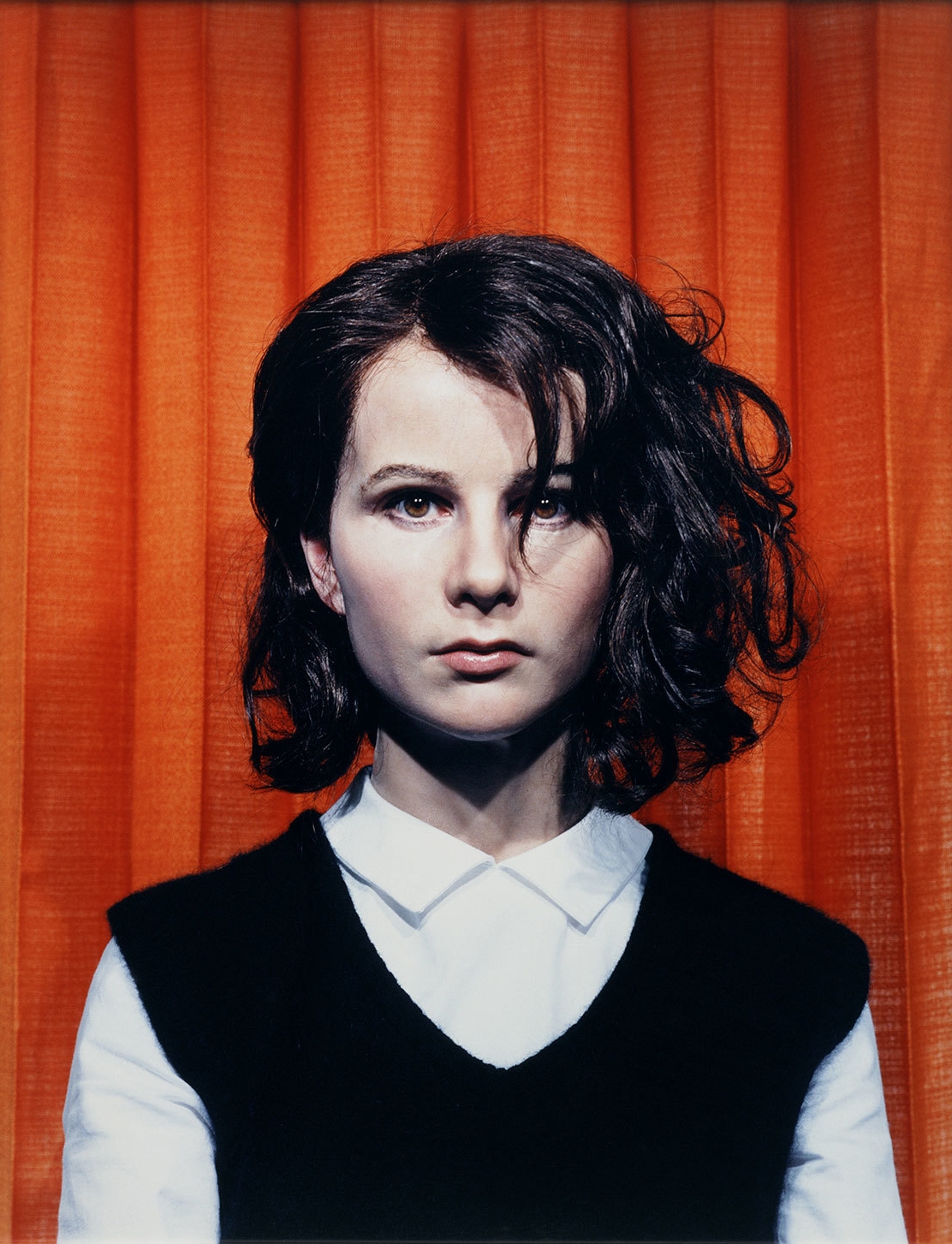
Gillian Wearing


"It really opened up to me how much my thinking of the world was so narrow, and that any view of someone else changes when you give them the openness that the sign series was able to offer."


Our interview with Turner Prize winner Gillian Wearing OBE.

Hello Gillian, thank you for taking the time to talk to us. You won the Turner Prize in 1997, looking back how do you feel winning the prize has effected you and your work?

It did feel like a seal of approval, a recognition of the work I have done, which is really wonderful,  but it is hard to know if it has an impact or not in terms of work. I was already showing internationally and the biggest change at the time was the media interest.

The prize was much more debated in the 90’s than it is now, so there would be a lot of press in tabloids and broad sheets. The art world was also a lot smaller and so if you were in the news it felt magnified. But since then contemporary art in the UK has grown exponentially - gallery wise, museum wise and many more artists, there is more voices and visibility and less of focus on one event.  

"Signs that say what you want them to say, and not Signs that say what someone else wants you to say" 1992-3

Your well known series of works called: "Signs that say what you want them to say, and not Signs that say what someone else wants you to say" is still very impactful. Could you tell us about these works, did you find that people were willing to share their thoughts/anxieties/feelings?

This was the early 90’s and I wasn’t expecting the full depth and breath of confession, emotion, thoughts or opinions. It really opened up to me how much my thinking of the world was so narrow, and that any view of someone else changes when you give them the openness that the sign series was able to offer. The simple instruction that I asked passers-by was to “write anything they wanted to on an A3 sheet of paper”.  I didn’t have to coax any of the comments, people just wrote very honestly about themselves.  I also think the purity of the project was one of the reasons for it’s success as well as a lot of participants really loved the idea.

Your work explores the boundaries between the public and private self with the use of disguises, how did the idea of using masks come about? Did you find that people opened up more easily?

The signs series gave me the idea of doing confessional films, since some of the signs themselves were confessions. I realised that most people would probably want to be anonymous if recounting a particular story or event and that’s why I came up with the idea of using a mask.  The mask takes on it’s own identity in the film and I can’t remember how the people looked underneath and therefore relate each story to the individual masks.  In the 90’s there was much text on this work being very much how people started to relate to the internet, the hiding of identities and being able to say things other situations wouldn’t allow.

Do you feel that the use of social media is an extension of the mask? Another layer to hide behind, with the potential to be anonymous or someone else?

Yes it does. Although I was much more aware of that in the mid 90’s than now. I think many more people are now posting as themselves, since social media has become a very visual space. So instagram is like curating an ideal identity. In the less visual online presence of the 90’s where everyone was a bit scared in revealing their true identities, there was a sense that no one was who they said they were.  There is much more online policing now, or people being called out if  someone believes they are fake.  In my youth no one would consider someone a fake, but in the internet era it seems there is more doubt in what people believe to be real. 

Self Portrait at 17 Years Old, 2003

Self Portrait as my Father Brian Wearing, 2003

Rock 'n' Roll 70, 2015

You were recently a judge for the #SelfExpression competition, organised by Saatchi Gallery and Huawei. Where artists are invited to enter images only using their smartphones. How did you find the process of judging these works? Was it enjoyable?

I enjoy judging because you get to see work before someone else will judge or make a comment, so you have to rely on instinct. One thing to learn in art there is no right and no wrong, no good or bad. An opinion is very subjective.  One can pull apart anything in a negative way or raise it up positively.

On the short list of images there were some photographs I would not have chosen and were picked by other judges, their choices make me think OK I didn’t see that in the same way and you do remember that. Of course someone’s judgement isn’t the be all and end all of anything, certain art just will resonate with more people than others and sometimes something comes along that gets a unanimous vote.

'Daydream in Blue' Paola Ismene (WINNER of #SelfExpression competition)

'London Bus' Denis Cherim (shortlisted Artist)

Tell us a bit about how you spend your day/studio routine? What is your studio like?

My studio is like an office, but it is large enough to make art. Michael Landy my partner has a larger space below and I do a lot of photo shoots there.  There is quite a lot of administration in my work, and I do spend quite a lot doing emails and/or doing drawings of ideas on Photoshop etc.

Is there anything new and exciting in the pipeline you would like to tell us about?

I have a solo show opening up in SMK Copenhagen in October, as well as unveiling a public sculpture there and I am creating a statue of Millicent Fawcett for Parliament Square next year.

More works by Gillian Wearing

Self Expression Competition

Maureen Paley

Tanya Bonakdar Gallery

Regen Projects, Los Angeles

Images © Gillian Wearing, courtesy Maureen Paley, London, Tanya Bonakdar Gallery, New York and Regen Projects, Los Angeles.
#SelfExpression images courtesy of Saatchi Gallery
Publish date: 28/09/2017

Read More
Guest Artist Frame 61 Guest Artist Frame 61

Marie Jacotey


"Any social interaction inspire me; my friends and other strangers’ relationship stories as well as ones depicted in fictions such as songs, movies, books are great sources to base my work on."


Our interview with artist Marie Jacotey of Hannah Barry Gallery, London.

Hello Marie, thank you for finding the time to talk to us. Could you tell us a bit about yourself. How long have you been a practising artist and where did you study?

I have been a practising artist since I graduated from my MA in printmaking at the Royal College of Arts in 2013.

Your work feels like a glimpse into people's fleeting thoughts and feelings, almost like extracts from a personal journal. What inspires you to tell these small narratives? Are they biographical?

Any social interaction inspire me; my friends and other strangers’ relationship stories as well as ones depicted in fictions such as songs, movies, books are great sources to base my work on. None of it is ever clearly autobiographical. It might be highly personal and self reflective at times but it never straightforwardly depicts my own life.

The show also coincides with the publication of "Nights of Poor Sleep", a collaborative publication between yourself and poet Rachael Allen. Could you tell us how this came about and the thoughts behind it?

I have loved Rachael’s words from the moment I heard them first: she was giving a reading of her new poems in 2014 at Hannah Barry Gallery during my first solo show there. In January 2016, we collaborated on a commission for Art licks magazine, for which she wrote two poems to go alongside a poster work of mine. A couple months later, she told me she had not been able to stop writing and sent me over 15 new amazing texts all based on former drawings of mine. From those, I started this new series of pastel drawings now exhibited and in the book. I feel it’s been a real luck to spend so much time accompanied by such beautiful writing and it gave me the opportunity to really let the words soak into the drawings and their atmosphere really impregnates me. They’ve defined the mood of a years work.

Morning Defeats installation view, Hannah Barry Gallery, photo credit Damian Griffiths

Sorry but not sorry, 2017

Looking out the window, a pre-ghost, 2017

Yea!!!, 2017

Could you tell us about your show "Morning Defeats" at Hannah Barry Gallery? What is the meaning behind the title?

It refers to the sleepless nights that come with great life’s turmoil. I find an acute sense of despair in the darkness of the night, all troubles seem amplified and dramatised; it’s hard to emerge full of hope after such intense hours. The atmosphere of the works for this show builds up on this morning feeling of lingering hopelessness.

How do you go about naming your work?

I have always written a lot alongside or on my drawings, so titles often come rather naturally. I see them as an extended part of the narratives at play in the works. In that specific case though, it was an even easier task as most the words come from Rachael’s writings.

Morning Defeats installation view, Hannah Barry Gallery, photo credit Damian Griffiths
 

Morning Defeats installation view, Hannah Barry Gallery, photo credit Damian Griffiths
 

Morning defeats, 2017

Tell us a bit about how you spend your day/studio routine? What is your studio like?

I am in my studio every day from 9/10 am till 7/9 pm (up to seven days a week when busy – but I actively try to not have this happen too often). I absolutely adore my studio space: I am in a shared building run by the architect collective Assemble in Bermondsey with lots of other very talented artists, designers, musicians, makers… I thrive of this community feeling, where everyone runs their own businesses and work their ass off to be free to achieve what they want to. It’s a very empowering setting. On a daily basis, I don’t really have a set schedule but do what needs be done, some days are very boringly administratively tasked, others are more focused on commissioned work and others are pure experimental fun, when I get to make my own personal work.

What artwork have you seen recently that has resonated with you?

I undertook a residency in Denmark this July and had a chance to go and see both shows on at the Louisiana museum then, Tal R (one of my all times favourite) and Marina Abramovic (I only knew her most iconic works before that visit). Both artists were so intense, amazingly good and so prolific; they literally blew my mind! I left there with a prodigious drive and an excitement toward making new and daring work, which is the ultimate feeling I expect to get from seeing a great show: a decupled desire to make.

Is there anything new and exciting in the pipeline you would like to tell us about?

Yes definitely! I am now working on a short animation movie written by Lola Halifa-Legrand and produced by MIYU productions. We are in the development stage of the film and are looking into finding some investors to fund the making! It’s all very exciting… Other than, I have a few leads toward new bodies of work, books and commissions I will be developing over this winter but that’s all to be announced at the appropriate times!

hannahbarry.com

All images courtesy of the artist and Hannah Barry Gallery. Photo credit Damian Griffiths.
Publish date: 28/09/2017

Read More