Yulia Iosilzon
"Painting feeds into the ceramic work through colour and pattern, almost as if the surface is trying to behave like a skin that wraps around an object."
Our interview with Yulia Iosilzon explores an expansive practice shaped by displacement, storytelling, and the construction of imagined worlds. Moving fluidly between painting, ceramics, and installation, Iosilzon creates layered environments where figures, symbols, and organic forms drift between memory and myth. In this conversation, she reflects on material transformation, studio rhythms, and the evolving possibilities of painting as an encounter that extends beyond the surface. The discussion coincides with her recent solo exhibition ‘Entangled Pluralism’, presented at Victoria Miro Gallery’s: Miro Presents.
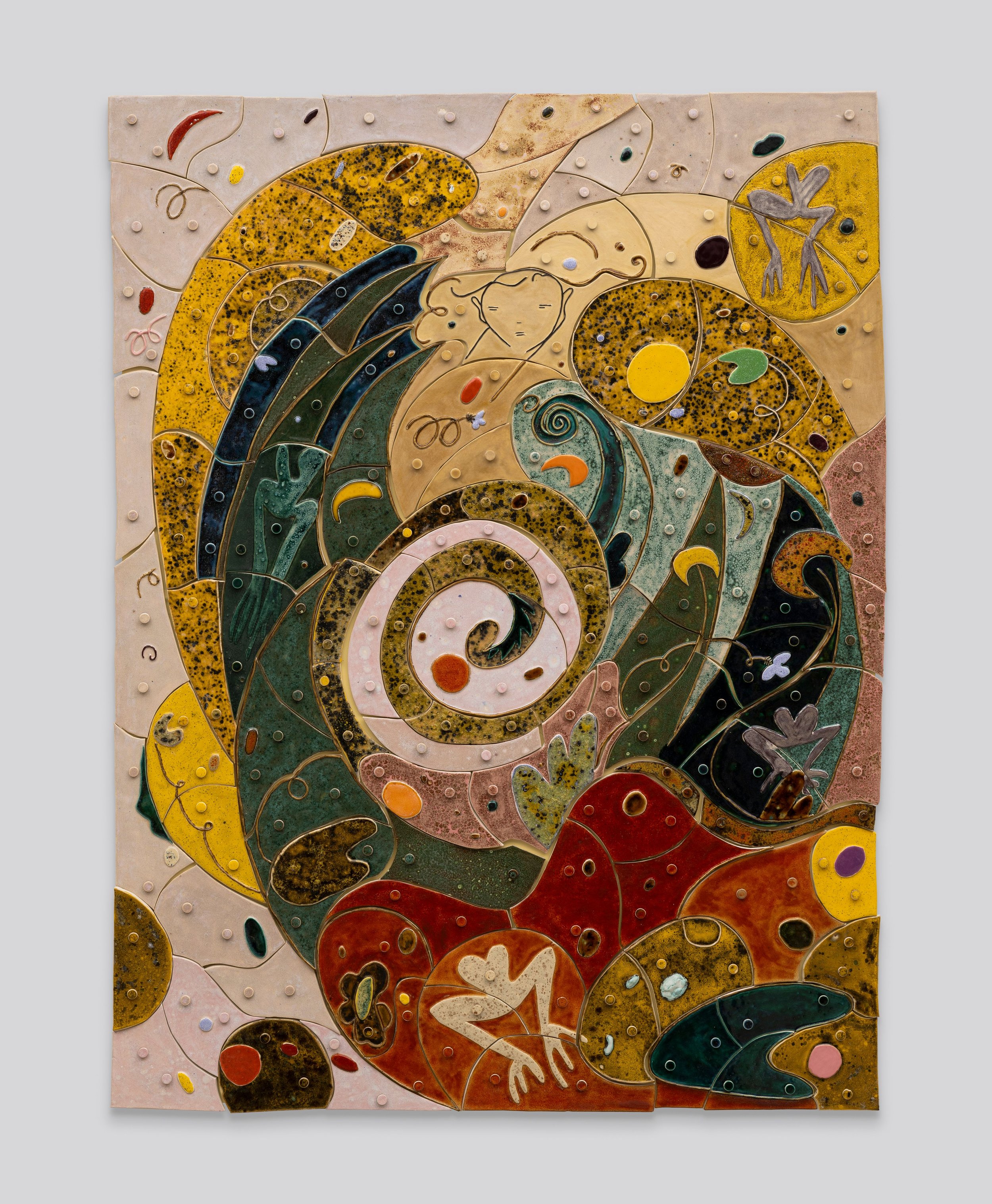
Pretending to Play, 2026
Could you tell us a bit about yourself and your background?
I was born in Moscow and lived between Moscow and Tel Aviv. Then I moved to London when I was quite young, and that sense of displacement has stayed with me since. It’s not something I try to resolve. My work naturally tends to explore imagined landscapes, fragmented narratives, and spaces that feel both familiar and slightly out of reach. I studied painting at Slade and then at RCA but I’ve always approached it more as a way of constructing environments rather than just images. Over time, that has expanded into installation - ways to build worlds that viewers can step into, rather than simply observe. I’m interested in stories with symbols, how stories are told, who gets to tell them, and how they shift depending on perspective.
We last spoke with you back in 2020, and a lot can shift in a few years. How has your work evolved since then, whether in the themes you explore, the way you approach your materials, or even in how you think about what a painting can do?
Materially, I’ve become more attentive to surface as a kind of skin that records time. I’m working with layering in a way that feels closer to sedimentation than composition - allowing things to accumulate, erode, and reappear. There’s a greater acceptance now of instability, of letting forms hover between states rather than resolving them too quickly - given I work on transparent fabric and lately stretched my practice onto doing large scale ceramic paintings. I’ve also been thinking about painting less as an image and more as an event or encounter. Something that happens between the work and the viewer, rather than something that is fixed. That has opened up questions about scale, about installation, about how a painting might extend beyond its own edges - almost behaving architecturally or atmospherically. When I start planning a show I always go from the space where the works would be hanged. Each space tells its story and gives you hints how to build a composition.
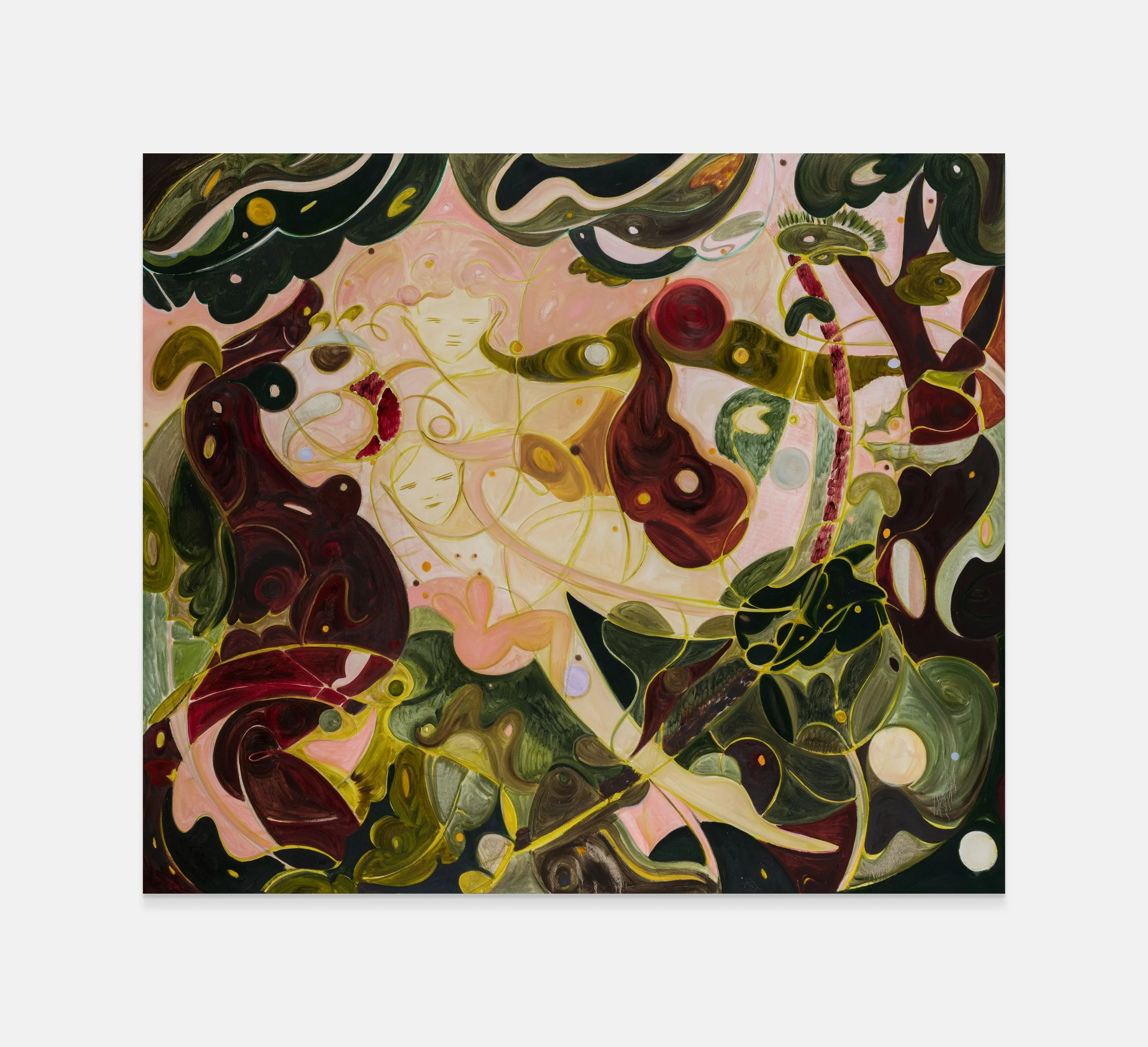
Wizard Oaks, 2025. Image courtesy of the artist and CARVALHO, New York.
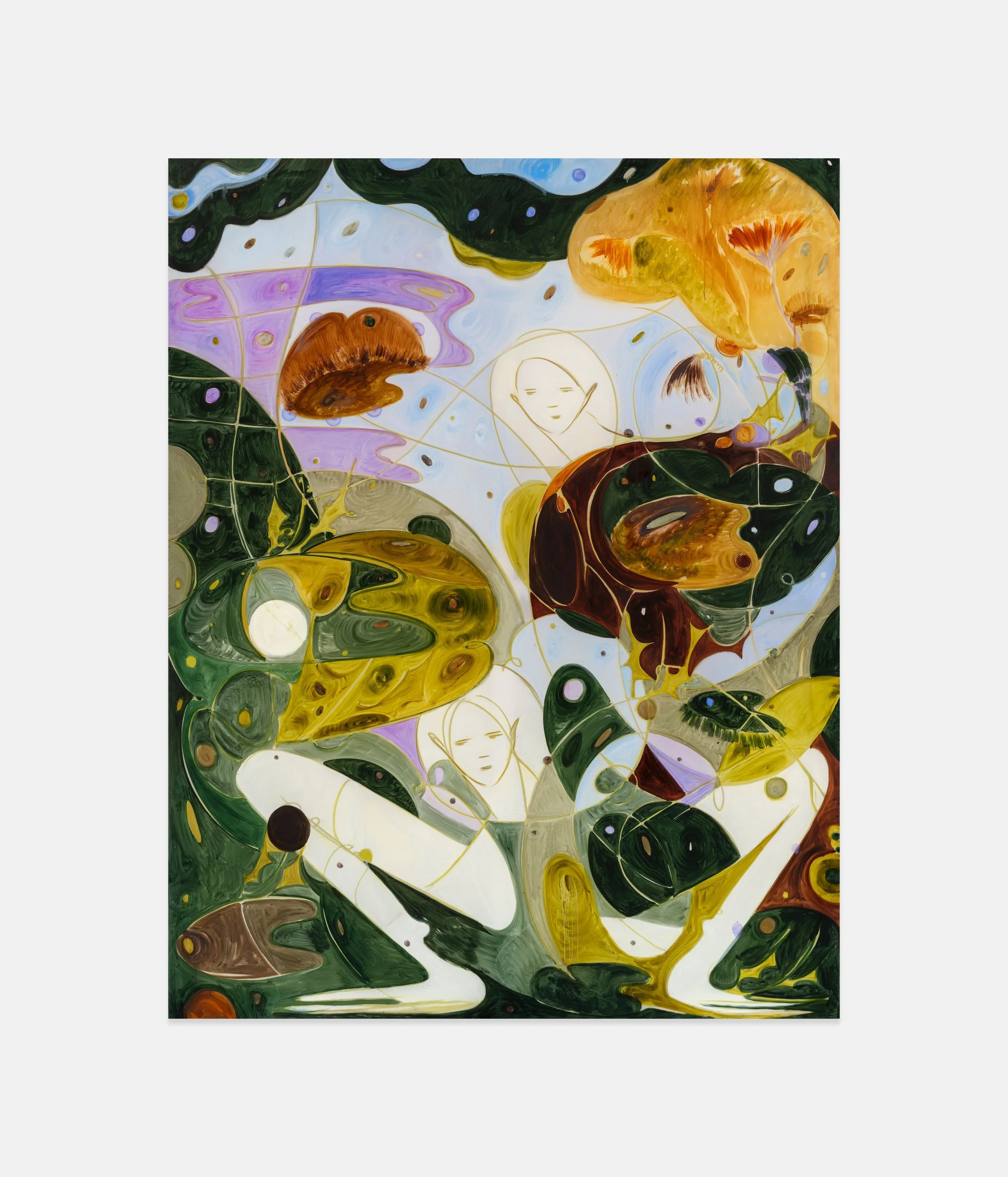
Reflections of the Purple Cloud, 2025. Image courtesy of the artist and CARVALHO, New York.
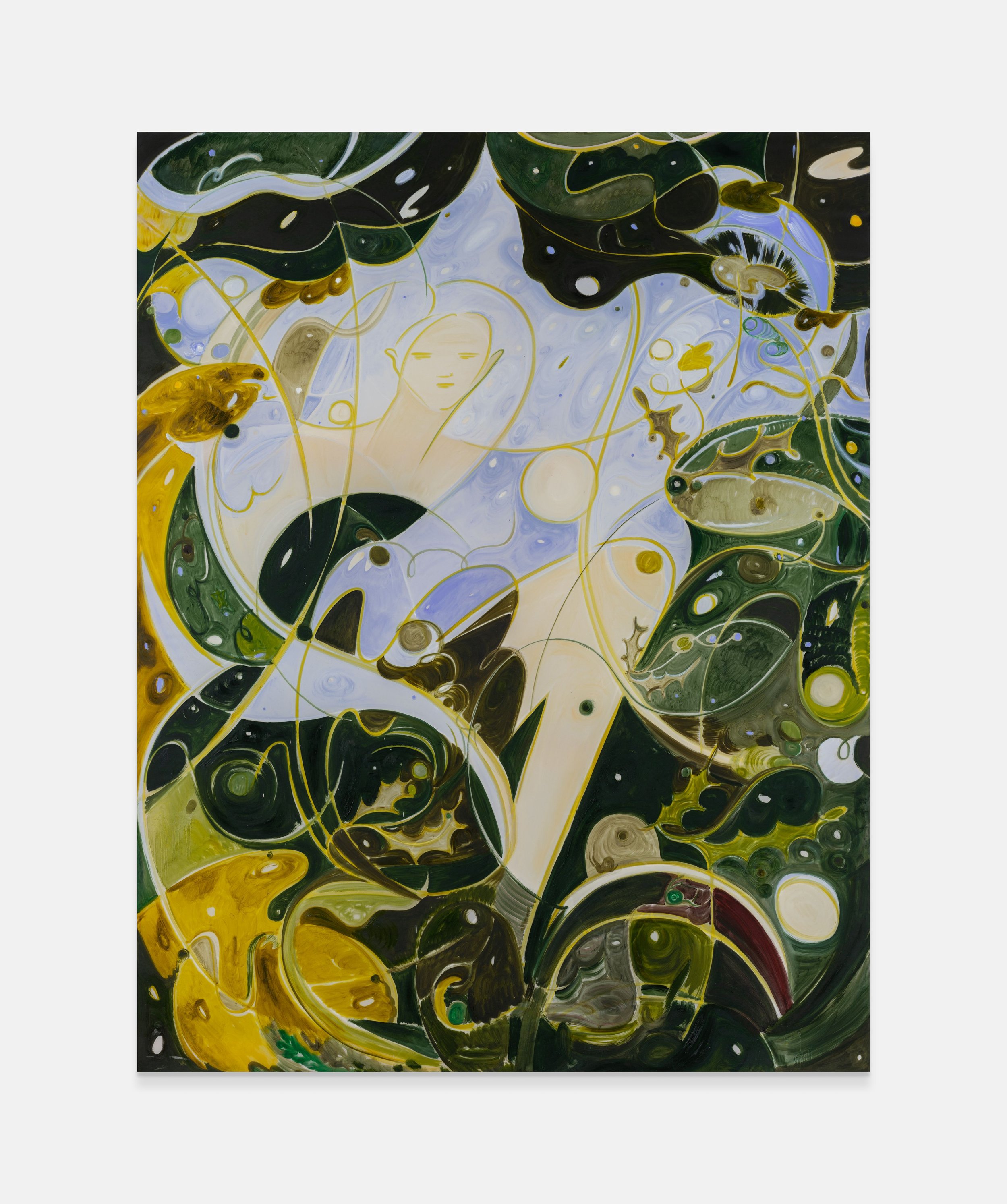
Fragility in Everything, 2025. Image courtesy of the artist and CARVALHO, New York.
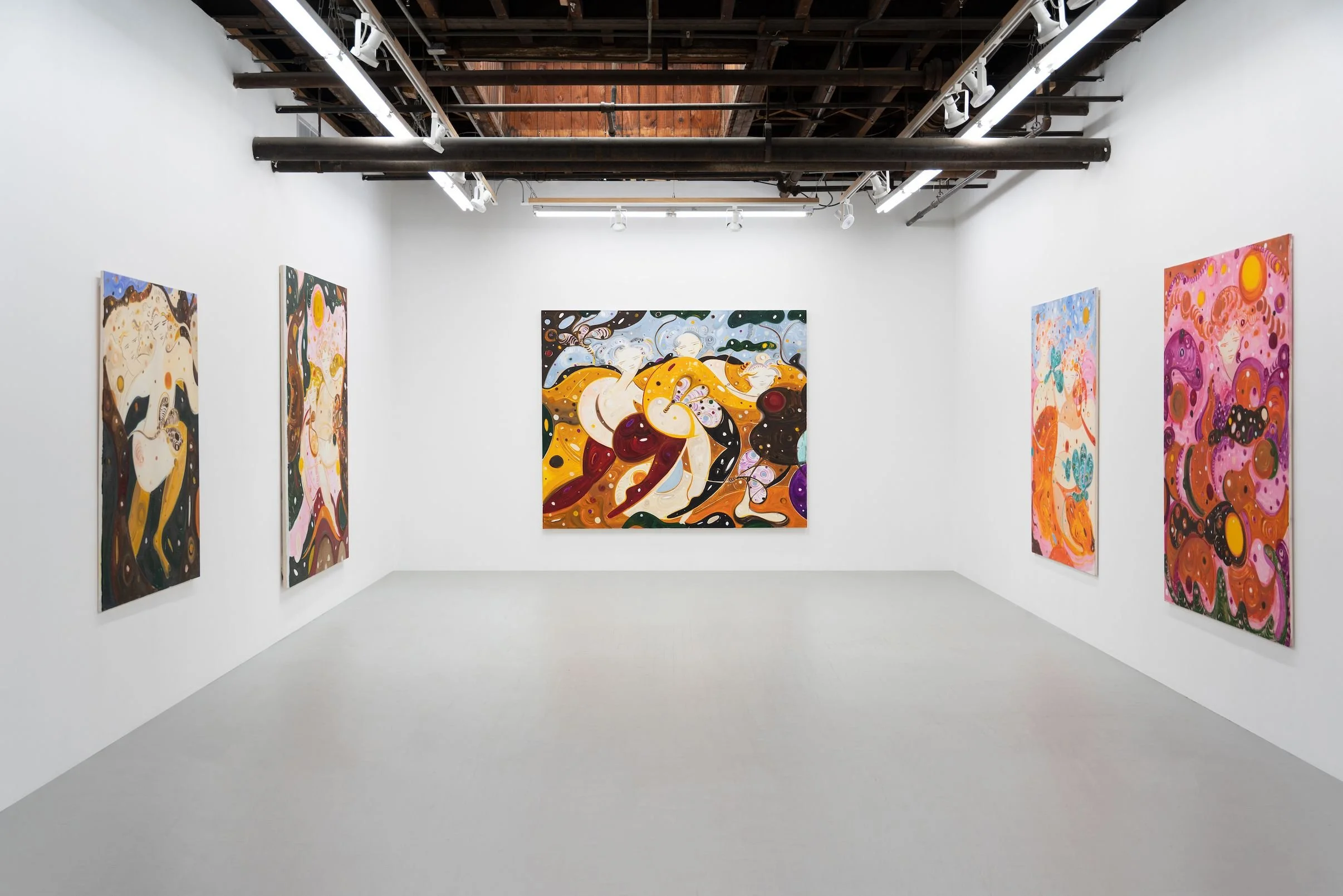
Heaven’s Chambers, Installation View, 2023, CARVALHO. Image courtesy of the artist and CARVALHO, New York.
You work across both painting and ceramics, and there seems to be a shared visual language between the two. How does moving between these very different materials shape the way you think about your imagery, and does one medium ever surprise you in ways the other does not?
For me, the two mediums feel less separate than they might initially appear. There is a shared vocabulary that moves between them - certain gestures, rhythms, or ways that forms stretch and repeat - but the translation is never exact, and that’s where it becomes interesting. Painting allows for a kind of immediacy and fluidity. The image can shift very quickly, dissolve, reconfigure itself within a single session. Ceramics, on the other hand, introduces resistance and time in a different way. There’s a physical negotiation with the material, and also a delay - you have to wait, to relinquish some control, especially through firing. That unpredictability can be quite generative. I think ceramics has made me more aware of weight and volume, even when I return to painting. There’s a stronger sense of how forms occupy space, or how they might press against the surface rather than sit on it. At the same time, painting feeds into the ceramic work through colour and pattern, almost as if the surface is trying to behave like a skin that wraps around an object. What surprises me is how each medium exposes different vulnerabilities. In painting, it’s easy to overwork or overstate something. In ceramics, things can fail more quietly or more completely. So moving between them creates a kind of balance - one keeps the other unsettled, and that instability feels productive.
There is a strong sense of storytelling running through your work, with recurring figures, animals, and organic forms that feel almost like characters in an ongoing narrative. Where do these figures come from, and how much of what we are seeing is drawn from personal memory versus something more collective or inherited?
I tend to think of these figures less as fixed characters and more as projections that return in different states. They’re not anchored to a single story, but they carry different traces - of gestures, of moods, of encounters that accumulate over time. It’s more like fragments: sensations, atmospheres, or half-remembered images that surface and then get reworked through the process of painting. At the same time, I’m interested in how these forms might feel familiar beyond that, as if they belong to a shared visual memory or something more subconscious or intuitive.
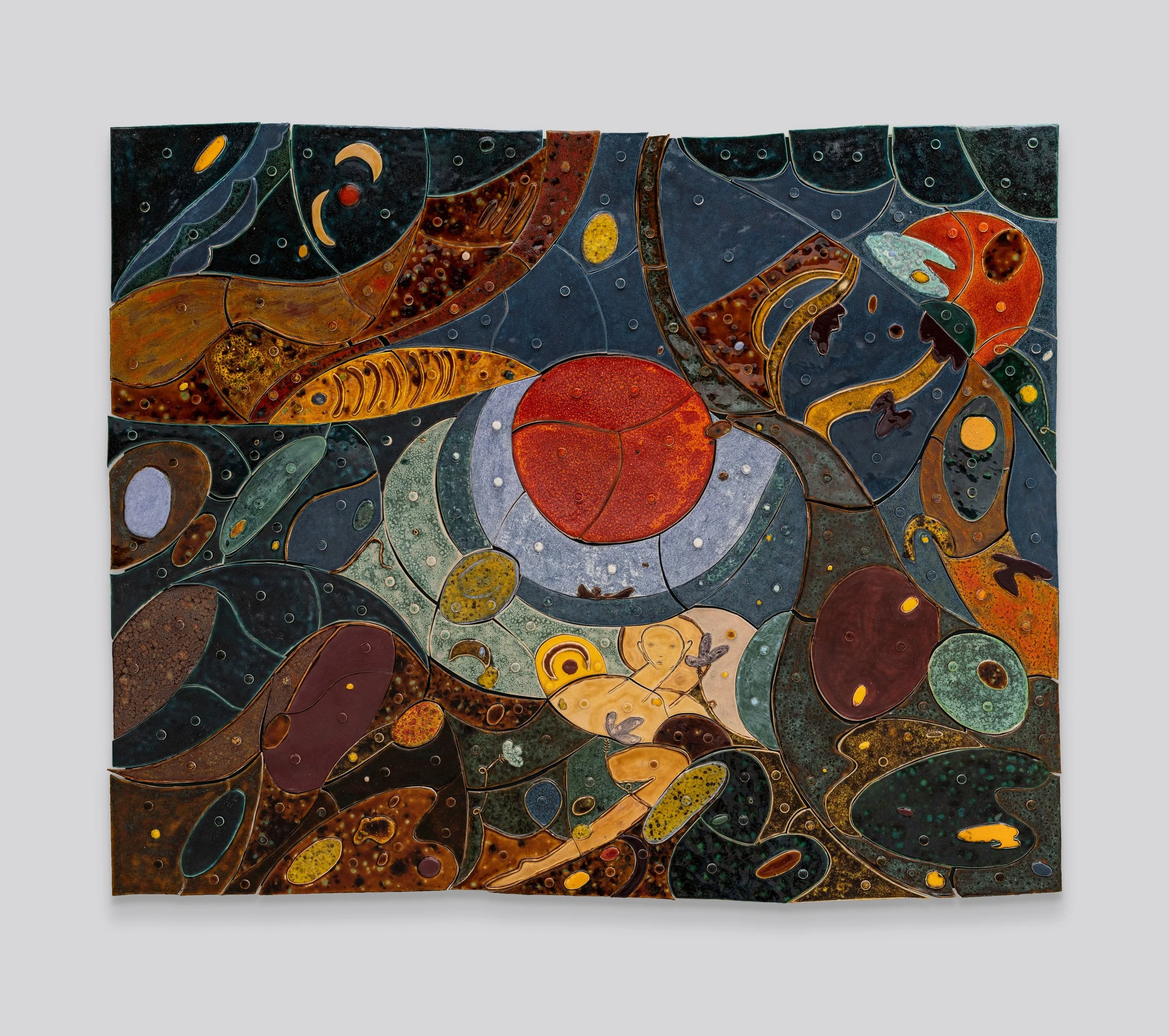
Tunnel Vision, 2026
Tell us a bit about how you spend your day / studio routine? What is your studio like?
My days usually begin quite similar. I drop my child off at nursery first. After that I go straight to the studio and tend to stay there until late in the evening. I like long stretches of time where things can unfold slowly, without too much interruption. The work often requires a kind of drifting focus- moving between painting to ceramics, letting one thing sit while something else develops. The studio itself is quite fluid. Paintings, ceramic forms, fragments, and materials tend to coexist rather than being strictly separated. I rarely work on just one piece at a time, so the space becomes a kind of landscape of ongoing ‘chaos organisé’.
What artwork have you seen recently that has resonated with you?
It was about a year ago, but it is still with me. It was the whole show rather than the single work. I went to see the Yoshitomo Nara exhibition at the Hayward Gallery on its final day. Seeing so many of my favourite paintings in person, including ones I had known for years only, shifted something quite quietly but permanently. The surfaces held a softness and an immediacy that images don’t quite convey. The figures felt both self-contained and completely vulnerable, and there was a directness in the work that felt almost disarming.
Is there anything new and exciting in the pipeline you would like to tell us about?
Upcoming projects include two solo exhibitions: one at The Foundry in Seoul, and another at the Nassima Landau Foundation in Tel Aviv. These exhibitions will feature installation-based work, including a large-scale transparent installation, alongside paintings and ceramic pieces.
Images courtesy of the artist.
Header image: Installation view of Yulia Iosilzon: Entangled Pluralism on LIVE / ARCHIVE.
Powered by Vortic technology © Yulia Iosilzon. Courtesy of the artist and Victoria Miro.
Interview publish date: 09/07/2026
Interview by Richard Starbuck